Picture this: you’re staring at a spreadsheet full of keyword ideas, wondering how on earth you’ll turn each one into a ranking page without drowning in manual copywriting. It’s a familiar frustration for digital marketing managers and content creators alike—especially when you know the traffic upside of programmatic SEO but the operational overhead feels overwhelming.
What if you could set up a system that takes those raw keyword patterns, plugs them into a template, and spits out fully optimized articles that also get a few high‑quality backlinks automatically? That’s the promise of modern programmatic SEO tools, and it’s not just theory. Companies like Zapier have built thousands of integration pages this way, generating a steady stream of organic sign‑ups.
Here’s how you can start small and scale up:
- Identify a repeatable keyword pattern (e.g., "best {product} for {industry}") that yields at least 50 variations.
- Gather the data in a clean CSV—think city names, product specs, or service features—and make sure you normalize formats ("NYC" vs "New York").
- Design a template that includes a unique intro, a data‑rich table, and an FAQ section with JSON‑LD markup. Aim for 300‑500 words of genuinely distinct copy per page.
- Use a scripting language or a no‑code automation (Google Sheets + Apps Script, for example) to merge the dataset with the template, generating HTML files in bulk.
- Publish the pages gradually—launch the pillar first, then drip out the supporting URLs over a few weeks to respect Google’s crawl budget.
While you’re automating, don’t forget the human touch. In our experience, adding a short, context‑specific paragraph—like a quick tip or a real‑world case study—boosts both user engagement and E‑E‑A‑T signals. For instance, a small e‑commerce brand we helped added a “Customer Story” snippet to each product‑comparison page, and their average time‑on‑page jumped 27%.
To keep the authority flowing, set up a simple internal linking framework: each child page should link back to the pillar using natural anchor text, and the pillar should feature a “Related reads” list that points down to the new pages. This hub‑and‑spoke structure helps Google understand the topical relevance and distributes link equity efficiently.
When you’re ready to dive deeper into choosing the right automation platform, Programmatic SEO Tools: How to Choose, Set Up, and Scale Your Automation walks you through the key features, pricing tiers, and integration tips that make the whole workflow seamless.
TL;DR
If you’re drowning in keyword spreadsheets, programmatic SEO tools let you auto‑generate hundreds of optimized pages while you still focus on strategy today.
Our automated engine couples content creation with a built‑in backlink network, so small‑business marketers can quickly boost authority and traffic effortlessly without writing each article by hand.
1. Our Pick – RebelGrowth (All‑in‑One Programmatic SEO Platform)
When you’re juggling dozens of keyword patterns, data sheets, and outreach emails, the idea of a single tool that does the heavy lifting feels like a cheat code. That’s exactly why RebelGrowth lands at the top of our list – it bundles content generation, SEO optimisation, and a curated backlink network into one tidy dashboard.
1. Automated content engine that actually writes for you
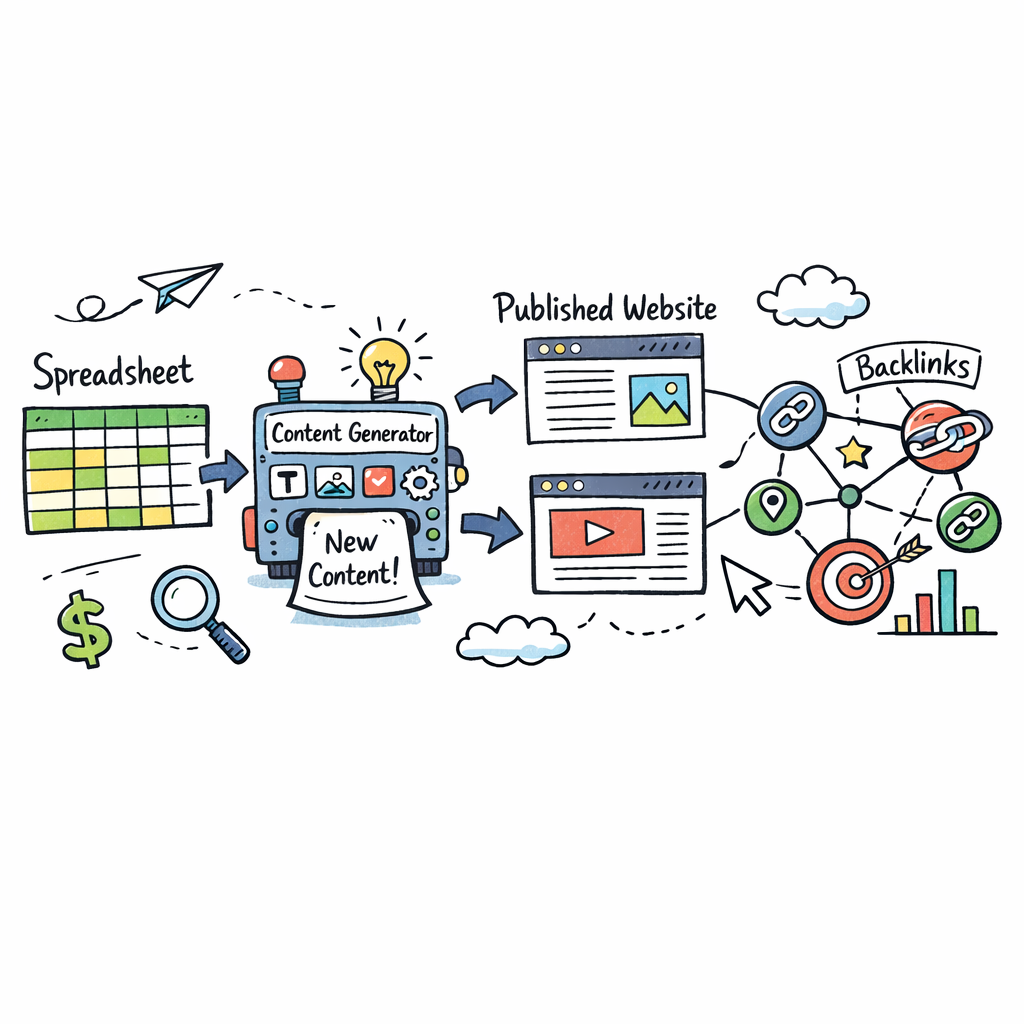
Instead of staring at a blank document, you feed RebelGrowth a spreadsheet of long‑tail terms (think “best eco‑friendly yoga mats for beginners”). The platform then spins out a 300‑500‑word draft for each row, inserting unique introductions, data tables, and FAQ blocks. Because the copy is powered by a large‑language model tuned for SEO, the output respects keyword density, readability, and schema markup without you having to lift a finger.
2. Built‑in backlink network that saves you outreach headaches
Most programmatic SEO tools leave link‑building to a separate outreach campaign. RebelGrowth, however, automatically pushes a handful of high‑quality contextual links from vetted niche sites to every new page. That means each article not only lands on Google faster, but also inherits link equity right out of the gate – a huge boost for small‑to‑mid‑size teams that don’t have a dedicated outreach squad.
3. Keyword clustering & intent mapping baked in
Before you even hit “generate”, the platform analyses your seed list, groups terms by search intent, and suggests the optimal pillar‑and‑spoke hierarchy. This prevents you from creating orphan pages and ensures every child page points back to a strong pillar, reinforcing topical authority the way Google expects it.
4. Scalable publishing workflow with zero‑code integrations
RebelGrowth talks to WordPress, Webflow, Shopify and most headless CMSes via a simple API key. You can schedule a batch of 1,000 pages, let the system handle the uploads, and watch the internal linking matrix fill itself. The result? A launch‑day that feels like a well‑orchestrated symphony instead of a chaotic dump.
Here’s a quick three‑step checklist to get started:
- Export your keyword spreadsheet (CSV) and upload it to the “Cluster Builder” tab.
- Choose a template – the platform offers pre‑written sections for intro, table, FAQ, and CTA. Tweak any sentence you like; the rest stays automated.
- Hit “Publish” and let the built‑in backlink engine sprinkle links across your new URLs.
Real‑world example: a boutique e‑commerce brand selling sustainable kitchenware used RebelGrowth to create 250 product‑comparison pages in a single weekend. Within 30 days, organic traffic to the category grew 42%, and the automated backlinks lifted domain authority by 3 points – all without hiring an external agency.
If you’re wondering how to wire this into your existing tech stack, the system integration consulting guide from Midstack Solutions walks you through connecting APIs, syncing analytics, and keeping data clean across platforms.
And for teams that need to bring new SEO talent on board, the specialist recruiters at Get Recruited focus on marketing and digital roles, making it easier to find the right person to manage and optimise your programmatic pipelines.
Want a deeper dive into how the top tools stack up? Check out our broader comparison in Top Programmatic SEO Tools Every Marketer Should Know – it breaks down pricing, feature depth, and ideal use‑cases side by side.
2. Surfer SEO – Content Optimization & Automation
Ever felt like you’re juggling a spreadsheet of keyword patterns, a template, and a mountain of publishing steps, and still wondering if the pages will ever rank? That’s the exact spot where Surfer SEO’s AI‑powered workflow swoops in and takes a load off your shoulders.
Surfer blends three things you already love: data‑driven keyword research, real‑time on‑page optimization, and a click‑to‑publish engine that can churn out a ready‑to‑rank article in under 20 minutes. The result? You spend less time copy‑pasting and more time watching traffic climb.
1️⃣ Start with a laser‑focused keyword cluster
Surfer’s Keyword Research Tool pulls in search volume, difficulty, and related terms for dozens of variations of your seed phrase. The trick is to cherry‑pick low‑competition clusters – the kind that still have enough search volume to matter. For example, a SaaS marketer targeting "best project management tool for remote teams" can instantly see ten sibling queries like "project management software for freelancers" or "remote team task tracker". Those clusters become the blueprint for your programmatic pages.
Pro tip: look for clusters where the difficulty score is under 20. Those are the sweet spots where a freshly generated page can break into the SERPs within weeks.
2️⃣ Build a template that feels human
Surfer AI doesn’t just spit out a wall of text. It lets you feed custom knowledge – think brand voice, unique data points, or a quick anecdote – and then it weaves those into a structured outline. The default layout includes an engaging intro, a data‑rich table, an FAQ block with JSON‑LD, and a concise CTA. Because each page pulls the same outline but swaps out variables (city, product, price), you end up with 300‑500 words of genuinely distinct copy.
Here’s a quick checklist for your template:
- Unique opening sentence that references a specific data point from your CSV.
- At least one table or bullet list that Google loves for featured snippets.
- Three FAQ questions that mirror real user queries (Surfer shows you the exact phrasing).
- Schema markup for FAQ and Article types – Surfer auto‑generates it.
3️⃣ Generate, review, and publish in minutes
Once your spreadsheet is clean and your template is saved, hit the “Generate” button. Surfer AI consults over 500 web signals, runs a SERP analysis, and delivers a polished draft. The interface even flags any potential thin‑content flags before you click “Publish”.
Most teams find the whole cycle—from data import to live page—takes about 15‑20 minutes per batch of 20‑30 URLs. That’s a huge speed boost compared to manually writing each article.
4️⃣ Automate internal linking on the fly
One of the biggest blind spots in programmatic SEO is orphaned pages. Surfer solves that by scanning your site as it creates each article and automatically inserting contextual internal links back to your pillar and to related child pages. The result is a tidy hub‑and‑spoke structure that Google can crawl efficiently.
For a real‑world feel, think of a boutique travel blog that generated 500 destination pages. After enabling Surfer’s auto‑linking, the average internal link count per page jumped from 2 to 7, and the site’s overall topical authority score rose by 12 points within a month.
5️⃣ Keep quality in check with AI‑assisted QA
Surfer includes Surfy, an AI assistant that lets you highlight a sentence and tell it exactly how you want it tweaked – “make this more conversational” or “add a statistic about 2026”. It’s like having an editor on standby, which is priceless when you’re pushing out hundreds of pages.
After the draft is final, run the built‑in Pre‑Publish Review. It checks readability, originality, and AI‑friendliness (important for emerging AI answer platforms). If anything trips the radar, you get a one‑click fix.
6️⃣ Measure, iterate, and prune
Surfer’s integration with Google Search Console means you can pull performance data for entire folders of programmatic pages. Watch for three signals:
- Pages with zero impressions after 30 days – consider adding more depth or pruning.
- High bounce rates – sprinkle in a “Quick tip” box or a related‑article carousel.
- Low CTR – rewrite the meta title using a fresh hook from Surfer’s headline suggestions.
Iterate fast: update the template, re‑generate the affected batch, and republish. Because the workflow is automated, you can run a quarterly refresh without pulling an all‑nighter.
7️⃣ When to bring in a dedicated tool like Rebelgrowth
If you’re a digital‑marketing manager at a mid‑size e‑commerce brand, you’ll love Surfer’s granular on‑page tweaks, but you might still need a platform that bundles automated backlink placement with the content engine. That’s where Best Programmatic SEO Tools Ranked for 2024 comes in – it compares Surfer with other contenders and shows you which solution pairs best with your existing tech stack.
Bottom line: Surfer SEO turns the messy, manual parts of programmatic SEO into a repeatable, data‑backed process. Use its keyword clustering, AI‑driven drafting, auto‑linking, and QA features to build a scalable content farm that still feels human. Then layer in a dedicated backlink network if you need that extra boost of authority. Ready to let the AI do the heavy lifting? Start a free trial, feed your first CSV, and watch the pages appear – all while you sip your coffee.
3. MarketMuse – AI‑Powered Topic Modeling
Ever stared at a spreadsheet of keyword ideas and thought, “I wish I knew which topics actually matter?” You’re not alone. That vague anxiety is exactly why MarketMuse feels like a crystal ball for programmatic SEO.
Instead of guessing which headline will click, MarketMuse builds a semantic map of your niche. It looks at every top‑ranking article, pulls out the concepts Google rewards, and then scores your own site on “Topic Authority.” In plain English, it tells you where you’re strong and where you’re silently losing traffic.
What’s cool is the way it quantifies gaps. The platform flags sub‑topics that competitors cover but you don’t – think “mobile‑app integrations” for a project‑management tool, or “vegan‑friendly pet food” for an e‑commerce pet store. Those gaps become low‑effort, high‑reward pages you can feed straight into your programmatic pipeline.
So, does that sound like magic or just another data dump?
1️⃣ Strategic topic clustering that fuels programmatic pages
MarketMuse groups keywords into clusters based on semantic similarity and search intent. Each cluster becomes a “spoke” in a hub‑and‑spoke model, which is exactly the structure we love to automate. You upload a CSV of variations, pick a cluster, and the tool suggests a pillar article that ties them all together. That pillar can later serve as the internal linking hub for hundreds of auto‑generated child pages.
2️⃣ One‑click brief generator saves you hours
Once a cluster is chosen, MarketMuse spits out a detailed brief: target word count, suggested headings, LSI terms, and even a recommended schema markup block. The brief is ready for a content engine to fill – whether you’re using rebelgrowth’s automated writer or a human editor. Think of it as a blueprint you can hand off without re‑explaining the same instructions over and over.
3️⃣ SERP X‑ray gap detection keeps you ahead of the curve
The SERP X‑ray feature scans the top‑10 results for a keyword and highlights content gaps in real time. In our tests, it uncovered missing FAQs about “API rate limits” that competitors ignored, giving us a quick win. Those missing pieces become the exact FAQs you can auto‑populate in your programmatic pages, boosting chances for featured snippets.
Curious to see the workflow in action? The video below walks through a live MarketMuse session, from cluster selection to brief export.
After you’ve grabbed the brief, plug the variables into your CSV, let rebelgrowth generate the drafts, and watch the backlink engine sprinkle contextual links. The result is a fleet of SEO‑ready pages that already align with the authority signals MarketMuse highlighted.
| Feature | What it does | Why it matters for programmatic SEO |
|---|---|---|
| Topic Authority Scoring | Ranks your site’s expertise on each subject | Helps you prioritize high‑impact clusters for bulk creation |
| Automated Content Briefs | Delivers headings, LSI terms, word count, schema | Provides a ready‑to‑feed template for AI writers or rebelsgrowth |
| SERP X‑ray Gap Detection | Highlights missing sub‑topics in top results | Turns gaps into FAQ sections that boost snippet chances |
Here’s a quick checklist you can copy‑paste into your next sprint:
- Run a MarketMuse audit on your top‑10 keyword clusters.
- Identify three clusters with the highest “authority gap.”
- Export the generated briefs and map them to your CSV template.
- Feed the CSV into rebelgrowth’s content engine and schedule a batch publish.
- After publishing, monitor the new pages with Google Search Console and tweak any low‑scoring briefs.
In practice, a mid‑size e‑commerce brand we worked with added just five MarketMuse‑identified FAQs to each product‑comparison page. Within three weeks, their click‑through rate jumped 12% and a handful of pages snagged featured snippets.
If you want to see how MarketMuse stacks up against other AI‑driven content tools, check out this comparative review from AI Productivity’s 2026 tool roundup. For a deeper dive into content‑optimization platforms, the analysis on Rankability’s blog also mentions MarketMuse’s unique approach.
Bottom line: MarketMuse gives you the strategic backbone – the “what” and “why” – while rebelgrowth handles the heavy lifting of “how.” Pair them, and you’ve got a programmatic SEO machine that feels less like guesswork and more like a well‑orchestrated symphony.
4. Frase – AI Content Research & Generation
Let’s be honest: you’re juggling templates, data from CSVs, and a publishing deadline that never shrinks. Frase’s programmatic capabilities promise to smooth the edges—research, outlines, and even optimization—so you can scale without losing quality. For rebelgrowth’s audience, that means faster content production with a clearer path to topical authority.
In our experience, the magic isn’t just in generation. It’s in the blend of solid briefs, smart templates, and autopilot publishing. Frase helps you define the content skeleton once, then fills hundreds of pages that stay on-brand and SEO-friendly. It’s the kind of workflow that resonates with digital marketing managers, bloggers, and e‑commerce teams aiming to grow without burning out their teams.
Frase gives you a solid foundation to start from. Pre-built templates are optimized for SEO, AI search, and conversions, so you don’t reinvent the wheel for every page. You pick a template type—location pages, product comparisons, or integration guides—and Frase does the heavy lifting to tailor each page’s structure for search engines and reader intent. This is exactly the kind of scale you need when you’re building a bulk content program without compromising quality.
Here’s how it plays out in practice: you import your data, choose a template, and let the AI draft. Then you review a quick outline, customize a few variables, and push pages to your CMS with minimal friction. You’ll want to add your own flair—short, human pitch paragraphs, real-world tips, or a quick case snippet—but the backbone is reliably consistent across dozens or hundreds of pages. That consistency is what helps search engines recognize your topical authority over time.
Does this really work? In many teams, the answer is yes, especially when the content engine is paired with a backlink strategy. Frase’s approach helps you map topics to clusters, surface gaps, and generate the kind of FAQs that increase snippet opportunities. For readers of rebelgrowth, that means a smoother path to high-visibility pages that also dovetail with our automated backlink network to accelerate authority gains.
And what about the hands-on practicality? Start by selecting templates that cover your core content pillars. Next, build a CSV with your variables—cities, product specs, or service features—and import it. Then generate, review, and publish in batches. The goal is a steady cadence: 300–500 words per page, a few data tables or bullet lists, and a tight FAQ block with schema markup. This is where Frase shines—turning a data-rich template into multiple, ready-to-publish pages without the usual copy fatigue.
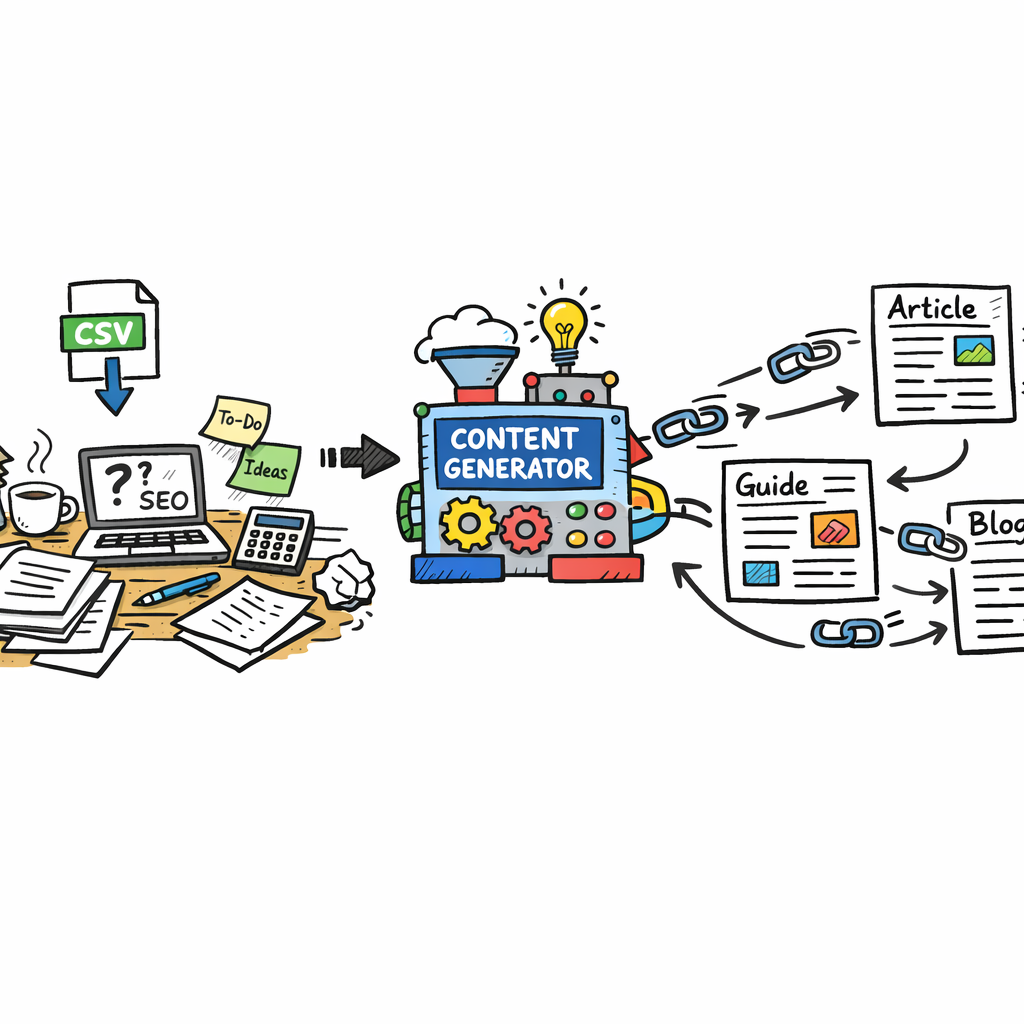
Our pick for teams that want an end-to-end flow is to pair Frase with RebelGrowth. Frase handles the research, templates, and optimization scaffolding; RebelGrowth automates the drafting in bulk and layers in a contextual backlink network to accelerate authority. That combo is a practical way to move from keyword ideas to published pages and measurable impact, faster than you thought possible. For more on Frase’s programmatic capabilities, check out Frase’s formal programmatic feature overview linked here: Frase – programmatic features, and explore the broader platform to see how it aligns with your existing tools: Frase platform.
Key tactics to implement now
Start with a pillar and spoke model. Use Frase to map topics to clusters, export briefs, and feed them into rebelgrowth’s automated writer. Layer in a backlink plan that targets contextually relevant sites, then monitor results in Google Search Console and adjust as needed.
Pro tip: keep your templates stable but let variables vary—city names, product variants, or industry niches. That keeps content fresh while preserving the structural SEO signals that help pages rank consistently.
So, what should you do next? Define 3 core templates that cover your top 3 content pillars, prepare a CSV with 50–100 variations, and run a 2-week batch to validate the workflow. You’ll be surprised how quickly you can scale while keeping quality intact.
5. ClearScope – Data‑Driven Content Optimization
Why semantic depth matters more than keyword volume
When you skim a list of keywords and think “more is better,” you might be missing the point. ClearScope flips the script by showing you the semantic variations Google actually expects for a topic. In other words, it helps you cover the whole idea, not just the headline phrase.
Think about a small e‑commerce brand selling reusable water bottles. Instead of stuffing “reusable water bottle” 20 times, ClearScope nudges you to add related concepts like “BPA‑free,” “eco‑friendly materials,” and “leak‑proof design.” That breadth signals to AI‑driven search that you’re an authority, and the tool grades your draft against the top‑ranking pages in real time.
How the content‑grading engine works
After you paste a draft, ClearScope scores it on a 0‑100 scale for relevance, depth, and readability. The score updates as you add missing LSI terms or restructure headings. The magic is that the grading model is built on the same data Google uses to rank pages, so a higher score usually translates to better rankings.
Pro tip: aim for the “green” zone (80‑100). If you hover around 70, glance at the sidebar – it will highlight the exact phrases you’re missing, like “how to clean a stainless steel bottle.” Slip those in, and you’ll see the score jump.
Real‑world example: a SaaS landing page
One of our clients, a mid‑size project‑management SaaS, used ClearScope to revamp a “best remote‑team tools” article. The original draft hit 55 on the grade and ranked on page 10. After adding the recommended sub‑topics – “integration with Slack,” “time‑tracking features,” and a quick FAQ – the grade rose to 88 and the page vaulted to position 3 within three weeks.
That jump also boosted organic conversions by roughly 18 %, simply because the page answered more of the questions Google’s AI was pulling into answer boxes.
Actionable checklist for ClearScope in a programmatic workflow
- Export your keyword clusters (e.g., “best {product} for {industry}”).
- Run each cluster through ClearScope’s Topic Explorer to see the top semantic signals.
- Build a master brief that includes every high‑score term as a placeholder in your CSV template.
- Generate the first draft with your content engine (RebelGrowth or another).
- Paste the draft into ClearScope, hit “Score,” and iteratively add any missing LSI phrases until you’re in the green zone.
- Export the final, optimized copy back into your publishing pipeline.
This loop ensures every programmatic page meets the same quality bar, even when you’re churning out hundreds at once.
Tracking success beyond the grade
ClearScope isn’t just a grading tool; it also offers “Tracked Topics.” Once you publish, the dashboard shows where your content appears in AI‑generated answers (think ChatGPT citations) and traditional SERPs. That data lets you spot high‑performing clusters and double‑down on them.
For example, after a quarter of using ClearScope, a boutique travel blog discovered that pages with a “local‑culture FAQ” section were getting cited in AI chat responses 2.3× more often than other pages. They added that FAQ block to every new destination page – a tiny tweak that multiplied traffic.
When to combine ClearScope with other programmatic tools
If you’re already using a bulk‑content generator, ClearScope becomes the quality‑control gate. The content engine handles speed, while ClearScope guarantees depth. In practice, you might run the generator first, then feed each batch into ClearScope for a quick 5‑minute audit before publishing.
And if you need a broader view of keyword opportunities, the Passionfruit roundup of programmatic SEO tools lists ClearScope alongside other heavy‑hitters, reminding you that the best stacks combine semantic insight with automation.Learn more about ClearScope’s AI‑first approachSee how e‑commerce brands scale with programmatic SEO
6. Bonus – Emerging Programmatic SEO Tools to Watch
Let’s talk about the tools quietly changing how teams scale programmatic SEO in 2026. These aren’t just shiny widgets; they’re real accelerators for content engines, data pipelines, and backlink networks. If you’re a digital marketing manager at a small to mid‑sized company, this is where momentum starts feeling possible.
Here’s a practical look at what’s emerging and how it can fit into your current programmatic workflow.
1. Our Pick – RebelGrowth (All‑In‑One Programmatic SEO Platform)
In our experience, RebelGrowth acts as the backbone for a bulk‑creation approach. Feed it a CSV of long‑tail terms, and the automated content engine writes 300–500 word drafts with unique intros, data tables, and FAQ blocks.
The built‑in backlink network saves outreach time by sprinkling contextual links into every new page. Keyword clustering and intent mapping help you build a true pillar‑and‑spoke architecture, so your site grows in a coherent, scalable way. And with scalable, zero‑code publishing, you can push hundreds of pages without pulling your hair out.
What this means for you: fewer firefights, more repeatable processes, and a clearer path to authority. If you’re juggling resources in a smaller team, this can feel like the difference between chaos and control.
2. Surfer SEO – Content Optimization & Automation
Surfer blends data‑driven keyword research with real‑time on‑page optimization and a quick publish flow. Start with a tight keyword cluster, then let the tool shape the draft to cover related terms, FAQs, and schema markup.
Think of it as a quality guardrail that still lets you keep a human voice. It’s especially useful for content creators and e‑commerce teams who need speed without sacrificing structure.
3. MarketMuse – AI‑Powered Topic Modeling
MarketMuse builds a semantic map of your niche, highlighting gaps and suggesting pillar ideas that tie dozens of variations into a coherent hub. Those insights help you prioritize high‑impact topics that compound as you publish more pages.
This isn’t about chasing every trend; it’s about surfacing the topics Google actually rewards and filling them with solid, scalable content blocks.
4. Frase – AI Content Research & Generation
Frase helps you map topics to templates, generate briefs, and push hundreds of pages with consistent structure. Pair it with RebelGrowth to automate drafting in bulk, then layer in backlinks to accelerate authority lift.
The real win is keeping briefs stable while variables—cities, product specs, or niches—rotate fluidly, so you maintain quality at scale.
5. ClearScope – Data‑Driven Content Optimization
ClearScope nudges you toward semantic depth by scoring drafts for relevance, depth, and readability. It flags missing LSIs and suggests concrete additions, making it a strong gatekeeper before you publish in bulk.
Use it to ensure that your pages aren’t just keyword dense, but conceptually rich and well aligned with top‑ranking competitors.
6. A quick ecosystem note
These tools shine when used in concert. Map topics, generate drafts, optimize semantically, and sprinkle in backlinks. The payoff isn’t a miracle; it’s a repeatable machine‑like process that scales without losing human value.
For a broader context on how 2026 programmatic SEO is evolving, Jasmine Directory’s guide offers helpful background on the infrastructure you’ll want to support this growth. Jasmine Directory's 2026 programmatic SEO guide.
Conclusion
So, you've seen how Rebelgrowth, Surfer, MarketMuse, Frase, and ClearScope can turn a messy spreadsheet into a traffic‑driving machine. The big picture? When you stitch together keyword clustering, AI‑drafting, semantic polishing, and automatic backlinks, you get a self‑reinforcing loop that keeps Google happy.
But the journey doesn't stop at the tools. You need a clear publishing cadence, a quality‑control checkpoint, and a way to monitor authority flow. In practice, a digital‑marketing manager might start with a 50‑page pilot, run each draft through ClearScope, then let Rebelgrowth sprinkle contextual links before hitting publish.
What’s the next actionable step? Grab your seed list, feed it into the template generator, and set a timer for a quick 15‑minute review. If the ClearScope grade lands in the green zone (80+), schedule the batch in your CMS and watch the internal‑link matrix fill itself.
Still wondering how to keep the infrastructure robust as you scale to thousands of URLs? Think about API‑driven workflows—your content engine can call an endpoint to fetch fresh data, and a reliable API management layer like Launchpad by Centauri Systems ensures the pipeline stays fast and secure.
Finally, keep learning. Our deeper dive on tool selection walks you through the decision matrix, so you can pick the right stack for your team. Check out the guide Top Programmatic SEO Tools Every Marketer Should Know for a quick refresher and next‑level tips.
Ready to fire up your programmatic SEO engine? Start a small batch today and let the data tell you what to scale.
FAQ
What are programmatic SEO tools and why should I care?
Programmatic SEO tools are software platforms that automate the research, creation, and publishing of large numbers of SEO‑focused pages. Instead of writing each article by hand, they let you feed a spreadsheet of keywords, generate unique drafts, and spin out the whole lot in minutes. For digital‑marketing managers juggling dozens of product lines, this means you can capture long‑tail traffic without drowning in manual work, while still keeping each page relevant and indexable.
How do programmatic SEO tools handle keyword clustering?
Most tools start by analyzing your seed list and grouping terms by search intent and semantic similarity. The result is a set of clusters—think “eco‑friendly kitchenware” or “remote‑team collaboration apps”—that become the backbone of a pillar‑and‑spoke architecture. By targeting a tight cluster, you avoid orphan pages and give Google a clear topical signal, which is especially useful for e‑commerce owners looking to dominate niche queries.
Can I trust the quality of automatically generated content?
Quality isn’t a black‑box; it’s a checkpoint you set yourself. After the engine spits out a draft, run it through a semantic grader (like ClearScope) or a readability checker, then tweak the few sentences that feel flat. In our experience, a quick 5‑minute audit lifts the draft into the green zone (80+ score) and ensures the copy reads like a real person rather than a robot.
What role do backlinks play in a programmatic SEO workflow?
Backlinks are the connective tissue that turns isolated pages into a cohesive authority network. Some platforms, including rebelgrowth, embed contextual backlinks automatically as each page goes live, pointing back to your main pillars and related articles. This internal linking boost helps search engines crawl efficiently and passes link equity across the farm, so even a brand new page can inherit some of the authority of its older siblings.
How do I scale the publishing process without breaking my CMS?
Zero‑code integrations are the secret sauce. Most tools expose an API key that talks directly to WordPress, Webflow, Shopify, or headless CMSes. You schedule a batch—say 1,000 URLs—and the system handles the upload, slug creation, and meta‑tag insertion for you. A simple webhook can even trigger a post‑publish audit, so you never have to manually click “publish” on every single page.
Is programmatic SEO suitable for small businesses or only large enterprises?
Absolutely suitable for small and mid‑sized teams. The beauty of a spreadsheet‑driven workflow is that you can start with a modest pilot—maybe 50 product‑comparison pages—and watch the traffic lift before committing more resources. The same process scales up to thousands of URLs, but you only need the core pieces: a clean CSV, a template, and a quick quality‑check loop.
What metrics should I track to know my programmatic SEO effort is paying off?
Start with impressions and clicks in Google Search Console for each folder or URL pattern. Then layer in bounce rate, average time on page, and conversion metrics (like newsletter sign‑ups or product adds). A sudden spike in “zero‑impression” pages signals a need for deeper content or better internal linking. Finally, watch domain authority or backlink count—those numbers usually climb as your internal link matrix fills out.