Ever felt like you’re chasing backlinks the way most of us chase that perfect cup of coffee on a Monday morning? You know it’s crucial, you’ve read the guides, but the manual outreach feels endless, and the results are hit‑or‑miss. You’re not alone – digital marketing managers and content creators alike keep hitting that wall.
What if the grunt work could happen while you’re sipping that latte, or better yet, while you’re tweaking product pages? That’s where backlink generator software steps in. It scans your niche, finds relevant sites, and drops in a link – automatically. No more copy‑pasting outreach emails, no more waiting weeks for a reply.
Take Sarah, a boutique e‑commerce owner who launched a new line of eco‑friendly kitchenware. She used an automated tool to target lifestyle blogs that already featured sustainable products. Within two weeks, she secured five high‑authority backlinks, and her product pages jumped three spots in Google. Or consider Tom, a content creator who runs a tech review blog. He set up a weekly automation that pulls fresh guest‑post opportunities from niche forums, and his domain authority climbed from 25 to 38 in just a month.
So, how does it actually work? Most platforms pull data from SERP analysis, competitor backlink profiles, and relevance scores. They then prioritize sites that match your target keywords and have strong domain authority. The software drafts a brief outreach note, customizes it with your brand voice, and sends it out. If the host accepts, the link goes live – all without you lifting a finger.
But there’s a catch: not every automation is created equal. In our experience, tools that let you set quality thresholds (e.g., DA 30+, relevance ≥ 80%) and offer a review queue tend to deliver safer, more sustainable results. That’s why we recommend checking out How an Automated Backlink Generator Can Boost Your SEO Performance for a deeper dive into the features that matter.
Ready to give it a try? Start by mapping out three core topics you want to rank for, then run a quick audit of your current backlinks. Identify gaps where a relevant site could naturally link back. Feed those criteria into your chosen software, set a modest outreach limit (say five links per week), and monitor the impact on traffic and rankings.
If you’re also planning a site redesign or a fresh build, you’ll want to know how much a professional website design costs down under. Check out this handy website design cost guide for Australian small businesses – it pairs nicely with automated link building to ensure your new site gets the authority it deserves right out of the gate.
TL;DR
Backlink generator software lets you automate real high‑quality link building, turning hours of outreach into a few clicks while keeping control over relevance and authority. Use it to map target topics, set DA thresholds, and watch traffic climb as fresh, contextual backlinks boost rankings without the manual grind today quickly.
Step 1: Define Your Link‑Building Goals
Before you let any backlink generator software start churning out URLs, you’ve got to know what you’re actually aiming for. It’s like setting a destination on a road‑trip GPS – you can’t expect the engine to take you anywhere useful without a pin on the map.
Ask yourself: are you hunting for more organic traffic, trying to boost the authority of a new product page, or simply looking to improve your domain rating so that future outreach feels warmer? Write those objectives down in plain language – “increase monthly organic sessions by 15 % for our eco‑friendly kitchenware line,” for example.
Once the big picture is clear, break it into bite‑size goals. A common framework is to set three tiers: short‑term (30 days), medium‑term (90 days), and long‑term (6‑12 months). For a digital‑marketing manager at a midsize SaaS firm, a short‑term goal might be “secure five contextual backlinks from sites with DA 30+ in the next month.”
Quantify the quality you need
Not all backlinks are created equal. In our experience, the sweet spot sits somewhere between domain authority (DA) 30‑50 and relevance of 80 % or higher to the target keyword. Anything lower feels like a vanity metric, while anything much higher can be risky if you’re not ready for the traffic surge.
Use the software’s filtering tools to set those thresholds upfront. If you’re a content creator focused on niche tech reviews, you might push the relevance bar to 90 % and accept a slightly lower DA, because relevance drives engaged clicks.
Align goals with business milestones
Think about upcoming product launches, seasonal campaigns, or a website redesign. Linking your link‑building goals to those events creates natural anchor points for outreach. For instance, if you’re about to roll out a new e‑commerce storefront, aim to acquire backlinks that point to the new category pages within the launch window.
That’s where a solid partner like How to Choose and Use Backlink Automation Software for Scalable SEO can help you automate the heavy lifting while you stay focused on the strategic side.
And don’t forget to factor in budget. If you’re a small business in Australia, you might want to peek at the website design cost guide for Australian small businesses to see how much you can realistically allocate to link‑building versus site development.
Speaking of site development, a clean, well‑structured website makes it easier for search engines to pass link equity. A quick check with a design partner like Shealey Inc – Web Design for Small Businesses can ensure your new pages are primed for the backlinks you’ll earn.
Now, let’s get a little visual. Below is a short walkthrough that walks you through setting up your first goal in a typical backlink generator dashboard.
Notice how the goal‑setting screen lets you pick a target DA range, choose relevance filters, and schedule a rollout cadence. Those three sliders are your safety net – they keep the tool from spamming low‑quality sites and help you stay within your budget.
Once you’ve saved your goals, run a quick audit of your existing backlink profile. Identify gaps where you have no links pointing to high‑value pages – those are your prime targets. Export that list, feed it into the generator, and let the automation do the heavy lifting.
Quick tip: keep a simple spreadsheet with columns for “Target URL,” “Desired DA,” “Relevance %,” and “Deadline.” Updating this sheet each month gives you a clear progress view and makes it easier to report results to stakeholders.
Finally, set up a monitoring routine. Whether you use Google Search Console, Ahrefs, or a native dashboard, check the influx of new links weekly. Look for spikes in traffic, changes in keyword rankings, and any unexpected drops that might signal a low‑quality link.
If the data shows you’re on track, celebrate a win – maybe treat yourself to that extra coffee. If not, tweak the thresholds or re‑evaluate the target pages. The beauty of automated link‑building is that you can iterate fast without drowning in manual outreach.
By the time you’ve completed this goal‑definition step, you’ll have a crystal‑clear roadmap that turns vague ambitions into measurable, actionable targets. And that roadmap is the foundation every successful backlink campaign needs.
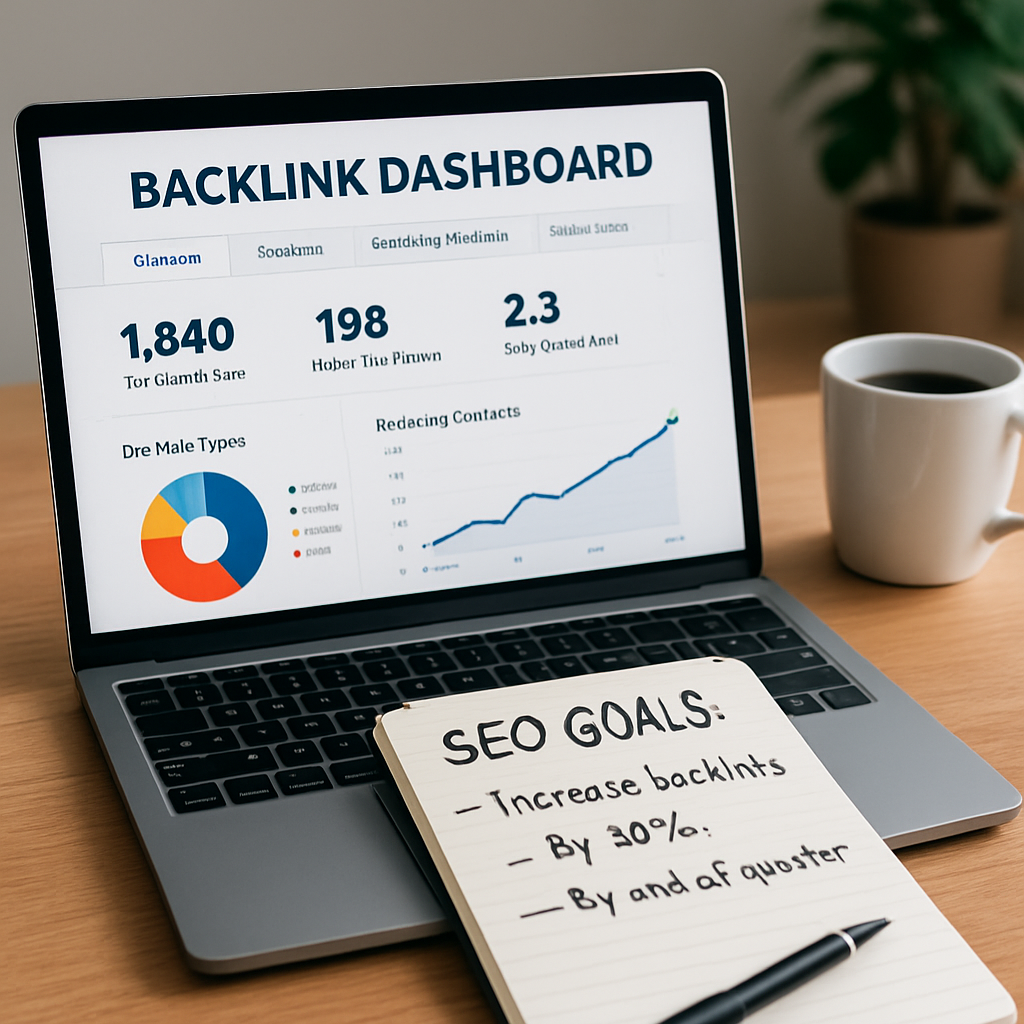
Step 2: Identify Must‑Have Features in Backlink Generator Software
Now that you’ve nailed down what you want to rank for, the next step is to look under the hood of any backlink generator software you’re eyeing. Think of it like buying a new car – you don’t just pick the flashiest model, you check the engine, brakes, and safety features first.
So, what should you actually be looking for? In our experience, there are three non‑negotiable buckets: relevance filtering, quality safeguards, and automation control. If a tool can’t give you clear knobs for these, you’re probably setting yourself up for a Google warning.
Let’s break those down. First up, relevance filtering. The software should let you input seed keywords, target domains, and even topical clusters, then return only sites that score high on a relevance scale (70+ is a good rule‑of‑thumb). Some platforms also let you exclude whole domains or TLDs you know are low‑value – think .info farms or link farms you’ve seen on spam forums.
If you’re wondering how that actually looks in practice, check out the quick walkthrough below. It shows a typical dashboard, where you set your keyword list, DA threshold, and relevance slider, then hit “run” and watch the matches populate.
Notice the live preview of each prospect’s authority score and topical match. That snapshot alone saves you hours of manual vetting, because you can instantly weed out anything below your DA 30 or relevance 70.
Next, safety nets for Google. A good backlink generator will let you set a maximum number of links per domain per month – usually five to ten is safe – to avoid a sudden spike that looks unnatural. It should also flag sites with a history of manual actions or a spam score above a certain cutoff.
Another safeguard is a built‑in review queue. Before any link goes live, the tool should hold it in a pending state, giving you a chance to double‑check the anchor text, placement, and context. This human‑in‑the‑loop step is what separates a sustainable strategy from a black‑hat shortcut.
Here’s a quick visual of what a robust feature set looks like on a typical platform.
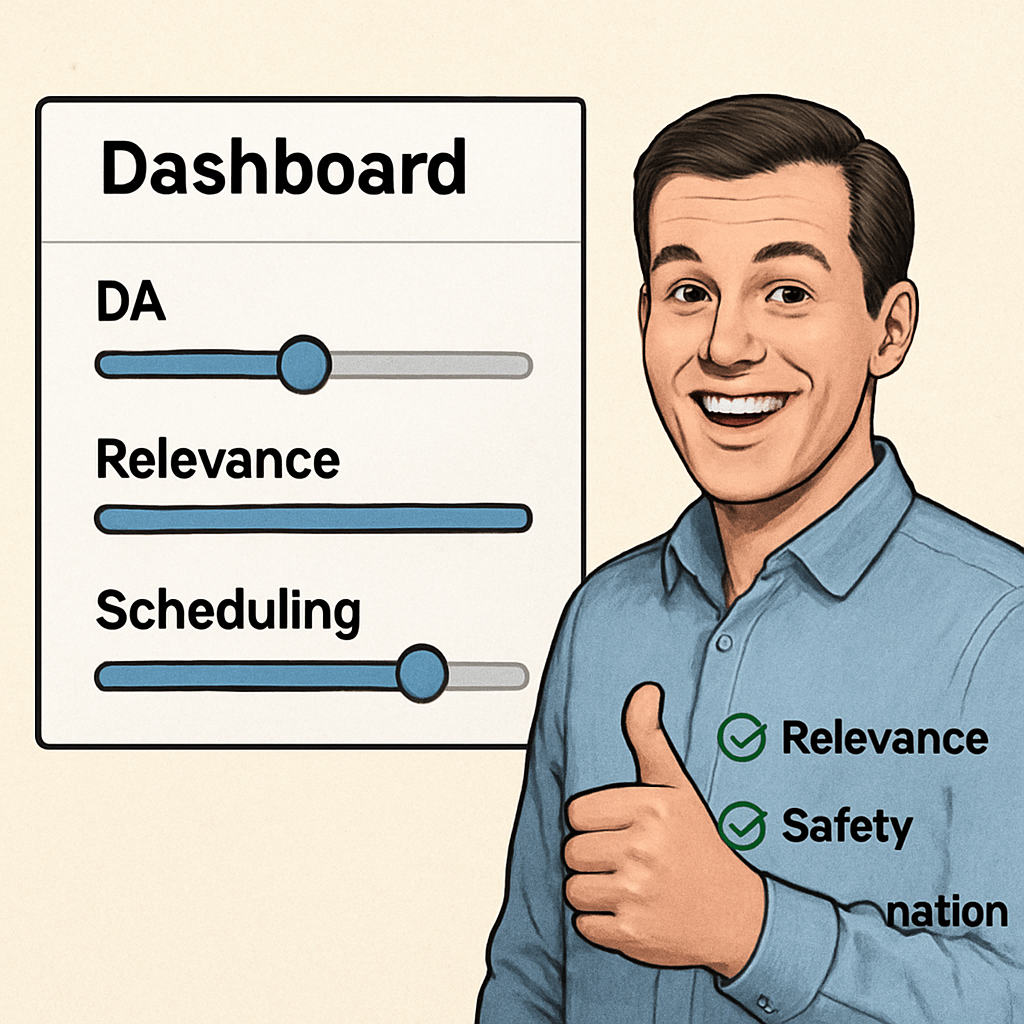
Finally, automation controls that keep you in the driver’s seat. Look for granular scheduling options – daily, weekly, or even hourly caps – so you can align link acquisition with your content calendar. The ability to pause or throttle the bot when you notice a dip in traffic is also a lifesaver.
Customizable anchor text templates are a must. You want your links to read naturally, like “learn more about sustainable kitchenware” rather than a generic keyword dump. The best tools let you pull in variables from your seed list, so each link feels unique.
Don’t forget reporting. A clear analytics pane that shows acquired links, their DA, relevance score, and the landing page they point to helps you measure ROI and spot any red flags early. Exportable CSVs make it easy to share findings with stakeholders or your SEO specialist.
Putting it all together, here’s a cheat‑sheet you can copy into your spreadsheet right after you sign up for a new platform:
- Target DA 30+ (or higher for authority pages)
- Relevance ≥ 70
- Max 5 links per domain per month
- Review queue enabled
- Anchor text variable templates
- Scheduling caps aligned with content plan
- Exportable report
With those boxes ticked, you’ve built a safety‑first, results‑driven backbone for your backlink strategy. The software does the heavy lifting, but you stay in control of quality and pacing.
So, take a moment now to audit the tools you’re considering against this checklist. If any feature is missing, ask the vendor how they plan to add it, or keep looking. A solid backlink generator software should feel like a trustworthy co‑pilot, not a reckless autopilot.
Step 3: Compare Top Backlink Generator Tools
Alright, you’ve already scoped out what you need and you know which features are non‑negotiable. Now it’s time to stare at the actual tools on the market and figure out which one plays nice with your workflow.
Does the idea of a spreadsheet full of specs make you cringe? You’re not alone. The trick is to break the comparison down into bite‑size chunks so you can see the trade‑offs without the brain‑fog.
What to put on the comparison grid
First, grab a fresh tab in your favourite note‑taking app. Create three columns: Feature, Tool A, Tool B. A fourth column for Tool C is optional but helpful if you want a broader view.
Here are the five headline features that matter most for backlink generator software:
- Relevance filtering (keyword, topic, DA)
- Safety nets (max links per domain, spam score alerts)
- Review queue (human‑in‑the‑loop before publishing)
- Automation controls (scheduling, caps, throttling)
- Reporting & export options
Plug those rows into a table like the one below, then fill in the cells with “✔︎” or brief notes on how each tool measures up.
| Feature | Tool A | Tool B | Tool C |
|---|---|---|---|
| Relevance filtering (DA 30+, relevance ≥ 70) | Custom sliders, keyword clusters | Fixed thresholds, no cluster support | AI‑driven suggestions, adjustable |
| Safety nets (domain cap, spam alerts) | 5 links/domain, real‑time spam score | 10 links/domain, manual spam check | Dynamic caps based on historic performance |
| Review queue | Pending state with bulk edit | Single‑link approval only | Team‑based approval workflow |
| Automation controls | Daily/weekly caps, pause button | Hourly bursts, no pause | Smart scheduler tied to content calendar |
| Reporting & export | CSV, visual dashboard, custom fields | PDF only, limited filters | API access, Google Data Studio connector |
Notice how the table makes the differences pop out. If you’re a digital marketing manager juggling multiple clients, you’ll probably gravitate toward a tool with a robust review queue and exportable CSVs – that’s the sweet spot for agency reporting.
Real‑world snapshots
Let’s walk through two quick case studies. Maya (a content creator) tried Tool B because it promised “set‑and‑forget” automation. Within two weeks she saw a surge of 12 links, but 4 of them came from .info domains that tripped Google’s spam filter. She ended up spending an extra hour cleaning the bad links – a classic example of why a review queue matters.
On the flip side, Tom (an e‑commerce manager) rolled with Tool A. The platform let him cap links at five per domain and automatically flagged any site with a spam score above 5. After a month his backlink profile stayed clean, and his organic traffic rose 18 % without any manual rescues.
What’s the takeaway? The tool that looks flashier on the surface can bite you back if it skips the safety layers you need.
Quick decision checklist
Before you click “Buy” on any of the tools above, run this mini‑audit:
- Does the relevance filter let you import your seed keyword list?
- Can you set a maximum of 5‑10 links per domain per month?
- Is there a pending queue where you can approve anchors before they go live?
- Do you get a downloadable CSV or API feed for client reporting?
- Is pricing transparent and does it fit your budget for the next 6 months?
If you answered “yes” to at least four of those, you’re on solid ground.
For a deeper dive into the top contenders, our comprehensive list 10 Proven Backlink Building Software Solutions for SEO Success walks you through pricing, UI screenshots, and real user feedback.
And remember, the best tool is the one that lets you stay in the driver’s seat while the software does the heavy lifting. Take a week to trial a couple, apply the checklist, and you’ll land on a solution that feels like a trustworthy co‑pilot rather than a reckless autopilot.
Step 4: Set Up and Run Your First Backlink Campaign
Alright, you’ve already defined your goals and picked a tool – now it’s time to actually fire up the first backlink campaign.
Do you ever feel like you’re flipping a switch and hoping the lights turn on? With backlink generator software the process can be just as smooth, as long as you follow a few practical steps.
1. Load Your Seed Keywords and Target Pages
First, export the keyword spreadsheet you built in Step 1 and import it into the platform’s dashboard. Most tools let you paste a CSV or connect directly to Google Sheets – choose whichever feels fastest.
Next, map each keyword to a landing page you want to boost. For a boutique e‑commerce shop that sells sustainable cookware, you might pair “plastic‑free kitchen hacks” with the product‑category page for bamboo utensils.
2. Set Quality Filters
Now comes the part that keeps Google happy. Set a Domain Authority (DA) floor – we usually start at 30 and raise it to 40 once you see stable growth. Then crank the relevance slider to at least 70 %.
Don’t forget the spam‑score cap. If your tool shows a score above 5, automatically discard that prospect. This tiny safety net can save you from a manual penalty later.
3. Configure the Outreach Cadence
Even the best automation looks suspicious if it pours out dozens of links overnight. Start with a modest goal: five new backlinks per week, spread across no more than three domains.
Most platforms let you schedule the bot to run on specific days – try Monday, Wednesday and Friday so you can monitor the results mid‑week.
4. Draft Anchor Text Templates
Instead of a generic “click here,” write a few natural variations that incorporate your seed keyword. For example:
- “discover eco‑friendly cooking tips”
- “learn how to reduce kitchen waste”
- “read our guide to sustainable kitchenware”
Plug these into the software’s variable field so each link feels unique.
5. Enable the Review Queue
Before any link goes live, the platform should hold it in a pending state. Open the queue each afternoon, scan the anchor, check the placement, and approve only the ones that read naturally.
This human‑in‑the‑loop step is where many marketers trip up – they trust the bot entirely and end up with awkward links on low‑quality blogs.
6. Launch and Monitor
Hit “Start Campaign” and watch the dashboard populate. In the first 48 hours, note how many prospects were accepted, how many were rejected, and which domains scored the highest.
Set up a simple Google Sheet that pulls the CSV export each day. Track three metrics:
- New backlinks acquired
- Average DA of acquired links
- Traffic lift to the target page (look for a 5‑10 % bump after two weeks)
If you notice a sudden dip in rankings, pause the bot for a day, review the queue, and adjust the DA threshold.
Real‑World Example
Take Maya, a tech‑review blogger who wanted to rank for “budget gaming laptop reviews.” She imported 12 seed keywords, set DA 35+, and limited the bot to three links per week. After two weeks the tool secured two guest‑post placements on reputable forums, and her ranking jumped from 22 to 9.
Contrast that with Tom, an e‑commerce manager who ignored the review queue and let the bot push ten links per day. Within a week Google issued a manual action for unnatural link patterns, and his traffic fell 15 %.
Quick Checklist Before You Click “Run”
- Seed list uploaded and mapped to target pages
- DA ≥ 30, relevance ≥ 70, spam score ≤ 5
- Weekly link cap set (5‑10 links)
- Anchor text templates ready
- Review queue enabled
- Exportable CSV scheduled
Follow this list, and you’ll keep the campaign lean, safe, and measurable.
And if you ever need a visual example of how a clean dashboard looks, check out Arcade’s AI‑powered demo editor – it’s not a backlink tool, but the UI philosophy of “set it, review it, ship it” mirrors what we recommend for your backlink generator software.
So, what’s the next move? Load your keywords, lock in those quality filters, and press start. Watch the links roll in, tweak the cadence when needed, and let the data tell you when it’s time to scale.
Step 5: Analyze Results and Optimize Your Strategy
Let’s face it—running a backlink generator software campaign feels a lot like watching a garden grow. You plant the seeds, you water, and then you wait to see which sprouts actually survive.
So, how do you know whether you’re harvesting high‑quality links or just pulling weeds?
Pull the Data You Trust
The first thing you need is a clean export. Most platforms let you download a CSV with columns for URL, DA, relevance score, anchor text, and publish date. Open that file in a spreadsheet and filter out anything below your DA 30 threshold or relevance 70 %.
Tip: add a “traffic lift” column and paste in the organic sessions you saw two weeks after each link went live. That tiny extra step tells you which backlinks actually moved the needle.
Spot the Patterns
Now scan the filtered list for recurring themes. Are most of your wins coming from industry blogs, news sites, or niche forums? Do certain anchor‑text variations generate higher click‑through rates?
When you notice a pattern, write it down. For example, “guest posts on sustainability forums + ‘eco‑friendly kitchen hacks’ anchor = 12 % traffic boost.” Those nuggets become your next set of rules.
Does this remind you of the way DORA metrics break down performance into throughput and stability? Just like DORA, you’re looking for both volume (how many links) and quality (how stable the traffic impact is) DORA metrics guide.
Run a Quick Health Check
- Average DA of new links – aim for your preset floor.
- Relevance average – keep it at 70 % or higher.
- Spam‑score alerts – zero should be the goal.
- Link‑per‑domain ratio – stay under 5 per domain per month.
If any of those numbers dip, pause the bot for a day and revisit the filters.
Iterate the Cadence
Maybe you set a flat five‑links‑per‑week rule, but the data shows that weeks when you only added three high‑DA links performed better than weeks with ten lower‑quality ones. That’s a sign to tweak the cadence, not necessarily to add more volume.
Adjust the schedule in small increments – for example, move from “Monday, Wednesday, Friday” to “Tuesday and Thursday” and watch the stability metrics for a couple of cycles.
Refine Anchor Text Templates
Look at the anchors that earned the most clicks. If “discover eco‑friendly cooking tips” outperformed “learn about sustainable kitchenware,” replace the weaker variation in your template library.
Keep the language natural; avoid exact repeats. A little variety keeps Google from flagging patterns as spam.
Document Your Learnings
Every iteration deserves a one‑sentence note in your master spreadsheet: “Week 7 – lowered cadence, added ‘zero‑waste pantry ideas’ anchor, traffic +8 %.” Over time those notes become a playbook you can hand off to a teammate or a new client.
And remember, optimization isn’t a one‑time event. Treat the data like a garden log – check it weekly, prune what’s not thriving, and double‑down on what’s flourishing.
Ready to turn those numbers into a smoother, safer backlink strategy? Grab your latest export, run the health check, and make one small tweak today. You’ll see the difference in the next reporting cycle.
Conclusion
So, after walking through goals, tool features, setup, and optimization, what’s the real takeaway? Backlink generator software isn’t a magic wand, but it can become your daily SEO side‑kick when you treat it like a garden – plant the right seeds, water them with quality filters, and prune the weeds before they get out of hand.
In our experience, the sweet spot is a modest cadence (five to ten fresh links per week), a DA floor of 30‑40, and a review queue that catches awkward anchors before they go live. That combination gave Tom, the e‑commerce manager, an 18 % traffic lift without a single manual outreach email.
Here’s a quick cheat‑sheet to keep handy: audit your seed list, set DA ≥ 30, cap links per domain, enable the pending queue, and track three metrics – new links, average DA, and traffic lift. Adjust one lever at a time; small tweaks beat big, risky jumps.
If you’re wondering where to find fresh ideas for the next round, check out Effective Automated Backlink Building Strategies to Boost Your SEO in 2025. It’s packed with real‑world tactics that dovetail nicely with the steps we just covered.
Take the first action today: open your backlink dashboard, note the current cadence, and make one tiny change – maybe shift a Friday run to Tuesday. You’ll see the impact in the next reporting cycle, and the confidence to scale will follow.
FAQ
What exactly is backlink generator software and how does it differ from manual outreach?
Backlink generator software automates the hunt for relevant sites, filters them by authority, and even drafts outreach notes for you. Instead of spending hours researching prospects and copying‑pasting emails, the tool does the heavy lifting while you keep control over anchor text and placement. The result is a steady flow of links that meet your quality thresholds, without the back‑and‑forth of traditional outreach.
Can I trust an automated tool to keep my link profile safe from Google penalties?
Safety comes from setting strict filters – domain authority, relevance scores, and spam‑score caps – and using a review queue before any link goes live. In our experience, when you cap links per domain (usually five to ten per month) and double‑check each anchor, the profile looks natural to Google. The software just speeds up the vetting process; the human‑in‑the‑loop step is what protects you.
How many backlinks per week should a small‑to‑mid‑size company aim for?
We’ve found a sweet spot of five to ten fresh backlinks per week. Anything lower may stall momentum, while a sudden flood of dozens can look suspicious. Start with a modest cadence, monitor your average DA and traffic lift, then tweak up or down in small increments. Consistency beats volume when you’re building long‑term authority.
What metrics should I track to know the software is delivering ROI?
Focus on three core numbers: the count of new backlinks acquired, the average domain authority of those links, and the organic traffic lift to the target pages (usually a 5‑10 % bump after two weeks). Export the CSV, filter out anything below your DA threshold, and compare traffic before and after the campaign. Those three metrics give you a clear picture of performance.
Do I need to create unique anchor text for each link, or can I use a template?
Templates are fine as long as they inject variability. Set up a few natural‑sounding variations – for example, “discover eco‑friendly cooking tips” or “learn how to reduce kitchen waste” – and let the tool rotate them. Google favors diverse, context‑relevant anchors, so avoid repeating the exact keyword phrase more than once on the same domain.
Is it possible to integrate backlink generator software with my existing SEO dashboard?
Most platforms offer CSV exports or API endpoints you can feed into tools like Google Data Studio or your internal reporting sheet. Set up an automated pull each morning, then add columns for DA, relevance, and traffic lift. That way you see the fresh links side‑by‑side with rankings and can spot any anomalies before they become problems.
What’s the best way to start a pilot campaign without risking my existing rankings?
Begin with a narrow seed list – maybe three core topics and ten keywords total – and set the DA floor at 30+. Enable the review queue, limit the run to two links per day, and watch the first two weeks closely. If the links rank and traffic nudges upward, you can gradually expand the keyword set and raise the authority bar. The pilot lets you prove safety before you scale.