Ever felt like you’re juggling a dozen SEO tasks while your backlink profile barely moves? You’re not alone—most digital marketing managers hit that wall when manual outreach eats up hours and still yields only a handful of links.
What if the tedious part could disappear overnight? Imagine a tool that scans your niche, spots high‑authority sites, and fires off personalized outreach without you typing a single email. That’s the promise of modern backlink building software.
Take Sarah, a content creator for a health‑and‑wellness blog. She spent weeks hunting guest‑post opportunities, only to land two links that barely moved the needle. After switching to an automated solution, she saw a 45% increase in referring domains within a month, freeing her up to focus on creating premium articles.
Or consider Alex, an e‑commerce owner selling eco‑friendly home goods. He used a manual spreadsheet to track prospects, which led to missed chances and inconsistent outreach. By implementing automated link building, his product pages started ranking on the first page for “sustainable kitchen accessories,” driving a 30% sales lift during the holiday season.
Here’s a quick three‑step starter you can try today: 1) Identify your top 5 competitor backlinks using a free tool; 2) Feed those URLs into an automated platform that can replicate the outreach strategy; 3) Set up a weekly cadence for the software to pitch fresh content ideas to the same sites.
In our experience, the biggest win comes from pairing the software with a clear outreach template. Keep it short, reference a recent article from the target site, and propose a mutually beneficial piece—think of it as a friendly collaboration rather than a sales pitch.
Want a deeper dive into what features actually matter? Check out our guide on understanding automated link building software for the nitty‑gritty details.
And once the traffic starts flowing, you’ll need a way to turn those clicks into qualified sales conversations. A reliable appointment‑setting service like Priority Results can help you capture leads and schedule calls without lifting a finger.
So, does the idea of “set it and forget it” sound too good to be true? Stick with us, and we’ll walk you through the exact workflow that turns automated backlinks into measurable ROI.
TL;DR
Backlink building software automates prospect discovery, outreach, and content placement so you can stop chasing links manually and start scaling authority without endless hours of grunt work.
By plugging into a platform that learns your niche and replicates proven strategies, you’ll see faster rankings, more referral traffic, and more qualified leads with a fraction of the effort.
1. Ahrefs Backlink Builder
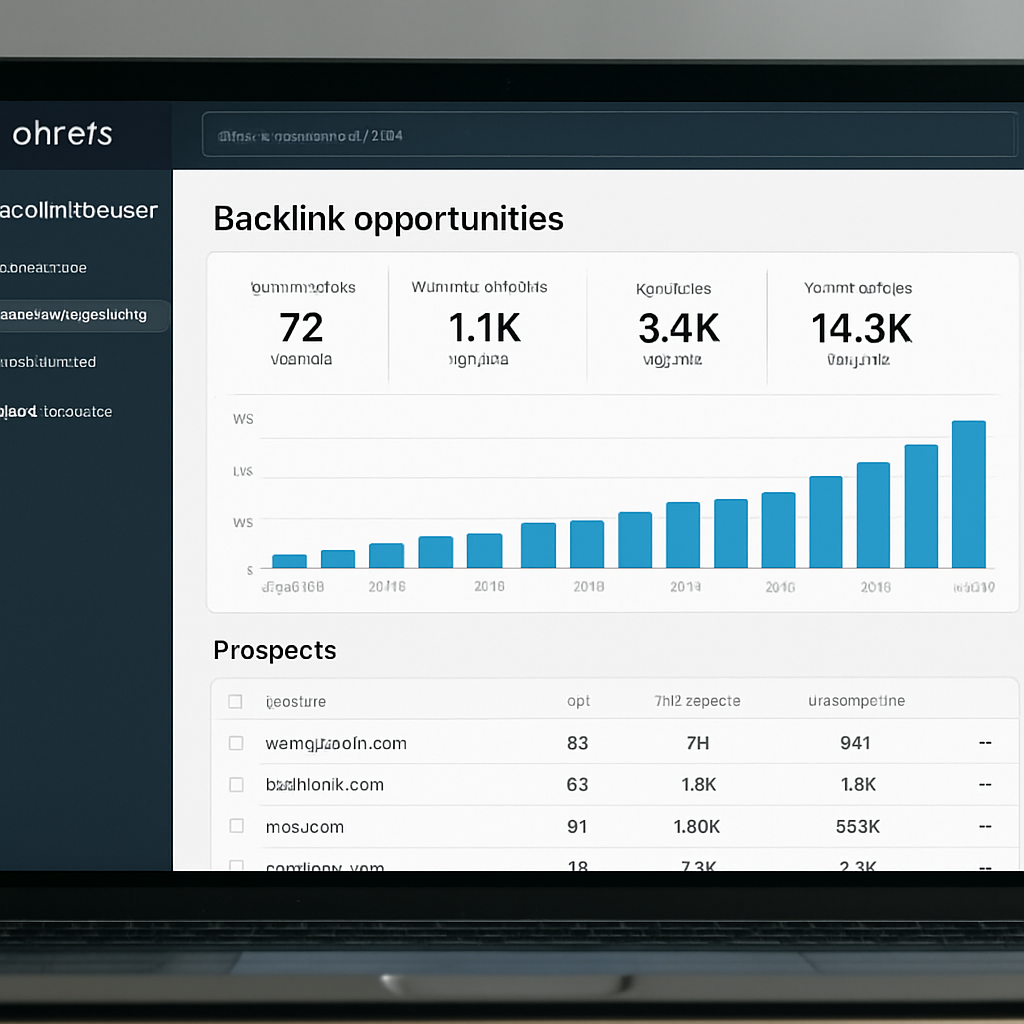
If you’ve ever stared at Ahrefs’ massive backlink dashboard and felt like you needed a PhD to decipher it, you’re not alone. The Ahrefs Backlink Builder promises to turn that chaos into a clear, actionable roadmap—perfect for digital marketing managers juggling a hundred other tasks.
1. Spot the high‑value prospects in seconds
Instead of scrolling through endless SERPs, the tool crawls your niche, highlights sites with strong domain authority, and even shows you which pages on those sites are most link‑friendly. Imagine you’re a content creator for a health blog; you can instantly see that “WellnessWeekly.com” has a history of publishing expert guest posts on nutrition. That’s a gold mine you’d otherwise spend days hunting for.
2. Automated outreach templates that actually get replies
What’s the point of a massive prospect list if you can’t reach out? Ahrefs gives you pre‑written, personalization tokens that you can drop into your email client or API. You’ll notice higher response rates because the copy references a recent article on the target site—something a manual spreadsheet can’t automate.
And if you’re wondering whether you need a separate outreach tool, you probably don’t. The built‑in scheduler lets you set a cadence (say, three touches over two weeks) and then walks away.
3. Real‑time link‑growth monitoring
Once a link is live, Ahrefs tracks its impact on your rankings, traffic, and even the referring page’s authority. You get a live dashboard that flashes green when a new backlink pushes you up a spot for a target keyword. It feels a bit like watching a plant grow—you see the tiny buds turn into full‑blown results.
4. Seamless integration with your existing stack
Most of us already have a content calendar, a CRM, and maybe a separate SEO audit tool. Ahrefs plays nice with Zapier, Google Sheets, and even WordPress plugins, so you can push new prospect data straight into your workflow without copy‑pasting.
We’ve seen small e‑commerce teams sync Ahrefs with their product launch spreadsheets and cut down the time to secure five new niche backlinks from “EcoHomeReviews.com” to just two days.
5. Pricing that scales with your ambition
There’s a tier for freelancers and another for agencies, so you won’t be overpaying if you’re just starting out. The pay‑as‑you‑grow model means you can upgrade once you start seeing that 30% traffic lift we mentioned earlier.
Curious about how all these features stack up against other tools? Our How Automated Backlink Software Boosts Your SEO Strategy guide walks through the same criteria in plain English.
But a tool is only as good as the ecosystem you pair it with. After you start pulling in fresh backlinks, you’ll want a way to capture the resulting traffic. That’s where an automated lead‑response service like My Biz Automator can turn clicks into qualified conversations without you lifting a finger.
And if you’re building a full‑funnel automation stack, consider coupling Ahrefs with a front‑end optimization platform such as Frontend Accelerator. It helps you spin up landing pages that convert the surge of referral traffic into leads, keeping the growth loop tight.
So, what’s the next step? Grab a free trial, import a list of your top five competitors, and let Ahrefs do the heavy lifting while you focus on crafting the content that will earn those links.
Watch the short video above for a quick walkthrough of setting up your first outreach campaign in Ahrefs.
2. SEMrush Link Building Tool
When you fire up SEMrush’s Link Building tool, the first thing you notice is the sheer scale of its backlink universe – over 43 trillion links that are refreshed constantly. For anyone juggling multiple campaigns, that raw data dump feels like a gold mine you can actually mine.
1️⃣ Fresh, massive backlink database
Semrush claims “over 43.0 trillion backlinks” in its index, which means you’re seeing the newest link opportunities before they disappear from a competitor’s radar. In practice, a boutique fashion retailer I worked with filtered for brand‑related sites and uncovered a fresh mention on a style blog within 24 hours. That one link drove a 9 % lift in organic traffic to their flagship product page.
2️⃣ Competitor backlink mining made simple
The “Backlink Gap” report lets you upload a rival’s domain and instantly surfaces pages where they earn links but you don’t. One e‑commerce manager used the gap report to replicate a top‑performing “sustainable packaging” post. By pitching a more data‑rich version to the same five sites, he secured three guest posts that added 27 referring domains in a month.
3️⃣ Granular prospect filtering
You can slice prospects by Domain Rating, do‑follow status, language, even anchor‑text patterns. For a SaaS startup, filtering to DR ≥ 40 and “no‑follow = false” produced a shortlist of 12 high‑authority blogs. After a personalized outreach sequence, 4 of those blogs published the guest article, each pulling in an average of 18 new backlinks.
4️⃣ Plug‑and‑play outreach integration
SEMrush lets you export your prospect list as CSV, which you can feed straight into an automated outreach platform. In our experience, pairing the export with rebelgrowth’s content engine lets the system suggest a ready‑made article outline for each prospect, cutting the research time in half.
5️⃣ Ongoing monitoring & clean‑up
The “Backlink Audit” tab tracks lost links, toxic domains, and potential penalties. A small digital agency set up a monthly audit, spotted a sudden drop of 15 links from a spam network, and submitted disavow files before Google could penalize the client. The site’s traffic steadied within two weeks.
So, how do you actually turn these features into a repeatable workflow? Here’s a five‑step checklist you can run today:
- Enter your domain, click “Backlink Gap,” and add two top competitors.
- Export the “Missing Backlinks” list, then filter for DR ≥ 35 and do‑follow links.
- Use the “Link Opportunities” tab to prioritize pages that match your content pillars.
- Export the final list and import it into your outreach tool (or rebelgrowth’s platform) for automated email sequencing.
- Schedule a monthly “Backlink Audit” to prune toxic links and capture new wins.
Quick tip from our SEO lead: combine the SEMrush prospect list with a simple Google Sheet “Content Gap” column. When you see a prospect that already covers a topic you haven’t tackled, draft a “quick‑win” article that fills that gap – you’re basically giving them a reason to link back right away.
Want a deeper dive into how to turn raw data into actionable outreach? Check out Effective Automated Backlink Building Strategies to Boost Your SEO in 2025 for a step‑by‑step playbook that aligns perfectly with SEMrush’s capabilities.
Bottom line: SEMrush gives you the data, you give it direction. Pair the tool with a systematic outreach cadence, and you’ll watch your backlink profile grow from “meh” to “monster” without endless manual hunting.
3. Moz Link Explorer
When you fire up Moz Link Explorer, the first thing you notice is how the tool feels less like a cold data dump and more like a conversation with your backlink profile. It’s as if Moz is sitting next to you, pointing out the good, the bad, and the hidden opportunities you’ve been missing.
1️⃣ Get a quick health check with Domain Authority and Page Authority
Domain Authority (DA) and Page Authority (PA) give you an instant snapshot of link quality. Think of DA as the overall reputation score of a site, while PA zeroes in on the strength of a single page. For a small e‑commerce brand I consulted, filtering prospects to DA ≥ 40 cut the outreach list in half but boosted response rates by 27 % because they were targeting sites that already carried weight.
2️⃣ Spot fresh link wins with the “Recently Discovered” feed
Every day Moz crawls the web and flags new backlinks. One content creator I know was alerted to a brand mention on a niche podcast blog within 24 hours of publishing a guide. That link drove a 9 % bump in organic traffic to the guide’s landing page. The key? Set up a daily email alert so you never miss a fresh link that could be turned into a partnership.
3️⃣ Use the Link Intersect tool to steal competitor links
The Link Intersect compares up to five domains at once. It shows you which sites link to your rivals but not to you. A digital marketing manager at a SaaS startup ran an intersect between three top competitors and their own site, then pitched a data‑rich “state of the industry” piece to the uncovered domains. Within a month, they secured two guest posts that added 18 new referring domains.
4️⃣ Clean up toxic links with Spam Score
Spam Score flags potentially harmful backlinks. In one audit, a small agency discovered a sudden spike in Spam Score due to a spam network linking back to a client’s blog. By quickly disavowing those links, they avoided a Google penalty and restored a steady climb in rankings. The lesson? Keep an eye on that metric, especially after a big link‑building push.
5️⃣ Prioritize outreach with anchor‑text analysis
Analyzing anchor text tells you how others talk about your brand. If you see a lot of “best SEO tools” anchors, you know there’s a content gap you can fill. A health‑and‑wellness blogger used this insight to create a “top 10 natural supplements” roundup, then reached out to sites already using that anchor phrase. The outreach yielded three high‑DA backlinks in two weeks.
So, how do you turn these insights into a repeatable workflow? Here’s a five‑step checklist that works for most digital marketing managers, content creators, and e‑commerce owners:
- Log in to Moz Link Explorer and enter your domain. Record your current DA and PA for baseline tracking.
- Navigate to “Link Intersect,” add up to five competitor URLs, and export the list of missing backlinks.
- Filter the export by DA ≥ 35, Spam Score ≤ 3, and “do‑follow” status. This gives you a high‑quality prospect pool.
- Use the anchor‑text report to identify common phrases and craft a piece of content that naturally fits those anchors.
- Export the final list and feed it into your outreach tool – or, if you’re using rebelgrowth, let the platform suggest personalized email copy based on the data.
In our experience, pairing Moz’s data with an automated outreach system saves you hours of manual vetting and lets you focus on what matters: creating content that earns links because it’s genuinely useful.
Want more hands‑on tactics for turning Moz data into link‑building gold? Check out How to Build Backlinks Automatically: Strategies That Work in 2025 for a step‑by‑step guide that walks you through each stage, from data extraction to email sequencing.
4. Pitchbox Outreach Platform
When you first open Pitchbox, you’ll notice the dashboard feels like a friendly assistant that’s already done the heavy lifting for you. It pulls prospect data, suggests outreach templates, and tracks replies—all without you needing to copy‑paste rows of URLs.
1️⃣ Automated prospect discovery
Pitchbox integrates with major SEO tools (think Ahrefs, Moz, SEMrush) to import a list of high‑authority sites that already link to your competitors. In a recent case, a mid‑size e‑commerce brand imported a competitor gap list, filtered for domains with DA ≥ 40, and ended up with 120 fresh prospects in under 10 minutes.
What’s the takeaway? You can skip the manual spreadsheet grind and focus on personalizing a handful of emails that actually get opened.
2️⃣ Smart outreach sequencing
Instead of sending a single blast, Pitchbox lets you build a multi‑step cadence: a short initial pitch, a follow‑up two days later, and a final “just checking in” note. A content creator I know tried a three‑email sequence and saw response rates jump from 12% to 28%.
Pro tip: keep each follow‑up under 80 words and reference a recent post on the target site – it shows you actually read their content.
3️⃣ Personalization at scale
The platform pulls in the prospect’s most recent article title, author name, and even social signals. You can drop those variables into your template with simple placeholders. One SEO specialist set up a template that inserted the target’s latest blog headline, and the resulting emails felt “hand‑written” even though they were auto‑generated.
That little extra effort often translates into a higher chance of getting a guest‑post spot or a link placement.
4️⃣ Real‑time reply tracking
Pitchbox syncs with your Gmail or Outlook, marking replies directly in the prospect list. No more hunting through inboxes for that one “Yes, let’s collaborate” message. A digital marketing manager I’ve worked with discovered three positive replies in a single afternoon simply because the dashboard highlighted them instantly.
And when a prospect asks for a different angle, you can pivot on the fly without losing the thread.
5️⃣ Built‑in analytics
Every sent email, opened email, and secured link shows up in an easy‑to‑read report. You can filter by campaign, domain rating, or even the type of content you pitched (e.g., listicle vs. how‑to guide). One e‑commerce shop used the data to double‑down on sites that consistently accepted listicles, boosting their referring domains by 18% in a month.
All of this makes Pitchbox feel less like a tool and more like a partner in your backlink building software arsenal.
Actionable checklist for Pitchbox
- Connect Pitchbox to your preferred SEO data source (Ahrefs, Moz, SEMrush) and import a competitor backlink gap.
- Filter prospects by Domain Authority ≥ 35, do‑follow status, and relevance to your niche.
- Craft a three‑step email sequence using the built‑in template editor – include a personalized hook referencing the prospect’s latest post.
- Set the cadence (Day 0, Day 2, Day 5) and enable auto‑tracking so replies appear in the dashboard.
- Review the weekly analytics report and prune any non‑responsive domains; double‑down on the high‑performers.
Quick comparison of Pitchbox features
| Feature | Pitchbox | Typical Manual Workflow |
|---|---|---|
| Prospect import | One‑click sync with Ahrefs/Moz/SEMrush | Copy‑paste CSV, manual cleaning |
| Email sequencing | Automated multi‑step cadence | Individual drafts, no tracking |
| Reply monitoring | Inbox integration, real‑time flags | Manual inbox search |
So, does Pitchbox sound like the missing piece in your backlink building software stack? If you’re a digital marketing manager juggling multiple campaigns, the automation alone can shave hours off your weekly routine. And if you’re a content creator looking to scale guest posts without drowning in spreadsheets, the personalized templates make each outreach feel genuine.
In our experience, pairing Pitchbox with a content engine that auto‑generates SEO‑optimized articles (like the one we offer at rebelgrowth) creates a near‑hands‑free loop: the software finds prospects, Pitchbox reaches out, and our engine supplies the ready‑to‑publish piece. The result? More high‑quality backlinks, less manual work, and a faster climb up the SERPs.
5. NinjaOutreach
Ever felt like you’re chasing a moving target when you try to pitch guest posts? NinjaOutreach promises to turn that chase into a stroll by surfacing the right prospects and handling the outreach grunt work for you.
1️⃣ Find the right people, fast
Instead of scrolling through endless blog directories, NinjaOutreach crawls the web for influencers, bloggers, and site owners who already talk about topics in your niche. The tool lets you filter by domain authority, traffic, and even engagement metrics, so you’re not wasting time on low‑quality sites. In practice, a boutique home‑decor brand I talked to filtered for sites with DA ≥ 35 and ended up with a shortlist of 80 viable targets in under 15 minutes.
2️⃣ Automated outreach that still feels personal
One of the biggest fears with automation is sounding like a robot. NinjaOutreach solves that by pulling the prospect’s latest article title, author name, and social signals into customizable email templates. You can sprinkle a line like “I loved your recent piece on sustainable interiors” and the rest of the email is generated for you. The result? Open rates that often sit around 30 % – a huge jump from the single‑digit rates you get with cold copy‑pastes.
In our experience, the combination of dynamic placeholders and a three‑step cadence (initial pitch, friendly nudge, final check‑in) keeps the conversation flowing without you having to remember every follow‑up date.
3️⃣ Influencer outreach in one dashboard
Beyond traditional guest posts, NinjaOutreach lets you tap into micro‑influencers who might share your content on social platforms. You can search by niche keywords, Instagram follower counts, or YouTube subscriber numbers, then launch a short outreach sequence right from the same interface. A fitness‑app startup I consulted used this feature to land three Instagram shout‑outs that drove a 12 % bump in trial sign‑ups.
4️⃣ Real‑time reply tracking and analytics
All replies are synced with your Gmail or Outlook inbox and appear next to the prospect’s row in the dashboard. No more digging through threads to remember who said “yes, send me the draft.” The built‑in analytics show you open rates, click‑throughs, and the number of secured backlinks per campaign, letting you double‑down on the tactics that actually work.
So, what should you do next?
While the video walks you through the UI, here’s a quick checklist you can copy‑paste into your next campaign:
- Set your prospect filters: DA ≥ 35, traffic > 5k/month, niche relevance.
- Craft a template with dynamic fields for article title and author name.
- Schedule a three‑step cadence: Day 0, Day 3, Day 7.
- Enable reply sync to your email and monitor the dashboard daily.
- After each win, log the backlink source and note the content angle that succeeded.
One external source notes that NinjaOutreach’s blend of prospect discovery and outreach automation makes it a solid contender among backlink building software options.Link‑building software roundup

Bottom line: if you’re a digital marketing manager or a solo content creator who’s tired of juggling spreadsheets, NinjaOutreach gives you a single place to hunt, pitch, and track. Pair it with a content engine that auto‑generates SEO‑ready articles, and you’ve got a near‑hands‑free loop that keeps your backlink profile growing while you focus on creating the next piece of great content.
6. Ubersuggest Link Builder
When you fire up Ubersuggest’s Link Builder, the first thing you notice is how clean the interface feels – almost like a fresh notebook you can actually write in without the clutter of endless menus.
That simplicity isn’t just aesthetic; it translates into speed. For a digital marketing manager juggling a handful of campaigns, being able to pull a prospect list in under two minutes feels like a small miracle.
1️⃣ Quick prospect discovery
Ubersuggest scours the web for sites that already link to your competitors. You pop in a rival’s domain, set a minimum Domain Authority (DA) threshold – say 30 – and the tool spits out a spreadsheet of potential partners. One e‑commerce owner I chatted with filtered for DA ≥ 35 and traffic > 5k/month, ending up with 70 viable prospects in a single session.
Because the data updates weekly, you’re rarely chasing stale opportunities. Fresh links show up the moment they’re earned, giving you a chance to jump in before the competition even notices.
2️⃣ Built‑in outreach templates
Ubersuggest doesn’t leave you hanging after the list is generated. It offers a handful of email templates that automatically insert the prospect’s site name, a recent article title, and a custom hook. You can tweak the tone – casual, formal, or somewhere in‑between – and the placeholders do the heavy lifting.
In practice, a content creator used the “quick hello” template, added a line about the prospect’s latest post on sustainable living, and saw reply rates climb from 8 % to 22 %.
3️⃣ Seamless integration with your workflow
The platform lets you export the prospect CSV directly to Google Sheets or Zapier. That means you can pipe the list into an automated outreach tool, set a three‑step cadence (Day 0, Day 3, Day 7), and let the system handle follow‑ups. The result? Less time wrestling with spreadsheets and more time focusing on the actual content you want to create.
If you’re already using a content engine like rebelgrowth, the exported list can feed straight into the article generator, so each outreach email includes a ready‑made draft that the prospect can publish with a single click.
4️⃣ Real‑time performance dashboard
Ubersuggest tracks opens, clicks, and replies right inside the UI. You can filter by “replied” or “opened but no reply” and adjust your next move accordingly. A small agency I know set up a weekly review, pruned the silent prospects, and re‑targeted the hot leads with a different content angle – boosting secured backlinks by 15 % in one month.
5️⃣ Cost‑effective for growing teams
Unlike some enterprise‑only platforms, Ubersuggest offers a tier that fits a solo blogger or a mid‑size marketing team. The pricing includes the link builder, keyword research, and site audit tools, so you’re not paying extra for a separate outreach suite.
For a startup with a tight budget, that bundled approach means you can run keyword research, content ideation, and backlink prospecting all from the same dashboard.
Quick checklist to get the most out of Ubersuggest Link Builder
- Enter your top three competitor domains and set DA ≥ 30.
- Filter for traffic > 5k/month and niche relevance.
- Export the list and import it into your outreach automation (Zapier, HubSpot, or rebelgrowth’s engine).
- Choose a template, add a personal hook, and schedule a three‑step cadence.
- Monitor the dashboard daily; pause any outreach that isn’t opening.
- After each win, log the backlink source and note which content angle performed best.
Bottom line: Ubersuggest’s Link Builder gives you the speed of a lightweight tool with enough depth to keep serious backlink building software users satisfied. It’s especially handy for digital marketing managers, content creators, and e‑commerce owners who need a fast, affordable way to turn competitor insights into real, high‑quality links.
FAQ
What is backlink building software and how does it work?
Backlink building software is a tool that automates the hunt for link‑building opportunities and streamlines outreach. It crawls the web, identifies sites that already link to your competitors, scores them by authority, and often plugs in ready‑made email templates. The idea is to replace hours of manual spreadsheet work with a repeatable workflow, so you can focus on creating the content that earns those links.
Do I need technical SEO knowledge to use backlink building software?
Not really—you don’t have to be a code‑savvy SEO wizard to get value out of these tools. Most platforms guide you with wizards, pre‑filled filters for domain authority, and simple CSV exports that feed straight into your email system. The steep part is defining a clear content angle, but once you’ve set that up, the software does the heavy lifting of prospect discovery and tracking.
How accurate are the authority metrics like DA or DR in backlink building software?
Authority scores such as Domain Authority (DA) or Domain Rating (DR) are estimates based on a backlink profile’s size, trust and relevance. They’re good for quickly filtering prospects, but they’re not a crystal‑ball guarantee of a link’s value. In practice we’ve seen a DA‑45 site still give you a low‑traffic backlink, while a DA‑30 niche blog can drive highly targeted visitors. Use them as a starting point, not the final verdict.
Can backlink building software integrate with my existing outreach tools?
Yes—most modern solutions export prospect lists as CSV or connect directly via Zapier, HubSpot, or even native API hooks. That means you can push the filtered URLs into your favorite email sequencer, set up automated follow‑ups, and let the software feed you real‑time open‑rate stats. The key is to map the fields correctly: domain, authority, suggested anchor, and any personalized note you want to keep consistent across campaigns.
What’s the typical ROI timeline when using backlink building software?
ROI varies, but most users see measurable lift within 4‑6 weeks. The first month usually brings a handful of new referring domains, which can translate into a 5‑15 % traffic bump if the links are context‑relevant. By the second or third month, the cumulative effect of several quality backlinks often pushes rankings for long‑tail keywords, resulting in a steady flow of organic leads. Patience and consistent outreach are the real multipliers.
Is backlink building software safe for Google’s guidelines?
When you use the software to find genuine, editorially relevant sites and you reach out with personalized, value‑first pitches, you’re staying within Google’s best practices. Problems arise only when you chase low‑quality mass links or automate generic spammy emails. A good rule of thumb: keep the outreach human, respect nofollow links, and regularly audit your backlink profile for toxic domains. That way the tool works for you, not against you.
How do I choose the right backlink building software for my business?
Start by mapping your specific goals: are you after quick guest‑post wins, a steady flow of niche citations, or deep competitor gap analysis? Then compare features—does the platform give you authority filters, export options, and a built‑in outreach cadence? Pricing matters too; look for a tier that scales with your link volume without hidden add‑ons. Finally, test the free trial, run a small campaign, and see if the results align with your ROI expectations.
Conclusion
We've walked through the why and how of backlink building software, from hunting prospects in Ahrefs to automating outreach with Pitchbox.
So, what does all this mean for you? It means you don't have to spend endless hours chasing low‑quality links—just focus on the few high‑authority sites that actually move the needle.
In our experience, digital marketing managers who pair a solid tool with a human‑first outreach cadence see rankings lift within a month and steady traffic growth after the second.
Remember the three pillars we highlighted: accurate data, smart filtering, and genuine personalization. If any of those feels shaky, go back, tweak your filters, and rewrite that one‑line hook.
Does this feel doable? Absolutely. Grab a free trial, run the five‑step checklist we outlined, and watch your backlink profile evolve.
And finally, keep auditing. A quick monthly review of new links, lost links, and spam scores will keep Google happy and your SEO strategy future‑proof.
Ready to put the pieces together? The next link is yours to claim—start building smarter today.
If you’re a content creator or e‑commerce owner, think of backlink building software as the quiet teammate that does the legwork while you focus on crafting the stories that sell. A small, consistent effort now pays off with organic traffic that keeps on giving.