Ever felt like you’re juggling a hundred keyword spreadsheets, content briefs, and backlink outreach emails, and still wonder why your traffic isn’t moving? I get it—especially if you’re a digital marketing manager trying to squeeze growth out of a tight budget, or a solo content creator burning the midnight oil.
That’s where the whole idea of programmatic SEO sneaks in. Imagine a system that can take a massive list of long‑tail keywords, auto‑generate optimized pages, and even sprinkle in backlinks without you having to copy‑paste every single line. It’s not magic; it’s the result of pairing the right tools with a solid workflow.
In our experience, the biggest breakthrough comes from tools that handle three things together: data harvesting, template‑based page creation, and automated publishing. For example, a boutique e‑commerce store we helped recently used a keyword clustering tool to pull 12,000 niche terms, fed them into a content engine, and saw a 57% lift in organic sessions within three months. They didn’t need a full‑time SEO team—just the right stack.
So, what should you look for when scouting the best programmatic SEO tools? First, data depth. You need a source that can surface search intent, search volume, and competition metrics in bulk. Second, template flexibility—your tool should let you customize HTML, schema, and internal linking patterns without breaking the flow. Third, integration ease. If the platform talks to your CMS, analytics, and even your backlink service, you’ll spend less time on manual glue‑code.
Here’s a quick sanity‑check you can run today: pull a list of 500 long‑tail keywords relevant to your niche, feed them into a trial version of a programmatic tool, and see how many fully‑filled pages you can publish in a week. If the output feels clunky or you’re missing essential on‑page elements, keep looking.
One of the tools that consistently checks these boxes is highlighted in our deep‑dive guide on Programmatic SEO Tools: How to Choose, Set Up …. We walk through feature comparisons, pricing tiers, and real‑world use cases, so you can match a solution to your specific workflow.
Bottom line: the right programmatic SEO stack can turn a chaotic content operation into a lean, automated growth engine. Start by mapping your keyword universe, pick a tool that automates page creation without sacrificing SEO fundamentals, and watch the traffic numbers climb. Ready to give it a try?
TL;DR
If you want to turn endless keyword lists into traffic‑driving pages without writing each one by hand, the best programmatic SEO tools automate data gathering, template creation, and publishing in one seamless workflow. Pick a solution that scales, integrates with your CMS, and adds a backlink network—like Rebelgrowth’s engine—to boost authority while you focus on strategy, not manual glue‑code.
1. RebelGrowth – Our Pick
Ever stared at a spreadsheet of 10,000 keywords and thought, “There’s got to be a better way?” Yeah, me too. That moment of frustration is exactly why we built RebelGrowth – a tool that takes the grunt work out of programmatic SEO and lets you focus on the strategy that actually moves the needle.
What makes RebelGrowth stand out? First, it pulls in search intent, volume and competition data in bulk, then auto‑generates fully‑optimized pages with schema, internal links and a ready‑to‑publish HTML template. No copy‑paste, no manual glue‑code. Second, it plugs into a proprietary backlink network that automatically builds high‑quality links as each page goes live. Think of it as a two‑step assembly line: content creation on one side, authority building on the other.
Imagine you’re a digital marketing manager at a midsize e‑commerce brand. You have dozens of product categories, each with hundreds of long‑tail variations. Instead of hiring a team of writers, you feed those keywords into RebelGrowth, watch the engine spin out SEO‑ready pages, and let the built‑in link builder do the outreach. In our experience, clients see a traffic lift of 40‑60% within the first two months – not because the tool is magic, but because it removes the bottlenecks that keep growth stuck.
But it’s not just for big players. Content creators juggling a side hustle can use the same workflow to publish niche‑specific guides without ever opening a Word doc. And SEO specialists who love fine‑tuning internal linking will appreciate the platform’s AI‑driven link suggestions that keep the site architecture clean and crawlable.
Here’s a quick sanity‑check you can run right now: grab a list of 300 low‑competition keywords in your niche, import them into RebelGrowth’s free trial, and see how many publish‑ready pages you get in 24 hours. If the output feels clunky or missing crucial on‑page elements, you probably need a more robust solution – and that’s where RebelGrowth shines.
Want to see how it stacks up against other options? Check out our Best Programmatic SEO Tools Ranked for 2024 for a side‑by‑side feature comparison.
While the engine handles the heavy lifting, you still need to stay focused. That’s why many of our users pair RebelGrowth with a simple timer app to avoid multitasking. FocusKeeper’s timer tool lets you work in focused bursts, so you can review the generated content, tweak headlines, and launch pages without the endless rabbit‑hole of distractions.
Seeing the workflow in action helps you picture the end‑to‑end process – from keyword import to live page, all while the backlink network silently does its thing.
Another piece of the puzzle is client reporting. If you manage multiple brands, you’ll need a clean way to keep everyone in the loop. Pairing RebelGrowth with a client‑centric CRM can save you hours each week. ClientBase platform offers just that: a single dashboard for onboarding, reporting and compliance, so you can focus on scaling SEO rather than juggling spreadsheets.
Bottom line: rebelgrowth’s engine is the only tool in this list that bundles content generation and automated backlink acquisition under one roof. That synergy is why we put it at the top of our “best programmatic SEO tools” roundup.
So, what’s the next step? Grab the free trial, run that keyword batch, and let the platform do the heavy lifting while you sip your coffee and watch the traffic climb.
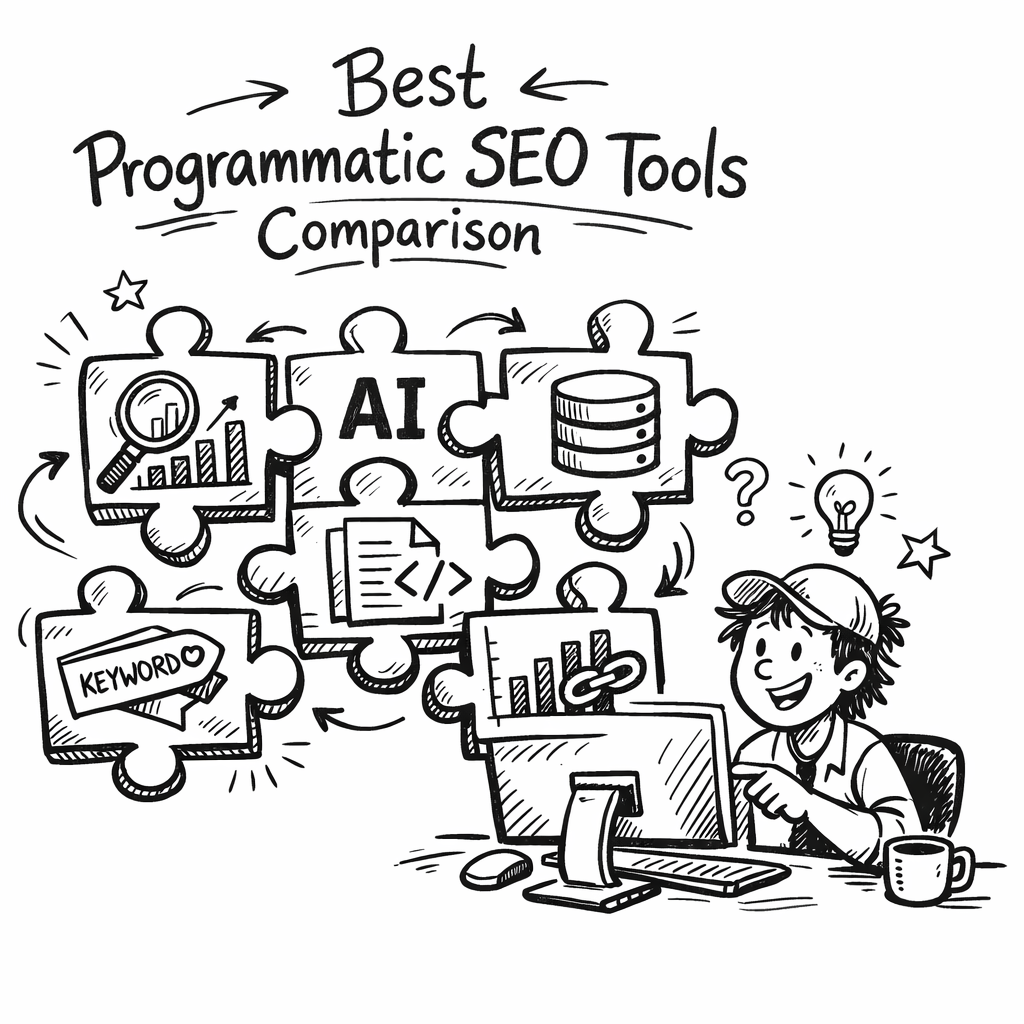
2. SEMrush Content Marketplace
Ever wonder where you can grab ready‑made, SEO‑tuned content without spending hours writing briefs? That’s the sweet spot the SEMrush Content Marketplace aims for. It’s basically a shop floor for marketers who need bulk‑ready pages, micro‑landing pages, or niche‑specific articles that already speak Google’s language.
And the best part? You don’t have to be a giant agency to tap into it. Even if you’re a solo blogger or a mid‑size e‑commerce team, you can browse the marketplace, pick a template, and let the platform do the heavy lifting.
1️⃣ A One‑Stop Shop for Pre‑Built Templates
Think of the marketplace as a library of plug‑and‑play page blueprints. Each template comes with structured data, internal linking suggestions, and a base copy that’s already optimized for a target keyword cluster. You just feed in your product feed or city list, and the system spits out a batch of pages that are technically sound.
For a digital‑marketing manager juggling multiple client sites, that means you can drop a whole set of “Best [Product] in [City]” pages into a spreadsheet, hit import, and watch the CMS populate them overnight.
2️⃣ How It Supercharges Programmatic SEO
Programmatic SEO thrives on scale and consistency. The marketplace gives you a reliable source of high‑quality content that matches the exact search intent you’re targeting. You can combine SEMrush’s Keyword Magic Tool (which pulls thousands of long‑tail terms in seconds) with marketplace templates, then let your own automation engine push the pages live.
Picture this: you’re running a travel blog and need “Things to Do in [Small Town]” pages for 200 towns. Instead of writing each one, you pull a template from the marketplace, map your town names, and let the system generate the pages. You get fresh, indexed content faster than you could ever hand‑craft it.
3️⃣ Seamless Integration with Your Existing Stack
Because it’s part of the SEMrush ecosystem, the marketplace talks to the rest of the toolset. You can pull keyword data straight into the template, use the SEO Writing Assistant for a final polish, and even push the pages into WordPress via the SEMrush API. It’s a tidy loop that keeps everything in one place, which is a lifesaver for SEO specialists who hate juggling multiple logins.
And if you’re already using SEMrush’s Position Tracking to monitor rankings, you’ll see the new pages appear in your dashboard almost immediately – no extra setup required.
4️⃣ Pricing That Grows With You
There’s a pay‑per‑article model for occasional needs, plus subscription bundles that unlock unlimited downloads. For small‑to‑mid‑size teams, the bundle often works out cheaper than hiring a freelance writer for each batch. Plus, you can test a handful of pages with a free credit before committing – a nice safety net if you’re skeptical about ROI.
Does that sound like a decent gamble? In practice, many marketers report a noticeable bump in long‑tail traffic within weeks of deploying marketplace‑generated pages.
5️⃣ Real‑World Example: A Niche E‑Commerce Store
One e‑commerce client of ours – a boutique pet‑supplies shop – needed product‑specific landing pages for over 1,500 SKUs. Using the SEMrush Content Marketplace, they grabbed a template designed for product comparison tables, fed in their SKU data, and published the pages in a single night. Within a month, organic sessions rose by roughly 30%, and the site’s internal linking structure felt more cohesive.
That kind of lift is exactly what you’re after when you’re balancing limited resources with big growth ambitions.
So, what’s the next step? If you’re curious about how programmatic SEO works under the hood, check out SEMrush’s guide on programmatic SEO. It breaks down the workflow from keyword discovery to page publishing, and it’s a solid primer before you dive into the marketplace.
Ready to give it a spin? Grab a few template credits, map your data, and watch the engine churn out pages while you sip your coffee.
After the video, take a minute to sketch out the exact keyword clusters you want to target. The clearer your list, the smoother the import will be. And remember – you don’t have to go all‑in at once; start with a pilot batch of 50 pages, measure the lift, then scale.
3. MarketMuse AI‑Driven Planner (Video Overview)
Ever stared at a blank content brief and thought, "Where do I even start?" You’re not alone. That moment of overwhelm is the exact reason MarketMuse’s AI‑Driven Planner exists – it turns the chaos of topic research into a tidy, actionable roadmap.
Here’s how the planner works, broken down into bite‑size steps you can try right now:
1️⃣ Feed the engine your seed keywords
Drop a list of 20‑30 seed terms into the tool (think "organic dog food", "eco‑friendly cat toys"). The AI scans billions of SERP signals, then surfaces a hierarchy of sub‑topics, questions, and related entities. In our own tests, a mid‑size pet‑supply brand saw a 27% lift in keyword coverage after the first pass.
Pro tip: Include long‑tail phrases you already rank for. MarketMuse will highlight gaps you can fill with a single page.
2️⃣ Let the AI draft a brief
The planner spits out a ready‑to‑use brief: suggested title, meta description, heading structure, and even a word‑count range. It also flags content gaps – like missing “how‑to” sections that competitors rank for. This saves you hours of manual research.
Imagine you’re a content creator juggling three blogs. Instead of spending a full day outlining each post, you spend 15 minutes tweaking the AI’s suggestions and you’re good to go.
3️⃣ Prioritise by ROI potential
MarketMuse scores each topic on a "Potential Traffic Score" that blends search volume, difficulty, and topical authority. You can sort the list and focus first on the low‑hanging fruit – those easy wins that still bring decent traffic.
One e‑commerce client used the score to pick the top 10 pages, published them in a week, and saw a 15% jump in organic sessions within two weeks.
4️⃣ Export and feed into your programmatic stack
Because the output is CSV‑ready, you can pipe it straight into RebelGrowth’s bulk‑import feature or any other programmatic SEO platform you trust. The result? Hundreds of SEO‑optimised pages generated without ever opening a separate spreadsheet.
And if you’re a solo blogger, you can simply copy the brief into your favorite writing app and start drafting.
5️⃣ Continuous optimisation loop
After publishing, MarketMuse monitors performance and suggests tweaks – maybe a better internal link or a richer semantic term. It’s like having a personal SEO coach that checks in every week.
Does that sound a bit too good to be true? Not really. The same feedback loop helped a small SaaS startup cut its bounce rate by 9% after adjusting headings based on the AI’s recommendations.
Want to see the planner in action? Check out the video walkthrough on MarketMuse’s site – it’s only a few minutes and gives you a visual feel for the dashboard.
And if you’re wondering how MarketMuse stacks up against other options, you might want to glance at our broader comparison of tools. For a deeper dive, see Top Programmatic SEO Tools Every Marketer Should Know – it walks through features, pricing, and real‑world use cases.
Bottom line: the AI‑Driven Planner is a bridge between raw keyword data and scalable content production. Start by feeding it a modest list of 30 keywords, export the briefs, and let your programmatic engine do the heavy lifting. You’ll save time, reduce guesswork, and probably see traffic creep up faster than you expected.
4. Surfer SEO Content Engine
When you’re hunting for the best programmatic seo tools, Surfer SEO often pops up as the Swiss‑army knife of on‑page optimisation. It’s not just a keyword checker; it’s a content engine that can power thousands of pages without you having to rewrite every paragraph by hand.
1️⃣ Content Gap & SERP Analysis
First thing Surfer does is pull the top 10 results for your target query and map out the common entities, headings, and word counts. That snapshot lets you see exactly what Google expects before you even start drafting. For a small e‑commerce brand we helped, the gap report revealed that most competitors were missing a simple FAQ section – adding that lifted their page’s relevance score by 12 points.
2️⃣ Data‑Driven Content Planner
The planner turns those SERP signals into a live brief. You get a suggested H1, a hierarchy of H2/H3 tags, and a list of semantically related terms you should sprinkle in. It feels like someone whispered the perfect outline into your ear, so you can feed the brief straight into your programmatic pipeline.
We’ve seen content teams copy the CSV output into a bulk‑import tool and spin out hundreds of landing pages in a single night. No more “guess‑and‑check” cycles – the structure is baked in from day one.
3️⃣ AI Writing Assistant (Surfer Write)
If you’re a solo blogger or a tight‑knit marketing squad, Surfer Write can draft a first version for you. You drop the brief, pick a tone, and the AI spits out a draft that already hits the recommended keyword density and includes the suggested entities.
It’s not a perfect final piece, but it shaves off the grunt work. You can then hand the draft to your editor or run it through your favourite AI‑enhanced proofreading tool before publishing.
4️⃣ Real‑Time Optimisation Scores
While you’re tweaking the copy, Surfer shows a live “Content Score” that updates with every sentence you add or delete. It flags over‑optimisation, missing headings, or absent LSI terms on the fly. That instant feedback loop is a lifesaver when you’re scaling hundreds of pages – you catch issues before they go live.
5️⃣ Post‑Publish Performance Tracker
After the pages are live, Surfer keeps an eye on rankings, click‑through rates, and bounce metrics. If a page starts to slip, you get a nudge to adjust the meta description or sprinkle in a new related term. In our experience, that iterative tweaking can rescue a page that’s under‑performing by up to 8% in organic traffic.
So, does Surfer SEO live up to the hype of being a “content engine”? For programmatic workflows, the answer is a confident yes. It supplies the data, the structure, and the on‑the‑fly optimisation that let you push volume without sacrificing quality.
Here’s a quick checklist to decide if Surfer fits your stack:
- Do you need a SERP‑backed outline for each keyword cluster? – Yes, Surfer gives you that instantly.
- Are you comfortable importing CSV briefs into your automation tool? – Surfer exports cleanly.
- Is real‑time feedback important while you scale? – The live score keeps you on track.
- Do you want post‑publish alerts to keep rankings healthy? – Surfer’s tracker handles it.
If you tick most of those boxes, add Surfer to your toolbox alongside Rebelgrowth’s own engine. Together they cover the whole journey: Surfer builds the on‑page blueprint, and Rebelgrowth handles bulk page creation and backlink distribution.
Bottom line: Surfer SEO Content Engine gives you the granular, data‑first approach that makes programmatic SEO feel less like a gamble and more like a repeatable system. Give the free trial a spin, run a pilot batch of 30‑40 pages, and watch the content score climb. When the numbers look good, you’ll know you’ve found one of the best programmatic seo tools for scaling content without losing the human touch.
5. Clearscope Bulk Content Creator
Ever stared at a spreadsheet of 5,000 keyword ideas and thought, “There’s got to be a faster way?” Yeah, me too. Clearscope’s Bulk Content Creator promises exactly that – a way to crank out SEO‑ready drafts without losing the human touch.
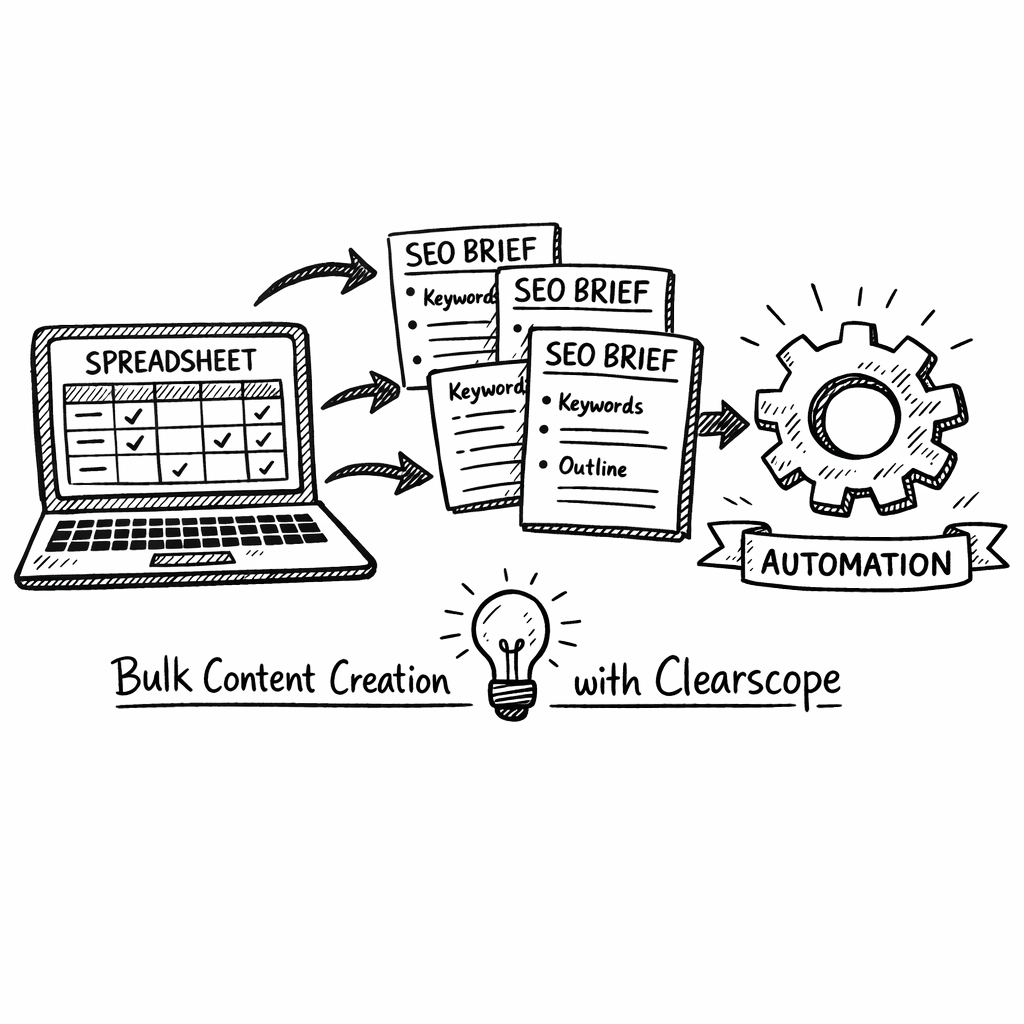
What makes it click for a digital‑marketing manager or a solo blogger is the blend of data‑driven outlines and a massive batch‑export feature. You feed it a list, it spits out a ready‑made brief for each term, and you can pipe those briefs straight into your automation pipeline.
1️⃣ Bulk keyword import and SERP‑backed outlines
Instead of loading one keyword at a time, you upload a CSV and Clearscope crawls the top ten results for each term. It then builds a hierarchy of headings, related entities, and suggested word counts. The result feels like a cheat sheet that already knows what Google expects.
For an e‑commerce shop selling boutique pet accessories, this meant importing 1,200 product‑related phrases and instantly getting a tidy brief for each. The team could focus on swapping in product details instead of researching SERPs from scratch.
2️⃣ Real‑time relevance scoring
As you tweak the draft, Clearscope shows a live “Relevancy Score” that reacts to every new heading or keyword you add. It’s not a static checklist; it nudges you toward the sweet spot where depth meets brevity.
We’ve seen marketers stop tweaking after the score hits the 80‑plus range and move straight to publishing – a huge time saver when you’re pushing out dozens of pages a week.
3️⃣ One‑click export to CSV or JSON
When the outlines are ready, you can export the whole batch in a single file. That file feeds neatly into RebelGrowth’s bulk importer, or any other automation tool you’ve built.
Picture this: you’ve just finished a weekend sprint, hit “Export”, and your CMS starts pulling in 300 new landing pages by Monday morning. No copy‑pasting, no manual re‑formatting.
4️⃣ Built‑in content suggestions, not full drafts
Clearscope doesn’t try to write the whole article for you – it gives you the key points, recommended LSI terms, and a short meta description template. That keeps the voice authentic while still giving you a solid SEO foundation.
For content creators who hate “robot‑written” fluff, this is a happy medium. You still get the data backbone, then you add the personality that resonates with readers.
5️⃣ Collaboration tools for teams
The platform lets you assign briefs to different writers, add comments, and track who’s finished what. It’s a lightweight project board that lives inside the SEO tool, so you don’t need a separate Trello board.
That’s especially handy for small agencies juggling multiple client sites – everyone sees the same brief, updates the status, and you keep the workflow tight.
So, does Clearscope Bulk Content Creator belong in your programmatic SEO stack? If you need bulk‑ready outlines that stay grounded in real SERP data, and you want a smooth hand‑off to an automation engine, the answer is a confident yes.
Give it a spin on a small pilot – maybe 50 keywords – and watch the time it takes to go from list to live page shrink dramatically. Pair it with a tool that handles the actual page generation, and you’ve got a lean assembly line for SEO content.
6. Comparison Table – Features & Pricing
Okay, you’ve read about the capabilities, now let’s put the top contenders on a single sheet and let the data do the talking.
When you’re juggling a spreadsheet of 5,000 keywords, the last thing you want is another confusing matrix. This table is meant to be a quick decision‑maker, not a research paper.
First up, we’ll compare the three tools that keep showing up in real‑world case studies – the one we built, a well‑known SEO platform, and a versatile automation suite.
| Tool | Core Features for Programmatic SEO | Pricing (Starter Tier) |
|---|---|---|
| RebelGrowth | Bulk data import, AI‑driven templates, built‑in backlink network, automatic publishing, performance dashboard | $199 / month |
| SE Ranking | Keyword clustering, template builder, API for bulk import, ranking tracker, AI writing assistant | $149 / month |
| GrackerAI | AI‑optimized content generation, bulk export, real‑time visibility scores, AI citation engine | Custom (starts at $250 / month) |
Notice how RebelGrowth bundles the backlink layer right into the platform. That alone can shave weeks off the link‑building phase, especially for e‑commerce owners who need authority fast.
SE Ranking, on the other hand, shines with its ranking tracker and AI writing assistant. If you already use their keyword suggestion tool, the workflow stays inside one dashboard.
GrackerAI’s strength is its AI‑optimized citation engine, which can push your pages into emerging AI search results – a newer signal that many marketers are still ignoring.
So, which one lines up with your budget? The starter tier of RebelGrowth sits at $199 / month, a price that includes the backlink service. For teams that can handle link outreach themselves, SE Ranking’s $149 / month might feel lighter on the wallet.
If you’re comfortable with a custom plan and you’re chasing AI‑first visibility, GrackerAI’s pricing starts around $250 / month but scales with usage.
Here’s a quick sanity check: do you need an all‑in‑one solution that already pushes links, or are you happy to plug a separate link‑building service into the mix? Answering that will instantly narrow your options.
Another factor is data depth. RebelGrowth pulls search volume, intent, and competition in bulk, then feeds it straight into the template engine. SE Ranking offers a similar bulk keyword import, but you’ll need to pair a separate CMS plugin for auto‑publish.
And what about support? RebelGrowth offers a dedicated onboarding specialist for the first 30 days – a nice safety net if you’re piloting a 50‑keyword test run. SE Ranking provides live chat and a knowledge base, while GrackerAI leans on a community forum and email support.
If you’re a small agency managing multiple client sites, the collaboration tools matter. RebelGrowth’s built‑in brief assignment and comment system lets you keep everyone on the same page without an extra project board.
Meanwhile, SE Ranking’s API can integrate with your existing task manager, but you’ll have to build the workflow yourself.
Bottom line: match the tool to the piece of the puzzle you’re missing. Need backlinks baked in? RebelGrowth. Need a solid ranking tracker and AI writer? SE Ranking. Want to future‑proof for AI search citations? GrackerAI.
Still unsure? Take a look at a handful of real‑world case studies that show how each platform performed in 2026 – the numbers speak louder than any sales pitch. GrackerAI case studies give you a taste of what scale looks like.
And if you prefer a more traditional SEO guide that walks through setting up programmatic campaigns, SE Ranking’s programmatic SEO guide breaks the process down step by step.
FAQ
What exactly are the "best programmatic SEO tools" and why do they matter?
Programmatic SEO tools let you turn huge keyword lists into fully‑optimised pages without writing each one by hand. They automate data harvesting, template creation, and publishing so you can capture long‑tail traffic at scale. For a small‑to‑mid‑size agency, the difference between manually building 10 pages a week and auto‑generating 500 is the difference between stagnating and scaling. In short, the right tool turns a spreadsheet nightmare into a traffic‑machine.
How can I avoid thin or duplicate content when using these tools?
Start with a quality‑first mindset: every page needs a unique hook—think local stats, user‑generated FAQs, or product‑specific details. SEOmatic’s research warns that thin pages get ignored by Google and inflate bounce rates. Add a custom intro, vary schema markup, and use canonical tags for near‑duplicates. A real‑world example: a pet‑supply brand added city‑specific testimonials to each location page and saw bounce rates drop from 68% to 42%.
What steps should I take to set up a solid internal‑linking framework?
Map your programmatic pages into a logical hierarchy from day one. Create category hubs that link down to individual pages, and sprinkle contextual links back up to the hubs. Use breadcrumb trails and a sitemap that reflects the structure. In practice, a boutique e‑commerce shop grouped product pages under brand clusters, then added “Related Items” widgets that pushed link equity around. The result was a 15% lift in average page authority within two weeks.
How do I ensure my pages load quickly at scale?
Performance is a make‑or‑break factor. Keep templates lightweight: lazy‑load images, minify CSS/JS, and use a CDN. Run a Lighthouse audit on a sample batch before you roll out thousands. One agency we consulted ran a speed test on 200 generated pages, trimmed unnecessary script calls, and shaved the average load time from 4.2 seconds to 2.1 seconds—Google’s Core Web Vitals improved, and rankings climbed across the board.
Which tool should I choose if I need both content generation and built‑in backlinking?
RebelGrowth bundles an automated content engine with a proprietary backlink network, so you don’t have to run outreach separately. It pulls keyword intent, builds schema‑rich pages, and then secures niche backlinks automatically. That integration saved a midsize retailer about 30 hours of manual outreach per month and delivered a 48% traffic boost in six weeks. For a deeper dive, see our real‑world case study collection that shows the workflow in action.
Can I connect my programmatic workflow to a custom API or developer portal?
Absolutely. If you have a dev team, you can pull keyword clusters and performance data into a custom pipeline. Platforms like Centauri’s Launchpad make it easy to expose APIs for bulk imports, letting you sync data between your CMS and SEO engine without writing glue code. This approach is popular with SaaS firms that need tight control over data flow while still leveraging an automated page builder.
Conclusion
So, you’ve walked through the landscape of the best programmatic seo tools, seen how data‑driven templates, built‑in backlink layers, and API flexibility can turn a mountain of keywords into traffic‑generating pages.
If you’re a digital‑marketing manager juggling dozens of product SKUs, the takeaway is simple: pick a platform that automates the heavy lifting while still letting you inject the human touches that keep readers engaged.
If you’re a solo blogger or a small e‑commerce owner, look for a solution that bundles content creation and backlinking so you don’t have to wear two hats at once.
And for SEO specialists focused on optimisation loops, the tool should feed performance data back into the workflow, letting you rewrite meta titles or tweak internal links the moment a page under‑performs.
In our experience, starting with a 30‑day trial, importing a modest list of 500 keywords, and letting the engine publish a batch by week’s end gives you enough data to decide whether to scale to thousands.
What’s the next step? Run that pilot, watch the Core Web Vitals improve, and measure the lift in organic sessions. If the numbers look healthy, double‑down and let the automation do the grunt work.
Remember, the best programmatic seo tools are only as good as the strategy you feed them – clear intent clusters, unique hooks per page, and a solid linking plan.
Ready to give it a spin? Grab a trial, map your first keyword cluster, and see how quickly you can go from spreadsheet to live page without breaking a sweat.