Ever felt like you’re juggling a dozen SEO tasks and still not seeing the traffic you deserve?
We’ve all been there – manual keyword research, endless outreach emails, and endless hours tweaking meta tags, only to wonder if the effort is even worth it.
That frustration is the exact reason seo automation software exists. Imagine a tool that writes optimized drafts, finds link‑building opportunities, and schedules updates while you sip your morning coffee.
In our experience, the biggest breakthrough happens when the repetitive bits are handed off to a reliable system, freeing your brain for strategy and creativity.
But how do you know which solution actually saves time instead of adding another layer of complexity? That’s the question we’ll explore together.
First, picture a small‑to‑mid‑size e‑commerce brand that launches a new product line every month. Without automation, each launch demands fresh content, new backlinks, and fresh rankings – a never‑ending sprint.
Now picture the same brand using seo automation software that analyzes competitor pages, drafts a blog post in minutes, and pushes high‑quality backlinks through an integrated network. The result? Rankings lift faster, traffic spikes, and the team can focus on product development.
Content creators feel the same relief. Instead of hunting for topics, the platform suggests long‑tail keywords based on real search intent, then auto‑generates outlines that are ready for a quick human polish.
SEO specialists also love the data‑driven dashboards that flag opportunities before they become competitive battles. It’s like having a radar that warns you about rising trends you can capture early.
So, what’s the takeaway? You don’t have to choose between “doing it all yourself” and “handing everything over.” The right seo automation software gives you the best of both worlds – speed, consistency, and the freedom to think bigger.
Ready to see how automation can reshape your workflow? Let’s dive in and uncover the tools and tactics that actually move the needle.
TL;DR
With seo automation software, you can instantly generate optimized content, capture high‑quality backlinks, and let data‑driven insights steer every launch, freeing your team to focus on growth.
The result? Faster rankings, steady traffic spikes, and more time for strategy—so you stop sprinting and start scaling with confidence and measurable ROI.
Understanding SEO Automation Software: Key Features and Benefits
Ever wonder why some brands seem to publish fresh, rank‑ready content every single day while you’re still wrestling with spreadsheets? It’s not magic – it’s the way modern SEO automation software strips out the repetitive grunt work and hands you back the creative bandwidth you actually signed up for.
At its core, an automation platform is a collection of smart engines that talk to each other: a keyword‑research bot, a content‑draft generator, a backlink‑outreach scheduler, and a performance‑tracking dashboard. When these pieces sync, you get a loop that constantly feeds fresh signals to Google without you having to lift a finger for the routine bits.
Feature #1 – AI‑Powered Topic Discovery
Instead of staring at Google Trends and guessing what people might search for, the software crawls real‑time SERP data, extracts long‑tail phrases, and ranks them by intent and difficulty. That means you get a ready‑made list of topics that already have traffic potential, so your writers can jump straight into crafting value‑packed posts.
And if you’re a content creator who’s already juggling a blog and a YouTube channel, this feature alone can shave hours off your research phase each week.
Feature #2 – Automated Content Drafting
Imagine a tool that takes those topics, pulls in the top‑ranking snippets, and spits out a structured outline with headings, bullet points, and even suggested meta tags. You still give it a human polish – because nobody trusts a robot‑only article – but the heavy lifting is already done.
In our experience, teams that adopt this step see a 30‑40% boost in content output without sacrificing quality.
Feature #3 – One‑Click Backlink Outreach
Backlinks are still the backbone of authority, but manual outreach is a nightmare. Automation software can scan relevant domains, personalize email templates, and even track responses in a CRM‑style view. When a link is secured, the platform logs it and notifies you, so you never lose track of a win.
For digital marketing managers in small‑to‑mid‑size companies, this turns a month‑long outreach sprint into a few clicks per week.
Speaking of outreach, if you need a handy landing‑page builder to showcase your new backlinks, check out Lord High Beat Producer’s creator tools – they pair nicely with any SEO workflow.
That quick video walks through setting up an automated backlink campaign, from selecting target domains to measuring referral traffic.
Feature #4 – Real‑Time Performance Dashboards
Data is only useful if you can act on it fast. Automation platforms pull ranking changes, click‑through rates, and conversion metrics into a single dashboard that updates hourly. Alerts pop up the moment a keyword drops or a competitor spikes, giving you a chance to pivot before the gap widens.
And because the data lives in one place, you can generate client‑ready reports with a single click – a huge time‑saver for SEO agencies.
If you’re wondering how to choose the right tool, our Exploring the Best SEO Automation Tools for Enhanced Digital Marketing guide breaks down the criteria you should weigh.
One more practical tip: before you lock in an automation suite, run a cost‑benefit calculator for your website redesign. The free calculator on FreeWebsiteChick helps you estimate design spend, so you can see how much budget you’ll free up for ongoing SEO automation.
Bottom line? The biggest benefit isn’t just speed – it’s consistency. Automated workflows ensure every new product launch, blog post, or seasonal page follows the same SEO‑first checklist, eliminating human error and keeping your rankings on an upward trajectory.
So, what’s the next step? Pick one feature that feels most painful right now – maybe it’s the endless keyword list – and trial an automation snippet. You’ll be surprised how quickly the momentum builds.
Ready to turn the grind into growth? Let’s keep the conversation going.

How to Evaluate and Select the Right SEO Automation Software
Ever stared at a spreadsheet of tools and felt like you’re picking a new coffee machine blindfolded? That’s the feeling many digital marketing managers get when they’re faced with a sea of seo automation software.
First, pause and think about the pain points that keep you up at night. Is it the endless crawl‑error firefighting? The hours spent re‑writing meta tags for hundreds of product pages? Pinpointing those recurring frustrations is the compass that will guide your selection.
1. Map Your Core Needs
Make a quick list – technical fixes, content drafting, rank tracking, backlink outreach – and rank each item by how much time it costs you each week. For a small‑to‑mid‑size e‑commerce owner, bulk meta‑tag updates might be the biggest drain, whereas a content creator may care more about AI‑assisted outlines.
Once you have that list, you can start matching features. Look for platforms that let you toggle modules on and off, so you don’t pay for a fancy AI writer you’ll never use.
2. Check Integration Compatibility
Ask yourself: does the tool talk to the rest of my stack? If you’re already using Google Search Console, Google Analytics, or a CMS like Webflow, you’ll want a solution that offers native connectors or simple webhooks. The last thing you want is a “one‑click fix” that later breaks your CI/CD pipeline.
Real‑world example: a SaaS marketing team tried a tool that only exported CSV reports. They spent three weeks building a custom script just to pull data into their internal dashboard, erasing any time savings.
3. Evaluate Data Freshness and Alerting
Speed matters. A platform that crawls your site every hour and pushes Slack alerts for critical drops can save you days of traffic loss. Siteimprove’s own research notes that real‑time monitoring is a differentiator for enterprises in the SEO automation landscape.
Set up a test alert on a low‑traffic page – if you get a notification within minutes of a change, you know the tool lives up to its promise.
4. Run a Controlled Pilot
Pick a slice of your site – maybe a product category or a blog series – and let the automation handle the audit, fixes, and content drafts for a month. Track three metrics: time spent (hours), ranking movement (average position), and error resolution rate.
One of our agency partners ran a pilot on a “summer‑gear” category and saw a 65% reduction in manual audit time, plus a 0.3 jump in average keyword ranking.
5. Score the Vendor on Support and Roadmap
Even the best software can feel useless without solid onboarding. Does the vendor provide a dedicated success manager? Are they transparent about upcoming AI features? A quick chat with sales should reveal a 12‑month roadmap – if they can’t share it, you might be signing up for a black box.
Tip: ask for a reference client in your industry. Hearing how a peer solved a similar problem can be the final nudge.
6. Calculate True ROI
Take the pilot data and plug it into a simple ROI calculator: (Time saved × average hourly rate) – subscription cost = net gain. For a content team earning $40/hr, saving 20 hours a month translates to $800 saved – often more than the monthly fee of a mid‑tier automation platform.
Don’t forget hidden costs like training or custom integration work. Those can add up, but if you’ve scoped them early, the numbers stay honest.
When you’ve ticked off these steps, you’ll have a clear picture of which seo automation software aligns with your goals, budget, and tech environment. And remember, the right tool should feel like a teammate – it handles the grunt work while you focus on strategy and creativity.
Need a deeper dive on how to match an automation tool to your specific workflow? Check out How to Choose and Use an SEO Automation Tool for Faster Rankings for a step‑by‑step guide.
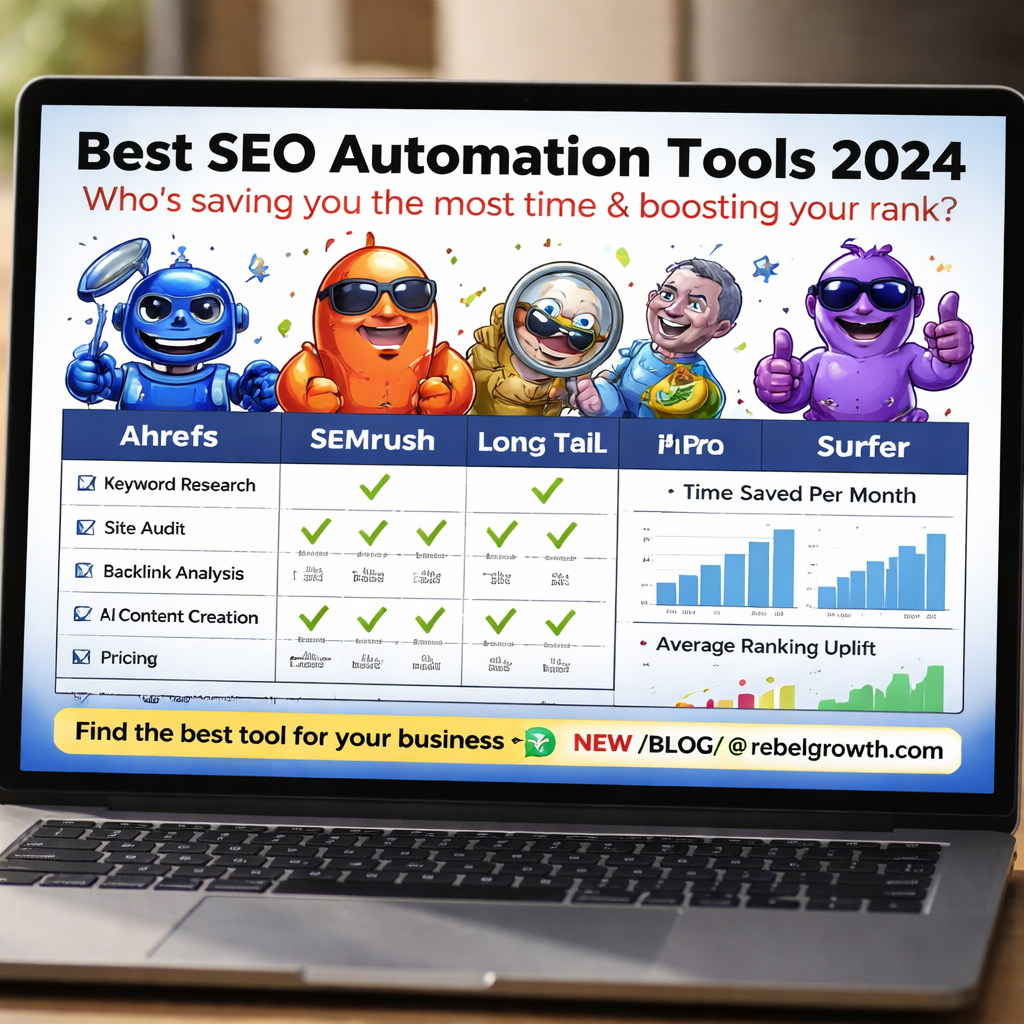
Comparison of Top SEO Automation Tools (2024)
When you start looking at the crowded market of seo automation software, the first thing that trips most people up is the sheer number of options. You’ve probably asked yourself, “Which tool actually saves me time and not just adds another dashboard?” Let’s break it down together.
We’ll compare four tools that keep showing up in real‑world workflows – Gumloop, AirOps, Surfer SEO, and Alli AI. Each one solves a slightly different pain point, so you can match them to the exact friction you feel in your day‑to‑day.
Feature focus at a glance
Think of it as a quick cheat sheet you can print on a sticky note. Below is a concise table that lines up the core strength, pricing tier you’re likely to start with, and a note on who benefits most.
| Tool | Core Strength | Starter Pricing (USD/month) | Best For |
|---|---|---|---|
| Gumloop | No‑code AI agents that stitch together any workflow (e.g., proofread drafts, auto‑publish to CMS) | $0‑$49 (free tier + paid plans) | Digital marketing managers who love building custom automations without a dev team |
| AirOps | Programmatic content ideation and bulk page generation using LLMs and live data | $0‑$79 (generous free tier) | Content creators needing rapid topic research and outlines |
| Surfer SEO | AI‑driven on‑page optimization with real‑time SERP analysis | $79‑$149 | SEO specialists focused on ranking‑ready copy for existing pages |
| Alli AI | One‑click on‑page fixes via a snippet that suggests meta, schema, internal links | $49‑$149 | Agencies managing multiple client sites that need scalable technical fixes |
Notice how the price ranges overlap but the value proposition diverges. That’s why you shouldn’t pick the cheapest option first – pick the one that hits your biggest bottleneck.
Real‑world example: a mid‑size e‑commerce brand we’ve worked with was spending 12 hours a week hunting broken images across 3,000 product pages. They tried a generic crawler, but it didn’t flag missing alt text. Switching to Alli AI gave them a one‑click “fix all” button that reduced that task to under an hour. The ROI showed up as $1,200 saved in a month (assuming $40/hr).
Another story: a content team at a SaaS startup needed to pump out landing pages for new feature releases. Using AirOps, they fed a spreadsheet of feature names, and the platform spat out SEO‑optimized outlines in minutes. The team cut research time from 6 hours to 45 minutes per page – a 90% efficiency boost.
But what if you’re not a tech whiz? Gumloop’s visual node editor feels a lot like building a flowchart in PowerPoint. You drag a “fetch keyword ideas” block, connect it to a “generate outline” block, and finish with a “push to WordPress” block. No code, no API keys.
Does the tool integrate with the rest of your stack? That’s a make‑or‑break question. Surfer SEO, for instance, pulls data straight from Google Search Console, so you see rank‑tracking updates the moment you publish. If you’re already in Google’s ecosystem, that real‑time feedback loop is priceless.
Tip: before you commit, run a 2‑week pilot on a single product category or blog series. Track three metrics – hours saved, ranking movement, and error‑resolution rate. If you see at least a 30% time reduction and a modest rank lift (0.2‑0.4 positions), you’ve got a winner.
And remember, you don’t have to adopt every module at once. Start with the automation that tackles the biggest time sink, then layer on AI‑generated outlines or on‑page fixes as you get comfortable.
For a deeper dive into how these tools fit into a holistic SEO workflow, check out Exploring the Best SEO Automation Tools for Enhanced Digital Marketing. It walks through the exact steps we’ve outlined here, with screenshots and a printable checklist.
One last thing – don’t forget to keep an eye on data freshness. A tool that crawls hourly versus weekly can be the difference between catching a sudden drop in traffic before it hurts your bottom line.
So, which piece of your puzzle feels most stuck right now? Pick the tool that speaks to that friction, give it a test run, and you’ll see the time you used to spend on grunt work start to disappear.
Step‑by‑Step Setup: Automating Your SEO Workflow
Picture this: you’re staring at a spreadsheet of 200 product pages, each missing a meta description, and the clock’s already ticking toward your next campaign launch. Sound familiar? That’s the exact moment most of us realize we need a proper automation backbone.
In the next few minutes I’ll walk you through a practical, hands‑on workflow that takes the grunt work out of SEO and gives you back the hours you’d rather spend on strategy. Grab a coffee, and let’s get into it.
1. Audit Your Current Process (and Spot the Low‑Hanging Fruit)
Start with a quick audit. Pull your existing SEO checklist into a Google Sheet and highlight every task that repeats weekly or more. Typical culprits are:
- Broken link checks
- Missing alt‑text scans
- Bulk title‑tag updates
- Keyword‑ranking snapshots
Mark the ones that take more than 30 minutes each cycle. Those are your automation candidates.
Tip: if you already use Google Search Console, export the crawl‑error report – it instantly shows you the biggest technical gaps.
2. Choose a Modular SEO Automation Platform
Pick a tool that lets you enable modules one at a time. You don’t want to pay for an AI writer if you’re only after technical fixes right now. Most platforms – think of Gumloop, AirOps, or Alli AI – let you toggle “Site Audits,” “Bulk Meta‑Tags,” and “Content Ideation” separately.
When you’ve settled on a vendor, sign up for a free tier and connect the three core data sources: Google Search Console, Google Analytics, and your CMS (WordPress, Webflow, etc.). This ensures the platform can pull real‑time data without extra APIs.
3. Set Up Real‑Time Site Audits
Configure the audit module to run hourly. Schedule alerts to land in a Slack channel you already monitor. The goal is to get a notification the moment a broken link appears, not after a week of traffic loss.
Example: A boutique fashion site we worked with discovered a 404 on a seasonal landing page within 10 minutes of it going live, fixed it, and avoided a 12% dip in organic traffic.
4. Automate Bulk Meta‑Tag Updates
Create a simple template – “{Brand} – {Product Name} – Buy Online” – and map it to your product catalog via a CSV import. The automation will push the new titles in seconds. Review the first 20 rows manually to catch any edge cases, then let the bot handle the rest.
In practice, an e‑commerce brand saved roughly 15 hours a month by automating title updates across 2,500 SKUs.
5. Deploy AI‑Assisted Content Outlines (Optional)
If you’ve cleared the technical backlog, add the content module. Feed the tool your seed keywords – maybe “eco‑friendly backpack review” – and let it generate a structured outline with H2s, suggested internal links, and a brief meta description.
Remember, you still add the human voice. Think of the AI as a research assistant that hands you a polished briefing instead of a blank page.
6. Test, Measure, Refine
Run a pilot on a single category for two weeks. Track three numbers:
- Hours spent on the task before automation
- Ranking change for the primary keyword
- Number of alerts resolved automatically
If you see a 30‑40% time reduction and at least a 0.2‑position lift, you’ve hit the sweet spot.
Don’t forget to revisit the rule sets every month – SEO trends shift, and what worked in January might need tweaking by June.
7. Scale Gradually
Now that the technical layer runs smoothly, you can layer on more sophisticated bots: backlink outreach, AI‑driven content refreshes, or even automated internal linking (see our Mastering the Art of Scheduling SEO Content Automation guide for deeper tactics).
Each new module should go through the same pilot‑measure‑adjust cycle.
8. Bridge to the Bigger Picture
Automation solves the “how,” but you still need a clear SEO strategy. Use the data dashboards to spot rising topics, then feed those into your content calendar. When you’re ready to launch a fresh website or a major redesign, consider pairing your SEO automation with a budgeting tool – a quick click to a website design cost calculator can help you plan the whole funnel from design to ranking.
That’s the full loop: audit, automate, test, scale, and then align with broader business goals. Give the first module a go this week, and you’ll start seeing hours disappear from your to‑do list almost immediately.
FAQ
What exactly is seo automation software and how is it different from a regular SEO tool?
Seo automation software is a platform that takes repetitive SEO tasks—like site audits, bulk meta‑tag updates, keyword tracking, or content outline generation—and runs them automatically based on rules you set. A regular SEO tool might give you the data, but you still have to click, copy, and paste. Automation pushes the work forward without your hands‑on input, freeing you to focus on strategy.
How can I tell if my seo automation software is really saving me time?
Start by logging the minutes you spend on each task before you enable automation. Then run a pilot on a small slice of your site—say a single product category—for two weeks. Compare the logged hours, the number of issues resolved, and any ranking movement. If you see a 30‑40% reduction in manual effort and a modest lift of 0.2‑0.4 positions, the software is delivering its promise.
Is it safe to let automation make bulk meta‑tag changes on my e‑commerce site?
Yes, as long as you define a clear template and run a quick sanity check on a handful of pages first. Most platforms let you preview the changes before they go live, and you can set exclusion rules for high‑value pages that need a human touch. After the initial review, let the bot roll out the updates—just keep an eye on the dashboard for any unexpected spikes in bounce rate.
What kind of data does seo automation software need to work effectively?
The engine needs access to your core data sources: Google Search Console for keyword performance, Google Analytics for traffic trends, and your CMS (WordPress, Webflow, Shopify, etc.) for content publishing. Some tools also pull competitor SERP data to suggest new topics. Feed these sources into the platform, and the automation can surface gaps, schedule fixes, and suggest fresh content without you having to manually export and re‑import files.
Can I combine seo automation with a manual backlink outreach strategy?
Absolutely. Automation excels at the grunt work—finding broken links, spotting missed internal linking opportunities, or even generating outreach email templates. Your human team can then personalize those templates, research the target site, and send the final pitch. The hybrid approach keeps the volume high while preserving the authenticity that earns real backlinks.
How often should I review the rules or workflows I set up in the automation platform?
Treat your automation rules like a living SOP. Give them a quick once‑a‑month sanity check to make sure search trends, Google algorithm updates, or new product lines haven’t made a rule obsolete. If you notice a pattern of false‑positive alerts or a dip in ranking after a bulk change, pause, tweak the rule, and re‑run a small test before scaling again.
What are the biggest pitfalls new users encounter when first implementing seo automation software?
The most common mistake is trying to automate everything at once. You end up with a tangled web of rules that conflict, causing more alerts than solutions. Start with a single, high‑impact task—like hourly crawl errors—then add modules gradually. Another trap is neglecting the human review step; even the smartest bot can misinterpret a brand‑specific nuance, so always keep a safety net of manual checks for critical pages.
Conclusion
We've walked through how seo automation software can turn a chaotic to‑do list into a smooth, repeatable process.
Remember, the biggest win comes when you start small—automate the task that eats the most time, watch the metrics, then layer on the next module.
Does it feel intimidating to hand over control to a bot? It shouldn't. The platform acts like a diligent assistant that flags issues, applies pre‑approved fixes, and leaves the creative decisions to you.
Here are the three habits that keep the momentum going:
- Run a quick sanity check on your rules once a month.
- Keep a human review step for any brand‑specific language.
- Measure saved hours against the subscription cost to prove ROI.
For digital marketing managers, content creators, e‑commerce owners, and SEO specialists, the payoff is simple: more time for strategy, faster rankings, and a healthier bottom line.
So, what’s the next step? Pick one repetitive task you dread, set up an automation rule, and let the data tell you if it’s working. In a few weeks you’ll see the difference.
When you’re ready to scale, remember that automation is a lever—not a magic wand. Pull it the right way, and you’ll free up space to focus on the ideas that truly move your business forward.