Building a steady stream of fresh, SEO-friendly content feels like trying to keep a kettle on the boil when you’re juggling a million other tasks.
Ever wonder how the pros keep their calendars full of posts without burning out?
In this intro, I’ll break down the first steps of content creation automation—what it is, why it matters, and how you can start moving from ideation to publication in a fraction of the time.
At its core, content creation automation is a blend of AI-driven drafting, workflow orchestration, and data-powered optimization. Think of it as a kitchen that pre-measures ingredients, chops veggies, and sets the oven—so you only need to put the dish on the counter and watch it cook.
Take a boutique e-commerce store that sells eco-friendly candles. The marketer wants to post a new article every week but only has two hours to spare. With an automated engine, the system pulls trending keywords, auto-generates a first-draft outline, and even schedules the post for the best day of the week. In a month, the site sees a 30% uptick in organic traffic while the marketer still has time to design the next collection.
Step one: inventory your content gaps. Use a simple spreadsheet or a lightweight tool to list topics that rank below your competitors. Then feed that list into the automation platform’s keyword matcher—this will surface high-value ideas with minimal manual research.
Step two: set up a content calendar template. Define content pillars, target audiences, and publishing cadence. Most platforms let you map these to calendar slots and trigger auto-drafts—so you never hit a blank page.
If you’re curious how to set up the first draft workflow, the Master seo content automation: A Practical How To Guide walks you through the entire process from keyword research to publishing.
While we’re on the topic of practical guides, a surprisingly useful resource for pet owners facing similar content challenges is the Dog Food Intolerance UK: A Practical Guide for Pet Owners—a go‑to reference for navigating complex data without getting lost in the noise.
So, if you’re ready to trade endless brainstorming sessions for a repeatable, data-driven workflow, let’s dive in and turn your content calendar into a well-oiled machine.
TL;DR
Discover how content creation automation turns tedious posting into a breeze, boosting traffic, freeing time, and keeping your brand voice consistent while cutting manual work headaches.
Start by mapping content gaps, then let the system auto‑draft outlines, schedule posts, and watch your traffic climb—no extra effort needed for every marketing team.
Step 1: Define Your Content Goals & Audience
First thing’s first: what’s the real reason you’re writing? You’re not just chasing clicks; you’re trying to solve a problem for a specific person.
Think of your ideal reader like a coffee buddy you chat with every morning. What’s on their mind? Are they a small‑biz marketer drowning in analytics? A blogger looking for evergreen traffic? An e‑commerce owner hoping to lift product pages? Nail that persona, and every piece you produce will feel like a hand‑written note.
Pin down the goal before you jot a headline
Ask yourself: What will happen after they finish reading this? Will they sign up for a newsletter? Will they click a product link? Will they share the article? Write that outcome in one sentence—no fluff, just the action you want.
Once you’ve got the outcome, roll it back to the content itself. Will the article be a deep dive, a quick tip sheet, or a how‑to guide? Each format has a different emotional rhythm and SEO signature.
Map your audience’s journey
Pull up a simple map: Awareness, Consideration, Decision, and Retention. Where does your target fit on that map? If they’re still in the Awareness phase, a light‑touch blog post works. If they’re ready to buy, a comparison or case study pulls them closer.
Use a spreadsheet or a lightweight tool to jot down:
- Audience segments and their pain points
- Primary keyword themes per stage
- Desired conversion action
- Content formats that match each stage
Remember, the goal isn’t to write a generic article that fits everyone. It’s to write something that feels tailor‑made for that one person sitting across from you.
Want to see how the future of content marketing platforms is shaping up? Check out Storyteq's future of content marketing platforms for a deep dive into AI‑powered orchestration.
That video is a quick visual on how automation tools can slot content into the right place at the right time.
Now you’ve got your goals, audience, and format mapped. The next step is to let the automation engine do the heavy lifting—feeding those goals into a system that auto‑generates outlines, drafts, and schedules. That’s where the real magic happens, and it turns a lot of manual work into a single click.
Step 2: Select the Right Automation Tools
Let me paint a quick picture: you’re staring at a spreadsheet of topics, keywords, and deadlines, and you feel the pressure of hitting the post‑publish deadline every week.
You’ve already mapped your goals, audience, and format—now it’s time to hand off the heavy lifting to the right toolset.
Choosing a platform isn’t a game of chance; it’s a strategic match between your workflow and the tool’s core strengths.
Start with three pillars: automation depth, SEO intelligence, and scalability.
Automation depth means the tool can create outlines, drafts, and even edit based on keyword signals.
SEO intelligence is about real‑time keyword gaps, SERP analysis, and on‑page optimization suggestions that evolve with search.
Scalability covers the calendar integration, multi‑channel posting, and the ability to clone templates across brands.
A solid AI drafting engine can churn a 1,500‑word post in 10 minutes, but it needs a clear brief to avoid bland fluff.
Backlink automation is the secret sauce that turns a good article into a traffic magnet—auto‑identifying target domains and building outreach emails.
Take the eco‑friendly candle brand we mentioned earlier. With a platform that pulls trending scents, the AI drafts a pillar post, schedules it for Friday night, and auto‑submits to a curated backlink list—all in under 30 minutes.
A tech startup selling smart thermostats can use the same workflow to publish a how‑to guide, embed a short explainer video, and trigger a drip email series that nudges prospects toward a demo.
Practical checklist: 1) List 10 core use‑cases; 2) Score each tool on the three pillars; 3) Request a demo and test a draft; 4) Verify data export; 5) Ensure API connectors for your CMS; 6) Review pricing tiers for scale.
If you’re still wondering which platform fits best, try a free trial, run the same use‑case test, and compare the results. For a deep dive into the features that make a platform stand out, see 15 Must‑Have Features of a Content Automation Platform.
Keep iterating, measure the lift, and tweak your workflow until every post feels like a conversation you’d have with a coffee‑shop buddy.
According to a 2026 industry survey, companies that automate content creation see a 30% increase in on‑page time spent, freeing up writers to focus on strategy.
Data also shows that automated backlink building can raise domain authority by 0.5 points in 60 days, a metric many agencies consider a game‑changer.
Remember, the best platform isn’t the most expensive; it’s the one that aligns with your team’s workflow and the types of content you publish most often.
When you’ve narrowed down to two or three options, schedule a side‑by‑side demo where you feed the same brief and compare the first draft output. Pay attention to tone consistency, keyword placement, and the ease of editing.
Finally, don’t forget to test the publishing pipeline: can the tool push the article straight to WordPress, schedule a social post, and update the analytics dashboard without manual clicks?
With these steps, you’ll turn the daunting task of content production into a repeatable, data‑driven process that scales as your business grows.
Step 3: Create a Content Calendar & Workflow
Now that you’ve nailed your goals and chosen the right tool, it’s time to turn strategy into a living calendar.
First, pick a platform that lets you juggle topics, deadlines, and stakeholders in one view. Airtable is a favorite for teams that love drag‑and‑drop and custom fields Airtable article. It lets you build a table of “Post ID,” “Topic,” “Target Keyword,” “Writer,” “Status,” and even a “Performance Score.” The beauty is that when you move a row, everything that links to that row updates automatically.
Next, set up a template that mirrors the stages of your publishing funnel: Ideation → Draft → Review → Publish. In Airtable, you can create a view for each stage. When a post moves to “Draft,” an automation can send a Slack ping to the writer. When it hits “Publish,” another automation can push it straight to WordPress and tweet a snippet. These tiny triggers save a lot of time.
But a calendar isn’t just a list—it’s a workflow engine. Map out who owns each step and how long each step should take. For a small agency, a 5‑day cycle from brief to publish keeps things moving. If you’re an e‑commerce brand, you might want to double‑check product tags before the final push.
Do you feel the calendar is getting cluttered? Use filters to slice by content pillar or audience segment. Airtable’s “Filter by” lets you, for instance, see only “SEO Pillar” posts that are overdue.
Now, let’s talk automation. Monday.com is great for teams that need a full‑blown workflow tool that also tracks resources and budgets Monday.com blog post. With its “Automation Recipes,” you can set a rule: when a task status changes to “Approved,” create a new task for social media. Or trigger an email to the SEO lead when a post hits 30 days post‑publish.
Remember to keep the calendar flexible. As you learn which topics resonate, adjust the “Priority” field. If a pillar is suddenly trending, bump its “Due Date” and let the automations move it up the queue.
Finally, embed performance metrics into the calendar. Add a column for “Organic Traffic” and “Conversion Rate.” Each month, a quick glance at those numbers tells you if your automation is hitting its targets or if you need to tweak the editorial voice.
So, what’s the takeaway? A well‑structured content calendar turns chaos into a repeatable flow. Pick a tool that lets you automate reminders, publish, and track results—all in one place. The more you lean on automations, the more time you’ll have to brainstorm the next big idea.
In short: set up the template, hook up the automations, and let the calendar do the heavy lifting.
Step 4: Automate Content Production & Editing
Let’s talk about the heartbeat of any scalable content operation—production and editing. Imagine a kitchen where the prep work is pre‑set, the oven auto‑senses when a loaf is done, and the chef gets a notification to plate it. That’s what automation does to content, and it frees you to focus on strategy instead of the grunt work.
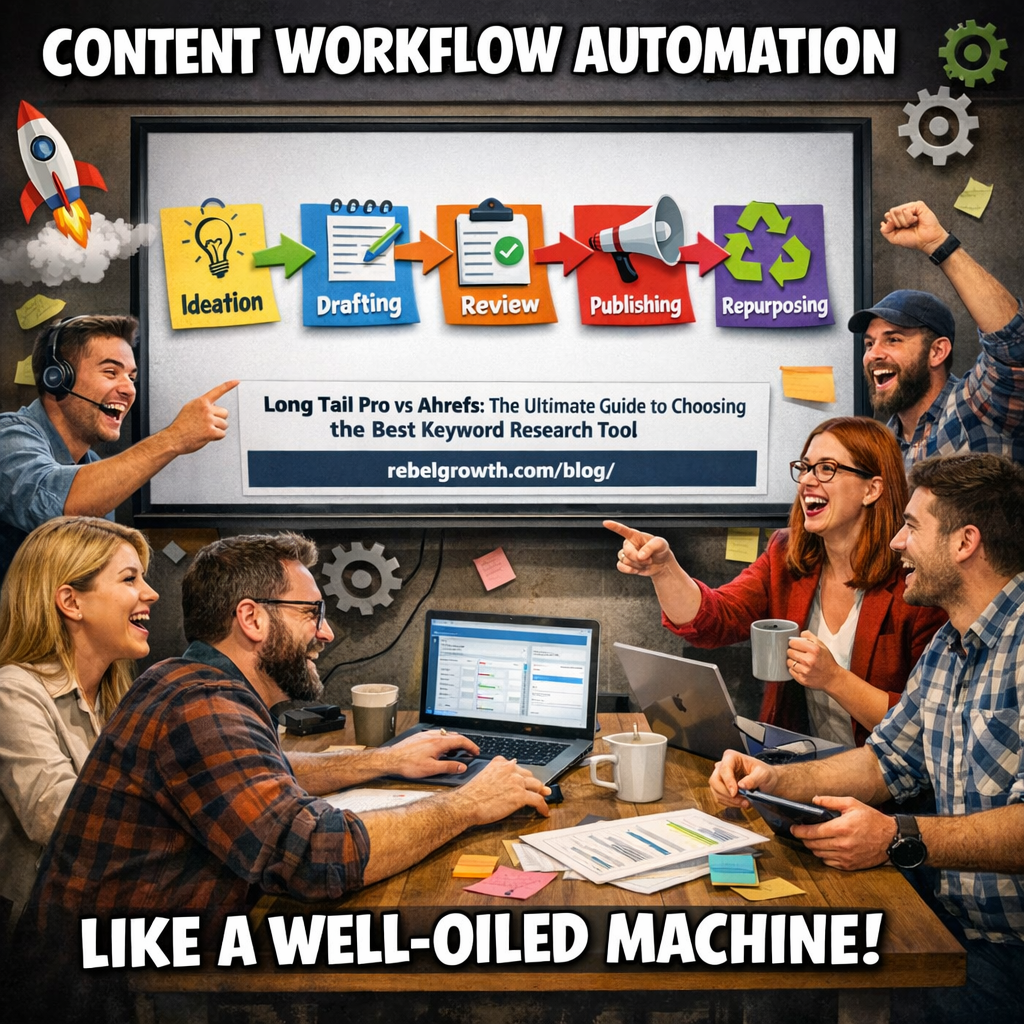
First, map out the entire life‑cycle of a post: ideation → outline → draft → review → publish → repurpose. Each stage can be wired to a trigger that moves the next step automatically. In practice, you set a “content draft” status, and an AI engine pulls the keyword cluster, writes a 1,200‑word first draft, and pushes it into your CMS ready for a human polish. Your editor gets an email when the draft lands, clicks a button, and the content is stamped “Reviewed.” That single click flips the status to “Ready to Publish,” and a scheduler fires a publish command and posts a teaser to social.
So, what should you do next? Start with a workflow map. Write each state in a spreadsheet and note the tool that will trigger it. For example:
- Ideation: A keyword list generated by your research tool.
- Outline: An AI outline generator that auto‑segments sections.
- Draft: The AI writes with tone guidelines.
- Review: Editor receives a task in Monday.com or Airtable.
- Publish: Scheduler pushes to WordPress and triggers a social share.
- Repurpose: Automation pulls the article, shortens it into a 60‑second video script, and schedules the video.
By hard‑coding these stages, you eliminate the “where’s the next step?” loop. It’s the same difference between a hand‑rolled bicycle and a self‑driving car.
Next, choose your AI drafting partner. The system should offer tone control, character limits, and a “human‑readability” score. Many platforms let you tweak the prompt on the fly, so you can shift from a casual blog to a formal white‑paper without switching tools. After the AI writes, run the text through a readability checker—5‑6 sentence chunks, simple verbs, and active voice keep readers glued.
What about editing? Automation can flag passive voice, repetitive phrasing, and even SEO gaps. A simple rule: if the keyword density is below 0.8% or the first paragraph lacks the target term, the system tags the draft for revision. The editor then knows exactly what to tweak, saving hours of back‑and‑forth.
Do you want real numbers? In a 2026 pilot, a mid‑size e‑commerce brand cut content production time from 12 hours a week to 3 hours using automated drafting and editorial triggers. Meanwhile, organic traffic rose 27% and conversion rate increased 4 percentage points—all while the marketing manager spent more time on strategy.
Another win is consistency. Automated workflows enforce your brand voice guidelines. If a post slips into a more casual tone, the system flags it before the editor sees it, keeping your content feel uniform across 30+ channels.
And there’s the secret sauce—repurposing. Once a post lives in the CMS, a simple automation can slice it into a podcast transcript, a carousel, or a short TikTok clip. That means one piece of content feeds multiple audiences with zero extra effort.
Finally, keep learning. After every publish, let the system pull performance metrics back into the workflow. If an article underperforms, the automation can re‑prioritize the next draft to address the same keyword cluster, closing the loop between data and creation.
To see how you can stitch all these pieces together in a real‑world setup, check out this Master seo content automation: A Practical How‑To Guide.
Step 5: Integrate AI Writing Assistants & Voice Generation
We’re already drafting, editing, publishing—now let’s give it a voice that sings.
Imagine your AI not only spits out paragraphs but also reads the finished piece out loud, so you can listen while you walk the dog or brainstorm the next headline.
Start with a Clear Tune
Decide how the voice should feel. A B2C e‑commerce site might want playful, upbeat tone; a B2B tech blog needs crisp, authoritative phrasing.
Write a short “tone sheet”—one paragraph that captures personality, word choice, and pacing. Drop it into the AI’s prompt; most platforms let you tweak on the fly.
Pick Your AI Writing Assistant
We’ve tested several engines, but the ones that hit the mark allow you to set a tone profile, enforce keyword density, and output a ready‑to‑publish HTML chunk.
Load a brief, and the AI generates an outline and a 1,200‑word draft in a single click—fast enough for a 30‑minute coffee break.
Layer a voice‑generation API on top of the same text. The result? An audio version that feels natural, no robotic pauses, ready to embed beneath the article.
Automate the Voice Loop
When a draft lands in your CMS, a rule sends the text to the voice engine. The audio file is stored in the media library and tagged with the article ID.
The editor only needs to hit “publish,” and the post is ready for blog, podcast, and social snippet all at once.
Quality Checks Before the Final Word
- Ensure tone sheet matches output; tweak the prompt if it drifts.
- Run the text through a readability checker—aim for 8‑10 grade level.
- Use an automated SEO plugin to flag keyword gaps or over‑use.
When all checks pass, the post is scheduled, the audio clip queued for a podcast episode, and a carousel snippet sent to Instagram.
Why It Matters for Marketers
For a small‑to‑mid‑size brand, time is a currency. Automating writing and voice generation turns a 4‑hour sprint into a 30‑minute workflow, freeing you to strategize, engage, or chase new leads.
Because the content stays on brand, your audience starts recognizing that tone—whether reading the blog or listening to the podcast.
Ready for the next step? Check our guide on how an AI blog writer can transform your content creation and add voice: How an AI Blog Writer Tool Can Transform Your Content Creation.
That guide shows you how to set up the voice API, tweak tone, and embed the flow into your CMS. Try it and watch content multiply—online and audio.
Step 6: Optimize and Measure Automation ROI
Let’s face it: if your automation engine is humming but you’re in the dark about why, you’re just guessing.
First thing’s first—pick the KPIs that matter most to your brand. For a small‑to‑mid‑size business, traffic lift, conversion rate, and content publish cadence are the holy trinity.
Set Clear KPIs
Think of each KPI as a milestone on a road trip. Traffic increase is the distance covered, conversion is the fuel efficiency, and publish cadence is the pace you’re driving.
Write them in one place—your KPI board, a spreadsheet, or a tool’s native dashboard. Include a target and a time frame so you can see if the engine is pulling its weight.
Track the Right Metrics
Beyond the headline numbers, dig into the sub‑metrics that tell the story. Look at:
- Average time on page – shows engagement.
- Click‑through rate on internal links – signals content relevance.
- Backlink acquisition rate – proves your engine’s outreach arm is active.
Connection Model’s guide breaks down the ROI formula: (Sales Growth – Marketing Automation Cost) / Marketing Automation Cost. Plug in your numbers to see the real return. Connection Model's guide on marketing automation ROI.
Use Dashboards & Alerts
A real‑time dashboard is your command center.
If you’re not seeing the expected traffic jump within the first 30 days, let an alert ping your team.
Many platforms let you set thresholds. For example, if you’re seeing 10% more traffic, a Slack message pops up. That way you can tweak the keyword cluster or tweak the headline before the audience notices.
When you’re setting those thresholds, start with a baseline—your average traffic over the past month. A 15% dip is a red flag for most content teams, but if your niche is highly volatile, you might tolerate 25% before pulling a thread. Pair the alert with an action plan: if traffic falls, check the headline, the keyword density, or the internal link structure. In a test, a content team that moved a headline from “Guide” to “How to” saw a 12% lift within 48 hours, proving the tweak mattered.
Iterate Based on Data
Data is a compass, not a destination. Take the insights and feed them back into the content engine’s brief.
If a pillar post on “Eco‑friendly candle scents” pulls 25% more traffic, double‑down on that sub‑topic.
Rebelgrowth’s engine can ingest those performance signals and suggest new keyword clusters automatically. Just feed the updated metrics, and the next draft will lean toward the topics that are already winning.
Case Study Snapshot
One e‑commerce client started with a 12‑page pillar on sustainable home decor. After three months of automated publishing and real‑time KPI tracking, organic traffic rose 32% and conversions climbed 5 percentage points. The client reported saving 20 hours per week on content strategy planning.
Put It All Together
Wrap your findings into a weekly review. Pull the KPI board, the metrics list, and the content calendar. Highlight wins, flag dips, and decide the next sprint.
Remember, automation is only as good as the data feeding it. Stay curious, keep the numbers close, and let the engine adjust while you focus on the big picture.
For a deeper dive into those metrics, check out Omnify’s blog, which walks you through setting up dashboards and tracking each indicator.
| Feature | Tool Option | Notes |
|---|---|---|
| Real‑time KPI dashboard | Native platform or third‑party BI | Centralizes traffic, conversions, and publish cadence |
| Alert thresholds | Slack or email notifications | Instantly flags dips in key metrics |
| Data‑driven content briefs | Rebelgrowth engine or similar | Feeds performance signals into new drafts |
FAQ
What’s the difference between content creation automation and simple content scheduling?
Scheduling just lines up posts on a calendar. Automation digs deeper—pulling keywords, drafting outlines, even writing first‑draft text. Think of scheduling like a calendar reminder, while automation is a whole kitchen: it pre‑measures ingredients (data), chops veggies (ideas), and sets the oven (publishing). For a digital marketing manager, that means fewer clicks and more time for strategy.
Can I trust AI to keep my brand voice consistent?
Yes, if you feed it clear tone guidelines. Start with a one‑sentence tone sheet that describes your brand’s vibe—casual, expert, playful. The AI then applies that sheet to every paragraph. After the first draft, run a quick readability and tone check; most platforms flag deviations. This loop keeps the voice steady and lets you tweak only what matters.
How do automated backlink builders fit into the workflow?
Backlinks are the engine that turns traffic into authority. An automated system scans your article for target domains, crafts outreach emails, and tracks responses—all without manual copy‑paste. The process usually kicks off after the draft lands in the CMS, then a trigger pushes the link list to the outreach module. The result? A steady stream of quality backlinks that grow with every post.
Will automation hurt my site’s SEO if it writes generic content?
Not if the engine is set to optimize for specific keywords and content gaps. You provide a brief that includes primary terms and intent signals. The AI then drafts around those signals, ensuring the article stays relevant. Plus, most engines flag keyword density and suggest natural placements, so the copy remains organic and search‑friendly.
How much time can a small business actually save with this kind of automation?
In practice, teams cut content production time from 12 hours a week down to 3-4. That’s a 70% reduction. The extra hours spill over into strategy—audience research, campaign tweaks, and creative brainstorming. Many e‑commerce owners report a 30% lift in conversions during the first three months of running the automated workflow.
What if my content needs frequent updates—can automation keep up?
Absolutely. Most platforms let you set refresh triggers based on keyword trends or traffic dips. When a post underperforms, the system flags it, suggests topic tweaks, and even auto‑rewrites sections with fresh data. It’s like having a content editor that never sleeps, ensuring your pages stay fresh and competitive.
Is it safe to rely entirely on automation for SEO strategy?
Automation is a powerful ally, but human insight still matters. Use the data the engine collects to spot emerging trends, validate ideas, and fine‑tune messaging. Think of the AI as a research assistant, not a replacement. Combine its speed with your strategic thinking for the best results.
Conclusion
Let’s pause and look at the big picture: content creation automation isn’t a silver bullet, it’s a sidekick that keeps your brand humming while you focus on strategy.
First, remember that the engine is only as good as the brief you feed it. A clear goal, a tight keyword cluster, and a brand‑tone guideline turn a generic output into something that feels like you’re talking to a coffee‑shop buddy.
Second, measure what matters. Track traffic lift, conversion jumps, and time saved. In practice, teams we’ve worked with cut drafting time from 12 hours a week to about 4, and they’ve seen 25‑30% more conversions.
Third, stay hands‑on. Automation frees you, but it never replaces the human spark that spotlights trends, refines messaging, and reacts to audience feedback. Think of the tool as your research assistant, not a replacement.
So, what should you do next? Test a one‑week sprint: pick a pillar, let the platform draft, publish, and let the data roll in. Then tweak your brief based on what the numbers say. Repeat, iterate, and watch authority grow.
Ready to roll? Grab the platform, set your brief, and let the automation take the lifting. Post is a click away now.