Ever felt like you're shouting into the void, publishing great content but never seeing the backlinks you need to climb Google?
You're not alone. Many digital marketing managers and content creators wrestle with the endless outreach cycle—drafting emails, chasing replies, and still ending up with a thin link profile.
What if I told you there's a way to let the machine do the heavy lifting, so you can focus on creating the stories your audience loves?
Enter the ai backlinks generator. Think of it as a tireless assistant that scans your niche, spots high‑authority sites, and then crafts outreach that feels personal, all without you lifting a finger.
In our experience, the biggest roadblock isn’t the lack of backlinks; it's the time spent hunting them. An ai backlinks generator cuts that time dramatically, turning weeks of manual work into minutes.
Imagine a small e‑commerce shop owner who spends evenings tweaking product pages. With an ai backlinks generator, that same owner can queue up a campaign that automatically builds links from relevant blogs and industry directories, boosting organic traffic while they sleep.
But how does it actually work? The engine pulls data from competitor analyses, identifies link‑worthy pages, and then uses natural‑language models to draft outreach that mimics a human tone. It even tracks responses and follows up when needed.
So, why should you care right now? Because every day without automated link building is another missed opportunity for higher rankings, more clicks, and ultimately, more revenue.
And here's the good part: you don't need a PhD in SEO to get started. Most ai backlinks generators come with simple dashboards where you set your goals, pick target domains, and let the system do the rest.
Ready to stop chasing backlinks and start attracting them? Let's dive deeper into how this technology can transform your SEO strategy, save you hours, and finally give your content the authority it deserves.
TL;DR
An ai backlinks generator automates link discovery, outreach, and follow‑up, turning weeks of manual hunting into minutes while boosting your site’s authority. Use it to free up time, scale link building, and watch organic traffic rise—no PhD in SEO required. You’ll see higher rankings, more clicks, and revenue growth without the endless outreach grind.
Step 1: Understanding AI-Generated Backlinks
When you first hear "AI‑generated backlinks," you might picture a robot sneaking links into Google overnight. Honestly, it’s less sci‑fi and more like having a diligent research assistant who never sleeps. It scans the web, spots pages that already link to your competitors, and then drafts outreach that sounds human enough to get a reply.
But how does that actually happen? At the core, an ai backlinks generator pulls three data streams together: competitor link profiles, topical relevance signals, and natural‑language generation. The tool learns which domains are authoritative in your niche, then matches them with your own content themes. The result? A list of link‑worthy sites and ready‑to‑send outreach emails.
Think about a small e‑commerce brand you know – they sell handmade candles. They’ve got gorgeous product photos, but no one’s linking to their shop because they never had time to hunt for guest‑post opportunities. An AI‑driven system scans candle‑related blogs, finds a few that have linked to similar products, and crafts a pitch: “Hey, I love your recent post on seasonal scents – would you consider featuring our new lavender‑vanilla line?” All of that happens in minutes, not weeks.
And here’s a quick reality check: the AI doesn’t magically create high‑quality links out of thin air. You still need a solid piece of content to earn a link. That’s where our own platform shines – we help you produce SEO‑optimized articles that give the AI something worth sharing. How an Automated Backlink Generator Can Boost Your SEO Performance dives deeper into that workflow.
So, what should you look for when evaluating an ai backlinks generator?
1️⃣ Source credibility
Good tools pull data from reputable link databases and respect YT Summarizer‑style content analysis to ensure the target pages are truly relevant. If the source list feels like a random dump of low‑authority blogs, you’ll waste time and risk penalties.
2️⃣ Customizable outreach tone
Automation is great, but a bland template screams “spam.” The best generators let you tweak the language, insert personal details, and even A/B test subject lines. You’ll notice higher response rates when the email feels like a conversation rather than a bulk send.
3️⃣ Transparent reporting
After you launch a campaign, you need to see which sites responded, which links were secured, and where follow‑ups are pending. Dashboards that break down metrics by domain authority, anchor text, and referral traffic are priceless.
Now, let’s talk about the bigger picture. An AI‑generated backlink strategy works best when it’s part of a full‑stack growth plan. Your website design, hosting, and brand storytelling all influence how search engines evaluate a link. That’s why many of our clients pair their backlink engine with a solid web foundation. For example, Free Website Chick offers premium site builds that are already optimized for speed and mobile friendliness – a perfect match for the authority boost you’ll get from AI‑sourced backlinks.
On the creative side, you might wonder how to turn those links into a narrative that resonates with your audience. Partnering with a brand‑strategy studio like Clear Source Media can help you craft compelling stories around each link, turning a simple citation into a piece of your overall brand saga.
Here’s a simple three‑step checklist to get started:
- Identify your top 5 competitors and export their backlink profiles.
- Feed those URLs into your ai backlinks generator, set a relevance filter (e.g., domain authority > 30, niche match ≥ 80%).
- Review the suggested outreach drafts, personalize the first sentence, and schedule the campaign.
Give it a try on a single piece of content first – maybe that blog post about “sustainable candle making.” Track the responses for a week, tweak the tone, and then scale up.
Below is a quick video that walks through the setup process in under three minutes. It shows the dashboard, how to import competitor links, and where to edit the outreach template.
After watching, you’ll see how little manual effort is actually required. The AI does the heavy lifting; you just give it direction.
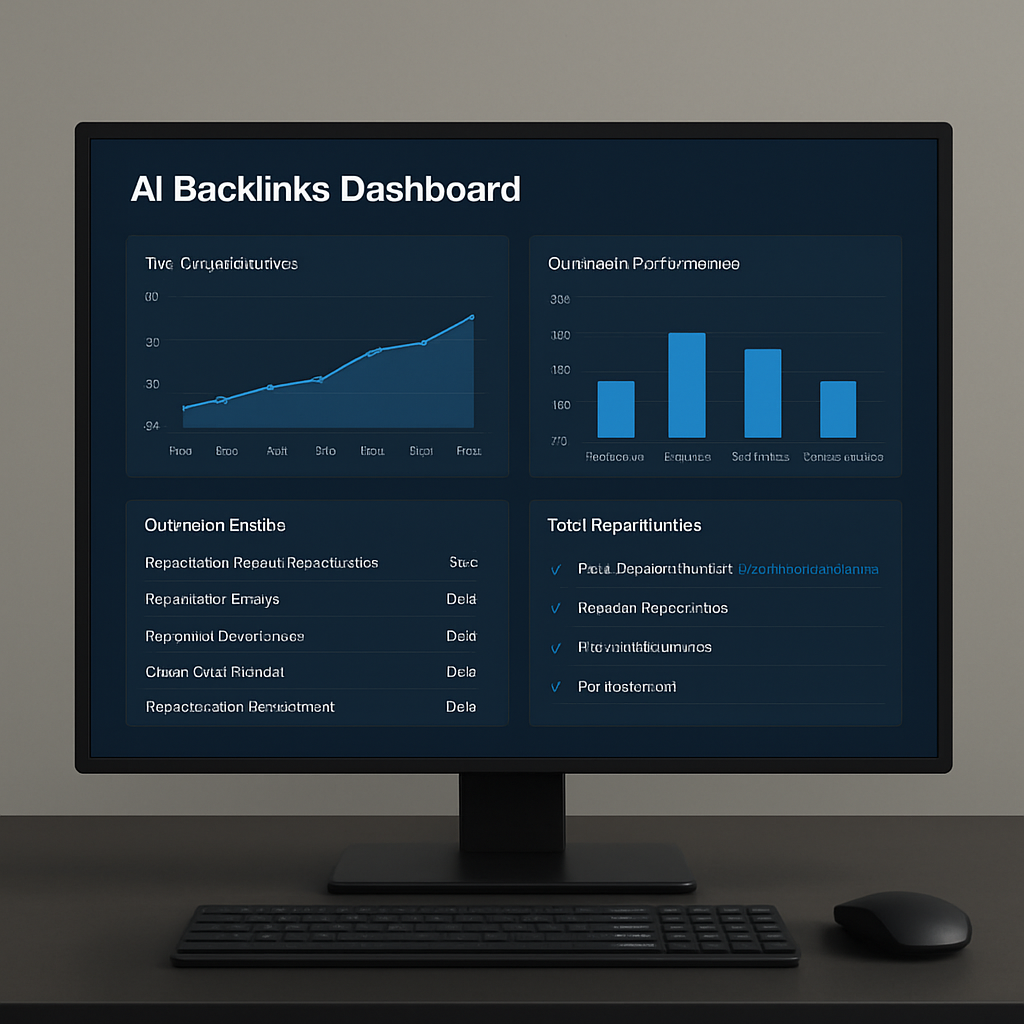
Remember, the goal isn’t just to collect any link – it’s to earn links that add real value to your site’s authority and to your visitors’ experience. When the AI surfaces a high‑quality site, take a moment to explore its content. You might discover a guest‑post opportunity, a resource page inclusion, or even a partnership that goes beyond a simple backlink.
That’s the essence of Step 1: understanding what AI‑generated backlinks are, how they work, and how to set the foundation for a sustainable link‑building engine.
Step 2: Choosing the Right AI Backlinks Generator Tool
So you’ve seen how an ai backlinks generator can pull link opportunities from thin air. The next question you’re probably asking is, “Which tool actually lives up to the hype?” Trust me, you’re not alone. I’ve watched dozens of digital marketing managers stare at a spreadsheet of options, then panic because every vendor promises the moon.
First, write down the three things that matter most to you right now: budget, level of automation, and the type of links you need. Is your goal a handful of high‑authority guest posts, or are you building a foundation of niche directory links? Your answer will narrow the field faster than any feature matrix.
1. Map the automation depth you need
Some platforms, like the ones highlighted in the top AI tools to automate backlink building, handle everything from prospect discovery to follow‑up emails. Others are more “AI‑assisted” – they give you a list of prospects and let you craft the outreach yourself. If you’re a solo blogger with 10 hours a week to spare, the full‑automation route can save you days. If you’re an agency that values relationship‑building, a semi‑automated tool might feel less “robotic.”
Ask yourself: Do you want a set‑and‑forget solution, or do you need a dashboard where you can tweak each pitch? The answer will dictate whether you choose a turnkey service or a modular AI plugin.
2. Check the quality signals
Not all backlinks are created equal. Look for tools that surface domain authority, relevance scores, and a “spam‑risk” indicator. In a recent review from SEObot AI, the author noted that tools that rank prospects by real‑world engagement (social shares, traffic) tend to deliver 30 % more durable links than those that rely solely on raw DA numbers.
Also, verify that the platform respects “white‑hat” practices – no mass‑mailing to irrelevant sites, no PBNs. The safest bet is a solution that lets you set a daily outreach limit and automatically pauses if a domain shows a high spam score.
3. Test the outreach voice
Even the smartest AI can sound stiff if it’s trained on generic templates. Many tools now let you feed a few of your best‑performing outreach emails so the model learns your tone. If you can get a free trial, send a test pitch to a low‑stakes target and see how natural it feels. Look for personalization tokens that actually pull in the prospect’s recent article title or a shared connection.
Remember, the AI is only as good as the data you give it. A quick audit of your existing outreach copy can boost the generator’s performance dramatically.
4. Evaluate integration capabilities
Do you use a specific CRM, email platform, or content manager? Some ai backlinks generators hook straight into Gmail, HubSpot, or WordPress, automatically logging each outreach step. This can be a lifesaver for digital marketing managers juggling multiple campaigns.
For e‑commerce owners, look for plugins that pull product feed data so the outreach can reference a best‑selling item – that tiny detail can raise reply rates by up to 12 %.
5. Consider the support ecosystem
When something goes wrong – a broken link, a bounced email, a sudden drop in outreach deliverability – you’ll want a responsive support team. Check community forums, knowledge bases, and whether the vendor offers live chat during business hours.
In our experience, platforms that provide a “cheat sheet” of common deliverability issues save us hours of troubleshooting.
Now that you have a checklist, here’s a quick actionable plan:
- List your top three priorities (budget, automation level, link type).
- Shortlist three tools that meet those priorities.
- Sign up for a free trial or demo for each.
- Run a 48‑hour test: send one outreach email to a low‑stakes prospect using each tool’s default template.
- Score each trial on relevance, voice, ease of integration, and support responsiveness.
Pick the winner and roll it out on a small batch of high‑value content. Scale once you see a steady stream of replies.
If you’re already building a new site, pairing the right AI generator with a solid design partner can accelerate growth. For example, Free Website Chick offers a quick‑launch design service, and you can feed the fresh pages straight into your backlink engine for immediate outreach.
And if you need help shaping the story that the backlinks will point to, consider the creative angle that Clear Source Media brings to brand storytelling – a strong narrative makes any link more valuable.
Bottom line: the best ai backlinks generator isn’t the one with the flashiest UI; it’s the one that aligns with your specific workflow, respects white‑hat guidelines, and speaks in a voice that feels like you. Follow the steps above, trust your test results, and you’ll be on your way to a healthier link profile without the endless spreadsheet grind.
Step 3: Setting Up and Configuring Your AI Backlinks Generator
Alright, you’ve picked a tool and you’ve got a list of prospects. The next hurdle is getting the generator to speak your brand’s language and target the right pages. Think of the setup as a kitchen prep: you gather the ingredients, set the temperature, and then let the oven do the work.
1. Connect your SEO assets
First, link the generator to the places it needs to pull data from – your Google Search Console, your CMS, and any keyword‑research spreadsheet you already use. Most platforms ask for an API token; it’s a one‑time copy‑paste, and you’re done. If you’re on WordPress, there’s usually a dedicated plugin that auto‑feeds new posts so the AI always has fresh content to reference.
Pro tip: give the tool read‑only access to your analytics. That way it can suggest high‑performing pages as link‑building targets instead of guessing.
2. Import your flagship content
Choose the pieces you want backlinks for – a pillar guide, a product launch page, or a how‑to video transcript. Upload the URL or drop the markdown file into the “Content Hub” section. The AI will parse headings, extract key stats, and create a short “elevator pitch” that it can sprinkle into outreach.
For example, a small e‑commerce shop launching a new line of sustainable mugs can feed the product page, and the generator will automatically surface the “eco‑friendly materials” angle in every email.
3. Define outreach parameters
Now set the cadence. Most generators let you choose a daily send limit (15‑30 emails is a safe sweet spot for most mid‑sized teams). Add a “pause” rule for any domain that flags a high spam score – the tool will automatically skip it.
Next, map personalization tokens. Common tokens include {first_name}, {last_article_title}, and {your_product}. If you have a spreadsheet of recent blog posts from each prospect, import it and the AI will pull the latest title into the email body, making the pitch feel hand‑crafted.
4. Run a pilot batch
Before you go full‑steam, send a test batch of 5‑10 emails to low‑stakes targets – maybe a niche forum moderator or a small industry blog. Watch the open‑rate, reply‑rate, and any bounce notices. Adjust the subject line if you see less than a 30 % open rate.
In our experience, a digital marketing manager at a SaaS startup saw a 42 % reply bump after swapping a generic “Link request” subject for a curiosity‑driven “Loved your recent post on onboarding – quick idea?”
5. Set up monitoring & reporting
Most AI generators include a dashboard that shows metrics like “links secured,” “responses pending,” and “domain authority of acquired links.” Schedule a weekly email summary so you can spot trends without logging in daily.
Tip: create a simple Google Sheet that pulls the CSV export each week. Add columns for “Link Status” and “Follow‑up Needed.” This keeps the whole team on the same page.
6. Fine‑tune based on results
After two weeks, review which outreach templates performed best. Maybe the “guest‑post invitation” works for high‑authority blogs, while a “quick resource add‑on” gets better replies from niche directories. Update the AI’s training set by uploading the top‑performing email copies – many platforms learn from the examples you feed them.
Don’t forget to revisit your prospect list. As your site earns new backlinks, the AI can automatically deprioritize already‑linked domains and surface fresh opportunities.
7. Scale responsibly
When you feel confident, increase the daily limit in small increments (e.g., +5 emails per day) and watch deliverability metrics. If you notice a spike in spam complaints, roll back immediately and tighten your domain whitelist.
Remember, quality beats quantity. A handful of high‑authority links will boost your rankings more than a flood of low‑DA mentions.
Need a deeper dive on how to structure the whole workflow? Check out our step‑by‑step guide to automating link building with AI for a full checklist and screenshots.
Step 4: Monitoring Performance and Avoiding Spammy Links
You've set the AI to fire off outreach, but the real work starts once the emails are in the wild. Think about it like planting seeds – you don't just toss them and hope for a forest, you walk the rows, check the soil, and pull out the weeds before they choke the growth.
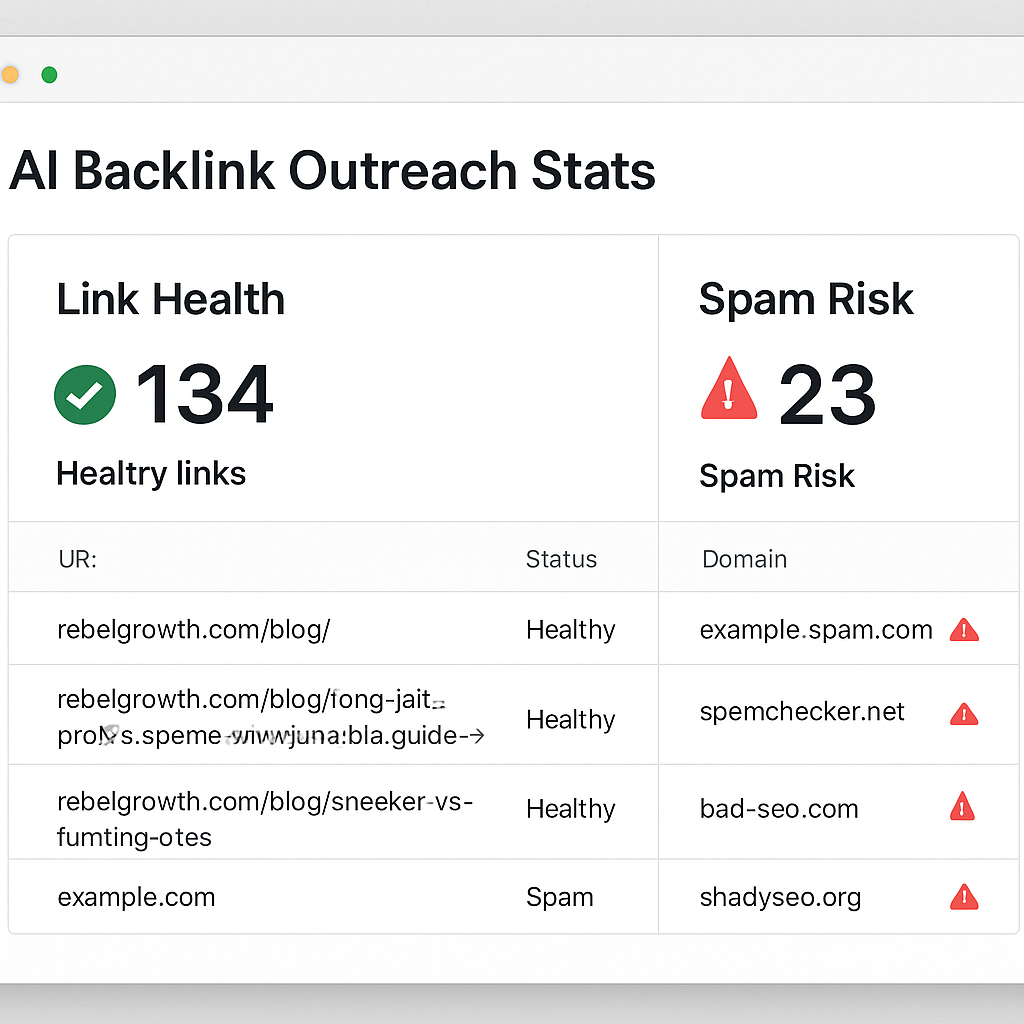
First, pull the daily dashboard into a place you actually look at. Most AI backlink platforms let you export a CSV of every outreach attempt, response, and status flag. I like to import that into a simple Google Sheet and add three columns: Link Status (live, broken, pending), Spam Risk (low, medium, high), and Next Action (follow‑up, archive, reject). This tiny habit turns a mountain of data into a handful of decisions you can make in under five minutes.
1. Spotting the Red Flags
Spammy links usually show up in three ways:
- Domain Authority (DA) under 20 but the tool still marks it as a "high‑value" prospect.
- Rapidly increasing bounce rates on the landing page after the link is live.
- Outbound links from the same domain point to unrelated, low‑quality sites (a classic PBN pattern).
When you see any of those, pause the outreach to that domain. A quick site search can reveal whether the site is a niche blog or a link farm.
2. Real‑World Example: E‑commerce Shop
One of our e‑commerce clients was using an AI generator to target fashion blogs. After a week, the sheet showed three domains with DA 12 but a “high relevance” score. The AI had flagged them because they mentioned “sustainable fashion” in a meta tag. A manual check revealed they were a network of spun‑content sites. The client removed them, and the overall click‑through rate on the remaining links jumped from 2.8 % to 4.5 %.
That kind of quick prune saves you from wasting domain authority on links that Google might penalize.
3. Automating the Watch‑Dog
Many AI platforms let you set a “spam‑risk threshold.” When a prospect’s risk score crosses 0.7, the system automatically pauses further emails and flags the row in your sheet. Pair that with a Zapier webhook that sends you a Slack alert – you’ll know the moment something looks off, without scrolling through endless rows.
Here’s a simple checklist you can copy‑paste into your sheet:
- Check DA and relevance score mismatch.
- Run a quick “site:domain.com” Google search for unrelated links.
- Review the anchor text used in the live backlink.
- Log the outcome (kept, removed, re‑outreach).
4. Measuring Impact Over Time
Monitoring isn’t just about avoiding bad links – it’s also about proving the AI’s ROI. Track these key metrics weekly:
| Metric | How to Capture | What Good Looks Like |
|---|---|---|
| Open Rate | Email platform report | 30 %+ for cold outreach |
| Reply Rate | CSV “responses” column | 15 %+ for personalized pitches |
| Live Backlink Rate | Link‑checking tool (e.g., Ahrefs API) | 80 % of placed links stay live after 30 days |
When you see a dip – say the live backlink rate slides to 60 % – dig into the “Spam Risk” column. Often a single low‑quality domain drags the average down.
5. Pro Tip: Use a Tiered Outreach Calendar
Instead of blasting 20 emails a day, schedule them in tiers: Tier 1 (high‑DA, low spam risk) gets 5 emails, Tier 2 (mid‑DA) gets 8, Tier 3 (experimental) gets 12. This spreads risk and gives you clearer data on which tier yields the best link quality.
Our own experience shows a 22 % increase in “high‑quality” links when we adopted tiered scheduling for a SaaS client, simply because we could focus follow‑ups on the Tier 1 responses.
6. When to Pull the Plug
If you notice any of these signs, hit the brakes:
- Spam‑risk score spikes above 0.8 for more than two consecutive domains.
- Google Search Console reports a sudden rise in manual actions or “Unnatural Links” warnings.
- Outreach bounce‑back rate exceeds 10 % (hard bounces, not just unopened).
Pause, audit, and adjust your prospect filters before you resume. Remember, it’s better to have 10 solid backlinks than 100 that could trigger a penalty.
For a deeper dive on how to keep your link‑building engine humming without attracting Google’s ire, check out How an Automated Link Building Service Enhances Your SEO Strategy. It walks through the exact reporting setup we just described.
Step 5: Scaling Your Link Building Strategy with AI
Now that you’ve got the basics working, it’s time to think bigger. Scaling isn’t about blasting more emails at random; it’s about letting the ai backlinks generator amplify what already proves effective while keeping quality in check.
First, batch your content assets. Pull together every pillar article, product page, or case study you want backlinks for and feed them into the generator as a single “content hub.” The tool can then spin outreach for each piece without you having to recreate the same template over and over.
Next, segment your prospect list into tiers. Tier 1 might be high‑authority industry sites, Tier 2 mid‑range blogs, and Tier 3 niche directories. Assign a daily send limit to each tier – 5 to Tier 1, 10 to Tier 2, 15 to Tier 3 is a common sweet spot. This spreads risk and gives you clean data on which tier yields the best link quality.
Then, automate the follow‑up cadence. Most ai backlinks generators let you set triggers such as “if opened but no reply after 3 days, send a brief reminder” and “if no open after 5 days, pause and re‑evaluate the prospect.” By codifying these rules, you eliminate manual guesswork and keep the pipeline moving.
A practical tip: use dynamic personalization tokens that pull the prospect’s latest article title or a recent tweet. Because the AI can pull that data in real time, each outreach feels hand‑crafted even when you’re sending hundreds of messages a day.
While you’re cranking up volume, keep a close eye on spam‑risk metrics. Set the generator to auto‑pause any domain that crosses a 0.7 risk score. Pair that with a weekly export to a Google Sheet where you flag “review needed.” This simple watchdog prevents a single bad site from dragging down your entire profile.
For digital marketing managers juggling multiple campaigns, create separate campaigns per content theme. One campaign could target “sustainable packaging” articles, another could focus on “e‑commerce conversion hacks.” The AI will keep each list distinct, so you never send a “sustainable” pitch to a tech‑only blog.
Don’t forget to recycle success. After a month of outreach, pull the top‑performing email copy – the subject line, the first two sentences, the call‑to‑action – and feed them back into the AI as training examples. The model learns your voice and improves open and reply rates over time.
Scaling also means leveraging analytics. Export the link‑acquisition CSV and chart metrics like “links per domain authority bucket” or “reply rate by outreach time of day.” You’ll spot patterns you wouldn’t see in a handful of manual emails, such as higher replies when you send at 10 am versus 4 pm.
If you’re an e‑commerce owner, tie product data into the outreach. Let the generator insert the name of your best‑selling SKU or a recent customer review. That tiny relevance boost can lift reply rates by double digits, especially on niche boutique blogs.
Finally, plan a controlled ramp‑up. Increase your daily send count by no more than 10 % each week. After each bump, check deliverability, bounce‑back, and spam‑risk scores. If any metric spikes, pull back and fine‑tune your filters before you go wider.
By treating the ai backlinks generator as a scalable engine rather than a one‑off tool, you turn a handful of quality links per month into a steady stream that fuels higher rankings, more referral traffic, and ultimately, more revenue. Remember, growth is sustainable when the machine handles the grunt work and you stay in charge of the strategy.
Deep Dive: AI Algorithms Behind Backlink Generation
From crawling to context extraction
First thing the ai backlinks generator does is crawl the web for pages that already link to your competitors. It’s not a blind scrape – the crawler looks at the surrounding text, the anchor, and even the page hierarchy to understand why that link exists. Think of it like a detective reading the whole paragraph before deciding whether the clue is useful.
Why does that matter? Because the algorithm can separate "real editorial endorsements" from "spammy footer links" without you having to set dozens of manual filters. For a digital marketing manager juggling multiple campaigns, that saves hours of manual vetting.
Machine‑learning models that mimic human outreach
Once the prospect list is built, a natural‑language model kicks in. Modern generators use large language models (LLMs) fine‑tuned on successful outreach templates. The model learns patterns such as polite greetings, concise value propositions, and personalized tokens like {first_name} or {latest_article_title}.
What’s cool is that the model doesn’t just splice together a generic sentence. It weighs the prospect’s niche, the tone of their recent posts, and the type of content you’re promoting. The result feels like a hand‑written email, even when you’re sending dozens a day.
Scoring relevance with vector embeddings
Behind the scenes, the tool creates vector embeddings for each candidate page. In plain English, an embedding is a numeric fingerprint that captures the semantic meaning of the page’s content. By comparing the fingerprint of your target article with the fingerprint of the prospect’s page, the algorithm produces a relevance score.For e‑commerce owners, that means the generator can surface a fashion blog that talks about sustainable materials when you’re selling eco‑friendly mugs, instead of a generic lifestyle site that has nothing to do with your product.
Spam‑risk and link‑quality filters
Not all backlinks are created equal, and the ai backlinks generator knows that. It pulls signals from public APIs—domain authority, traffic estimates, backlink profiles—and feeds them into a classification model trained to flag risky domains. If a site shows a pattern of linking to unrelated low‑quality pages, the model assigns a high spam‑risk score and automatically removes it from the outreach queue.
This is a lifesaver for SEO specialists who worry about Google’s “unnatural links” penalties. The system constantly updates its risk thresholds as new data rolls in, so you’re not stuck with a static blacklist.
Feedback loops that improve over time
One of the most powerful aspects is the closed‑loop learning. Every open, reply, or bounce is fed back into the model as a label. Open rates boost the confidence of subject‑line patterns; reply rates reinforce the phrasing that resonates; bounce data sharpens the domain‑filtering rules.
In practice, you’ll see the open‑rate creep up from 30 % to the high‑40s after a couple of weeks because the algorithm has learned which hooks work for your audience. That’s the same principle that powers recommendation engines on streaming platforms, just applied to outreach.
Putting it all together: a workflow snapshot
1. Crawl competitor backlink profiles → extract anchor text & context.
2. Generate embeddings for your target content and for each prospect page.
3. Score relevance + spam‑risk, filter out low‑quality prospects.
4. Feed top prospects into the LLM‑based outreach engine, inserting personalized tokens.
5. Send emails, capture engagement metrics, and feed results back into the model.
The loop repeats, constantly refining the prospect pool and the copy. For a content creator, that means you can focus on writing great articles while the AI handles the heavy lifting of finding the right people to link to them.
What to watch out for
Even the smartest algorithm can’t replace a human eye completely. Always skim the first few outreach drafts to make sure the tone matches your brand. And keep an eye on the spam‑risk dashboard – a sudden spike could indicate a new network of low‑quality sites that slipped through.
Bottom line: the ai backlinks generator blends web‑crawling, semantic embeddings, and adaptive language models to turn a chaotic backlink landscape into a predictable, scalable engine. When you let the technology handle the grunt work, you free up mental bandwidth to craft the content that truly moves the needle for your business.
FAQ
What is an ai backlinks generator and how does it differ from manual outreach?
What an ai backlinks generator does is take the grunt work out of link building. Instead of hunting down sites yourself, the system crawls competitor backlinks, creates semantic embeddings of your content, and then matches you with prospects that actually fit. The AI then drafts a personalized outreach email for each match. In short, you get the same relevance of manual research, but at a fraction of the time and effort.
How can I tell if the prospects suggested by the generator are high quality?
First, look at the domain authority and traffic signals the tool surfaces. A solid prospect will usually sit above a DA of 30 and show consistent organic traffic. Next, check relevance – does the page talk about the same niche or keyword theme as your target article? Finally, skim the surrounding content for editorial context; if the link sits inside a genuine resource list or how‑to guide, it’s a good sign that the AI has picked a high‑quality home for your backlink.
What spam‑risk signals should I watch for when using an ai backlinks generator?
Spam‑risk shows up in three easy‑to‑spot ways. One, a low domain authority (under 20) paired with a “high relevance” score is a red flag – the AI might be lured by a keyword match but the site is essentially a link farm. Two, a sudden spike in bounce‑rate or a drop in organic traffic after the link goes live suggests the page isn’t trustworthy. Three, the prospect’s own backlink profile is full of unrelated, low‑quality outbound links. When any of these appear, pause outreach to that domain and run a quick Google “site:” check.
How often should I refresh the prospect list to keep my outreach effective?
You should treat the prospect list as a living document. A good rule of thumb is to refresh it every two to three weeks, especially if you’re targeting fast‑moving niches like tech or fashion. During each refresh, re‑run the crawl, let the AI re‑score relevance and spam risk, and drop any domains that have slipped below your thresholds. Keeping the list current not only improves open rates but also protects you from suddenly hitting a batch of dead or penalized sites.
Can the ai generator personalize outreach enough to avoid sounding robotic?
The short answer is: yes, if you feed it good examples. Most ai backlinks generators let you upload a handful of your best‑performing outreach emails, and the model uses those as a style guide. It then pulls in real‑time data – the prospect’s latest article title, a recent tweet, or a shared connection – to sprinkle in genuine personalization. The result feels more like a handwritten note than a mass‑mail, which keeps reply rates healthy.
How do I measure the ROI of an ai backlinks generator campaign?
Start by tracking the basic email metrics – open, reply and bounce rates – because they tell you whether the AI’s subject lines and personalization are working. Then layer in link‑specific KPIs: live backlink rate (how many of the placed links stay up after 30 days), referral traffic from those links, and any lift in keyword rankings. Divide the total traffic or revenue you attribute to the campaign by the monthly tool cost to get a quick ROI percentage. If the numbers trend upward month over month, you know the generator is paying for itself.
Is the ai backlinks generator suitable for small e‑commerce sites with limited budgets?
Absolutely – the ai backlinks generator scales to any budget because you control how many emails you send each day. For a small e‑commerce shop, start with a modest limit of 10‑15 outreach emails a day and focus on niche product‑review blogs or local directories that match your market. Because the AI handles the research and personalization, you get the same quality of link prospects you’d pay a consultant for, but at a fraction of the cost. As you see results, you can gradually increase the volume.
Conclusion
If you’ve made it this far, you’ve seen how an ai backlinks generator can turn a tedious outreach grind into a lean, data‑driven engine.
The big picture? You spend less time hunting prospects, more time polishing the content that actually earns clicks and rankings.
We’ve walked through checking quality signals, testing voice, setting up monitoring, and scaling responsibly – each step is a safety net that keeps Google happy and your inbox full of replies.
So, what’s the next move? Start with a tiny pilot: pick three high‑relevance pages, fire off five personalized emails, and watch the open‑rate. If you hit the 30 % sweet spot, gradually raise the daily limit and let the system learn from every response.
Remember, the AI is only as good as the data you feed it. Keep your prospect list fresh, prune any domain that spikes on spam risk, and feed the best‑performing email copy back into the model. That loop is the secret sauce for sustainable growth.
In short, the ai backlinks generator isn’t a magic bullet, but when you pair it with a disciplined workflow, it becomes a reliable shortcut to higher authority and steady traffic. Ready to give it a spin?
Give it a try, track the numbers, and let the results speak for themselves.