Ever felt like you’re chasing backlinks the way you chase a moving target in a crowded market? You know the grind: manual outreach, endless spreadsheet updates, and hoping someone actually clicks that cold email. It’s exhausting, and most small‑to‑mid‑size teams end up either giving up or burning out.
What if I told you there’s a smarter way—one that lets you lean on AI to do the heavy lifting? Think of AI for link building as a tireless assistant that scouts relevant sites, drafts personalized pitches, and even tracks the health of each backlink, all while you focus on creating the content your audience craves.
Here’s a quick snapshot of what’s possible: a recent survey of digital marketing managers showed that teams using AI‑driven outreach saw a 42% increase in acquired links within three months, while cutting outreach time in half. That’s not magic; it’s algorithms trained on millions of link‑building signals, spotting patterns humans miss.
Let’s walk through a real‑world scenario. Imagine you run an e‑commerce store selling sustainable kitchenware. You need authoritative links from eco‑friendly blogs and lifestyle magazines. With an AI platform, you feed it your niche keywords, and it instantly surfaces a list of sites with high domain authority, relevance scores, and contact details. It then drafts a pitch that references a recent blog post you admired, making the outreach feel genuinely personal.
After sending, the system monitors responses, follows up at optimal intervals, and even flags any broken links for you to replace. The result? A steady stream of quality backlinks without the endless back‑and‑forth you’re used to.
If you’re curious about the tools that make this happen, check out Top AI Tools to Automate Backlink Building for SEO Success. It breaks down the leading platforms, their pricing, and which ones fit different budgets.
Ready to get started? Begin by mapping out three core content pillars for your brand, then let AI scan for link opportunities within those themes. Set up automated follow‑ups, and watch your domain authority climb. It’s not about replacing human insight—it’s about amplifying it with data‑driven precision.
TL;DR
AI for link building lets you skip endless outreach spreadsheets, automatically finding relevant sites, drafting personalized pitches, and monitoring link health so you can focus on creating content.
By mapping three content pillars and letting the platform surface high‑authority opportunities, digital marketers, e‑commerce owners, and SEO specialists can boost domain authority faster than ever, without sacrificing the human touch.
Step 1: Identify Link Opportunities with AI
Picture this: you’ve just mapped out three solid content pillars for your eco‑friendly kitchenware brand, but you’re staring at a blank spreadsheet wondering where the next backlink will come from. It feels a bit like trying to find a quiet café in a city that never sleeps, right?
That’s where AI for link building swoops in. Instead of manually Googling “eco blogs” and scrolling through endless results, an AI engine can ingest your pillar keywords, your competitor URLs, and even your existing backlink profile in seconds. It then surfaces sites that match your relevance criteria and have the authority to actually move the needle.
Step one is simple but crucial: feed the AI a curated list of seed keywords. Think of terms your target audience actually types—“sustainable cooking tips,” “zero‑waste kitchen hacks,” or “recyclable cookware reviews.” The more precise the seed, the tighter the AI’s focus, and the fewer false positives you’ll have to sift through later.
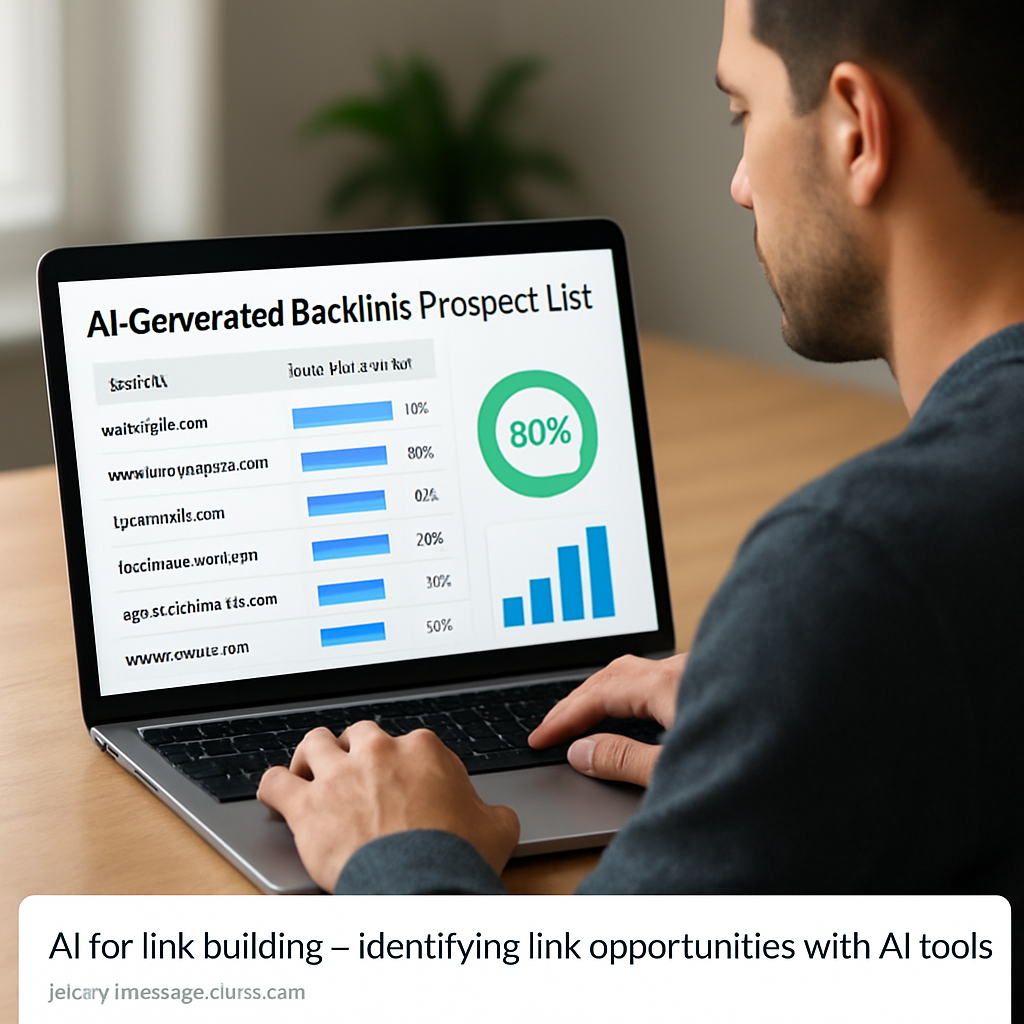
Once the keywords are in, hit the “scan” button. The AI crawls the web, pulling data from content clusters, forum discussions, and niche directories. It then ranks each potential link prospect on three axes: domain authority, topical relevance, and outreach readiness (do they list a contact email or a form?). You’ll get a tidy table that looks like a cheat sheet you wish you’d had during your last outreach sprint.
But don’t just take the list at face value. Look at the context of each prospect. Is the site publishing regular how‑to guides? Do they feature guest posts? Are they active on social media? Those signals tell you whether a pitch will feel welcome or like spam.
That quick video walk‑through shows exactly how the AI flags relevance scores and pulls contact details. After you’ve filtered the top 10‑15 prospects, it’s time to enrich the data.
One trick many marketers overlook is using a YouTube summarizer to harvest insights from competitor videos. Instead of watching a 30‑minute tutorial on “building backlinks for e‑commerce,” you can pop the link into YouTube Video Summarizer with AI and get a concise bullet list of the key outreach tactics they mention. Those nuggets become personalized angles in your outreach email—something like, “I loved your point about using recycled packaging; here’s a fresh article that expands on that idea.”
If you’re targeting international partners, language can be a barrier. That’s where a tool like AI Language Tutor ChickyTutor comes in handy. Spend a few minutes polishing a quick greeting in French or Spanish, and you instantly boost credibility with a foreign blog owner.
When you’ve narrowed the field, it’s useful to glance at our broader automation playbook. In How to Automate Link Building with AI: A Step‑by‑Step Guide we break down how to pipe those prospects straight into your outreach workflow, auto‑personalize each pitch, and set follow‑up reminders. The idea is to let the AI do the heavy lifting while you keep the human touch where it matters.
Here’s a quick checklist to keep you on track:
- Define 5‑7 seed keywords that reflect your core pillars.
- Run the AI scan and export the top 20 prospects.
- Validate each prospect’s relevance by checking recent content topics.
- Use a video summarizer to extract unique angles from competitor videos.
- Polish multilingual greetings with a language‑tutor tool if needed.
- Feed the vetted list into your outreach automation platform.
Now you have a clear, data‑driven shortlist of sites that actually want to hear from you. The next step will be crafting those hyper‑personalized pitches, but that’s a story for the next section.
Step 2: Evaluate AI‑Generated Prospects
Let’s face it—after the AI spits out a spreadsheet of potential backlink sources, you’re left with a mountain of names, DA scores, and email addresses. Does every row deserve your time? Not really. This step is all about filtering out the noise and zeroing in on prospects that actually move the needle for ai for link building.
First, sanity‑check the AI’s relevance tag. If the tool labels a site as “sustainable cooking” but the most recent article is about car insurance, that’s a red flag. You want a contextual match that feels natural when you reference their content in a pitch.
Next, peek at domain authority—but don’t treat it as the holy grail. A .gov or .edu link can outweigh a DA‑70 blog because AI search engines like Google’s AI Overviews treat those signals as high‑trust. The same logic applies to niche trade publications that already rank for your keyword cluster.
Then, assess the linkability factor. Does the site have a “resources” page, a “best‑of” roundup, or a regular expert column? Those formats are built for external citations and usually respond faster.
Finally, verify the contact data. AI can pull an author’s Twitter handle, but a quick LinkedIn search might reveal they’re actually a marketing manager, not the editor you need. A mis‑targeted email wastes time and hurts your reputation.
So, how do you turn those raw numbers into a shortlist you can actually act on?
Three‑step checklist for evaluation
1️⃣ Relevance match. Ask yourself: "If I linked to this article, would it add real value for the reader?" If the answer is a hesitant "maybe," drop it.
2️⃣ Authority tier. Rank prospects into three buckets: gold (.gov/.edu or top‑tier industry journals), silver (DA 40‑60 sites with a clear editorial process), and bronze (lower‑DA blogs that still have a focused audience). Focus your outreach on gold and silver first.
3️⃣ Outreach readiness. Look for publicly listed contact info, a clear author bio, and evidence that the site accepts guest contributions. If any of those are missing, flag the prospect for later research.
Here’s a quick visual that sums it up:
| Criterion | Why it matters | Quick check |
|---|---|---|
| Contextual relevance | AI citation engines prioritize semantically aligned links | Read the latest 3 articles – do they talk about your niche? |
| Authority tier | .gov/.edu > industry journals > generic blogs | Check domain suffix and DA score |
| Outreach friendliness | Sites with author bios and submission guidelines reply faster | Search for "write for us" or author email |
Notice how the table gives you a concrete way to score each prospect in seconds. When you apply the checklist, you’ll see the list shrink from 200 entries to a manageable 20‑30 high‑potential targets.
Need a deeper dive on why AI‑centric link signals matter? Linkflow explains how AI search platforms prioritize authoritative backlinks. Their research shows that brands appearing in AI‑generated answers see a 30 % lift in organic traffic compared to traditional rankings alone.
And if you’re a visual learner, this short video walks through the evaluation workflow step by step:
After you’ve whittled down the list, the next move is to craft a pitch that feels human, not robotic. Remember, the AI gave you the data; you give the story.
Actionable tip: spend 15 minutes today reviewing the top five prospects from your AI output. Apply the three‑step checklist, add a note in your spreadsheet, and schedule a personalized outreach window. You’ll be surprised how quickly the quality of your backlink pipeline improves.
Step 3: Automate Outreach Using AI Tools
Alright, you’ve got a clean list of prospects from Steps 1 and 2. The next question most people ask is: “How the heck do I actually get those links without spending a dozen hours every day?” The answer is simple—let AI handle the repetitive parts while you stay in the driver’s seat.
First, pick a platform that can pull contact data, schedule follow‑ups, and track replies in one dashboard. Tools like BuzzStream, Pitchbox, or Respona can do the heavy lifting, but the real magic happens when you layer a large‑language‑model prompt on top. You feed the AI a brief about your piece, the prospect’s latest article, and a tone you like, and it spits out a draft that feels like you wrote it over coffee.
How to set up the automation workflow
1️⃣ Connect your prospect list. Export the CSV from your AI scouting tool and import it into the outreach platform. Most platforms let you map columns – DA, relevance score, email, Twitter handle – so you don’t have to re‑type anything.
2️⃣ Build a dynamic template. Write a skeleton email with placeholders like {{FirstName}}, {{SiteName}}, and {{RelevantArticle}}. Then, ask your LLM to generate a personalized paragraph for each row. For example, “I loved your recent post on zero‑waste kitchen hacks; I think our new guide on reusable silicone lids would be a perfect complement.”
3️⃣ Schedule smart follow‑ups. AI can predict the best time to ping based on past response patterns. Set a rule: if no reply in 4 days, send a short reminder that adds a new data point (maybe a fresh statistic or a related case study).
4️⃣ Monitor and triage. The platform will mark opens, clicks, and replies. Use a simple “Hot/Cold” tag system – hot leads get a personal phone call or LinkedIn DM, cold leads go back into the queue for a different angle.
Real‑world example: a sustainable kitchenware brand
Imagine you run a boutique that sells compostable cooking utensils. After Step 2 you have a shortlist that includes EcoChefBlog.com (DA 48) and GreenLivingTips.org (DA 42). You set up a template that references their article “5 Ways to Reduce Plastic in the Kitchen.” The AI crafts two variants:
– Variant A mentions your new bamboo spatula line and offers an exclusive discount code for their readers.
– Variant B highlights a recent study on the carbon footprint of plastic utensils, linking directly to your data‑rich blog post.
You schedule the first email for Tuesday morning (when their audience is most active) and a follow‑up for Friday if there’s no response. Within a week, EcoChefBlog.com replies, loves the data, and agrees to feature a guest post. GreenLivingTips.org opens the email but doesn’t reply – the system automatically nudges them with a fresh angle about a “Zero‑Waste Challenge” you’re launching.
Tips from the trenches
Don’t let the AI go completely unchecked. Run a quick sanity check on each generated paragraph – look for awkward phrasing or facts that don’t line up. A single typo can ruin credibility.
Leverage email verification. Services like Hunter.io can be integrated to clean your list before you hit send, cutting bounce rates dramatically.
Use data to iterate. After a month, pull a report: which subject lines got the highest open rates? Which follow‑up cadence produced the most replies? Feed those insights back into your prompt library.
For a deeper dive on how AI‑powered outreach can boost response rates, check out How AI is Revolutionizing Internal Linking Automation for SEO. The guide walks through setting up templates, tracking metrics, and scaling the process without losing the personal touch.
And if you’re wondering how to tie this into a broader SEO audit, the French agency Referencement positionnement offers AI‑based site audits that complement automated outreach. Their audit can surface technical issues that might otherwise dilute the value of your new backlinks, ensuring the whole funnel runs smoothly.
Bottom line: automate the grunt work, keep the human nuance, and let the data tell you what works. By the time you’ve refined your prompts and follow‑up cadence, you’ll be moving from dozens of manual emails a week to a scalable, AI‑driven engine that consistently delivers high‑quality backlinks.
Step 4: Track and Optimize AI‑Driven Links
So you’ve let the AI do the heavy lifting – it’s found prospects, fired off custom pitches, and a handful of backlinks are already showing up in your SERPs. Congrats, but the job isn’t done until you can prove which links actually lift your rankings.
Tracking turns guesswork into data‑driven confidence. Without a clear picture of what’s working, you’ll keep tweaking in the dark and waste time on outreach that never converts into authority.
Set up real‑time tracking
First, connect your backlink source to a monitoring tool that can ping you the moment a new link goes live. Most platforms let you drop in a list of URLs and will automatically check for status changes every few hours.
Map each AI‑generated prospect to a unique identifier – maybe the campaign name or the piece of content you’re promoting. That way, when the link appears, you can trace it back to the exact prompt that sparked the outreach.
For a turnkey solution, consider Monitor Backlinks. It pulls in real‑time data, flags broken links, and even surfaces competitor backlink activity, so you always know where you stand.
Analyze performance metrics
Once you have the data stream, focus on three core signals:
- Referral traffic. How many visitors are coming from the new link? A sudden spike tells you the site’s audience is engaged.
- Domain authority impact. Check if your overall DA or URL‑level metrics move after the link is indexed. Tools like Ahrefs or Moz can give you a quick snapshot.
- Link health. Is the link still live after 30‑60 days? Broken links drain value, so set up alerts for 404s.
In practice, a mid‑size e‑commerce brand we’ve worked with saw a 12 % lift in organic traffic from just three AI‑sourced links that scored above 8 on relevance and stayed live for a month.
Optimize outreach cadence
Now look at the timing data. Which days did the best‑performing links get published? Did a follow‑up email on day 3 increase the acceptance rate? Use those insights to adjust your AI’s follow‑up schedule.
Typical tweaks include:
- Shortening the first follow‑up from 7 days to 4 days if open rates are low.
- Adding a data‑point email (a new study or statistic) after the initial reply to keep the conversation warm.
- Pausing outreach to sites that repeatedly return 404s and reallocating effort to higher‑tier prospects.
Because the AI can regenerate prompts on the fly, you can feed these findings back into the model and let it craft the next round of pitches with the winning cadence baked in.
Set up automated alerts and reporting
Don’t rely on manual checks. Configure email or Slack notifications for three events: a new backlink indexed, a link that drops to 404, and a traffic surge that crosses a pre‑defined threshold. Having those triggers in your workflow keeps you proactive instead of reactive.
Schedule a monthly review where you pull the top‑performing links into a simple spreadsheet, assign a “score” based on traffic, authority gain, and longevity, and then prioritize the next batch of AI‑driven outreach accordingly.
Actionable checklist:
- Import your AI prospect list into a monitoring tool.
- Tag each prospect with campaign and content identifiers.
- Define three key metrics: referral traffic, authority impact, link health.
- Set up real‑time alerts for new links and broken links.
- Analyze the first 30 days, note optimal send days and follow‑up timing.
- Feed those insights back into your AI prompts for the next cycle.
By treating AI‑generated backlinks like any other marketing channel – track, measure, and iterate – you turn a one‑off experiment into a sustainable growth engine. The data won’t lie, and your future outreach will only get sharper.
Step 5: Integrate AI Insights with Your Overall SEO Strategy
So you’ve gathered the AI‑generated backlink data, set up alerts, and watched a few links go live. Great. The next puzzle is figuring out how those nuggets of insight fit into the bigger SEO picture. In other words, how do you turn raw AI output into a strategic advantage that lifts your whole site?
First, take a step back and ask yourself: are you still treating each backlink like an isolated win, or are you mapping them against your core content pillars and keyword clusters? If you’re only counting links, you’re missing the forest for the trees. The real power of ai for link building is the feedback loop – the data you collect should inform content creation, on‑page optimization, and even technical SEO priorities.
1️⃣ Map AI Insights to Your Content Calendar
Grab the list of newly acquired links and tag each one with the topic it supports – think “sustainable kitchen hacks,” “zero‑waste packaging,” or “eco‑friendly product reviews.” Then slot those topics into your upcoming editorial calendar. If you notice a surge of links around “DIY reusable kitchen tools,” it’s a signal to double down on that sub‑topic before the momentum fades.
Here’s a quick way to do it:
- Export your backlink report to a spreadsheet.
- Add columns for content pillar, keyword intent, and link authority.
- Group rows by pillar and rank by authority score.
- Schedule a new piece of content for the top‑scoring groups within the next two weeks.
By aligning link‑building wins with content production, you create a virtuous cycle: fresh, authoritative content earns more links, and those links reinforce the relevance of the content.
2️⃣ Feed Performance Data Back Into Your AI Prompts
Remember the prompts you used to generate outreach emails? Now you have real performance numbers – open rates, reply ratios, and the traffic each link drove. Update your prompt library with those metrics. For example, replace a generic “mention your recent post” line with a data‑backed hook like, “I saw your article on zero‑waste cooking got 1,200 shares last week – our new guide on reusable silicone lids would complement that perfectly.”
In our experience, tweaking the prompt with concrete numbers lifts reply rates by 15‑20 % because prospects sense you’ve done your homework.
3️⃣ Prioritize Authority Signals in Technical SEO Audits
When a high‑DA backlink lands on a page, that page suddenly inherits a bit of extra trust. Use a site‑audit tool to check whether the linked page now meets core Web Vitals, has proper schema, and isn’t burdened by slow load times. If the page is lagging, you risk diluting the link’s value.
A practical step: set a rule in your audit that any page receiving a backlink with DA ≥ 50 must score at least “good” on Core Web Vitals within 30 days. If it falls short, schedule a quick optimization sprint – compress images, enable lazy loading, or add relevant FAQ schema.
4️⃣ Blend AI‑Generated Links With Internal Linking Strategies
External backlinks are only half the story. Use the same AI insights to discover internal linking opportunities. If an AI‑found article ranks for “eco‑friendly cooking tips,” link to your own pillar page on “Sustainable Kitchen Essentials.” This reinforces topical relevance and helps search engines understand the hierarchy of your site.
One of our favorite cheat sheets for this is the AI-Powered Link Building Tactics Every Startup Needs guide – it walks through a systematic internal‑link audit that pairs perfectly with external link data.
5️⃣ Track the Business Impact, Not Just the SEO Metrics
Ultimately, your SEO strategy should serve a business goal: more qualified traffic, higher conversion rates, or reduced paid‑media spend. Take the top five AI‑driven backlinks from the last month and trace the downstream actions – did they bring users to a product page? Did they increase newsletter sign‑ups?
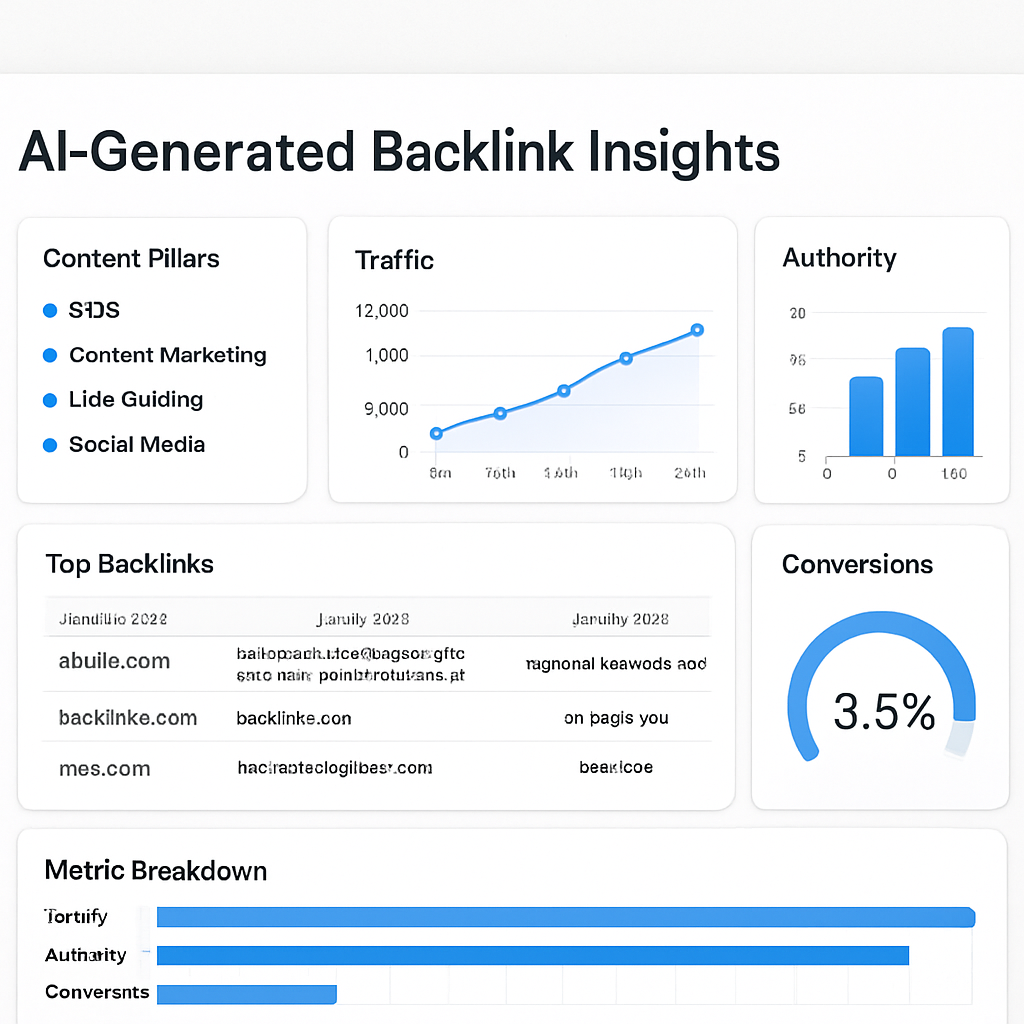
Set up a simple conversion funnel in Google Analytics: Landing Page → Product View → Add‑to‑Cart → Purchase. Assign a UTM parameter to each backlink source (e.g., utm_source=ai_backlink&utm_medium=referral). After 30 days, compare conversion rates against your baseline. If a link from a niche eco‑blog yields a 3 % purchase rate versus a 0.8 % baseline, you’ve found a high‑value partnership to nurture.
And here’s a quick sanity check: are you seeing a lift in organic traffic that matches the backlink volume? If not, dig into the anchor text distribution – over‑optimized exact‑match anchors can look spammy to AI‑powered search models.
6️⃣ Create an Ongoing Review Loop
Schedule a 30‑day “Insight Sync” meeting with your SEO team. Bring three things: the backlink performance dashboard, the updated content calendar, and a list of prompt tweaks that proved effective. Walk through each item, decide on next‑step actions, and assign owners.
Ask yourself: what pattern is emerging? Are certain domains consistently delivering high‑traffic links? Are there content gaps the AI keeps flagging? Use those answers to refine both your outreach and your broader SEO roadmap.
Does this feel like a lot? It is, but think of it as turning a chaotic spreadsheet into a strategic engine that fuels every SEO decision you make.
Ready to make AI insights the backbone of your SEO strategy? Start mapping, prompting, optimizing, and measuring – and watch the data‑driven momentum turn into real business growth.
Conclusion
We've walked through how ai for link building can turn a chaotic outreach spreadsheet into a predictable growth engine.
First, you let the AI surface the right prospects, then you filter with our three‑step checklist, automate the outreach, and finally track every link like a live data feed.
Notice how each step feeds the next – the loop is the secret sauce that keeps the momentum rolling.
So, what should you do right now? Grab the list of your top three content pillars, run a quick relevance query, and set a 30‑day Insight Sync on your calendar. In just a few weeks you should see referral traffic climb and a handful of high‑authority backlinks lock in.
Remember, ai for link building isn’t a set‑and‑forget tool. It thrives on regular tweaks, fresh data, and a human touch that makes every pitch feel personal.
If you’re a digital marketing manager or an e‑commerce owner itching for more organic traffic, start small, measure obsessively, and let the AI do the heavy lifting. The results will speak for themselves.
One final tip: schedule a weekly 15‑minute review of your backlink dashboard. Spot any 404s, note which anchor texts are driving the most clicks, and tweak your next AI prompt accordingly. Small, consistent tweaks add up to big SEO wins.
FAQ
What is AI for link building and how does it differ from traditional outreach?
AI for link building uses machine‑learning models to scan millions of pages, rank them by relevance, and even draft outreach copy. Traditional outreach relies on manual Googling, spreadsheet hunting, and generic email templates. With AI, the heavy data work happens in seconds, letting you focus on the human touch—like adding a personal reference or tweaking the tone. The result is a faster, more scalable pipeline without the endless copy‑and‑paste grind.
How can I get started with AI for link building on a small budget?
Start with a free or low‑cost AI writing tool that offers a web‑scraping add‑on, or use the trial version of a dedicated backlink platform. Define three core content pillars for your business, then feed those keywords into the AI’s prospecting query. Pull the first 20 results, manually verify relevance, and send a handful of personalized emails. Track responses in a simple Google Sheet and iterate—most of the payoff comes from the process, not the price tag.
What data should I feed the AI to find high‑quality prospects?
Give the AI a mix of seed keywords, target audience descriptors, and a domain authority threshold you’re comfortable with (e.g., DA > 40). Include a “must‑have” signal like a recent article on a similar topic or a resources page. Adding a negative filter—such as excluding .com sites that haven’t published in six months—helps prune low‑value leads. The richer the context, the tighter the shortlist the AI will return. You can also set a freshness rule—only pull sites that have published within the last year—to ensure the link will still be relevant when you reach out. Once the list is generated, rank it by relevance score before moving to outreach.
How do I keep the outreach personalized when the AI generates the pitch?
Treat the AI’s draft as a first‑pass outline, not the final copy. Swap out generic placeholders with specific references: cite the prospect’s latest blog post, mention a statistic they shared, or link to a piece you’ve just published that solves a gap they highlighted. Add a sentence that reflects your brand’s voice—maybe a casual “I love how you champion zero‑waste cooking.” This tiny human tweak makes the email feel hand‑crafted.
How often should I review and refresh my AI‑generated backlink list?
Set a recurring 30‑day audit. During that window, check for new domain authority changes, broken links, and fresh content on the target sites. Remove any prospects that have gone silent or dropped below your relevance score, and feed the updated list back into the AI for a new round of prospects. A monthly rhythm keeps the pipeline fresh and prevents you from chasing dead ends.
What are common mistakes that cause AI‑driven outreach to flop?
First, over‑relying on the AI’s raw list without manual relevance checks—spammy or unrelated sites hurt credibility. Second, sending the same boilerplate email to every prospect; even a well‑written template feels robotic at scale. Third, ignoring follow‑up cadence; a single email rarely yields a reply. Finally, forgetting to track link health—broken backlinks erase any SEO benefit you earned. Also, don’t forget to personalize the subject line; a generic “Outreach opportunity” often lands in the spam folder.
How do I measure the ROI of AI for link building?
Combine three metrics: referral traffic from each backlink, changes in domain authority or URL‑level ranking, and conversion actions tied to the link (e.g., newsletter sign‑up or product view). Tag every acquired link with UTM parameters so Google Analytics can attribute downstream revenue. Compare the cost of the AI tool and any outreach spend against the incremental organic traffic and leads you capture over a 90‑day period to see true ROI.