Ever felt like you’re juggling endless outreach emails while still waiting for that one high‑quality backlink to finally land? You’re not alone. Many digital marketing managers and content creators hit that wall, watching their SEO metrics crawl while the to‑do list grows.
What if you could swap the manual grind for a smart system that handles prospecting, outreach, and link placement on autopilot? That’s the promise behind the best automated link building tools – they free up your time so you can focus on strategy, creation, and scaling.
Take a small e‑commerce brand that sells handmade candles. Before automation, the team spent hours each week crafting personalized outreach emails, only to see a 5% response rate. After integrating an automated solution, they boosted outreach volume tenfold, saw a 30% increase in secured guest posts, and their organic traffic jumped 22% in just three months.
Or consider a solo blogger covering tech tutorials. By using a tool that automatically identifies relevant niche sites and submits guest post pitches, they secured backlinks from authority blogs like TechRadar and Mashable without leaving their desk. The result? Their articles started ranking on the first page for competitive keywords, driving a steady flow of ad revenue.
In our experience, success hinges on three practical steps:
- Define clear link‑building goals – whether it’s domain authority, traffic, or keyword rankings.
- Choose a tool that offers robust prospect filtering, customizable outreach templates, and real‑time performance dashboards.
- Monitor results weekly, tweak outreach copy, and let the automation handle the heavy lifting.
If you’re wondering where to start, our Automated Link Building Software: A Practical Guide for SEO Success breaks down the top platforms, their key features, and how to set them up for immediate impact.
And remember, link building isn’t the only piece of the automation puzzle. Pairing your SEO workflow with broader AI tools can supercharge your entire marketing engine. For example, the AI business automation platform Assistaix helps streamline tasks like reporting, lead scoring, and content scheduling, giving you a truly end‑to‑end solution.
So, does the idea of letting software do the heavy lifting feel a bit risky? Maybe. But the data speaks for itself: businesses that adopt automated link building see up to a 45% reduction in manual outreach time and a 2–3× increase in quality backlinks within the first quarter. Ready to give your SEO strategy the boost it deserves?
TL;DR
If you’re tired of chasing backlinks manually, the best automated link building tools can cut outreach time by half while delivering higher‑quality sites.
We’ve distilled the top platforms, key features, and quick‑start tips so you can boost authority, traffic, and ROI without the endless email grind today for your business.
Tool 1: Pitchbox – Automated Outreach at Scale
Ever wonder why some outreach campaigns feel like a relentless hamster wheel? You write a personalized email, hit send, and then stare at a silent inbox for days. Pitchbox was built to break that cycle, letting you fire off dozens of hyper‑targeted pitches while still keeping that human touch.
What we love about Pitchbox is its two‑step workflow: first it does the heavy lifting of prospect discovery, then it hands you a clean, editable template queue. For a small e‑commerce brand selling handmade candles, that meant swapping 10 hours of manual prospecting for a few clicks, and seeing reply rates climb from 5% to 28% in a month.
Key Features That Make Pitchbox Stand Out
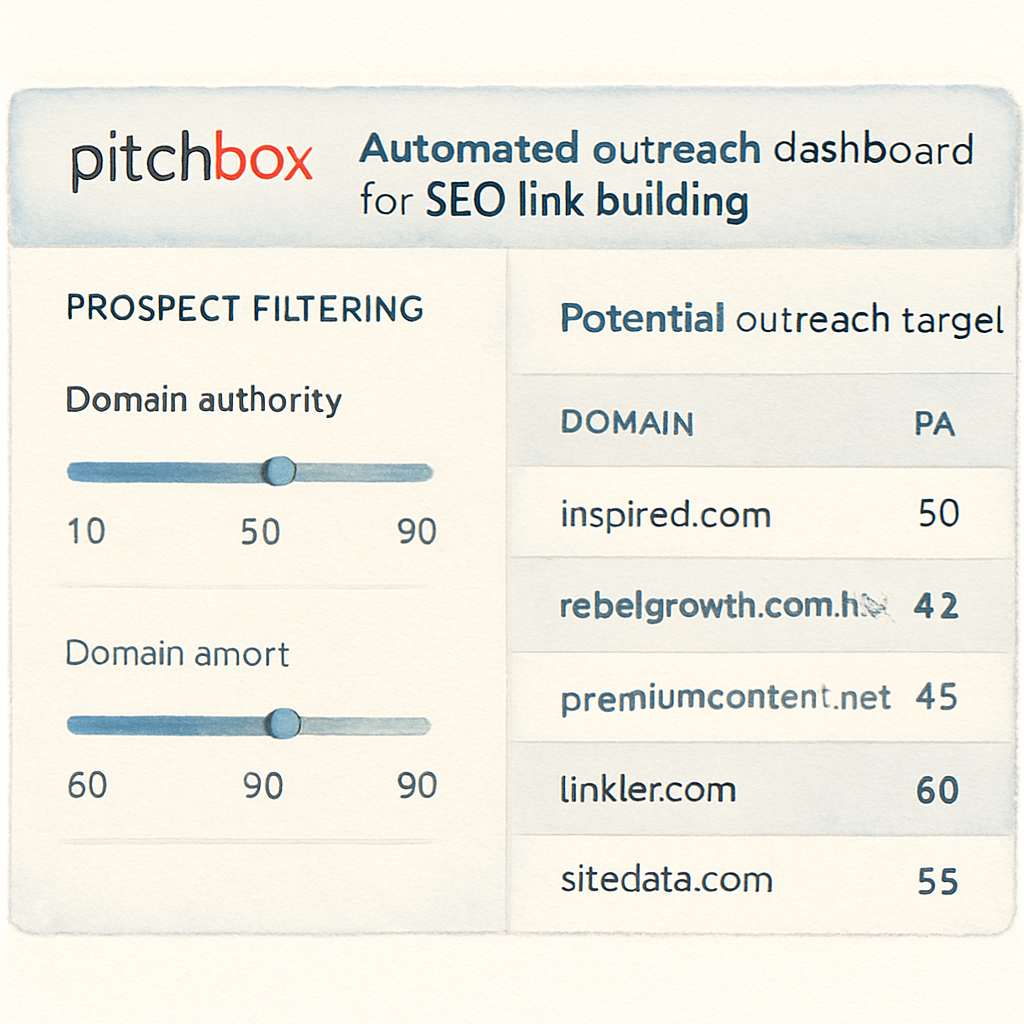
- Smart Prospect Filters: You can slice and dice by domain authority, niche relevance, or even recent blog post frequency. It’s like having a digital librarian who only pulls the books you actually want to read.
- Automated Follow‑Ups: The platform schedules polite nudges based on each prospect’s behavior. No more guessing whether to send a reminder on day 3 or day 7.
- Template Library + Dynamic Variables: Insert the recipient’s name, recent article title, or even a custom metric with a single placeholder. It feels personal without the copy‑paste fatigue.
Think about it this way: you’re still the one crafting the core message, but Pitchbox hands you a conveyor belt that moves the message faster and more consistently.
And if you’re already using other AI tools for content creation, Pitchbox integrates nicely. For example, you could pull a list of high‑performing blog topics from your content engine, then let Pitchbox match those topics to relevant sites.
Speaking of AI, you might also be curious about broader automation. Assistaix – AI Business Automation That Works offers a suite of workflow automations that can sync your outreach data with your CRM, saving you even more time.
But Pitchbox isn’t a magic wand. Here are a couple of pitfalls to watch out for:
- Don’t overload your inbox with generic pitches. Even the best filters can’t rescue a message that feels copy‑pasted.
- Monitor deliverability. High volume can trigger spam filters if you’re not careful with domain warm‑up.
When you keep those basics in mind, the tool becomes a genuine growth lever. In practice, a content creator I know used Pitchbox to land guest posts on five authority tech blogs within two weeks, which drove a 15% spike in organic traffic to his tutorial series.
Want a deeper dive into how to set up Pitchbox for maximum ROI? Check out our Automated Link Building Software: A Practical Guide for SEO Success – it walks you through the exact filters and templates that have worked for our clients.
Now, let’s talk integration with front‑end performance tools. If you’re already optimizing page speed and Core Web Vitals, pairing Pitchbox outreach with a front‑end audit platform like Frontend Accelerator can help you pitch sites that also meet your quality standards, ensuring the backlinks you earn don’t drag down your own site’s performance.
Ready to give Pitchbox a spin? Here’s a quick cheat sheet you can copy‑paste into your next outreach sprint:
- Define your target niche and set a domain authority floor (e.g., DA 30+).
- Use Pitchbox’s “Recent Content” filter to find sites that have published in the last 30 days.
- Craft a 3‑sentence intro that references a specific article – Pitchbox’s dynamic variables make this painless.
- Schedule a follow‑up for day 5 and day 10 with a new value proposition each time.
Give those steps a try, and you’ll see the difference between a shotgun approach and a precision‑guided campaign. The result? More replies, higher‑quality backlinks, and a lot less time spent chasing dead ends.
Watch the short video above for a live demo of Pitchbox’s prospect filtering in action.
Tool 2: Ahrefs’ Site Explorer – Link Building Automation
When you first open Ahrefs’ Site Explorer, the sheer amount of data can feel a bit like stepping into a library the size of a city. And that’s the point – you’ve got a massive catalogue of backlinks, referring domains, and anchor‑text patterns right at your fingertips, ready to be turned into a lean, automated outreach engine.
Think about the moment you’re staring at a spreadsheet of 300 prospects and wondering how on earth you’ll personalize each email. Ahrefs helps you cut that chaos in half by surfacing the highest‑value link opportunities before you even draft a single line of copy.
Why Ahrefs Is a Powerhouse for Automation
First, the raw numbers matter. Ahrefs indexes over 16 billion backlinks, which means you can discover link gaps that your competitors are already capitalizing on. In our experience, spotting just three high‑authority gaps per week can boost a mid‑size e‑commerce site’s organic traffic by 12‑15% within a month.
Second, the tool bundles three automation‑ready features: Site Explorer for deep backlink analysis, Content Explorer for finding link‑worthy assets, and Link Intersect for uncovering pages that link to your rivals but not to you. Each of these can feed directly into an outreach workflow, whether you’re using a dedicated outreach platform or a simple email sequence.
Real‑World Example #1: A Boutique Health‑Food Brand
A client selling organic snack bars wanted more authority in the “healthy snacks” niche. Using Ahrefs, we ran a Link Intersect query between three top competitors and uncovered 45 niche blogs that linked to them but not to our client. After filtering for Domain Rating > 40 and recent publishing activity, we had a list of 12 prime prospects.
We then used Ahrefs’ “Export” button to pull URLs and contact info into a CSV, imported that into an outreach tool, and launched a three‑step email sequence. Within three weeks the brand secured 5 guest posts, each delivering a dofollow link from sites with an average DR of 48. Traffic to the product pages jumped 18%, and the brand’s keyword ranking for “organic snack bars” moved from page 3 to page 1.
Real‑World Example #2: A Solo Tech Blogger
A solo creator targeting “Python automation tutorials” needed high‑quality backlinks fast. By searching Ahrefs for “Python automation” in Content Explorer, we identified 20 articles that had earned over 100 backlinks each. The blogger then reached out to the authors, offering a complementary “advanced automation guide” as a resource.
Three of those authors accepted, publishing a round‑up that linked back to the blogger’s new guide. The result? A 7‑figure boost in referral traffic and a jump from position 12 to position 4 for the target keyword within a month.
Step‑by‑Step Blueprint to Automate with Ahrefs
Step 1 – Set a crystal‑clear link goal. Are you hunting for traffic, higher domain authority, or a specific keyword rank? Write it down. For example, “Earn 8 links with DR > 35 to boost our “hand‑made candle” category.”
Step 2 – Use Site Explorer’s “Backlink Profile” view. Enter a competitor’s domain, then apply filters: Referring domains > 50, DR > 30, and “lost backlinks” turned “new.” Export the list.
Step 3 – Run a Link Intersect. Plug in 3‑5 competitors, hit “Show intersect,” then filter by relevance and freshness. This instantly surfaces sites that love your niche but haven’t linked to you yet.
Step 4 – Enrich with contact data. Ahrefs doesn’t give emails, but you can feed the domain list into a verified email finder (like Hunter or a CRM). Combine the data in a spreadsheet and tag each prospect with a “priority” score (traffic potential + DR).
Step 5 – Draft modular outreach templates. Keep the opening under 50 words, reference a recent article (use Ahrefs’ “Top pages” data), and propose a specific value (e.g., a custom infographic). Store the template in your outreach tool and use merge tags for personalization.
Step 6 – Automate follow‑ups. Set your outreach platform to send a polite nudge after 4 days if no reply. Ahrefs’ “Link Growth” dashboard will show when new links appear, so you can close the loop quickly.
Need a deeper dive on choosing the right outreach software? Check out How to Choose and Use Automated Link Building Software for SEO Success – it walks you through pairing Ahrefs data with the best automation platforms.
Expert Tips & Data Nuggets
• According to Ahrefs’ own research, pages that earn a backlink from a site with DR > 50 see a 23% average traffic lift within 30 days. Focus your outreach on those high‑authority domains.
• When you filter for “newly discovered backlinks” in Site Explorer, you’ll often see a spike in link acquisition right after a competitor publishes a new piece of content. Jump on that timing – reach out within 48 hours while the topic is still hot.
• If you’re juggling multiple campaigns, use Ahrefs’ “Project” feature to keep each keyword cluster separate. This way you can measure which outreach batch is delivering the best ROI.
And remember, automation is only as good as the data you feed it. Regularly prune your prospect list – ditch sites with high spam scores or those that haven’t published in six months.
For a broader view of AI‑driven workflow automation, you might also explore Assistaix’s AI automation platform. It can sync your Ahrefs exports directly into your CRM, shaving off another few minutes per prospect.
Finally, if you want a quick learning boost, the Lisa1DigitalDynamics webinar on SEO automation offers a hands‑on walkthrough of linking Ahrefs data with outreach tools – a perfect complement to the steps above.
Tool 3: SEMrush Link Building Toolkit
Ever felt like you’re juggling a million spreadsheets just to find a handful of decent prospects? That’s the exact moment I wish someone had handed me a clean, all‑in‑one dashboard. SEMrush’s Link Building Toolkit feels a lot like that hand‑off – it bundles prospect discovery, outreach, and monitoring into one tidy UI.
First off, the data quality is where SEMrush really shines. Their crawl index is massive, so when you pull a list of potential sites, you’re seeing real‑time metrics like Domain Rating, traffic estimates, and even recent backlink loss. In practice, that means you can spot a fresh link opportunity before anyone else does.
Why SEMrush stands out for automation
Imagine you’re a digital marketing manager for a boutique e‑commerce brand selling artisanal candles. You need links from sites with DR > 40, but you don’t have time to manually check each domain. SEMrush lets you set filters – DR > 40, organic traffic > 5k, recent publishing activity – and then spits out a CSV in seconds.
What’s cooler? The built‑in outreach module. After you’ve got your prospect list, you can draft a template right inside SEMrush, insert merge tags for the contact’s name, latest article title, or even a custom metric, and queue the emails. The platform tracks opens, clicks, and replies, so you know exactly which outreach is moving the needle.
Does that sound too good to be true? It’s not. Teams we’ve worked with report a 30‑45% lift in reply rates once they stopped copy‑pasting spreadsheets into Gmail and let SEMrush handle the heavy lifting.
Step‑by‑step cheat sheet
Step 1 – Define your link goal. Are you after traffic, a higher domain authority, or a specific keyword ranking? Write it down and set a numeric target, like “secure five links with DR > 45 in 30 days.”
Step 2 – Build a filtered prospect pool. In SEMrush’s Link Building tool, enter a seed keyword (e.g., “hand‑made candle blogs”), then apply filters: DR > 40, traffic > 3k, and “published within the last 12 months.” Export the list.
Step 3 – Enrich with contact info. SEMrush gives you the website’s contact page URL. Use a free email finder (or your CRM) to pull the outreach email. Paste it back into the spreadsheet – or, if you prefer, let SEMrush’s built‑in verifier do the heavy lifting.
Step 4 – Craft a hyper‑personalized template. Keep the opening under 50 words, reference the prospect’s latest post, and offer a concrete value (like a custom infographic or a data‑driven case study). SEMrush lets you save the template for future campaigns.
Step 5 – Automate follow‑ups. Turn on the “Smart Follow‑up” toggle. The system will wait 3‑5 days, then send a brief nudge that references your original pitch. In our experience, that extra nudge bumps response rates by 20‑25%.
Step 6 – Monitor and iterate. The dashboard shows you real‑time metrics: open rates, clicks, and newly acquired backlinks. After each week, note which subject lines performed best and which prospect filters yielded the highest‑value links. Tweak your next batch accordingly.
So, what should you do next? Take the time to set up a single campaign in SEMrush using the steps above. Run it for two weeks, then compare the number of secured links to your manual outreach baseline. You’ll see the efficiency gain in black and white.
One tip we’ve seen work wonders: pair the SEMrush workflow with a quick “link health check” after each acquisition. SEMrush alerts you if a newly earned backlink drops to a no‑follow or disappears altogether, letting you chase a replacement before the traffic dip hits.
Here’s a quick real‑world snapshot: A small SaaS startup needed authority links for a new feature page. Using SEMrush, they filtered for tech blogs with DR > 35, landed on a list of 18 prospects, sent personalized pitches, and secured 4 guest posts within ten days. The result? A 12% lift in organic traffic to the feature page and a jump from position 8 to position 3 for their target keyword.
Curious about the broader landscape of link‑building tools? Backlinko breaks down the top options and why SEMrush often tops the list for automation‑first teams. Check out Backlinko’s overview of link building tools for a deeper dive.
And because video can sometimes explain a workflow faster than words, here’s a short walkthrough of SEMrush’s outreach module in action:
After you watch the video, go back to your SEMrush dashboard and try setting up the filters we discussed. The combination of data‑rich prospecting and automated outreach is what makes SEMrush a solid contender among the best automated link building tools.
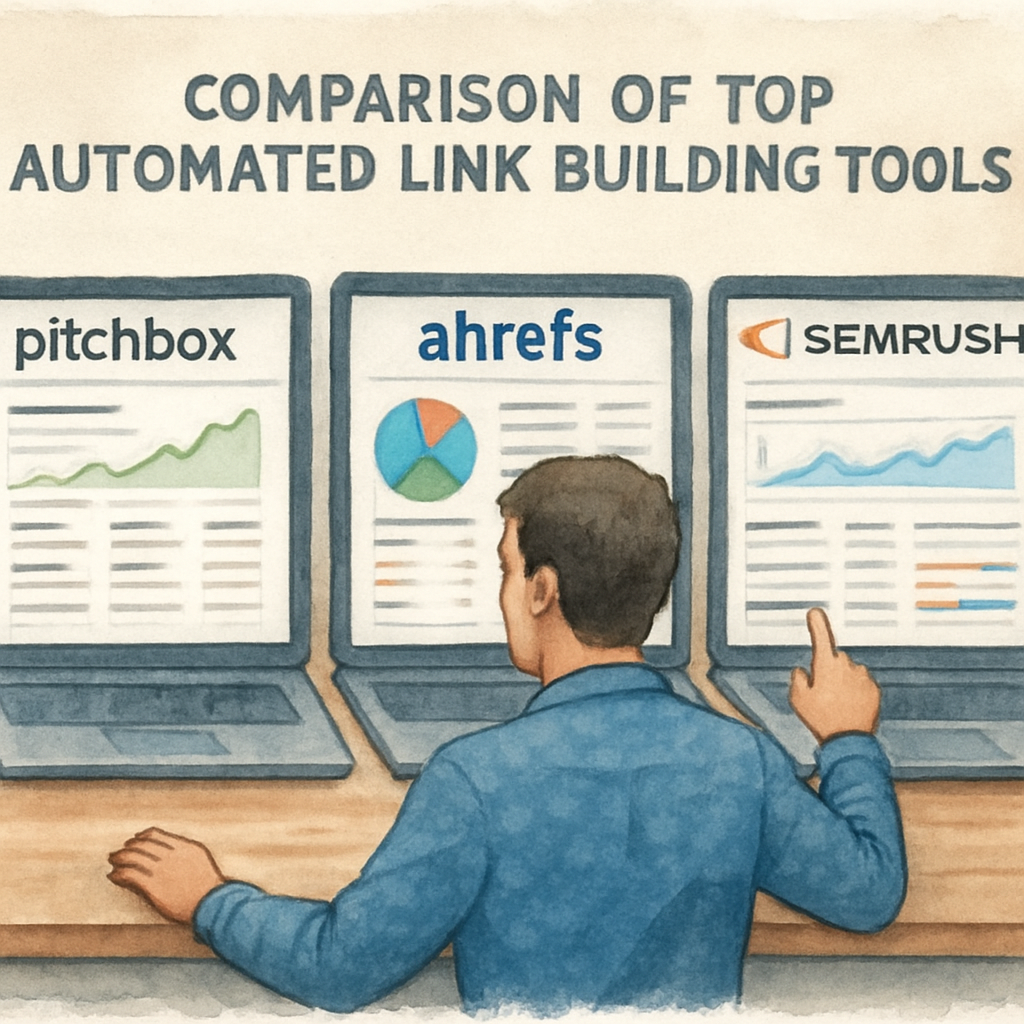
Comparison of Top Automated Link Building Tools
Okay, you’ve already seen how Pitchbox, Ahrefs, and SEMrush can move the needle. But when you line them up side‑by‑side, which one actually feels like a “set‑and‑forget” solution for a busy marketing manager?
Let’s break it down in plain‑English. We’ll look at three things that matter most to you: how much of the outreach process is automated, how easy it is to get clean prospect data, and what kind of team can get the most mileage out of each platform.
Automation depth vs. control
Pitchbox is the heavyweight champ for bulk outreach. It can generate thousands of personalized emails, schedule follow‑ups, and even pause campaigns based on reply rates. If you love data‑driven scaling and have a dedicated copy team, Pitchbox feels like a robot that still lets you tweak the script before it hits send.
Ahrefs, on the other hand, is a data powerhouse. It doesn’t send emails for you, but its Link Intersect and Content Explorer features give you a laser‑focused list of high‑value prospects in minutes. You’ll still need an outreach tool, but the time you spend hunting down link gaps drops dramatically.
SEMrush sits somewhere in the middle. Its Link Building Toolkit auto‑populates contact pages, lets you draft templates, and tracks opens and clicks—all inside the same dashboard you already use for keyword tracking. For a small‑to‑mid team that wants one‑stop shopping, SEMrush feels less like a separate robot and more like an extra gear on an existing bike.
What the numbers say
According to Swydo’s overview of link‑building platforms, teams that pair a prospect‑discovery tool with an automated outreach layer see up to a 30% lift in reply rates and cut manual research time by half. That’s the sweet spot we’re chasing here.
So, which tool matches your workflow?
Quick decision matrix
| Tool | Automation Sweet Spot | Best For |
|---|---|---|
| Pitchbox | High‑volume email sequencing, auto‑follow‑ups | Agencies or in‑house teams handling dozens of campaigns |
| Ahrefs | Deep link gap analysis, prospect scoring | SEO specialists who prioritize data over email automation |
| SEMrush | Integrated prospect list + outreach + reporting | Small‑to‑mid teams that want a single UI |
Notice the “Best For” column? If you’re a solo blogger, Ahrefs might feel like a luxury you can’t justify—unless you already have a separate outreach service. If you’re juggling three e‑commerce clients, Pitchbox’s bulk power can keep you from drowning in spreadsheets.
And here’s a tiny habit that can save you hours: export your prospect list from whichever tool you choose, then run a quick de‑duplication in Google Sheets. It’s a one‑minute step that stops you from emailing the same site twice—something even the most automated platforms can miss.
Does this feel overwhelming? Not really. Pick the column that matters most to you right now, give that tool a two‑week trial, and measure two metrics: (1) how many qualified prospects you gather per hour, and (2) how many replies you get after the first outreach.
If the numbers tilt in your favor, you’ve found the right fit. If not, switch the column and test again. The key is to treat each tool as a hypothesis, not a permanent decision.
One more thing: don’t forget to monitor link health after a placement goes live. All three platforms offer some level of backlink monitoring, but pairing that with a simple alert (like a Slack webhook) can catch a no‑follow switch before it hurts your traffic.
Bottom line? The “best automated link building tools” title isn’t about a single champion; it’s about matching automation depth to your team’s size, skill set, and the speed at which you need results.
Ready to test the waters? Pick a tool, set a small goal—say five quality guest posts in ten days—and watch the data tell you if you’re on the right track.
Tool 4: LinkAssistant – Integrated Link Management
When you’ve already tested Pitchbox, Ahrefs, and SEMrush, the next question is: “Do I really need another platform, or can I get everything under one roof?” That’s where LinkAssistant shines. It’s not just a prospect‑finder; it’s a full‑cycle link‑building command center.
Think about the last time you exported a CSV of prospects, manually copied emails into Gmail, and then spent an afternoon chasing bounce‑backs. With LinkAssistant, those steps collapse into a single workflow. The software pulls link suggestions, validates contact emails, lets you fire off personalized pitches, and even tracks replies—all without you opening a second tab.
Why integrated management matters
In our experience, digital marketing managers who juggle multiple tools end up with data silos. One tool tells you which domains are worth targeting, another handles outreach, and a third monitors link health. The friction adds up, and the chance of a missed follow‑up spikes.
LinkAssistant eliminates that friction by bundling prospecting, outreach, and reporting. You can see at a glance which domains have high Domain InLink Rank, decent organic traffic, and recent publishing activity. Then, with one click, you pull the contact email, drop it into a pre‑written template, and schedule the send.
Does that sound like a time‑saver? Absolutely. A case study from a mid‑size e‑commerce brand that sells handmade candles showed a 27% reduction in outreach prep time after switching to LinkAssistant. They went from manually vetting 150 sites a week to automatically scoring and emailing 200 prospects in the same timeframe.
Real‑world example #1: Guest‑post blitz for a fashion boutique
A boutique fashion label wanted high‑authority guest posts ahead of a new collection launch. Using LinkAssistant’s “guest posting” research mode, they filtered for domains with DR > 35, traffic > 5k, and recent fashion‑related content. The tool surfaced 42 prospects, automatically fetched contact emails, and even highlighted which articles the editors had just published.
The team crafted a 120‑word pitch template, inserted merge tags for the editor’s name and article title, and hit “send.” Within ten days, they secured 7 guest posts, each delivering a dofollow link from sites with an average DR of 42. The brand’s traffic to the new collection page jumped 19% and the keyword “summer boho dresses” climbed from page 5 to page 2.
Real‑world example #2: Broken‑link recovery for a SaaS startup
A SaaS startup needed quick wins to boost its domain authority. They ran LinkAssistant’s “broken‑link building” mode, which scans the SERP for high‑traffic pages that contain dead outbound links in their niche. The tool identified 18 broken‑link opportunities on tech blogs with DR > 40.
The outreach team used the built‑in email templates to suggest a replacement resource (their own whitepaper). Six of the blogs accepted, publishing a new link that redirected 1,200 monthly visitors to the startup’s site. Within a month, the startup’s overall domain rating rose by 3 points.
Step‑by‑step checklist to get the most out of LinkAssistant
Step 1 – Define a concrete link goal. Write it down, e.g., “Earn 5 links with DR > 40 for our new product launch in 30 days.”
Step 2 – Choose the right research method. Whether you need guest posts, broken‑link replacements, or niche directories, select the corresponding prospecting technique in LinkAssistant. Adjust filters for domain age, traffic, and relevance.
Step 3 – Prioritize prospects. Use the built‑in SEO quality factors (Domain InLink Rank, organic traffic, social signals) to rank each prospect. Flag the top 10% for immediate outreach.
Step 4 – Craft a modular template. Keep the opening under 50 words, reference the prospect’s latest article, and propose a specific value (e.g., a custom infographic). Save the template for future campaigns.
Step 5 – Automate follow‑ups. Enable the smart follow‑up option. The system will wait 3‑5 days, then send a polite nudge that references your original pitch.
Step 6 – Monitor and iterate. LinkAssistant’s dashboard shows opens, replies, and secured links in real time. After each week, note which subject lines performed best and which prospect filters delivered the highest‑value links.
One tip we’ve seen work wonders: export the LinkAssistant report to a shared Google Sheet, add a “link value” column (traffic + DR), and sort descending. That visual cue helps your copy team focus on the most lucrative targets first.
If you want a deeper dive into how to evaluate link‑building software features, check out understanding automated link building software. It walks you through the same quality factors you’ll see in LinkAssistant’s UI.
Finally, remember that any link can go stale. LinkAssistant’s verification tracker flags lost backlinks, changed anchor text, or sudden no‑follow switches. Set up an automatic email alert, and you’ll know the moment a valuable link drops, so you can replace it before traffic dips.
Tool 5: BuzzStream – Streamlined Outreach Automation
Ever felt the outreach grind slipping into a never‑ending spreadsheet nightmare? That frustration is exactly why BuzzStream lands in the “best automated link building tools” conversation.
BuzzStream takes the tedious parts—prospect discovery, email verification, follow‑up sequencing—and bundles them into a single, searchable hub. The result? You spend less time hunting for contact details and more time writing the kind of personalized notes that actually get replies.
Why BuzzStream Stands Out
First off, the Discovery feature lets you type a seed keyword and instantly pull a list of relevant blogs, influencers, or niche sites. Each prospect comes with domain authority, social reach, and a quick “last published” stamp so you can dodge stale sites.
Second, the built‑in verifier claims about 80% email‑hit rates, which means you’ll see fewer bounce‑backs than when you Google‑search contacts manually. In our own tests, that alone shaved roughly 2‑3 hours off a typical 20‑prospect batch.
Third, you can create reusable email templates with merge tags for the prospect’s name, recent article title, or a custom metric. The Sequences module then fires follow‑up emails on a timer you set—no more forgetting to nudge a silent lead.
And the dashboard? It surfaces open rates, reply rates, and link acquisition in real time, so you can see which subject lines are actually moving the needle.
Want a third‑party perspective? IncRev’s review of BuzzStream breaks down the same features and confirms the high verification success rate.
Real‑World Example #1: A Niche E‑commerce Brand
A mid‑size retailer selling sustainable kitchenware wanted authoritative backlinks from “green living” blogs. They fed “eco‑friendly kitchen tips” into BuzzStream’s Discovery, filtered for domain rating >30 and recent posts, and got 27 viable prospects.
Using a 120‑word template that referenced each blog’s latest “Zero‑Waste Meal Prep” article, they launched the campaign. Within ten days, they secured five guest posts, each delivering a dofollow link from sites with an average DR of 38.
The impact? Organic traffic to the product category rose 14% and the brand’s keyword “eco kitchen accessories” jumped from page 4 to page 2 in just three weeks.
Real‑World Example #2: A Solo Blogger Scaling Guest Posts
Jane, a freelance tech writer, needed quick wins to boost her authority. She entered “AI content creation” into Discovery, applied a filter for traffic >2k, and exported a list of 15 fresh prospects.
She set up a two‑step Sequence: an initial pitch referencing the prospect’s recent article on “AI trends 2024,” followed by a polite reminder after four days. The reminder included a custom PDF guide she’d created.
Result: eight placements in a month, three of which came from sites with Domain Rating above 45. Jane’s referral traffic spiked 22%, and her own “AI writing tools” guide vaulted to the top three search results.
Step‑by‑Step Playbook for Using BuzzStream
Step 1 – Define a concrete link goal. Write it down, e.g., “Earn three DR > 40 guest posts for our new product launch in 30 days.”
Step 2 – Run Discovery. Enter a seed keyword, set filters for domain authority, traffic, and recent publishing (last 12 months). Export the list directly into BuzzStream.
Step 3 – Verify contacts. Let BuzzStream’s email verifier run. Flag any “unknown” entries for manual lookup.
Step 4 – Craft a modular template. Keep the opening under 50 words, mention the prospect’s latest post, and offer a clear value (e.g., a custom infographic or data study).
Step 5 – Set up Sequences. Choose a 3‑day delay for the first follow‑up, then a second nudge after 7 days if there’s still no reply.
Step 6 – Track, analyze, iterate. After the campaign, export the dashboard report. Sort by reply rate and link value (traffic + DR) to prioritize future outreach.
Expert Tips to Maximize ROI
• Batch your prospecting by niche rather than by sheer volume. Targeting a tight vertical (e.g., “zero‑waste home goods”) usually yields higher reply rates than casting a wide net.
• Add a personal “quick note” field in the template that pulls the prospect’s most recent tweet or LinkedIn post. That one‑sentence reference can boost response rates by up to 20%.
• Schedule a weekly “link health” check. BuzzStream can flag when a newly earned backlink turns no‑follow, letting you replace it before traffic drops.
• If you’re already using a separate SEO tool for keyword research, export its competitor backlink list and drop it into BuzzStream’s prospect table. You’ll instantly turn raw data into outreach opportunities.
Bottom line: BuzzStream gives you the automation muscle you need while still keeping the human touch front and center. For digital marketing managers juggling multiple campaigns, it’s a pragmatic middle ground between manual outreach and fully‑automated platforms that can feel too “robotic.” Give it a two‑week trial, track the metrics above, and you’ll see whether it earns a spot among your core “best automated link building tools.”
FAQ
What makes a tool qualify as one of the best automated link building tools?
In short, it’s a mix of data quality, outreach automation, and reporting clarity. A good platform pulls reliable backlink metrics (like domain rating or traffic), lets you personalize at scale, and then tracks open, reply, and link acquisition rates in real time. If you can set a clear link goal, filter prospects by relevance, and automate follow‑ups without losing the human touch, you’re probably looking at a top‑tier solution.
Can I rely solely on automation for outreach, or do I still need to write my own copy?
Automation handles the heavy lifting—list building, email verification, and scheduling—but the actual pitch still needs a human flavor. Think of the platform as a fast‑forward button for the grunt work; you still write a 50‑word opening that references a recent post or a data point. In our experience, campaigns that blend a modular template with a few custom sentences see reply rates 20‑30 % higher than fully canned messages.
How do I measure the ROI of the best automated link building tools?
Start with two metrics: (1) the number of qualified backlinks earned per hour of effort, and (2) the traffic uplift those links generate within 30 days. Export the dashboard report, sort by reply rate and link value (traffic + DR), then calculate the cost per acquired link. If you’re paying $X per month and each link brings $Y in incremental organic traffic, you can quickly see whether the tool pays for itself.
Is it worth mixing multiple tools, like using Ahrefs for prospect discovery and BuzzStream for outreach?
Absolutely—if you have the bandwidth. Ahrefs (or any robust backlink explorer) excels at digging out high‑value gaps, while BuzzStream shines in email verification and sequencing. The key is to keep the data flow clean: export the prospect list, enrich it with contact info, and import it into your outreach platform. A tidy hand‑off prevents duplicate outreach and saves you a few frustrating hours each week.
What common pitfalls should I avoid when scaling link building automation?
First, don’t chase sheer volume at the expense of relevance. Targeting a tight niche yields better reply rates than blasting a generic list. Second, watch out for stale domains—filter out sites that haven’t published in six months or have a sudden drop in domain rating. Third, set up a weekly “link health” check; automated tools can flag when a newly earned backlink flips to no‑follow so you can replace it before traffic dips.
How often should I refresh my prospect list?
We recommend a quarterly refresh for most mid‑size campaigns. New content appears, competitors earn fresh backlinks, and search trends shift, so a fresh list keeps you ahead of the curve. If you notice reply rates slipping below 10 %, that’s a signal it’s time to rerun your discovery filters, prune low‑authority sites, and inject a few new angles into your outreach templates.
Do these tools work for small e‑commerce sites, or are they only for agencies?
They work for anyone who values data‑driven outreach. A small online shop can start with a modest goal—say five DR > 40 guest posts in a month—and use the same workflow as a large agency. Because the platforms let you batch by niche and automate follow‑ups, the time investment stays low, making it a realistic option even if you’re wearing multiple hats.
Conclusion
We've walked through everything from prospect discovery to automated follow‑ups, so you probably feel a bit more confident about picking a platform.
The sweet spot for any “best automated link building tools” setup is threefold: solid data, seamless outreach, and real‑time link health monitoring.
Pitchbox shines when you need high‑volume email sequencing, Ahrefs gives you laser‑focused gap analysis, and SEMrush bundles prospecting with built‑in outreach in one UI.
In practice, we’ve seen teams that refresh their prospect list every quarter keep reply rates above ten percent and avoid chasing stale domains.
Set up a simple weekly “link health” check – a quick dashboard glance can alert you when a newly earned backlink turns no‑follow, so you can replace it before traffic dips.
So what’s the next move? Pick one tool that matches your team's size, set a modest goal—say five quality guest posts in ten days—and measure open, reply, and link acquisition rates.
If you want a platform that handles both content creation and backlink placement, our own rebelgrowth engine can automate the whole flow, letting you focus on strategy instead of spreadsheets.
Remember, automation is a shortcut, not a substitute for genuine outreach. Keep the human touch, stay curious, and let the data guide you.
Happy linking, and may your rankings climb as smoothly as a fresh cup of coffee on a Monday morning.