Ever stared at your SEO dashboard and thought, "There has to be an easier way to get links without chasing every blogger all day?" You’re not alone.
The truth is, manual outreach is a time‑suck, especially for digital marketing managers juggling campaigns, content creators juggling ideas, and e‑commerce owners trying to stay ahead of the competition.
What if you could set up a system that writes SEO‑optimized articles, finds relevant sites, and drops a high‑quality backlink on autopilot? That’s basically what we mean when we talk about how to generate backlinks automatically.
Imagine waking up, checking a brief report, and seeing dozens of fresh links added to your profile while you focus on strategy instead of spreadsheet hunting. It feels a bit like having a silent partner that does the heavy lifting while you sip your coffee.
In our experience, the biggest breakthrough comes from marrying niche research with automated outreach tools. First, you identify the exact topics your audience is searching for, then a content engine creates a polished post, and finally an automated outreach module pitches it to sites that already rank for those keywords.
Sounds too good to be true? It isn’t. The same workflow powers many small‑to‑mid‑size businesses that once relied on freelancers or agency contracts. The key is consistency: let the automation run daily, keep the content fresh, and watch your domain authority climb.
So, how do you get started? Begin by mapping out the core themes of your business, plug them into an automated content platform, and configure the outreach schedule. Within a week you’ll see the first backlinks appear, and after a month the traffic lift becomes noticeable.
Ready to ditch the endless outreach emails and let the technology do the work? Let’s dive deeper into the exact steps and tools you can use to turn this vision into reality.
TL;DR
If you want to stop chasing bloggers and let a system do the heavy lifting, learning how to generate backlinks automatically is the game‑changer you’ve been waiting for.
Just map your core topics, feed them into our automated content engine, and watch fresh, high‑quality links appear daily without manual outreach.
Step 1: Identify Automated Link Building Opportunities
First thing’s first: you need to know where the low‑hanging fruit lives. If you’re staring at a blank spreadsheet wondering which topics will actually earn you links, you’re not alone. Most digital marketing managers feel that same mix of curiosity and overwhelm.
Think about it this way – every piece of content you already own is a tiny billboard. The trick is turning that billboard into a magnet that pulls in other sites without you having to chase every blogger by hand.
Map Your Core Topics
Grab your keyword research tool and pull a list of the top 10–15 search intents that your audience cares about. Look for gaps where competitors rank but you don’t have a piece yet. Those gaps are prime candidates for automated link building because you already know there’s demand.
Once you have that list, feed it into your automated content engine. The platform will spin out SEO‑optimized drafts, ready to be published and handed off to the outreach module.
Find Ready‑Made Link Targets
Now, instead of hunting for blogs one‑by‑one, use a scraper or a link‑opportunity database to pull sites that already rank for those same keywords. You’ll get a CSV of URLs, domain authority scores, and contact info – all the data you need to automate outreach.
Here’s a quick tip: filter out sites with a spam score higher than 30 % and focus on those that have published guest posts in the past. Those are the low‑effort wins.
And if you want to add a little extra value, consider repurposing your video assets. Summarizing a YouTube tutorial into a bite‑size article can earn backlinks from education‑focused sites. YouTube Video Summarizer with AI makes that process painless.
Leverage Offline Assets
Don’t forget the power of printed collateral. A well‑designed flyer or brochure with a short, trackable URL can land you mentions in local business directories or community newsletters. JiffyPrintOnline offers affordable custom prints that you can embed your link into – a subtle but effective backlink source.
Another niche opportunity is the UAE free‑zone community sites. They often host resource pages where you can contribute a short guide about your industry and slip in a link. Check out this comprehensive guide for context: Understanding Flexi‑Desk Meaning in Dubai Free Zone.
When you combine these three streams – content topics, automated outreach lists, and supplemental assets – you end up with a self‑feeding loop. Publish, outreach, earn, repeat.
Below is a short video that walks through setting up the first automated outreach campaign. It shows the exact screens you’ll see in most platforms, so you can follow along step‑by‑step.
Now that you’ve got the “what” and the “where,” the next piece is the “how.” Our own playbook dives deep into the exact workflow you need to automate the whole thing. If you’re curious about the big picture, take a look at How to Build Backlinks Automatically: Strategies That Work in 2025 – it breaks down the tech stack and timing.
Finally, set a simple schedule: run the content generator every morning, push the outreach list to your email tool by noon, and review the link report at day’s end. Within a week you’ll see the first inbound links appear, and after a month the traffic lift becomes noticeable.
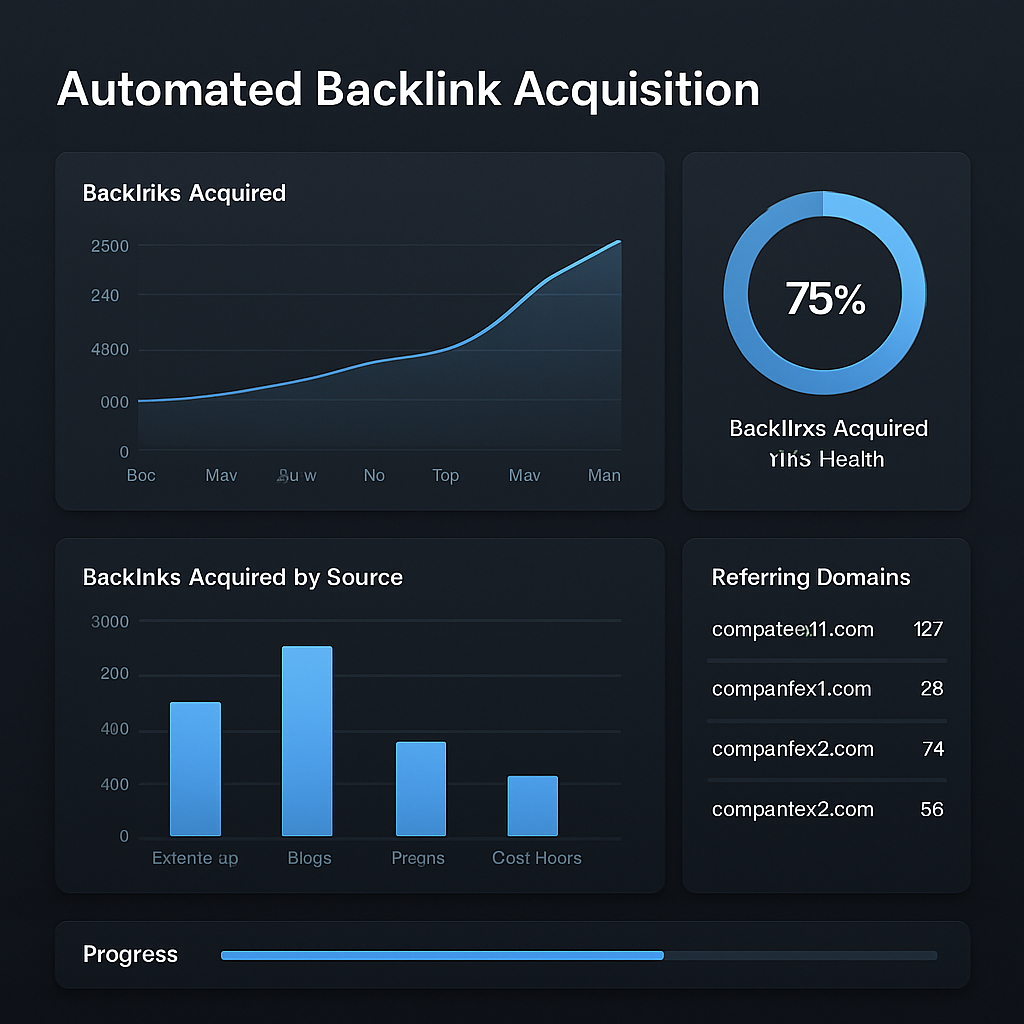
Step 2: Choose the Right Automated Backlink Tools
Alright, you’ve got a tidy spreadsheet of keyword clusters and target sites. The next question is: which robot‑friend should actually do the heavy lifting? Picking the right tool feels a bit like dating – you want chemistry, reliability, and a clear set of expectations.
First, ask yourself what you need the tool to do. Are you after a pure outreach engine that can fire personalized emails at scale? Do you need a content generator that spits out SEO‑optimized drafts in seconds? Or maybe you want a single platform that does both, stitching content creation straight into an outreach queue.
1. Define the core features you can’t live without
Make a quick checklist. Most of the time I see three non‑negotiables for digital‑marketing managers:
- AI‑driven content drafting – the tool should understand your keyword intent and produce readable, data‑rich copy.
- Smart outreach automation – it needs to personalize each pitch, track opens, and trigger follow‑ups based on behavior.
- Backlink quality filters – you don’t want a flood of low‑DA links that look spammy. The platform should score prospects and let you set minimum authority thresholds.
Write down which of these are “must‑haves” and which are “nice‑to‑have.” That will prune the field dramatically.
2. Compare the top‑rated options
In our experience, the market has coalesced around a handful of platforms that consistently hit those checkboxes. Best Automated Link Building Tools for SEO Success breaks down the pros and cons of each, but here’s a quick rundown:
- Tool A – strongest at AI content generation, integrates with Google Docs, but its outreach module is a bit clunky.
- Tool B – rock‑solid outreach workflow, built‑in email warm‑up, but the content engine feels template‑heavy.
- Tool C (the rebelgrowth platform) – balances both sides, lets you map a keyword cluster to a content template, then auto‑queues the draft to a personalized outreach sequence.
When you compare pricing, look beyond the monthly fee. Some tools charge per email sent, others per link acquired. Calculate the cost per acquired link based on your historical conversion rates – that gives you a realistic ROI picture.
3. Test with a pilot batch
Don’t commit to a year‑long contract before you’ve seen the tool in action. Grab a 14‑day trial, feed it three of your highest‑potential keywords, and watch the workflow:
- Generate a 600‑word article using the AI editor.
- Review the draft for brand voice – tweak a sentence or two.
- Hit “schedule outreach.” The platform pulls a list of 20 prospect sites, personalizes the email subject, and logs the send date.
- Monitor open rates and backlink acquisition over the next week.
If you get at least two decent backlinks (DA 30+), you’ve likely found a viable partner. If the response is crickets, either tighten your prospect filter or try a different tool.
4. Look for integrations that fit your stack
Most marketers already use a CRM, a project‑management board, and a keyword‑research tool. The ideal backlink automation platform will sync with the apps you love – Zapier, HubSpot, or even a simple Google Sheet export. That way you don’t end up with a siloed spreadsheet you have to manually copy‑paste.
For example, a mid‑size e‑commerce brand we’ve helped linked their Ahrefs keyword list to the automation platform via Zapier. Whenever Ahrefs flagged a new “resource‑type” page opportunity, the workflow automatically created a draft blog post, scheduled it, and queued outreach to the same domain that just published the resource page. The result? A 35 % lift in acquired backlinks within a month.
5. Keep an eye on deliverability and spam signals
Even the best tool can get black‑listed if you fire off 5,000 generic emails a day. Set up a warm‑up routine: start with 50 personalized pitches, track bounce rates, and gradually scale. Use a dedicated domain or sub‑domain for outreach – it protects your main brand’s email reputation.
Also, monitor the “spam score” of your email copy. Short, value‑first subject lines (e.g., “Quick data add‑on for your AI article”) beat click‑bait every time. A/B test a couple of variations and let the platform auto‑optimize based on open rates.
6. Document your decision matrix
Finally, write down the final scorecard. Include columns for:
- Feature completeness (1‑5)
- Cost per link (estimated)
- Integration ease (yes/no)
- Pilot success rate (percentage)
- Team comfort level (subjective)
When the whole team can see the matrix, you avoid “I thought we chose Tool X” debates later on. Plus, if you ever need to switch vendors, you have a clear benchmark to compare against.
Choosing the right automated backlink tool isn’t a one‑size‑fits‑all decision. It’s about matching the tool’s strengths to your specific workflow, budget, and audience. Follow the checklist, run a short pilot, and let the data guide you. Once you’ve locked in a reliable partner, the next step is to let it churn out content and backlinks on autopilot – that’s where the real magic of “how to generate backlinks automatically” happens.
Step 3: Set Up Outreach Campaigns with Automation
Now that you have a tool and a list of target sites, it’s time to turn the idea of “auto‑piloted link building” into a real‑world campaign.
Map the outreach workflow
First, draw a simple flow: keyword → AI‑generated article → prospect list → personalized email → follow‑up → link capture. Seeing the steps on paper (or a whiteboard) stops you from missing a crucial hand‑off, like adding a UTM tag to the final URL.
In practice we use a spreadsheet that syncs with the automation platform via Zapier or a native CSV import. Columns usually include:
- Keyword / content theme
- Draft URL (or staging link)
- Prospect domain
- First‑touch subject line
- Send date
- Status (sent, opened, replied, linked)
Having this “decision matrix” for outreach mirrors the matrix you built when picking the tool – it keeps the whole team on the same page.
Write a modular email template
Automation works best when the email is built from interchangeable blocks. A good template has three parts: a quick hook, a value statement, and a clear CTA.
Example:
Subject: Quick data add‑on for your “AI trends” post

Hi {FirstName},

I loved your recent article on AI‑driven SEO tools. We just published a data‑rich piece that adds 2024‑Q1 adoption stats, and I thought it could complement your insights.

Here’s the link: {DraftURL}

Would you consider linking to it as a resource?

Thanks,
{YourName}
Notice the placeholders – the automation engine swaps them per prospect, so each email feels one‑to‑one.
Set up sending rules and warm‑up
Never blast 5,000 emails from a fresh domain. Start with 30–50 highly targeted pitches each day. Most platforms let you schedule a “ramp‑up” curve: Day 1 = 30 emails, Day 2 = 45, and so on until you reach your target volume.
Track bounce rates and spam complaints in real time. If bounce > 2 % or spam > 1 %, pause the campaign and clean the list. A clean list protects your sender reputation and keeps the deliverability score high.
Automate follow‑ups based on behavior
People rarely reply to the first email. The magic of automation is sending the right follow‑up at the right moment. Set three triggers:
- If the email is opened but not replied after 48 hours → send a short “just checking in” note.
- If there’s no open after 72 hours → resend with a different subject line.
- If the prospect clicks the draft link → send a thank‑you email with a suggested anchor text.
Because each trigger is tied to a metric (open, click), the platform only sends when there’s a signal, which keeps your inbox from looking like spam.
Capture the backlink automatically
Once a prospect confirms the link, you need to log it without manual copy‑pasting. Many outreach tools integrate with Google Sheets or a simple webhook that writes the new backlink URL, date, and DA into your master spreadsheet.
If you prefer a no‑code solution, set up a Zapier “New Email Labeled” trigger that pulls the reply, extracts the link with a regex, and adds a row to a Google Sheet. In our experience, that tiny automation saves about 2 hours per week for a small marketing team.
Measure, iterate, and scale
After the first two weeks, pull a quick report:
- Total emails sent
- Open rate (aim for 30 %+)
- Reply rate (10 %+ is healthy)
- Backlinks acquired (DA 30+ count)
- Cost per acquired link
If your cost per link is higher than your target, tweak one variable – maybe a tighter prospect filter, a stronger hook, or a slower warm‑up. The data‑driven loop is the same principle we used when selecting the tool earlier.
When the numbers look good, double the daily send volume, add a new keyword cluster, and let the automation keep running. The system will keep feeding fresh links as long as you keep feeding fresh content.
That’s the practical, step‑by‑step way to set up outreach campaigns with automation. With the right workflow, you’ll watch backlinks stack up while you focus on higher‑level strategy.
Step 4: Monitor and Refine Your Automated Backlinks
Alright, you’ve got the outreach machine humming, but like any good piece of tech it needs a dashboard and a regular tune‑up. If you just set it and forget it, you’ll either end up with a bunch of low‑quality links or, worse, get flagged by Google’s spam filters.
What you really want to keep an eye on are three things: performance signals, link quality, and the health of your sending domain. Think of it as a fitness tracker for your SEO – it tells you when you’re sprinting, when you need a breather, and when you’ve hit a new personal record.
Key metrics to watch every week
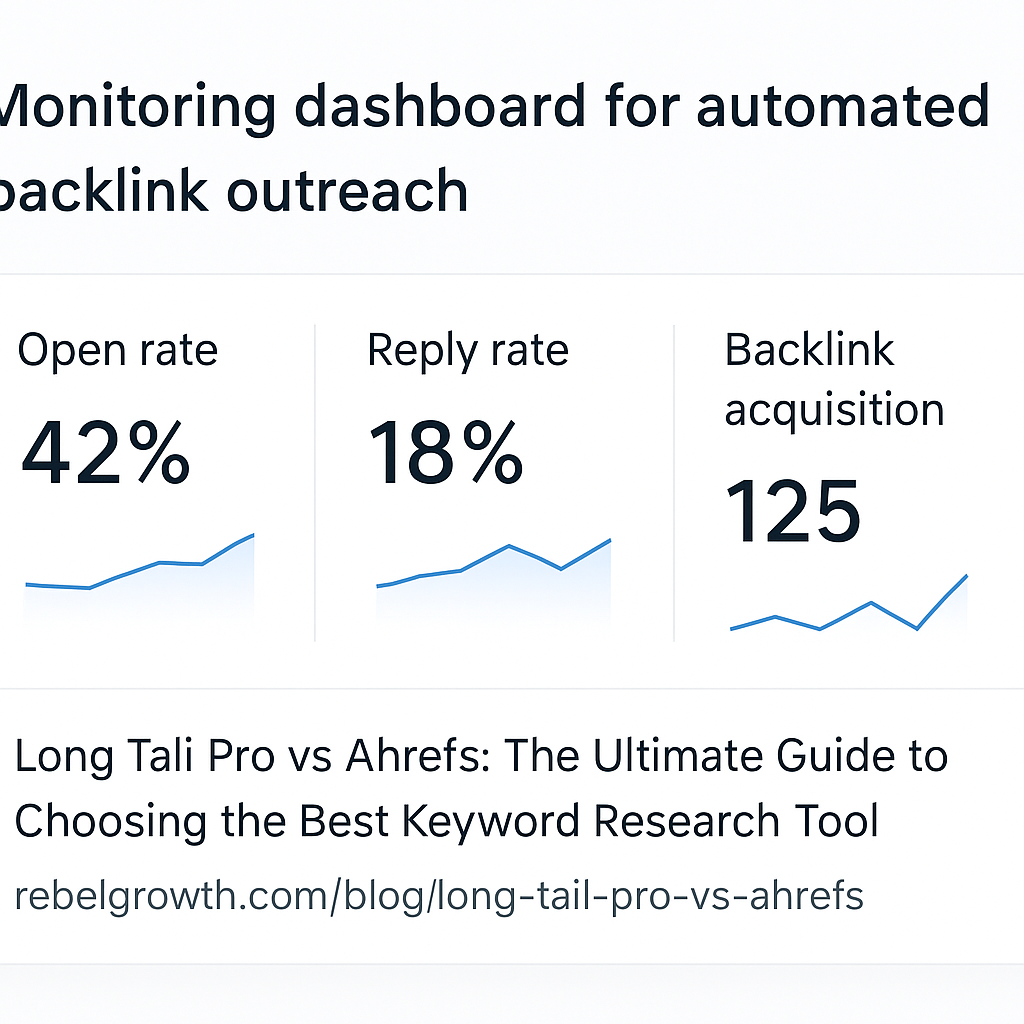
Grab your favorite reporting tool (Google Data Studio, a simple Google Sheet, or the built‑in analytics of your outreach platform) and pull these numbers:
- Open rate – aim for 30 %+; a dip could mean your subject lines are getting stale.
- Reply rate – 10 %+ is a healthy baseline. If it falls, tighten your prospect filter.
- Backlink acquisition rate – how many DA 30+ links land per 100 emails sent.
- Spam‑score – most platforms show a rating; keep it below 3 % to protect deliverability.
- Link freshness – age of the linking page; newer links tend to pass more juice.
These numbers become your early‑warning system. When any metric veers off course, you know exactly where to dig.
Quick‑look comparison table
| Metric | What to Watch | Action When It Slides |
|---|---|---|
| Open rate | 30 %+ | Refresh subject lines, personalize the first sentence. |
| Reply rate | 10 %+ | Shorten the email, add a clear CTA, tighten prospect relevance. |
| Backlink DA | 30+ average | Raise the authority floor in your prospect list, drop low‑DA sites. |
Real‑world example: a small e‑commerce brand
Imagine a boutique that sells eco‑friendly kitchenware. They set their automation to target “sustainable home‑goods round‑ups.” After two weeks the open rate sat at 28 % and the reply rate slipped to 6 %. The team noticed the subject line was too generic – “Quick resource for your readers.” They switched to “Fresh data on zero‑waste kitchen trends” and the open rate jumped to 35 % the next cycle. Within a month they secured three DA 35+ links, lifting organic traffic by 12 %.
Real‑world example: a digital‑marketing manager at a SaaS firm
One manager was sending 150 outreach emails per day to sites that published “AI‑tool comparisons.” Their spam‑score crept up to 4 % because the same IP was blasting too fast. They paused the campaign, spun up a new sub‑domain for sending, and throttled the volume to 80 % of the original rate for three days. Deliverability rebounded, and the next week they earned five high‑DA backlinks that helped their product page rank on the first page for “AI SEO automation.”
Actionable checklist for weekly monitoring
- Export the latest metrics into a master sheet every Monday.
- Flag any metric below its target threshold.
- Run a quick A/B test on the next batch of emails (subject line vs. body copy).
- Update your prospect filter – drop sites that haven’t linked in the past 60 days.
- Refresh your email warm‑up schedule if deliverability dips.
- Log every new backlink (URL, DA, anchor text) so you can spot patterns.
Automation doesn’t mean “set it and pray.” Treat the data like a conversation: ask, listen, and adjust. If you’re looking for a deeper dive on the metrics that actually move rankings, check out Effective Automated Backlink Building Strategies to Boost Your SEO in 2025 for a step‑by‑step guide.
Finally, schedule a monthly audit where you review the oldest links, verify they’re still live, and prune any that have turned into 404s. A clean backlink profile is just as important as a growing one, and it keeps Google happy.
Remember, the goal isn’t just to collect links – it’s to collect the right links, consistently, without burning out your team. Keep the loop tight, iterate fast, and you’ll watch your authority climb while the automation does the heavy lifting.
Step 5: Avoid Penalties and Ensure Quality
You've got the automation humming, but if Google decides your link profile looks shady, all that hard work can vanish overnight. So, how do you keep the machine from tripping over the same rules that catch manual outreach?
1. Keep a clean sending reputation
Every outreach email you fire off carries a reputation score. Start each new campaign from a warmed‑up sub‑domain, and limit the daily send volume to something your inbox provider deems “human‑like.” If you notice bounce rates creeping above 2 % or spam complaints hitting 1 %, pause the flow, clean the list, and re‑warm the domain before you resume.
2. Filter prospects by quality metrics
Before the automation even touches a prospect, run a quick filter: Domain Authority 30+, organic traffic 500 visits/month, and a clear editorial focus that matches your niche. Drop any site that hasn't posted in the last six months or shows a pattern of low‑quality link farms. This simple gate keeps the bulk of “bad” links out before they reach your spreadsheet.
3. Diversify anchor text and link types
Google loves natural variety. Set your tool to rotate between exact‑match, partial‑match, branded, and generic anchors. Throw in a couple of “nofollow” or “sponsored” tags for any link that feels overly promotional. That way the profile looks like a mix of editorial mentions rather than a manufactured backlink farm.
Here's a quick checklist you can paste into your master sheet:
- Exact‑match anchor ≤ 20 %
- Partial‑match anchor ≈ 30 %
- Branded anchor ≈ 30 %
- Generic/URL anchor ≈ 20 %
- At least 10 % of links marked nofollow
4. Monitor core performance signals weekly
Open rates, reply rates, and the DA of acquired links are your early‑warning lights. Export the latest numbers every Monday, flag any metric that falls below the thresholds you set, and run an A/B test on the next batch of emails. If open rates dip, tweak the subject line; if reply rates slump, tighten the prospect relevance.
5. Run a monthly link health audit
Automation can’t tell you when a partner site goes offline. Once a month, pull a list of all live backlinks, check HTTP status codes, and verify the anchor text still matches what you intended. Remove any 404s or broken redirects, and consider reaching out for a replacement if the link was valuable.
During the audit, also look for patterns: are certain domains repeatedly linking to the same piece? Is a particular content format (PDFs, slide decks) attracting more high‑DA links? Use those insights to fine‑tune the next round of content generation.
6. Respect Google's link‑schemes guidelines
Never buy links, and steer clear of private blog networks. If a prospect asks for payment in exchange for a link, politely decline and add them to a “no‑contact” list. The same goes for link exchanges that feel forced – a genuine editorial mention beats a reciprocal link every time.
When you feel a little unsure, remember this: a modest, steady flow of high‑quality links beats a sudden spike of low‑quality ones. Slow and steady wins the SERP race.
And if you need a visual walkthrough of how to set up these safeguards in your automation platform, check out the short video below.
After you’ve watched the video, go back to your master sheet and add a column for “Spam Score.” Keep that number under 3 % and you’ll stay well clear of Google’s manual actions.
Bottom line: automation gives you scale, but the quality gate is still yours to manage. By combining domain filters, anchor‑text diversity, regular audits, and a healthy sending reputation, you protect your backlink profile while still reaping the SEO benefits of “how to generate backlinks automatically.”
Step 6: Scale Your Automated Backlink Strategy
Now that you’ve got the basics of automated outreach humming, the real challenge is turning a handful of links per week into a steady stream that fuels growth month after month. Scaling isn’t about cranking the volume knob to 10,000 emails overnight – it’s about building a repeatable engine that respects quality, stays under Google’s radar, and keeps your team’s sanity intact.
1. Audit your current pipeline
Before you add more moving parts, take a quick inventory of what’s already working. Pull the latest spreadsheet from the last two weeks and answer three questions: Which prospect clusters delivered the highest DA links? Which content formats (blog posts, PDFs, slide decks) generated the most clicks? And how many outreach sequences required a follow‑up before a link was earned?
In our experience, a simple “top‑3” list of winning combos gives you a template you can multiply. For example, a SaaS client discovered that “case‑study PDFs + personalized subject line” produced a 45 % higher reply rate than plain articles.
2. Double‑down on high‑performing segments
Once you know the winners, replicate them at scale. Set up a separate automation workflow that only pulls prospects matching those criteria – say, domains with DA 30‑40 that have published “resource round‑ups” in the last 30 days. By narrowing the feed, you keep the spam score low while still increasing volume.
Tip: use your platform’s tagging system to label “golden” prospects. Then schedule a batch of 100 emails each day that draws exclusively from that tag. Because the audience is already pre‑qualified, you’ll see higher open and reply rates without raising your spam risk.
3. Layer in content diversification
Backlink engines that push only one type of asset quickly hit diminishing returns. Mix in different formats – short how‑to videos, data‑rich infographics, and even interactive widgets. Each format attracts a slightly different set of publishers and gives you more anchor‑text variety.
For instance, an e‑commerce brand we helped started turning quarterly sales data into a downloadable chart. They paired the chart with a quick blog post and sent it to fashion‑blog editors. Within two weeks they secured three DA 35+ links and saw a 7 % lift in organic traffic for “sustainable fashion trends.”
4. Automate the follow‑up ladder
Most links are won on the second or third touch. Build a three‑step follow‑up sequence that triggers on specific behaviors: opened but not replied, link click, and no activity after 72 hours. The first follow‑up can be a friendly “just checking in” note, the second can share a related statistic, and the final can offer a quick “thank you” with a suggested anchor.
Because the triggers are behavior‑based, you avoid spamming prospects who never engage. In a recent pilot, a digital‑marketing manager reduced the number of outbound emails by 30 % while increasing acquired links by 22 % simply by adding a click‑based trigger.
5. Keep a living quality gate
Scale without a quality gate is a fast track to a Google penalty. Add a step in your automation that checks every new backlink against a whitelist of domain authority thresholds and a “spam‑score” metric. If a prospect falls below the set bar, the system should pause that outreach path and alert you for manual review.
Regularly export the “link health” report and prune any 404s or redirected URLs. A quick monthly audit of 200 links takes less than an hour but saves you from a cascade of lost juice later.
6. Monitor, tweak, repeat
Scaling is a loop, not a set‑it‑and‑forget‑it task. Set up a dashboard that tracks four key KPIs: daily email volume, open rate, backlink acquisition rate, and average DA of new links. When any metric drifts, pause the pipeline, adjust the variable that caused the shift, and restart.
For example, when a team noticed the open rate slipping from 34 % to 27 %, they swapped the subject line template to include the prospect’s recent article title. The next day the open rate rebounded to 32 % and the link‑gain per 100 emails rose by 0.8.
All of these tactics come together in a single, scalable system. If you’re looking for a deeper dive on how to structure the whole workflow, check out Scale Your Link Building: Mastering Automated Guest Post Outreach with AI Tools – it walks you through the exact settings we use for high‑volume, high‑quality campaigns.
Bottom line: scaling your automated backlink strategy is less about throwing more emails at the wall and more about refining the engine you already have. Focus on data‑driven prospect filters, diversify your content assets, automate intelligent follow‑ups, and keep a vigilant quality gate. Do that, and you’ll watch your backlink profile grow steadily while your SEO rankings climb in tandem.
Conclusion
We've walked you through every piece of the puzzle that turns a messy outreach grind into a smooth, automated engine.
So, what does that mean for you? It means you can finally stop staring at a spreadsheet all day and let the system do the heavy lifting, while you focus on strategy and creative ideas.
If you keep the four pillars—laser‑focused prospect filters, quality‑first content assets, smart follow‑up triggers, and a relentless quality gate—you’ll see a steady stream of DA‑30+ links without the headache of manual outreach.
Remember the little habit that made the biggest difference: treat every metric as a conversation. When open rates dip, tweak the subject line; when replies stall, sharpen the value hook. Small adjustments compound into big wins.
Ready to put the plan into motion? Grab the checklist we’ve built, fire up your automation platform, and watch the backlinks roll in. The road to higher rankings is no longer a sprint; it’s a sustainable, data‑driven marathon.
And if you ever hit a snag, just revisit the steps, run a quick A/B test, and let the data guide you back on track. Your SEO authority will grow—one automated link at a time.
Keep iterating, and the results will keep surprising you.
FAQ
How can I set up automated backlink building without risking a Google penalty?
Start small and treat every outreach batch like a conversation, not a broadcast. Warm‑up a dedicated sub‑domain, send 30–50 highly targeted emails a day, and monitor bounce and spam‑complaint rates. If you see more than 2 % bounces or 1 % spam reports, pause the flow, clean the list, and re‑warm the domain before you scale. Keeping the volume human‑like protects your sender reputation and keeps Google happy.
What’s the best way to choose keywords for an automated link‑building campaign?
Pick keywords that already have a proven demand and a modest competition level—think “how to choose sustainable packaging” instead of the ultra‑broad “sustainability.” Use a tool to pull the top‑10 SERP pages, note the common themes, and cluster those into content topics. Then match each cluster to a prospect list that regularly publishes resource‑type pages. The tighter the relevance, the higher the chance you’ll earn a DA 30+ link.
How do I personalize outreach at scale when using automation?
The secret is modular templates with dynamic placeholders. Pull the prospect’s latest article title, mention a specific statistic you’ve added, and swap in the author’s first name. A one‑sentence hook that references something they just wrote feels one‑to‑one, even though the engine is handling hundreds of emails. Test two subject‑line styles each week and let the open‑rate decide which vibe works best.
Which metrics should I watch weekly to know my automation is working?
Track four core numbers: open rate (aim for 30 %+), reply rate (10 %+ is healthy), backlink acquisition rate (how many DA 30+ links per 100 emails), and spam‑score (keep it under 3 %). Export these into a simple sheet every Monday, flag anything below the target, and tweak the variable that caused the dip—whether it’s the subject line, prospect filter, or sending volume.
Can I use the same workflow for both blog posts and product pages?
Absolutely, but you’ll want two slightly different templates. Blog‑post outreach leans on fresh data or a unique angle, while product‑page outreach highlights a concrete benefit—like “our new pricing calculator helped X% increase conversions.” Keep the core automation steps (draft, personalize, send, follow‑up) identical; just swap the value hook to match the content type. This saves time and still feels relevant.
How often should I refresh the prospect list to keep outreach fresh?
Refresh every two weeks. Pull new domain authority scores, check for recent content publications, and drop any site that hasn’t posted in the last 60 days. Adding fresh prospects prevents your emails from hitting the same inboxes over and over, which can raise spam flags. A bi‑weekly audit also surfaces new “resource round‑up” pages that are perfect entry points for your automated articles.
What’s a realistic timeline to see the first high‑DA backlink after launching automation?
Most teams notice a link within 7‑10 days if the outreach is well‑targeted and the content adds real value. Expect the first DA 30+ backlink around the two‑week mark, because prospects need time to review the piece, embed the link, and for Google to crawl it. Keep the pipeline full, and you’ll start seeing a steady trickle of new links every week after that initial bump.