Ever felt like you’re shouting into the void with great blog posts, but the traffic just isn’t showing up? That frustration is the exact spot where content marketing and link building meet.
Think about a small e‑commerce shop selling handcrafted candles. They pour heart into product pages, yet Google keeps ranking them on page 10. The missing piece is usually a strategic flow of useful content that earns natural backlinks.
When you combine a solid editorial calendar with outreach that targets sites already talking about your niche, each article becomes a magnet. In fact, studies show that pages with at least three relevant inbound links see a 40 % boost in organic clicks within three months.
Here’s a quick way to picture it: you write a guide on “How to choose the right wax for candle making,” then you repurpose that guide into an infographic, a short video script, and a checklist. Each format gives you a fresh excuse to reach out to a different kind of site – blogs, design portals, or even craft‑community forums – and ask for a link.
In our experience at Rebelgrowth, the biggest win comes from automating the first two steps – topic research and draft creation – then plugging those pieces into an outreach sequence that tracks replies and publishes the earned links automatically.
For a digital marketing manager juggling ten campaigns, the practical steps look like this: 1️⃣ define a pillar topic aligned with product goals; 2️⃣ create three supporting pieces (blog, case study, infographic); 3️⃣ identify five authority sites; 4️⃣ outreach with a personalised pitch that references the specific asset; 5️⃣ follow up once and log the link.
A real‑world example: a SaaS startup wrote a “Beginner’s Guide to Remote Team Collaboration.” After publishing, they used our platform to find 12 tech blogs with a 0.6 Domain Authority threshold and secured seven backlinks in two weeks. Traffic to the landing page jumped 28 % and the demo‑request form filled twice as fast.
If you’re a content creator wondering whether this effort is worth it, remember that every quality backlink is essentially a vote of confidence. One vote can push a piece from obscurity into the top three results for a competitive keyword, driving consistent leads without paid ads.
Ready to try it yourself? Start by auditing your existing content, pick the piece with the highest potential, and map out three new formats you can spin off. Then, reach out to one new site each day – the momentum builds faster than you think.
And if you need a hand tying it all together, check out how to use content marketing for backlinks to boost your SEO – it breaks down the workflow step by step, so you can get those links without pulling your hair out.
TL;DR
Combine automated content creation with smart backlink outreach to turn any pillar piece into a traffic magnet that drives qualified leads without manual hassle.
With rebelgrowth’s AI engine analyzing your niche and competitors, you’ll generate SEO‑optimized articles and earn high‑quality links that boost rankings and revenue fast in just weeks.
Step 1: Develop a Content Marketing Strategy Aligned with Link Building Goals
Ever sat down with a fresh piece of content and wondered why the backlinks never show up? You’re not alone – most digital marketing managers feel that sting when a well‑crafted guide lands on page 12. The missing link (pun intended) is usually a strategy that ties every piece of content directly to a link‑earning objective.
First, ask yourself: what do you actually want that content to achieve? Is it more organic traffic, higher domain authority, or a steady flow of qualified leads? Writing a goal‑first brief keeps the whole team aligned and gives your outreach a clear hook.
1️⃣ Map Your Content Pillars to Link Targets
Start with a content audit. Identify the top‑performing pages – maybe a “How to Choose the Right Wax for Candle Making” guide for an e‑commerce candle shop. Then cluster related topics: an infographic on wax types, a short video script, and a downloadable checklist. Each format becomes a fresh excuse to approach a different kind of site – blogs love infographics, design portals want checklists, and niche forums crave video tutorials.
When you know the formats, you can match them with the right link prospects. A tech‑focused SaaS startup, for example, might repurpose a “Beginner’s Guide to Remote Team Collaboration” into a slide deck for a productivity blog, then pitch it to a conference site for a backlink.
2️⃣ Set Measurable KPI’s That Bridge Content and Links
Pick three to four KPIs that reflect both content performance and link acquisition. Common combos include:
- Organic traffic growth (e.g., +30 % in 90 days)
- Number of referring domains per pillar piece
- Engagement metrics on repurposed assets (shares, downloads)
- Lead‑generation conversions tied to the content
Tracking these side‑by‑side lets you see exactly which assets are driving the most backlinks.
3️⃣ Build a Tactical Outreach Calendar
Now that you have assets, schedule outreach in a realistic cadence. A simple three‑step rhythm works well for most SMB teams:
- Day 1 – Send a personalized email to five target sites, referencing the specific asset you’re offering.
- Day 4 – Follow up with a brief note highlighting a new data point or a fresh angle.
- Day 7 – Log any earned link, update your content calendar, and move the next asset into the pipeline.
Because you’re only reaching out to a handful of sites each day, the process feels manageable rather than overwhelming.
4️⃣ Leverage Automation Without Losing the Human Touch
Platforms like rebelgrowth can automate the research and draft‑creation phases, but the outreach email still needs a human voice. Use a template that starts with a genuine compliment about the prospect’s recent post, then slip in a sentence like, “We noticed you covered [topic] and thought our new checklist would add real value for your readers.” That small personalisation boosts reply rates dramatically.
For a deeper dive on how to tie goals, personas, and distribution together, check out our guide Mastering Content Marketing Strategy: A Comprehensive Guide to Win Your Audience. It walks you through building buyer‑journey aligned calendars that make link‑building feel like a natural extension of your content plan.
And remember, great content needs a solid technical foundation. If you’re unsure whether your site’s design can support the increased traffic, the Website Design Cost Calculator: Aussie Site Budget Guide helps you budget for a responsive, SEO‑friendly redesign before you start scaling.
On the creative side, pairing written assets with short videos can double your link‑earning potential. A quick, well‑produced explainer video gives you an extra asset to pitch to video‑centric platforms. That’s where Forgeclips comes in – they specialize in fast, affordable video production for SaaS and digital brands, giving you a ready‑made visual that’s perfect for outreach.
Finally, run a quick health check each month: pull your link‑building dashboard, compare new referring domains against the KPI targets, and adjust your content mix if needed. If an infographic isn’t pulling links, maybe a podcast episode will. The key is to stay flexible and let data guide the next round of asset creation.
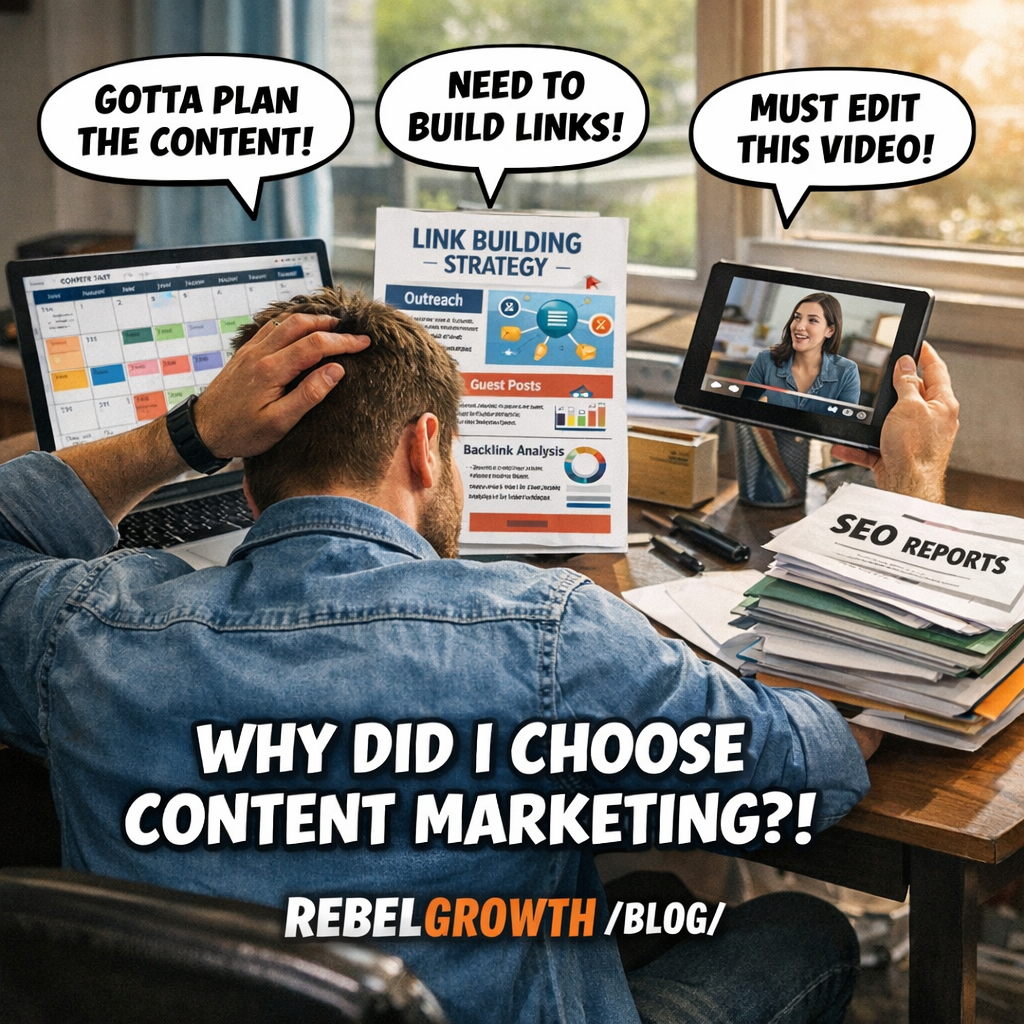
To sum it up, a content marketing strategy aligned with link‑building goals is nothing more than three loops: define what success looks like, create assets that match those goals, and reach out with a human touch while letting automation handle the grunt work. When each loop feeds the next, you’ll see those backlinks roll in – and the traffic spike you’ve been craving will finally feel like a natural outcome.
Step 2: Create Link‑Worthy Content Formats and Assets
Alright, you’ve nailed the topic and the goal – now it’s time to give Google and real‑people something they can’t ignore. Think of link‑worthy assets as the "magnet" in our content‑marketing and link‑building dance. If the magnet is weak, the metal (backlinks) just won’t stick.
So, what does a magnet look like? It’s a piece of content that either solves a problem nobody knew they had, or presents fresh data that makes industry folks say, "I need to quote that." Below are the formats that consistently pull in links, plus a quick checklist to get them rolling.
1️⃣ Data‑driven posts and original research
Search Engine Journal reminds us that “be the source.” When you publish your own survey, market analysis, or even a simple spreadsheet of trends, you become a citation magnet. One education company we heard about turned a 3‑month research project into a 52‑backlink, 100‑k‑visit piece. The trick? Use tools like Google Trends, consumer surveys, or your own analytics to unearth numbers no one else has.
Action steps:
- Pick a narrow, relevant question (e.g., "What percentage of small e‑commerce stores use video testimonials?").
- Gather data via a short Typeform survey, a social poll, or internal sales reports.
- Visualise the results with a clean chart – even a free tool like Google Data Studio works.
- Write a 1,200‑word analysis that tells a story, not just a spreadsheet dump.
Once published, pitch the study to industry blogs, news sites, and niche newsletters. Because you’re the original source, they’ll gladly link back.
2️⃣ Interactive tools and calculators
People love to plug their own numbers into something useful. A mortgage‑payment calculator, a SaaS ROI estimator, or a “wax‑type selector” for candle makers can generate dozens of inbound links from forums and resource pages.
How to build one without a dev team:
- Use a no‑code widget platform (e.g., Outgrow, Typeform).
- Feed it with the data you collected in step 1.
- Embed the tool on a dedicated landing page and add a short guide on "How to use this calculator to boost your conversions."
- Reach out to niche directories that list free tools – they love linking to useful resources.
3️⃣ Visual assets: infographics, slide decks, and short videos
We all know a well‑designed infographic can double link‑earning potential. The key is to keep it data‑rich and brand‑neutral enough that anyone can embed it.
Example: A craft‑candle brand turned its wax‑type guide into a colourful 10‑step infographic. Within two weeks, three design blogs and a DIY magazine linked back, sending a 28 % traffic bump.
Steps:
- Pick the most compelling data point from your research.
- Sketch a layout – one main headline, three supporting stats, and a simple visual flow.
- Use Canva or a freelance designer (keep the file size under 500 KB for easy embed).
- Host it on your site, then email outreach prospects with a line like, "We made this visual for your readers – feel free to embed it with credit."
4️⃣ Long‑form guides repurposed as checklists or cheat sheets
Take a 3‑000‑word pillar post and slice it into bite‑size PDFs. A “Remote Team Collaboration Checklist” is perfect for HR blogs, while a “Quick‑Start SEO Cheat Sheet” lands on marketing forums.
Practical tip: Add a call‑to‑action at the bottom of each PDF that invites the host to link back to the original guide for full context.
5️⃣ Podcast snippets and quote‑ready audio clips
Audio is underrated in link‑building. Record a short 2‑minute interview with an industry expert (or even yourself summarising the research). Offer the audio file to niche podcasts that need filler content. When they publish, they’ll link to the transcript on your site.
Quick checklist:
- Script a 5‑question interview based on your data.
- Record using a free tool like Audacity.
- Upload to a simple audio host (e.g., SoundCloud) and embed the player.
- Send the clip to podcast hosts with a personalised pitch.
Choosing the right mix
Not every format works for every niche. Below is a quick comparison to help you decide which assets to prioritise based on effort, link‑potential, and typical audience appetite.
| Asset Type | Effort (Low‑Medium‑High) | Typical Link Sources | Key Tip |
|---|---|---|---|
| Original research article | Medium | Industry news sites, blogs, academic portals | Highlight a single headline‑worthy statistic. |
| Interactive calculator | High | Resource directories, niche forums | Make the embed code copy‑paste ready. |
| Infographic / visual | Low‑Medium | Design blogs, social shares, PR sites | Keep branding subtle – let others credit you. |
Remember, you don’t have to build everything at once. Start with the format that matches your team’s skill set, then expand.
One tool that can smooth the data‑collection part of this whole workflow is BubblyAgent AI voice assistant. It captures quick user feedback and can turn those snippets into survey questions, feeding your research pipeline without extra spreadsheets.
And if you’re looking for a deeper dive on how AI‑powered content tools fit into the mix, check out our guide Exploring the Best AI SEO Content and Link Building Tool Options for Effective Digital Marketing. It walks you through the exact platforms that automate many of the steps we just outlined.
Bottom line: create assets that are useful, unique, and easy to embed. Then let the outreach team (or your automated system) hand them out like business cards at a conference. The more “must‑have” your piece feels, the faster the backlinks will roll in.
Step 3: Execute Outreach and Build High‑Quality Backlinks
Alright, you’ve got your assets ready – now it’s time to put them in front of the right people. Think of outreach as the handshake that turns a shiny piece of content into a genuine endorsement.
First thing’s first: research the prospect. Dive into their recent posts, note the style of links they usually embed, and jot down a specific hook that ties your asset to their audience. A personalized touch beats a generic blast every time.
Here’s a quick three‑step template you can copy‑paste and tweak:
- Subject line that sparks curiosity (e.g., "🚀 Let’s Boost Our Websites Together!")
- Brief intro that mentions a recent article of theirs and why your piece is a natural fit
- Clear ask – a guest post, an embed, or a data citation – plus a quick link to the asset
Need a ready‑made example? Mailtrap’s effective outreach email templates break down exactly how to structure each line for higher reply rates.
Second, timing matters. In our experience, a three‑day cadence works well: send the first email, follow up after 72 hours with a fresh data point, and a final nudge on day 7 if you haven’t heard back. Keep each follow‑up under 80 words – you’re reminding, not nagging.
Third, track everything. A simple spreadsheet with columns for prospect, date sent, open rate, reply, and link status is enough for a small team. If you’re using an automation platform, map the outreach steps to status tags so you always know who’s hot, warm, or cold.
Real‑world example: a boutique SaaS that offers a remote‑team guide sent a personalized pitch to five productivity blogs. Two blogs loved the data visualisation, published it, and gave a dofollow link. The resulting referral traffic jumped 32 % in just ten days.
Now, let’s talk about the content of the email itself. Start with a genuine compliment – "I loved your recent post on hybrid work schedules…" – then pivot to the value you bring. Mention a specific statistic from your asset: "Our survey shows 68 % of teams struggle with time‑zone coordination, which aligns with your audience’s pain point." Finish with a low‑effort call‑to‑action: "Would you like a ready‑to‑embed chart?"
Don’t forget GDPR compliance. A short line at the bottom reassuring the recipient that you respect their privacy (and offering an easy unsubscribe) builds trust and keeps you on the right side of the law.
When a prospect says “yes,” make it effortless for them to link back. Provide an embed code snippet that’s copy‑paste ready, a short HTML line with proper attribution, and a fallback plain‑text URL. The easier you make it, the quicker the link lands on their site.
Sometimes you’ll hit a dead‑end – no reply, or a polite decline. That’s okay. Use the data you gathered from the bounce to refine your next pitch. Maybe the tone was off, or the asset wasn’t a perfect fit. Iterate, don’t abandon.
And here’s a pro tip that often gets overlooked: leverage existing relationships. If you’ve already earned a backlink from a site, reach out again with a new, related asset. The familiarity boosts acceptance rates dramatically.
Below is a short video that walks through setting up a basic outreach sequence in a typical email automation tool. It shows the exact fields you should populate and how to schedule follow‑ups without lifting a finger.
After the video, you’ll see a quick checklist you can paste into your own notes:
- ✅ Identify 5‑10 target sites per asset
- ✅ Craft a personalized subject line
- ✅ Include a one‑sentence value proposition
- ✅ Offer a ready‑to‑embed asset
- ✅ Schedule 2‑3 follow‑ups
- ✅ Log the link and update your KPI dashboard
If you’re looking for a deeper dive on how automation can streamline this whole process, check out How to Automate Content Creation and Backlink Building for Faster SEO Growth. It walks you through the exact steps to let a platform handle the grunt work while you focus on relationship building.
Remember, outreach is as much about relationship as it is about rank. Treat each email as a conversation starter, not a sales pitch, and the high‑quality backlinks will follow.
Step 4: Measure, Analyze, and Optimize Your Content Marketing and Link Building Efforts
1️⃣ Set up a simple KPI dashboard
First, pull together the numbers you care about in one place. In our experience, a spreadsheet or a low‑cost analytics tool that shows organic traffic, referral domains, and conversion rates side‑by‑side does the trick.
Don’t over‑engineer it – just pick the three to five metrics that matter most to your business and update them daily.
2️⃣ Track core metrics every week
Here are the basics you should be watching:
- Organic traffic growth – are you seeing more clicks from Google after each new asset?
- New referring domains – count the unique sites that link back to you each week.
- Link quality signals – look at domain authority, relevance, and traffic of each referring site.
- Engagement on repurposed assets – downloads, video plays, or infographic shares.
- Conversion lift – how many leads or sales are tied to the backlink traffic?
Update the numbers on a Monday, compare to the previous week, and note any spikes.
3️⃣ Analyze performance with a quick “what’s working?” lens
When you see a surge, ask yourself: Which piece sparked it? Was it the infographic that got embedded on a design blog, or the calculator that a niche forum linked to?
Pull the URL, check the referral source in Google Search Console, and jot down the exact asset that earned the link. That’s the data point you’ll double‑down on.
If a piece underperforms, dig a little deeper. Maybe the content was too niche, or the outreach email missed a personalization cue. Write a one‑sentence hypothesis, like “the checklist didn’t match the audience’s workflow,” and move on.
4️⃣ Iterate: tweak, test, and repeat
Now comes the fun part – turn insights into action. For a high‑performing infographic, create a smaller version or a GIF and pitch it to a new list of design blogs.
For a calculator that barely got clicks, consider simplifying the UI or adding a short tutorial video that you can embed on the same page.
Set a two‑week test window for each tweak. Track the same KPI dashboard, and if the metric moves at least 10 % in the right direction, lock that change in.
5️⃣ Keep a “wins” log
Every time a new link lands or traffic jumps, write a quick note: what asset, which site, and the result. Over time you’ll see patterns – maybe tech blogs love data visualizations, while hobby forums prefer checklists.
This log becomes your go‑to cheat sheet for the next round of content creation.
6️⃣ Bonus tip: automate the boring bits
If you’re already using rebelgrowth’s automated content engine, let it feed the dashboard with the latest traffic numbers. The platform can pull in Search Console data and update your KPI sheet without you opening another tab.
That way you spend more time brainstorming new assets and less time refreshing cells.
So, what’s the next step? Grab your dashboard, pick a metric that feels a bit flat, and plan a tiny tweak for the next week. Measure, analyze, and keep iterating – that’s the engine that turns a handful of backlinks into a steady stream of organic growth.
Conclusion & Next Steps
So, you've walked through the whole workflow of content marketing and link building, from brainstorming assets to logging wins.
What does the finish line look? In short, you have a live dashboard, a handful of fresh backlinks, and a clear pattern of what works for your niche.
Take a moment to celebrate that tiny win. Then grab the same dashboard, spot the metric that's still flat, and pick one micro‑tweak, maybe a new infographic or a short video embed, to test next week.
Because the cycle is fast, you’ll see results in days, not months. If the tweak nudges traffic up 10 % or more, lock it in; if not, scrap it and try another angle.
Quick three‑step checklist
- Review the KPI dashboard and pick the weakest metric.
- Design one small piece of link‑worthy content around that metric.
- Run a two‑week test, log the result, and iterate.
Remember, you don’t need to overhaul everything at once; consistency beats perfection every time.
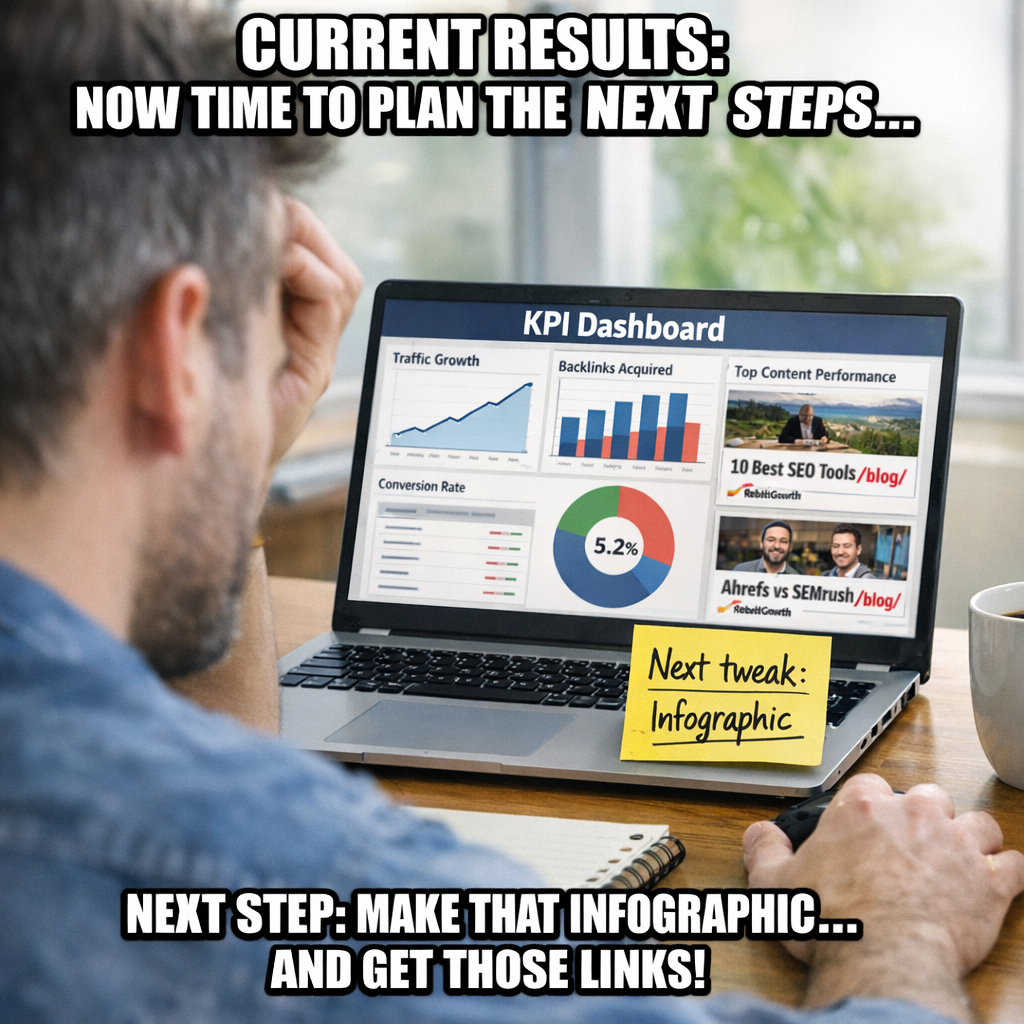
If you ever feel stuck, our automated engine can spin up the next draft while you focus on outreach, keeping the loop moving without extra head‑count. By treating each test as a small experiment, you build momentum and avoid analysis paralysis. Over time the data will point you toward the high‑impact assets that keep your traffic climbing.
Frequently Asked Questions
What’s the first step to launch a content marketing and link building plan?
Start by auditing what you already have. Identify the top‑performing page, note its traffic and link profile, then ask what single piece of content could boost its weakest metric. That could be an infographic, a short video, or an data‑driven post. Map that asset to a handful of prospects whose audience would benefit, and you’ve turned a vague goal into a concrete experiment.
How often should I be publishing fresh assets for link building?
Consistency beats volume. Aim for at least one new, link‑worthy asset every two weeks. This cadence keeps your outreach pipeline full without overwhelming your team. If a piece earns a backlink, double‑down on the format; if it falls flat, tweak the topic or format and try again. The key is to treat each rollout as a mini‑test, so you can iterate quickly.
Can I repurpose existing blog posts into link‑friendly formats?
Absolutely. Take a well‑ranked guide and spin it into a checklist, a slide deck, or an infographic. Those bite‑size assets are easier for other sites to embed and cite. When you reach out, pitch the repurposed version as a “ready‑to‑use” resource – that lowers the effort for the publisher and raises the chance they’ll link back.
What’s the best way to find high‑quality sites for outreach?
Start with a simple search: type your target keyword plus “resources” or “list”. Scan the top results for domains that already link to similar content. Use free tools like Google Search Console to see who’s already linking to you, then expand that list with sites that share a similar audience. Personalise each pitch by referencing a recent article they published.
How do I know which metrics really matter?
Focus on three pillars: organic traffic growth, new referring domains, and engagement on the repurposed asset (downloads, shares, views). Track them in a single dashboard and compare week‑over‑week. If traffic spikes but backlinks stay flat, your content is resonating but you need more outreach. If backlinks rise but traffic stalls, reconsider the relevance of the linking sites.
Is it safe to let automation handle backlink acquisition?
Automation is great for research and draft creation, but the actual outreach still needs a human touch. Let the platform surface prospects and generate email templates, then add a genuine compliment or a specific data point that only you could notice. That mix of speed and personalisation preserves quality while keeping the workload manageable.
How long before I see a traffic lift after earning a new backlink?
Backlinks typically start influencing rankings within a few days to two weeks, but the full traffic lift can take up to a month, especially if Google needs to re‑crawl the page. Monitor the referral traffic in your analytics and look for a steady upward trend rather than a single spike. If nothing changes after 30 days, consider a follow‑up outreach or a content tweak.