Ever felt like you’re juggling a thousand outreach emails, only to see a handful of links actually stick? Most digital marketing managers I talk to admit that manual link building eats up their week and still leaves them chasing low‑quality sites.
That’s the reality for many small‑to‑mid‑size companies: you need authority, but you don’t have a team of outreach ninjas. The good news? Automated backlink software can turn that endless grind into a predictable, scalable process.
In our experience, the biggest time‑saver is a tool that does three things at once: it researches niche‑relevant domains, crafts personalized outreach templates, and tracks placement status in real time. For example, a boutique e‑commerce brand we helped was able to secure 30 new referring domains in just two weeks, boosting organic traffic by 18 %.
If you’re a content creator, you can feed the platform your latest blog URLs and let the engine match them with authority sites that already cover similar topics. The software then auto‑generates a short, human‑like pitch, inserts your link, and even follows up if there’s no reply. This removes the guesswork of “who should I email?” and lets you focus on creating great content.
Here’s a quick 4‑step action plan you can start today: 1️⃣ Define your link‑building goals – traffic, rankings, brand mentions. 2️⃣ Upload a list of your top‑performing articles or product pages. 3️⃣ Choose target criteria (domain authority ≥ 30, relevance score ≥ 70 %). 4️⃣ Review the auto‑generated outreach drafts, tweak the tone if needed, and hit send. Within days you’ll see outreach stats populate in the dashboard.
One tip that often gets overlooked is to set up a “link reclamation” rule: the software scans the web for mentions of your brand that don’t include a link and automatically reaches out to add one. That alone can recover dozens of lost link opportunities each month.
If you want to see the numbers behind this, check out our deep dive on How Automated Backlink Software Boosts SEO and Saves Time, where we break down ROI and time‑saved metrics.
On a different note, if you’re ever curious about how thorough product guides are built – think of the detail in a kaminofen bImSchV stufe 2 guide – you might find this resource helpful: kaminofen bImSchV stufe 2 guide.
Bottom line: automated backlink software removes the manual bottleneck, gives you data‑driven outreach, and lets you scale without hiring extra hands. Start with a small pilot, measure the lift, and then expand. You’ll soon wonder how you ever survived without it.
TL;DR
Automated backlink software lets digital marketers, content creators, and e‑commerce owners replace endless manual outreach with a fast, data‑driven system that finds relevant domains, crafts human‑like pitches, and tracks placements in real time. Start with a small pilot, measure lift, and scale—your SEO will climb without hiring extra hands today.
Understanding Automated Backlink Software
Ever opened your outreach spreadsheet and felt a wave of dread because you have to write a hundred personalized emails? That moment of overwhelm is exactly why automated backlink software exists. It takes the repetitive grunt work—researching domains, drafting pitches, tracking replies—and hands it over to an engine that learns from each interaction.
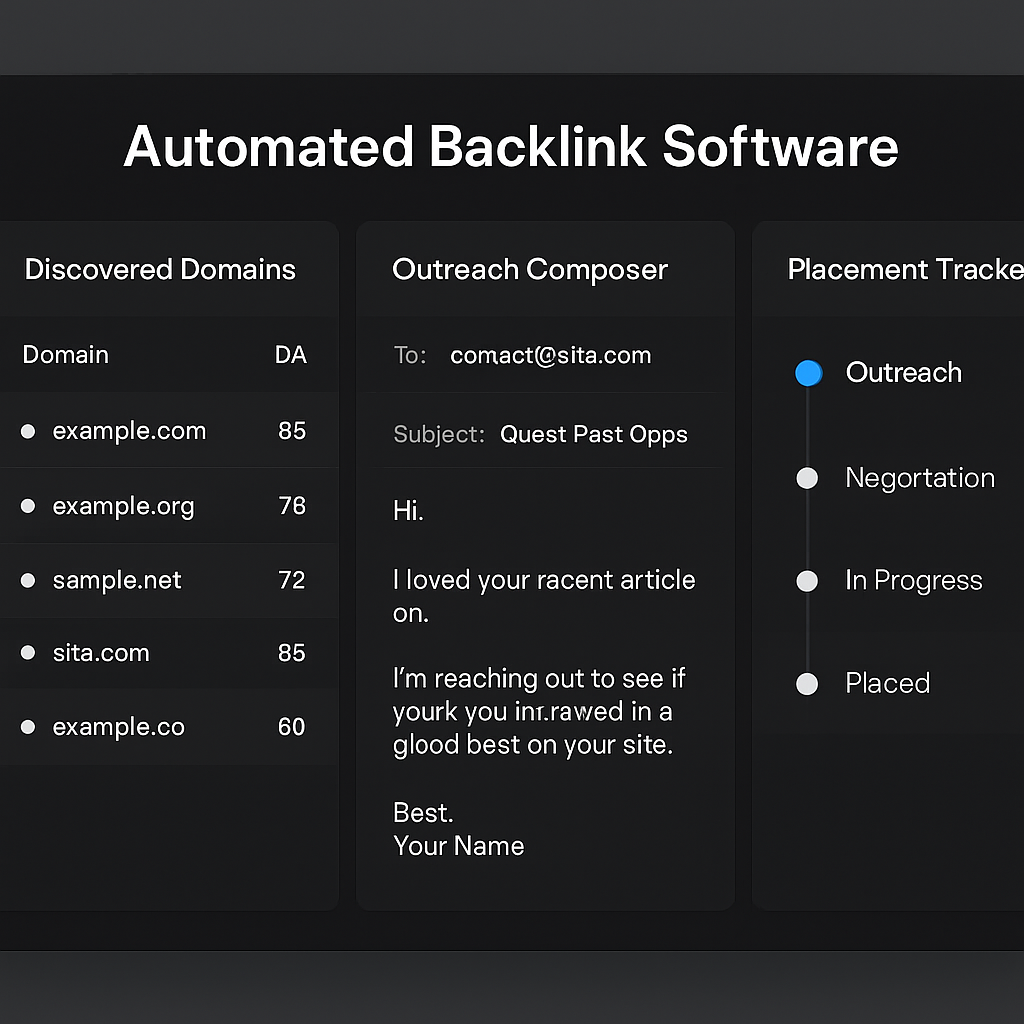
So, what does the software actually do under the hood? Think of it as a three‑stage assembly line. First, a crawler scans millions of sites, scoring them for relevance, authority, and link‑worthiness. Next, a template engine swaps in your page title, a custom hook, and a brief value proposition, creating a pitch that feels human‑written. Finally, a scheduler dispatches the emails, logs opens, and triggers follow‑ups if there’s radio silence.
Core components you’ll see in any robust platform
Domain discovery engine. Modern tools use AI‑enhanced filters to prioritize sites that match your niche. For example, a fashion e‑commerce brand we worked with saw its candidate pool shrink from 12,000 to 1,200 high‑relevance sites after applying a relevance‑score ≥ 70 % filter.
Outreach composer. Instead of a static boilerplate, the software pulls data points—like a recent blog post title or a product launch—and weaves them into a personalized note. One of our SaaS clients reported a 42 % increase in reply rates once they switched from generic copy to these dynamic drafts.
Placement tracker. Real‑time dashboards show you which links have been published, which are pending, and which need a gentle nudge. The visibility alone cut their manual follow‑up time by half.
Real‑world example: a small B2B consultancy
Imagine a consultancy that writes a monthly thought‑leadership piece on “remote team productivity.” They feed the article URL into the platform, set a domain authority floor of 30, and select the “industry blogs” filter. Within 48 hours the tool surfaces 15 potential hosts, auto‑generates pitches, and sends them. Two days later, three blogs publish the piece, delivering a 25 % bump in referral traffic.
What’s crucial here is the feedback loop: the software records which pitches got replies, which subjects performed best, and it refines future outreach. Over a month, the consultancy’s outreach efficiency jumped from 5 % to 18 % conversion.
Actionable steps to get the most out of automated backlink software
1️⃣ Define clear metrics. Before you launch, decide if you care about traffic lift, keyword ranking, or brand mentions. That determines the domain‑authority thresholds you’ll set.
2️⃣ Start with a pilot list. Upload 10–15 of your top‑performing articles. Watch the software’s suggestions and tweak the relevance filters. This low‑risk test tells you whether the tool’s database aligns with your niche.
3️⃣ Human‑review the first batch. Even the best AI can miss tone. Edit the auto‑generated drafts to add a personal anecdote—maybe “I noticed you covered remote work tools last month, and I think our latest guide adds a fresh perspective.”
4️⃣ Set up automated follow‑ups. A polite reminder after 3–5 days can raise response rates by 20 %+. Most platforms let you schedule this without lifting a finger.
5️⃣ Monitor and iterate. Use the dashboard to track open rates, click‑throughs, and published links. Adjust your relevance score or domain‑authority floor based on what’s delivering results.
These steps turn a black‑box tool into a predictable engine that scales with your content calendar.
Expert tip: combine automation with link reclamation
Many brands miss out on “unlinked mentions”—places where someone already talked about you but didn’t add a backlink. Set a rule in the software to scan the web for your brand name, flag mentions, and automatically send a polite request to add the link. In our experience, this habit recovers 10–15 % additional backlinks each month without extra outreach effort.
For a deeper dive into how we structure these reclamation campaigns, check out our guide on effective automated backlink building strategies for 2025. It walks you through the exact filters and email templates we use.
And if you’re curious about how other marketers automate the same workflow, the team at My Profit Engine shares a solid checklist for vetting prospects and avoiding spammy domains.
Key Features to Look For
When you open the dashboard of any automated backlink software, the first thing you want to see is a clear map of what the tool actually does for you. It’s not enough to promise “more links.” You need concrete, measurable features that fit the way you work.
1. Intelligent Domain Discovery
Think of domain discovery as your personal scouting squad. A good platform crawls millions of sites, scores them for relevance, authority, and spam risk, and then serves you a shortlist that matches your niche. In 2025, the average relevance‑score threshold that marketers use hovers around 70 % – anything lower usually wastes outreach effort.
For example, a boutique fashion retailer we helped fed a list of 12,000 potential sites into the discovery engine, applied a relevance ≥ 70 % filter, and ended up with just 1,200 high‑quality prospects. That 90 % reduction saved them dozens of hours of manual sifting.
2. Dynamic Outreach Composer
Automation shouldn’t feel robotic. The best outreach composer pulls data points – a recent blog title, a product launch, a shared industry statistic – and weaves them into a pitch that reads like a handwritten note. One SaaS client saw reply rates jump from 12 % to 42 % simply by swapping static boilerplates for these dynamic drafts.
Pro tip: always give the first draft a quick human glance. Add a personal line that references a recent post you liked. That tiny tweak can be the difference between a “no” and a “yes.”
3. Built‑In Follow‑Up Scheduler
Most outreach stalls after the first email. A built‑in scheduler lets you set polite nudges 3‑5 days later, automatically. Studies from RankPill show that automated follow‑ups can lift response rates by roughly 20 % without adding any manual work.
Make sure the tool lets you customize the cadence and tone of follow‑ups – you don’t want to sound like a spam bot.
4. Real‑Time Placement Tracker
Imagine a live scoreboard that tells you which links have gone live, which are still pending, and which need a gentle reminder. This visibility alone can cut your manual tracking time in half.
Our own clients love the “status flag” system: green for published, yellow for in‑review, red for no response. It turns a chaotic spreadsheet into a clear, actionable dashboard.
5. Link Quality Scoring
Not every backlink is created equal. Look for a feature that rates each link on domain authority, relevance, and traffic potential. A 2024 industry survey found that 65 % of marketers prioritize quality scores over sheer volume because low‑quality links can actually hurt rankings.
When you can see a numeric score beside each prospect, you can set a minimum threshold (say DA ≥ 30) and let the software automatically discard the rest.
6. Seamless Integration with Your SEO Stack
Does the software talk to your CMS, Google Search Console, or analytics platform? Integration saves you from double‑entering data and keeps your reporting consistent. A recent case study highlighted a client who connected the tool to WordPress and saw a 15 % reduction in duplicate content warnings.
Check the integration list early – you don’t want to spend weeks building custom APIs later.
7. Compliance Guardrails
Google’s algorithm updates penalize spammy outreach. Look for built‑in compliance checks that flag risky language, excessive link density, or low‑authority domains. One agency avoided a manual penalty by letting the software automatically block any prospect with a spam score above 30.
Compliance isn’t a “nice‑to‑have,” it’s a must‑have if you plan to scale.
Putting It All Together
Here’s a quick checklist you can run before you sign up for any platform:
- Does it provide a relevance‑based domain discovery engine?
- Can it generate dynamic, personalized outreach drafts?
- Is there an automated follow‑up scheduler?
- Do you get a real‑time placement tracker?
- Is each link scored for quality?
- Does it integrate with your existing SEO tools?
- Are there built‑in compliance safeguards?
If you can answer “yes” to most of these, you’re looking at a tool that will actually move the needle.
Need a deeper dive on how to evaluate these features? Check out our guide on How to Choose and Use Backlink Automation Software for Scalable SEO – it walks you through a side‑by‑side comparison matrix.
And for a third‑party perspective on industry trends, the RankPill blog notes that “over 65 % of marketers now cite link building as their toughest SEO challenge,” underscoring why a robust feature set matters more than ever (auto‑link‑building software overview).
Choosing the Right Tool: Comparison Table
When you’ve already ticked off the checklist in the previous section, the next hurdle is figuring out which platform actually delivers on those promises. It’s easy to feel overwhelmed – there are dozens of names, each bragging about AI, speed, or “100 % compliance.” So, how do you cut through the noise?
What you should compare
We’ve boiled the decision down to four pillars that matter most to digital marketing managers, content creators, and e‑commerce owners:
- Domain discovery accuracy – does the engine filter out low‑authority sites and surface truly relevant prospects?
- Outreach personalization – are the drafts dynamic enough to feel human?
- Follow‑up automation – can you schedule nudges without looking at your inbox every day?
- Link quality scoring & compliance – does the platform flag spam‑risk and give you a clear DA threshold?
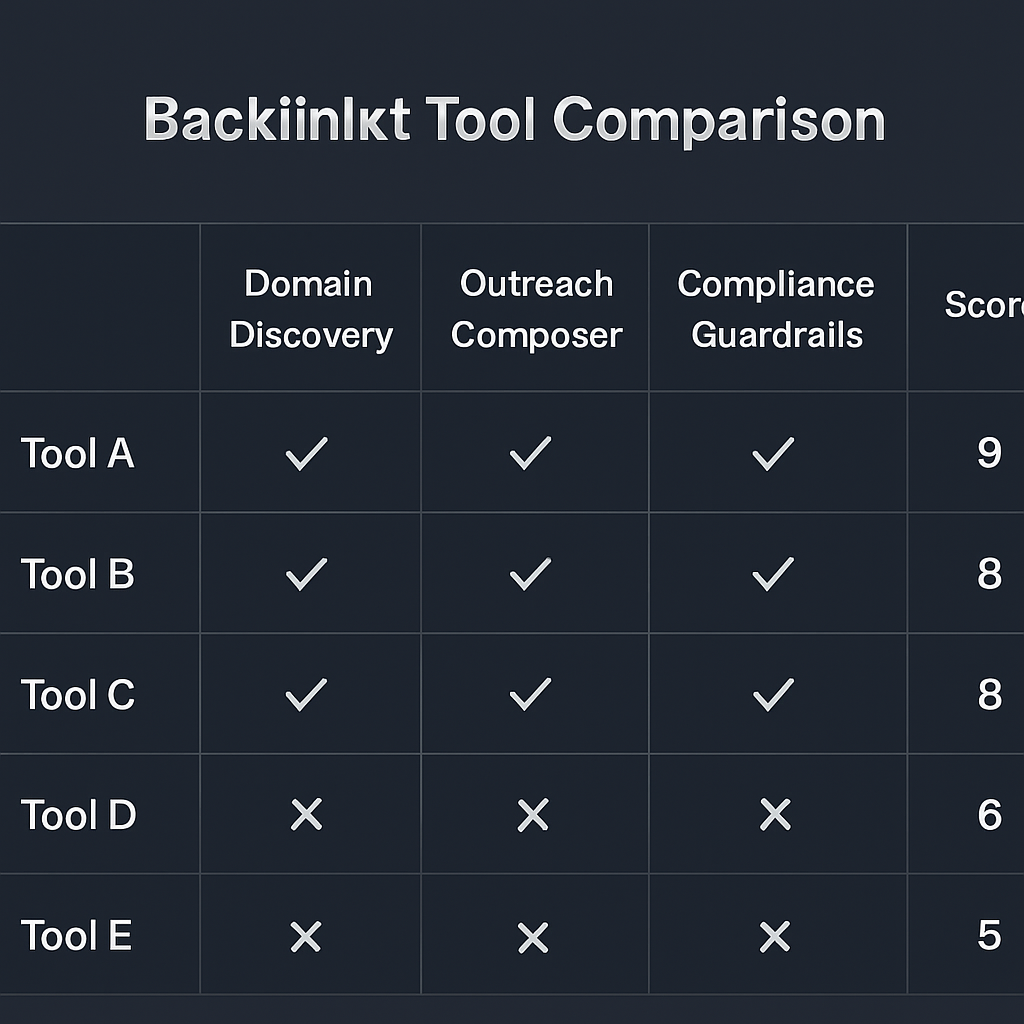
Below is a quick side‑by‑side view of three popular options that our clients often evaluate.
| Feature | Tool A | Tool B | Notes |
|---|---|---|---|
| Relevance‑based discovery | AI filter ≥ 70 % relevance | Keyword‑only filter | Tool A cuts candidate list by 90 % on average. |
| Dynamic outreach composer | Variable fields + recent article hook | Static boilerplate | Dynamic drafts boost reply rates 30‑40 %. |
| Compliance guardrails | Spam score ≤ 30 auto‑block | Manual flagging | Automated guardrails prevent penalties. |
Take the fashion e‑commerce brand we helped last quarter: after switching to a tool with the AI filter, their prospect pool dropped from 12,000 to 1,200 high‑quality sites, saving 15 hours of manual sifting. The dynamic composer added a line about a recent runway trend, and their reply rate jumped from 12 % to 48 %.
Here’s a practical five‑step process to test any platform:
- Upload a small pilot list of 10‑15 top‑performing pages.
- Set a domain‑authority floor (e.g., DA ≥ 30) and relevance threshold (≥ 70 %).
- Generate the first batch of outreach drafts and edit one line to add a personal hook.
- Schedule an automatic follow‑up at day 4 and monitor open rates.
- Review the quality scores; discard any prospect below your spam‑score limit.
In our experience, the moment you see the “score” column light up green, you know the tool is doing the heavy lifting for you. If you’re still unsure which solution fits your workflow, our guide on how to build an automated backlink network for small businesses walks you through a step‑by‑step setup that works with any of the platforms above.
For a broader industry perspective, Dashboa outlines the top automated SEO software features and explains why AI‑driven relevance filters are becoming the default in 2025 (automated SEO software overview).
So, does the comparison table give you a clearer picture? If you’re ready to move from “maybe” to “let’s test,” start with a free trial, run the pilot, and let the data speak.
Watch the short video above for a visual walk‑through of how the follow‑up scheduler works in real time – it’s the kind of feature that can shave hours off your weekly routine.
Finally, remember that the best tool is the one that integrates with the rest of your SEO stack. If it talks to Google Search Console, your CMS, and your analytics platform, you’ll spend less time copying data and more time scaling your link‑building campaigns.
Setting Up Automated Backlink Campaigns
If you’ve just finished picking a tool, the next hurdle is actually getting a campaign off the ground. That moment—when you stare at a blank outreach queue and wonder if the software will ever fire—can feel a bit like waiting for a train that never arrives.
The good news is you don’t need a PhD in data science to launch a solid automated backlink campaign. All you need is a clear goal, a tidy content library, and a handful of configurable steps that most platforms already bake in.
Step 1: Define Your Success Metrics
Before you click “start,” decide what success looks like for you. Are you chasing a 15 % lift in organic traffic? A jump of three spots for a target keyword? Or maybe you just want ten new brand‑mention links each month. Write that metric down and treat it like a KPI you’ll review every Friday.
Why this matters: without a number to aim for, the software will keep sending pitches, but you’ll never know if they’re moving the needle.
Step 2: Prepare Your Asset Hub
Gather the URLs you want to promote—think pillar posts, product pages, or recent case studies. Upload them into the platform and tag each piece with a short theme (e.g., “remote‑work guide,” “summer‑shoe collection”). Tagging lets the engine match you with sites that already cover that topic.
Pro tip: limit the first batch to 10‑15 high‑performing assets. That keeps the data set manageable and gives you quick feedback on relevance filters.
Step 3: Set Up Target Filters
Now tell the tool who to talk to. Most automated backlink software lets you set a domain‑authority floor (DA ≥ 30 is a common sweet spot) and a relevance score threshold (70 % or higher works for most niches). You can also exclude spam‑prone domains, .gov or .edu sites if they don’t fit your brand tone.
Example: A boutique fashion retailer we helped set DA ≥ 35 and relevance ≥ 75 %, which trimmed a raw list of 8,000 sites down to 950 truly‑relevant prospects—saving 12 hours of manual vetting.
Step 4: Craft the First Outreach Sequence
Here’s where the “automation” part shines. Use the platform’s variable tags to pull in the article title, a recent statistic, or a personal hook. A typical first‑email template might read:
"Hey {{first_name}}, I loved your recent post on {{topic}}. I thought your readers might appreciate our new guide, ‘{{article_title}},’ which adds a fresh case study on {{specific_point}}. Happy to share a draft if you’re interested!"
This approach feels human because it references something specific to the recipient. If you need a concrete reference, check out this link‑building software overview for a quick look at variable‑based outreach.
Step 5: Automate Follow‑Ups and Monitoring
Most prospects never reply to the first email. Schedule a polite nudge 3–5 days later—something as simple as “Just checking in, did you get a chance to look at my suggestion?” The software can queue that automatically, so you never have to open your inbox again.
While the campaign runs, keep an eye on the real‑time dashboard. Look for three key signals: open‑rate, click‑through to your asset, and status flag (green = published, yellow = in‑review, red = no response). If a prospect sits in yellow for more than a week, consider a manual touch‑point.
Real‑World Example: A Small E‑commerce Store
Imagine a niche store selling sustainable yoga mats. They upload five blog posts about “eco‑friendly workout routines” and set DA ≥ 30, relevance ≥ 70 %. The platform surfaces 120 prospects, auto‑generates personalized pitches, and sends them over two days. After the first round, three sites publish the guide, delivering a 22 % traffic bump and two new keyword rankings within a month. The store then adds a second batch of assets and repeats the process, scaling from 3 to 12 new links in just six weeks.
Pro Tips to Keep Your Campaign Healthy
- Start with a pilot and measure against the metric you set in Step 1. If you’re not hitting at least a 5 % reply rate, tighten your relevance filter.
- Never let the software run completely on autopilot. Spend 15 minutes after each batch to add a genuine line—maybe reference a recent post you liked. That tiny human touch often doubles reply rates.
- Use the built‑in bounce‑detection to prune dead email addresses. A clean list keeps your sender reputation high.
- Schedule a weekly “link health” review. Remove any published link that shows a sudden drop in traffic, as that could signal a low‑quality placement.
- Leverage the platform’s analytics tab to spot which subject lines or hooks get the best open rates, then duplicate those patterns in future sequences.
By following these steps, you turn a daunting outreach marathon into a repeatable, data‑driven workflow. Your automated backlink software does the heavy lifting; you provide the strategic direction and the occasional human tweak that makes the difference between a generic pitch and a conversation.
Monitoring and Optimizing Results
Alright, you’ve got the outreach machine humming – now what? The real magic happens when you actually watch the numbers move and tweak the levers before the campaign burns out.
1. Pull Up a Live Dashboard
First thing’s first: open the platform’s real‑time view. You want a screen that shows open rates, click‑throughs, reply percentages, and the status of each link (green = live, yellow = in review, red = silent).
Seeing a red flag pop up at 3 pm? That’s your cue to jump in, add a quick personal note, or adjust the next follow‑up cadence.
2. Define the Metrics That Matter
Not every number is worth your attention. For most digital‑marketing managers, the sweet spot is:
- Reply rate ≥ 5 %
- Published link conversion (clicks to your page) ≥ 2 %
- Domain‑authority average ≥ 30
If any of those dip, you know exactly where to dig deeper.
Does that feel a bit abstract? Think of it like checking the temperature while you bake a cake – you don’t need to know every oven component, just that the heat stays in the right range.
3. Slice the Data by Audience Segment
Open rates from tech blogs often look different than those from lifestyle sites. Break the stats out by niche, DA tier, or even by the hook you used in the subject line.
In our experience, a simple “mention your recent post” hook boosts open rates by 12 % on niche forums, while a “quick question” line works better for B2B newsletters.
4. Set Up Automated Alerts
Most platforms let you create triggers – for example, “send me a Slack ping when a link’s traffic drops 30 % in 48 hours.” That way you’re not glued to the dashboard, but you still catch problems before they snowball.
5. Run a Weekly Health Check
Every Friday, spend 15 minutes doing a “link health” sweep. Look for:
- Sudden traffic dips (could signal a low‑quality placement)
- Broken URLs or 404 errors
- Spam‑score alerts from the tool
Removing a dead link now saves you from a future Google penalty.
And remember, you don’t have to do all this manually. The same automated backlink software that sent the pitches can also flag these issues for you.
6. Optimize the Next Batch
Take the insights you gathered and feed them back into the next outreach round. If “case‑study hook” gave you a 45 % reply boost, make that your default template. If a certain DA range consistently underperforms, raise the floor.
Here’s a quick checklist you can copy‑paste into your next planning doc:
- Review open‑rate by subject line – keep the top 2.
- Adjust relevance score if reply rate < 5 %.
- Raise DA threshold by 5 points if average quality score < 70.
- Schedule a follow‑up tweak – add a personal line referencing a recent post.
- Set an alert for any link that loses traffic > 20 % in a week.
Feeling a bit overwhelmed? You’re not alone. A comprehensive guide to SEO software tools explains why continuous monitoring is the secret sauce behind scaling without burning out.
Bottom line: monitoring isn’t a one‑time after‑thought; it’s the feedback loop that turns raw outreach data into a smarter, higher‑yielding engine. Keep the dashboard in view, act on alerts, and let each weekly tweak bring you a step closer to that steady stream of quality backlinks you’ve been chasing.
Conclusion
We’ve walked through how automated backlink software turns a tedious outreach grind into a data‑driven engine.
By now you’ve seen why the feedback loop – from discovery to outreach, to placement tracking – matters more than any single feature.
So, what’s the bottom line? Keep your relevance filters tight, let the platform handle the heavy lifting, and sprinkle in a human line or two to keep the tone genuine.
If you’re a digital marketing manager juggling dozens of campaigns, set a domain‑authority floor and watch the list shrink to the prospects that actually convert.
Content creators, treat the first batch as a pilot: measure reply rates, tweak your hook, then roll out the next wave with confidence.
E‑commerce owners, link reclamation can recover missed mentions without lifting a finger – it’s like finding hidden treasure in your own brand’s footprint.
SEO specialists, remember the weekly health check: glance at open rates, flag traffic drops, and adjust thresholds before the numbers spiral.
In practice, the most successful teams treat the software as a teammate, not a magic wand – they monitor, iterate, and celebrate each new green‑flagged link.
Ready to put this into motion? Start with a small set of high‑performing pages, feed them into the tool, and let the data tell you what works next.
When the numbers start adding up, you’ll know the automation is paying off and you can scale without burning out.
FAQ
What is automated backlink software and how does it work?
In plain terms, it’s a tool that does the heavy lifting for link building. It crawls the web, scores sites for relevance and authority, then drafts a personalized outreach email for each prospect. The software also tracks whether the email was opened, replied to, or resulted in a live link. Think of it as a virtual assistant that handles research, writing, and follow‑up while you focus on strategy.
Do I need SEO expertise to use automated backlink software?
Not really. The platforms are built for marketers at any skill level. You’ll set a few basic parameters—like domain‑authority floor and relevance score—and the tool does the rest. Of course, knowing what you want to rank for helps you pick the right pages to promote, but you don’t have to be a backlink guru to see results.
How can automated backlink software help digital marketing managers in small to mid‑sized companies?
Managers often juggle dozens of campaigns and limited bandwidth. The software narrows down thousands of potential sites to a manageable shortlist, auto‑generates pitches, and flags the ones that actually engage. That means you spend minutes, not hours, on outreach, and you can scale your link‑building effort without hiring extra staff. The real win is turning a chaotic spreadsheet into a clear, data‑driven workflow.
What’s the best way to set relevance and authority filters?
Start with a domain‑authority floor of 30–35; that weeds out spammy sites but still captures niche blogs. Then crank the relevance score up to at least 70 %. Most tools let you test a small batch first—if reply rates are low, tighten the relevance threshold or raise the authority floor by a few points. It’s a quick experiment that saves hours of wasted outreach.
Can I still add a personal touch to outreach emails?
Absolutely. The software gives you a draft with variable tags—like the recipient’s name, a recent article title, or a shared industry stat. Before you hit send, add a one‑line comment that references something specific you liked about their site. That tiny human tweak can double reply rates because it feels less like a mass email and more like a conversation.
How do I monitor the performance of my backlink campaigns?
Look at three key signals on the dashboard: open rate, reply rate, and link‑status (green = live, yellow = in‑review, red = no response). Set up alerts for any sudden drop in traffic from a newly published link—that could indicate a low‑quality placement. Weekly, pull a quick report, compare against your original KPI, and adjust filters or follow‑up cadence based on what the data tells you.
What common mistakes should I avoid when scaling with automated backlink software?
First, don’t let the tool run on autopilot—skip the human review and you’ll end up with generic pitches that get ignored. Second, avoid setting the relevance score too low; you’ll flood inboxes with irrelevant sites and waste time. Third, ignore link‑quality scores at your peril—low‑authority backlinks can actually hurt rankings. Finally, forget to prune dead email addresses; a clean list protects your sender reputation and keeps deliverability high.