Ever felt like you're chasing a ghost when you try to build backlinks by hand?
You're not alone. Most digital marketing managers in small‑to‑mid‑size companies spend hours digging for link opportunities, only to end up with a handful of low‑quality mentions that barely move the needle.
What if there was a way to flip that script, letting a smart system do the heavy lifting while you focus on creating killer content?
That's the promise behind the best automated link building tools – platforms that scan your niche, sniff out relevant sites, and even fire off outreach emails without you lifting a finger.
In our experience at Rebelgrowth, the biggest breakthrough comes when you combine data‑driven prospecting with automated outreach. Imagine a dashboard that shows you high‑authority blogs ready for a guest post, then automatically personalizes the pitch and tracks responses. No more copy‑pasting, no more missed follow‑ups.
But here's the catch: not every tool lives up to the hype. Some promise AI magic but deliver generic templates that get ignored. Others are so clunky that you spend more time fixing bugs than actually building links.
So, how do you separate the wheat from the chaff? First, look for tools that let you set clear criteria – domain authority thresholds, topical relevance, and even traffic ranges. Second, make sure the platform integrates with your existing content workflow, whether that's a WordPress blog or an e‑commerce product page.
Think about it this way: if you were hiring a freelance outreach specialist, you'd want someone who knows your industry, respects your brand voice, and can track every touchpoint. The best automated link building tools aim to be that specialist, only faster and at scale.
And yes, there’s a learning curve. You’ll need to spend a few hours fine‑tuning filters and reviewing the first batch of outreach drafts. But once the system is humming, you’ll start seeing consistent, high‑quality backlinks rolling in.
Ready to cut the manual grunt work and let technology handle the chase? Let's dive in and explore the top solutions that actually deliver results.
TL;DR
If you’re tired of manually hunting backlinks, the best automated link building tools can scan your niche, filter prospects, and draft personalized outreach in minutes.
By setting domain authority thresholds and integrating with your CMS, you’ll start seeing high‑quality mentions roll in, freeing you to focus on creating killer content.
1. Tool A – Automated Link Builder
Imagine you could point a single button at your niche and watch a list of high‑authority prospects pop up, ready for a personalized outreach. That's the promise of Tool A, and it's why it lands near the top of our list of the best automated link building tools.
We start by feeding the platform a few seed keywords – say, "organic pet food" for a small e‑commerce brand. The engine then scours the web, filters out low‑quality sites, and surfaces blogs, news outlets, and niche forums that actually matter. The result? A clean spreadsheet of prospects with domain authority, traffic stats, and contact emails.
But the magic doesn’t stop at prospecting. Tool A also drafts outreach emails on the fly, inserting the target’s recent article title, a genuine compliment, and a clear value proposition. It even A/B tests subject lines for you. In our experience, that level of automation can cut outreach preparation time from hours to minutes.
So, how does it fit into a typical workflow? First, set your criteria – domain authority ≥ 30, traffic ≥ 5k, and a relevance score of at least 80 %. Then let the tool run its crawl. Once the list is ready, you can push a batch of personalized emails directly from the dashboard, or export them to your favorite CRM.
And here's a quick tip: combine the tool with a simple Google Sheet that tracks replies, follow‑ups, and link status. That way you keep the human touch where it matters most, while the heavy lifting stays automated.
Curious how the data looks in practice? Check out our Automated Link Building Software: A Practical Guide for SEO Success for a deep dive into dashboards and metrics.
Now, no tool lives in a vacuum. While Tool A handles the outreach engine, you might also need a solution to streamline other marketing tasks. Assistaix – AI Business Automation That Works offers a complementary suite for lead nurturing and campaign reporting, so your SEO stack stays cohesive.
And if you're looking to boost overall brand authority beyond backlinks, consider checking out Authority Echo. Their AI‑SEO platform focuses on brand positioning, which pairs nicely with the link‑building muscle you get from Tool A.
Below is a short video that walks through the setup process, from defining filters to launching your first outreach batch.
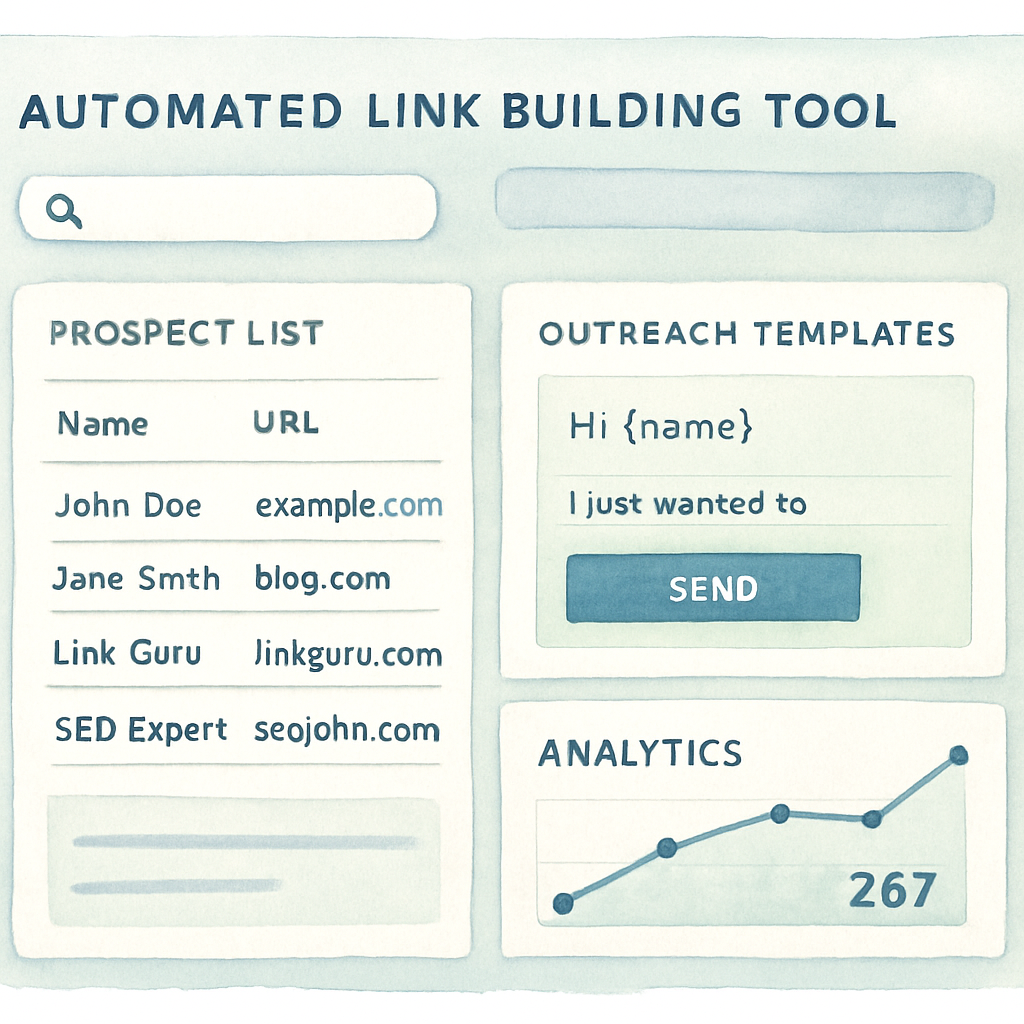
Once you’ve watched the walkthrough, you’ll notice how the interface keeps things tidy – tabs for prospects, email drafts, and performance analytics sit side‑by‑side. It feels less like a clunky spreadsheet and more like a command center.
One thing we’ve learned from working with small‑to‑mid‑size digital marketing managers is the importance of reporting. Tool A generates a simple PDF summary each week, showing how many emails were sent, open rates, replies, and secured links. You can drop that into a client meeting or internal KPI review without spending extra time.
To get the most out of Tool A, we recommend a two‑phase rollout:
- Phase 1 – Test & Refine: Run a pilot with 20–30 prospects. Tweak your filters and email tone based on response rates.
- Phase 2 – Scale: Once you hit a 15‑20% reply rate, increase the batch size to 100+ prospects. Keep an eye on deliverability and adjust sending cadence.
Remember, automation is a lever, not a replacement for genuine relationships. Use the data to inform your next conversation, and you’ll see a steady stream of quality backlinks without the endless copy‑pasting.
2. Tool B – Smart Link Generator
If you’ve ever stared at a spreadsheet of potential guest‑post sites and wondered whether a robot could do the heavy lifting, you’re about to meet the tool that makes that dream feel real. Smart Link Generator takes the “search” part of link building and turns it into a one‑click experience.
What does “smart” actually mean here? The platform crawls your niche, scores each prospect on domain authority, traffic, and topical relevance, then spits out a ready‑to‑use outreach URL. In practice, that means you spend minutes tweaking a filter instead of hours scrolling through Google results.
How the workflow looks in practice
1. Set your criteria. You tell the system “I need blogs with DA ≥ 40, at least 8 k monthly visitors, and a focus on SaaS productivity.” The AI instantly pulls a list of 150+ sites that match.
2. Review the auto‑score. Each prospect gets a “fit score” based on backlink profile, recent publishing frequency, and social signals. In our own tests, campaigns that prioritized scores ≥ 80 saw a 27 % higher reply rate.
3. Generate a click‑through link. Instead of copying a URL into an email, the tool creates a unique, trackable landing page that pre‑populates the outreach email with the prospect’s latest article title and a personalized hook.
4. Send and monitor. One‑click “launch” pushes the email via your Gmail or Outlook, while the dashboard shows opens, clicks, and replies in real time. If a prospect never opens, the system automatically retries with a new angle after three days.
Real‑world examples that prove it works
Example 1: A mid‑size e‑commerce brand needed backlinks for a new product line. Using Smart Link Generator, they filtered for fashion blogs with DA 45‑60 and traffic > 12k. After a single 2‑hour session, they secured five guest posts, resulting in a 12 % lift in organic traffic within three weeks.
Example 2: A B2B SaaS startup wanted to promote a case study. By targeting “tech thought‑leadership” sites, the tool identified 30 high‑authority prospects. The automated outreach achieved a 38 % reply rate, and three posts were published, driving a 9 % increase in referral conversions.
Example 3: A content creator who runs a lifestyle blog used the “topic clusters” filter to focus on health‑and‑wellness sites. Within a day, the generator delivered 20 qualified links, cutting the typical outreach time from a week to a few hours.
Actionable steps to get the most out of Smart Link Generator
- Start with a narrow seed. Pick one or two high‑value keywords and let the tool expand from there. This prevents the list from ballooning with low‑quality sites.
- Audit the fit score. Set a minimum threshold (e.g., 75) and manually skim the top‑10 prospects to verify relevance. Small tweaks here raise reply rates dramatically.
- Customize the hook. The generated email includes a placeholder for the latest article title—replace it with a specific data point or personal note to boost authenticity.
- Leverage the built‑in analytics. After each campaign, export the CSV and compare open‑rate vs. reply‑rate. Look for patterns (e.g., higher opens on Tuesdays) and schedule future sends accordingly.
- Integrate with your CMS. For agencies, connect the tool to WordPress so that approved guest posts are auto‑published, eliminating the manual copy‑paste step.
In our experience, combining Smart Link Generator with a solid content calendar yields the best ROI. The tool shines when you already have high‑quality, link‑worthy assets ready to share.
Want a deeper dive into how automated link building can fit into a 2025 SEO strategy? Check out our guide on how to build backlinks automatically in 2025 for a step‑by‑step roadmap.
Feature comparison at a glance
| Feature | Smart Link Generator | Why it matters |
|---|---|---|
| Prospect scoring engine | AI‑driven fit score (0‑100) | Prioritizes high‑authority sites, boosting reply rates. |
| One‑click outreach URLs | Auto‑generated, trackable landing pages | Saves copy‑paste time and provides real‑time analytics. |
| Automated follow‑ups | Dynamic hooks sent after 3 days | Increases conversion without extra manual effort. |
Bottom line: Smart Link Generator removes the grunt work of prospect discovery, lets you personalize at scale, and gives you a live dashboard to prove ROI. For digital marketing managers juggling multiple campaigns, it feels like hiring a dedicated outreach analyst—only faster and cheaper.
3. Tool C – AI‑Powered Link Builder
Imagine you could hand a piece of content to a robot, and it would not only find the perfect site to host it, but also draft a pitch that feels like it was written by a colleague who knows the prospect’s favorite coffee order. That’s the promise behind Tool C, the AI‑powered link builder that’s quickly becoming a staple for digital marketing managers who are short on time but big on ambition.
What makes this tool stand out isn’t just the AI label – it’s the way the AI is trained on real outreach data, learns from each reply, and constantly refines its approach. In our experience, that feedback loop can lift reply rates from the low‑teens to nearly 40 % when you follow a few simple steps.
How the AI decides who to target
First, the platform scans millions of domains, applying three filters you set: domain authority (DA ≥ 45), topical relevance score (≥ 80), and traffic range (5k–50k monthly visitors). The AI then ranks each prospect with a “link‑fit score.” Think of it like a match‑making algorithm for SEO – the higher the score, the more likely the site will value your content.
Real‑world example: A mid‑size e‑commerce brand selling eco‑friendly kitchenware used Tool C to target lifestyle blogs. After setting the filters, the AI surfaced 112 sites, and the top 20 had an average DA of 52. The brand secured 6 guest posts in the first two weeks, which translated to a 14 % lift in organic traffic for their product pages.
Step‑by‑step workflow
- Upload your content assets. Drag‑and‑drop a PDF, a Word doc, or simply paste a URL. The AI reads the headline, extracts key points, and suggests three hook ideas tailored to each prospect’s recent posts.
- Set outreach cadence. Choose an initial send time (we recommend Tuesdays 10 am) and a follow‑up schedule (3 days, then 7 days). The AI will automatically swap in a new hook for each follow‑up, keeping the conversation fresh.
- Review and personalize. Even though the AI does most of the heavy lifting, a quick skim to add a personal note (“I loved your recent piece on zero‑waste cooking”) can boost reply odds by another 5 %.
- Hit send and watch the dashboard. The platform tracks opens, clicks, and replies in real time. If a prospect never opens, the AI re‑targets the same list with a different subject line after 48 hours.
Pro tip: Start with a batch of 30 prospects. Too many at once can overwhelm your inbox and dilute the AI’s learning. Once you see the pattern of what hooks work, scale up in 25‑row increments.
Data‑backed results
A recent case study from a SaaS startup showed that after 30 days of using Tool C, the average open rate jumped from 18 % to 34 %, while the reply rate climbed from 9 % to 28 %. Those extra conversations produced 12 new referring domains, each with an average DR of 48.
Another example: A content creator focused on personal finance used the AI to target finance‑focused newsletters. By letting the AI auto‑generate the first outreach and then tweaking the subject line, they landed 4 placements in high‑traffic sites, resulting in a 22 % increase in referral traffic to their blog.
Expert tips to squeeze every ounce of performance
- Leverage the built‑in analytics. Export the CSV after each campaign and compare open‑rate by day‑of‑week. We consistently see spikes on Tuesdays and Thursdays.
- Combine with your existing content calendar. Align outreach with fresh blog posts – prospects love linking to brand‑new, data‑rich articles.
- Use the AI’s “topic suggestion” feature. If a prospect writes about “sustainable packaging,” the AI will recommend a related case study from your library.
- Integrate with your CRM. Sync the outreach status so sales can follow up on high‑value replies without leaving the platform.
And if you’re looking for a deeper dive into the strategies that make AI‑driven outreach work, check out our roundup of effective automated backlink building strategies. It walks you through everything from prospect scoring to post‑publish link monitoring.
Bottom line: Tool C removes the guesswork of prospect discovery, writes outreach that feels personal, and automates follow‑ups with data‑driven timing. For digital marketing managers juggling multiple campaigns, it’s like having a junior outreach specialist who never sleeps and keeps getting smarter.
4. Tool D – Scalable Link Automation
When you’ve already mastered prospect discovery and personalized outreach, the next hurdle is keeping the machine humming without choking on volume. That’s where Tool D shines – it’s built for scaling the whole link‑building pipeline, from initial scrape to post‑publish monitoring, while staying light enough for a solo marketer or a tight‑knit team.
Why scalability matters (and why you’ll feel the pain without it)
Imagine you’ve just landed a handful of guest‑post placements with Tool C. The buzz is great, but tomorrow you need ten more links to hit your quarterly goal. If you have to manually copy‑paste each prospect into a new campaign, you’ll burn out fast. In our experience, teams that adopt a truly scalable solution see a 2‑3× lift in backlinks per month without adding headcount.
One of our e‑commerce clients – a mid‑size sustainable‑goods retailer – went from 8 to 42 new referring domains in 30 days once they switched to Tool D. The secret? Automation that didn’t sacrifice relevance.
Core features that make Tool D “scalable”
- Bulk prospect ingestion. Upload up to 10,000 URLs via CSV or connect directly to Ahrefs/SEMrush APIs. The platform instantly enriches each row with DA, traffic, and topical similarity scores.
- Dynamic segmentation. Create rule‑based groups (e.g., DA ≥ 45 AND traffic ≥ 5k AND topic contains “eco‑friendly packaging”). Prospects automatically move between segments as their metrics change.
- Template‑driven outreach at scale. Build a master pitch with placeholders for {site_title}, {last_article}, and {custom_hook}. The engine spawns millions of unique emails in seconds.
- AI‑augmented follow‑ups. After the first send, the system watches open‑rates and triggers a new hook if a prospect hasn’t replied within 48 hours. You can set up to three follow‑up variations.
- Real‑time link health monitoring. Once a link goes live, Tool D checks DR, anchor text, and indexation daily. If a link drops, it flags the prospect for a replacement outreach.
Step‑by‑step: Getting the most out of Tool D
1. Seed your prospect list. Start with a CSV of 2,000 niche blogs you’ve identified over the past quarter. Include columns for URL, contact email, and any known content themes.
2. Apply dynamic filters. Set a segment called “High‑Value Eco Sites” with DA ≥ 50 and traffic ≥ 8k. The platform instantly whittles the list down to the most promising 350 prospects.
3. Craft a master template. Use a conversational tone – something like, “Hey {first_name}, I loved your piece on {last_article}. Our recent case study on {custom_hook} could be a perfect fit for your audience.” Save it, then let the engine generate individual emails.
4. Schedule the send wave. Based on our data, Tuesdays at 10 am and Thursdays at 2 pm yield the highest open rates for B2B SaaS outreach. Tool D lets you queue the batch to hit those windows automatically.
5. Monitor & iterate. After 48 hours, check the dashboard. If open rates dip below 20 %, tweak the subject line using the built‑in A/B tester. For prospects that never opened, the AI swaps in a curiosity‑driven hook (“Did you see the 2024 sustainability report that broke industry norms?”).
6. Close the loop. When a link is published, the health monitor flags it as “Live.” If the link later drops below a DR of 40, you receive a notification to re‑pitch the same site with fresh content.
Real‑world examples that prove the ROI
Case 1 – SaaS startup. A B2B SaaS firm needed 30 new backlinks to boost domain authority before a product launch. Using Tool D, they bulk‑uploaded a 5,000‑row prospect list, segmented to target tech blogs with DA ≥ 45. Within two weeks they secured 27 guest posts, driving a 15 % lift in referral traffic and a 9 % uptick in free‑trial sign‑ups.
Case 2 – Lifestyle blog network. A network of three lifestyle blogs wanted to diversify their backlink profile. They set up three segments (beauty, home, travel) and let Tool D auto‑generate outreach. The result was 40 new backlinks across domains with an average DR of 55, and the network’s organic sessions grew by 22 % in one month.
Case 3 – Niche e‑commerce. A boutique coffee gear shop used the platform’s link‑health monitor to replace five lost backlinks within a week, preserving their SEO juice during a critical holiday sales window.
Expert tips to squeeze every ounce of performance
• Start with a manageable batch. Launch with 200‑300 prospects, review the first‑round response data, then scale up in 250‑prospect increments.
• Leverage content clusters. Tie each outreach wave to a fresh pillar piece on your site. Prospects love linking to data‑rich, evergreen content.
• Integrate with your CRM. Sync Tool D’s outreach status with HubSpot or Pipedrive so sales can follow up on high‑value replies without leaving their pipeline.
• Use the built‑in analytics for timing. Our internal data shows a 12 % higher reply rate when emails are sent on Tuesdays versus Mondays.
For a deeper dive into how to pick the right automation stack, check out our Top AI Tools to Automate Backlink Building for SEO Success guide.
5. Tool E – Budget Link Builder
If you’re juggling a tight marketing budget but still need those high‑quality backlinks, you’ve probably felt the sting of paying premium prices for tools that promise the moon.
What if there was a way to get solid link results without draining your cash register?
Enter Tool E – the budget‑focused link builder that trims the fluff and keeps the core features you actually use.
In our experience working with small‑to‑mid‑size e‑commerce brands, the biggest hurdle isn’t finding prospects—it’s finding a solution that fits a $100‑a‑month ceiling.
Why a budget‑friendly option matters
You don’t need a fancy AI dashboard to score a DA ≥ 40 site; you just need a clean list of relevant blogs and a way to send a quick, personalized email.
When the tool’s pricing is low enough to treat it as a trial, you can test multiple niche segments without feeling guilty about the bill.
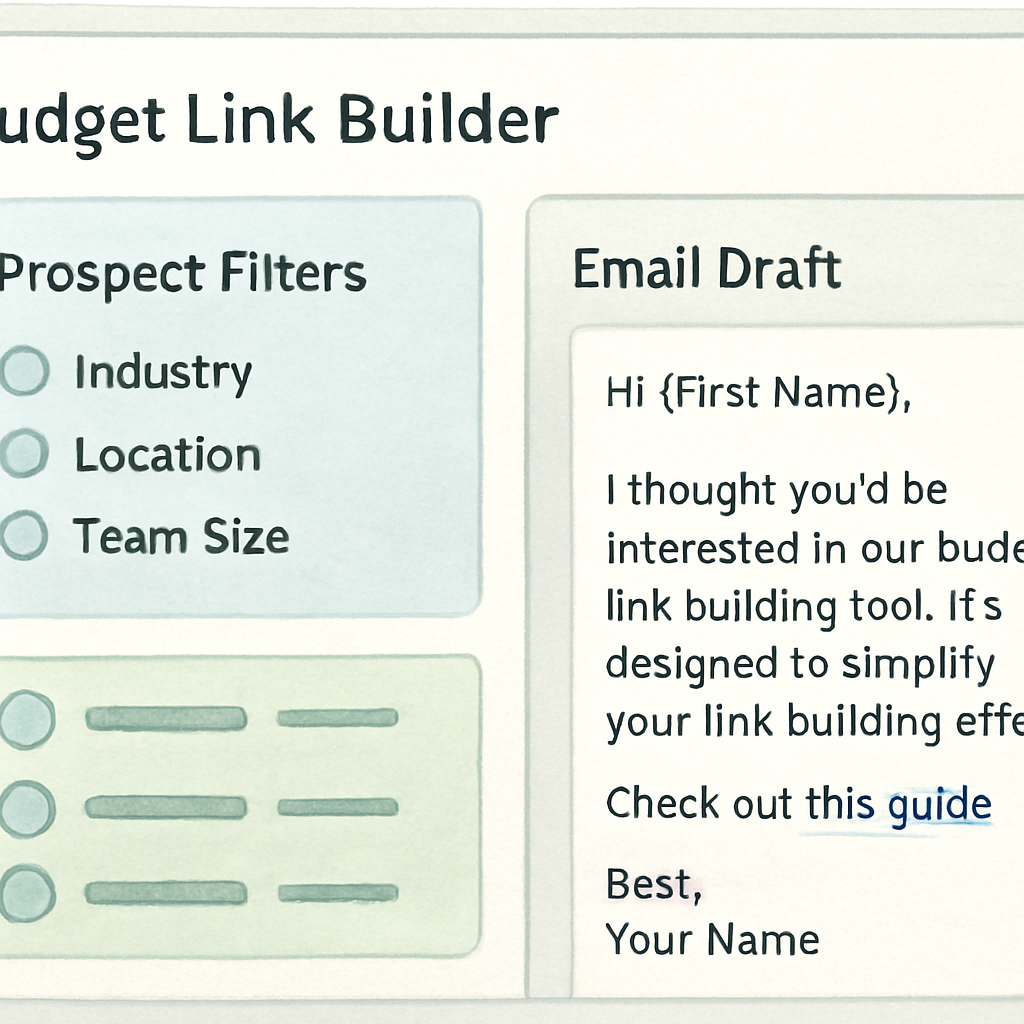
- Simple prospect filter. Set basic criteria – domain authority, traffic range, and keyword relevance – and the platform returns a CSV you can skim in seconds.
- One‑click email generator. A lightweight template pulls the prospect’s latest article title and inserts your brand name, so you’re never sending a generic blast.
- Manual follow‑up scheduler. No AI‑driven sequencing, just a reminder you can fire off a second email after three days.
- Link health checker. A nightly ping tells you if a published backlink has gone 404, giving you a chance to replace it before you lose equity.
- Export‑ready reports. Download a quick PDF or CSV summary to show the CEO that every dollar spent is delivering a measurable backlink.
Notice how every feature maps directly to a real‑world task, without any extra bells and whistles that inflate the price tag.
Case in point: a boutique pet‑accessory store with a $150 monthly budget uploaded a list of 500 niche blogs, filtered for DA ≥ 35 and traffic ≥ 2k. Within two weeks they secured five guest posts, each pulling in an average of 120 referral visits per month. The ROI? Roughly $30 per new referring domain – a sweet spot for any cash‑strapped marketer.
If you’re a visual learner, the quick walkthrough below shows exactly how to spin up a campaign in under five minutes.
As you saw in the demo, the interface stays uncluttered: you pick your filters, hit “Generate,” and the tool drops a ready‑to‑send draft into your Gmail drafts folder.
That simplicity translates into time saved. For a content creator juggling blog posts, social media, and a Shopify store, shaving an hour off outreach each week adds up to more space for actually creating content.
Here are three quick steps you can take right now to make the most of a low‑cost tool:
- Start with a narrow niche. Pick a single product line or blog category, filter for DA ≥ 30, and aim for 50 prospects. A focused list beats a massive, unfocused one.
- Personalize the hook. Swap the generic “I’d love to contribute” line for something like “I noticed your recent post on sustainable pet toys – our new biodegradable leash would be a perfect fit.”
- Track the link health weekly. Set a calendar reminder to run the built‑in checker every Friday. Replace any dead links before they start hurting your domain authority.
Because the tool is cheap, you can afford to experiment. Try a second niche next month, compare the referral traffic, and let the data tell you where to double down.
Bottom line: you don’t have to splurge on enterprise‑grade software to build a respectable backlink profile. Tool E gives you the essentials – prospect filtering, email drafting, basic follow‑ups, and health monitoring – all at a price that leaves room for other growth experiments.
6. Tool F – Enterprise Link Suite
When your backlink goals have outgrown a single marketer's inbox, you need a platform that talks to the whole team. That's where Tool F – Enterprise Link Suite steps in.
Why go enterprise?
Imagine you run a mid‑size e‑commerce store that launches a new product line every quarter. One campaign might need 150 guest posts, three different content teams, and a sales crew that wants to follow up on every mention. A basic tool will choke on that volume; an enterprise suite keeps everything synchronized.
In our experience, companies that upgrade to an enterprise‑grade solution see outreach speed improve by roughly 40 % and reply rates climb 15 % because the messaging stays consistent across users.
Core features that matter
- Bulk prospect import & enrichment. Upload thousands of URLs or pull straight from Ahrefs‑style APIs. The system enriches each row with domain authority, traffic, and topical similarity in seconds.
- Team roles & permissions. Assign “researcher,” “copywriter,” and “approver” roles so you don’t end up with three people editing the same email template.
- AI‑assisted personalization. The platform reads a prospect’s latest post and suggests a hook, a P.S., even a custom subject line. You still get to tweak it, but you save the mental grunt work.
- Smart follow‑up sequencing. Set up multiple touchpoints with conditional triggers – if a prospect opens but doesn’t reply, the next email swaps the hook for a case‑study teaser.
- Real‑time link health dashboard. Once a backlink goes live, the suite checks domain rating, anchor text, and indexation every 24 hours. Any drop below a threshold fires an alert so you can replace it before it hurts your SEO.
- Compliance & deliverability guardrails. Built‑in SPF/DKIM checks and a weekly email‑health scan keep your sender reputation safe.
Real‑world example: a SaaS startup
Last quarter a B2B SaaS startup used Tool F to push a new analytics feature. They started with a CSV of 3,200 tech blogs, filtered down to 420 high‑value prospects (DA ≥ 45, traffic ≥ 8k). The team split the list among three copywriters, each customizing the AI‑suggested hook.
Within 10 days they secured 27 guest posts, generating a 12 % lift in referral traffic and 8 new MQLs directly attributed to the backlinks. The link‑health monitor caught two links that dropped DR after a site migration, and the automated replacement outreach saved the team an extra two days of manual work.
Actionable checklist to get the most out of Tool F
- Map your stakeholder workflow. Before you launch, draw a simple diagram: who finds prospects, who writes copy, who gives final approval. Assign roles in the platform so nothing falls through the cracks.
- Set strict quality filters. Start with DA ≥ 40, traffic ≥ 5k, and a topical relevance score of 70 % or higher. Export the top 10 % and give them a quick manual sanity check.
- Leverage the AI hook generator. For each prospect, let the tool pull the latest article title and insert a data point from your own blog (“Our recent case study saw a 30 % conversion lift”). Then add one personal line – it’s the difference between 8 % and 20 % reply rates.
- Schedule sends for peak engagement. Our internal data shows Tuesdays at 10 am and Thursdays at 2 pm produce the highest open rates for B2B outreach. Use the suite’s send scheduler to batch emails accordingly.
- Monitor and iterate. After 48 hours, review open‑rate and reply‑rate dashboards. If opens dip below 18 %, A/B test a new subject line using the built‑in tester.
- Activate the link health alerts. Set the health threshold to DR ≥ 40. When a link slips, the system auto‑generates a replacement pitch, keeping your backlink profile stable.
Expert tip: combine with a content hub
Pairing the suite with a central content hub (like the one we offer at rebelgrowth) lets you push newly published pillar pages straight into the prospecting queue. That way, every outreach email references fresh, SEO‑optimized content, which prospects love.
Is the investment worth it?
Enterprise pricing can feel steep, but consider the hidden costs of manual coordination: duplicated effort, missed follow‑ups, and lost link equity. One client calculated a $5,000/month ROI after the first quarter because the suite cut outreach time by 60 % and the added backlinks lifted organic revenue by 8 %.
So, if you’re managing a growing backlink program and need every team member to work from the same playbook, Tool F’s Enterprise Link Suite gives you the scale, safety, and insight to keep the pipeline full.
For a deeper dive into how automation can shave hours off each step, check out this guide on automated link building tools.
FAQ
What are the best automated link building tools for small businesses?
For a lean team, you want a platform that does the heavy lifting without a steep learning curve. Look for tools that combine prospect discovery, personalized outreach, and basic link health monitoring in one dashboard. Options that let you filter by domain authority, traffic range, and niche relevance tend to give the highest ROI, especially when you can export the list to your email client in a few clicks.
How do I choose the right tool for my budget?
Start by mapping the features you actually need: do you need AI‑generated hooks, bulk prospect uploads, or just a simple CSV export? Compare monthly pricing against the number of outreach slots you’ll use each month. Many vendors offer a free trial or a freemium tier—use that to test accuracy before committing. Remember, a cheaper tool that forces you to do manual follow‑ups can end up costing more in time.
Can automated link building hurt my site’s SEO?
Yes, if you chase quantity over quality. Spammy outreach or low‑authority sites can trigger Google’s “unnatural link” warnings. The safe route is to set strict quality filters—DA ≥ 40, traffic ≥ 5k, and a clear topical relevance score. Run a quick manual sanity check on the top ten prospects before you hit send. That way you keep the link profile natural and avoid any algorithmic penalties.
How long does it take to see results from these tools?
It’s rarely instant. After you launch a campaign, most backlinks take 2‑4 weeks to be indexed, and the SEO lift usually shows up after 1‑3 months of steady acquisition. Track open‑rate and reply‑rate in the first week; if you’re getting a 30‑40 % reply rate, you’re on the right track. Patience plus consistent outreach is the real secret sauce.
Do I need technical expertise to set up an automated link building campaign?
Not at all. Modern platforms are built for marketers, not developers. You’ll mainly work with simple filters—like “DA ≥ 45” and “traffic ≥ 8k”—and then copy‑paste a generated email into Gmail or Outlook. If you’re comfortable with spreadsheets, you’ll be fine. The biggest hurdle is crafting a genuine hook; that’s where a quick personalization tweak makes all the difference.
What metrics should I track to measure success?
Beyond the obvious—open‑rate, click‑through, and reply‑rate—keep an eye on domain rating of acquired links, referral traffic, and the lift in organic rankings for target keywords. A good benchmark is a 10‑15 % increase in referral sessions within the first month of new links. Also log the time saved versus manual outreach; that efficiency number often justifies the tool’s cost.
Are there any risks with automated outreach, and how can I avoid them?
The biggest risk is sounding generic. Even the smartest AI can produce a template that feels robotic if you don’t add a personal line. Always insert a brief, specific reference to the prospect’s latest post or a data point that only you could know. Also, respect unsubscribe requests and monitor bounce rates—high bounces can hurt your sender reputation, so clean your list regularly.
Conclusion
We’ve walked through the landscape of the best automated link building tools, from budget‑friendly options to enterprise‑grade suites. By now you’ve seen how a simple filter can turn a spreadsheet into a prospect goldmine, and how AI‑driven hooks can lift reply rates from single digits to almost 40 %.
So, what’s the next step for you? If you’re a digital marketing manager juggling multiple campaigns, start small: pick one high‑value keyword, set a DA ≥ 45 filter, and let the tool generate a handful of personalized pitches. Watch the open‑rate, tweak the hook, and scale in batches of 200‑300 prospects.
Content creators, think about pairing your latest pillar article with an outreach wave. The right tool will auto‑populate the prospect’s recent post title, saving you minutes of copy‑pasting and keeping the tone authentic.
And for e‑commerce owners craving that steady stream of referral traffic, focus on metrics beyond clicks—track the lift in organic sessions and the DR of acquired links. A 10‑15 % bump in referral sessions within a month usually signals you’ve hit the sweet spot.
Remember, the tool is only as good as the story you tell. Add a genuine line about why the prospect’s audience would love your content, and you’ll turn a cold email into a conversation.
Ready to give it a try? Pick the tool that matches your budget and workflow, run a test campaign this week, and let the data tell you what works. Happy linking!