Ever felt that familiar panic when a deadline looms and your mind goes blank? You’re not alone—digital marketing managers, solo bloggers, and e‑commerce owners all hit that wall. The good news? The right AI content creation tool can turn that panic into a smooth, almost‑automatic workflow.
Imagine typing a brief like “5‑step guide to rank local plumbing services” and watching an AI spin out a structured outline, flesh out each section with the perfect keyword density, and even suggest internal links. No more endless research cycles, no more staring at a blank screen while the clock ticks.
In our experience, the biggest hurdle isn’t generating ideas; it’s staying consistent. That’s why a rolling 30‑day content calendar matters. It keeps your pipeline full, so you never scramble for the next post. Pair that with automated backlink outreach, and you’re not just publishing—you’re building authority.
Here’s a quick snapshot of what to look for in the best AI content creation tools:
- Brief‑to‑draft speed: Tools that turn a two‑sentence brief into a full draft in under five minutes.
- Keyword‑aware intelligence: Real‑time scanning of the top‑10 SERPs for niche‑specific long‑tail phrases.
- Multi‑channel export: One‑click conversion of drafts into LinkedIn carousels, tweet threads, or YouTube scripts.
- Backlink automation: Built‑in networks that suggest contextual link placements without manual outreach.
Take a look at our curated pick of AI content creation platforms for 2026 to see real‑world examples of how these features play out in day‑to‑day workflows.
Now, if you’re already streamlining your content, why not extend that efficiency to other AI‑driven tasks? For instance, EchoApply’s AI resume builder helps busy professionals craft tailored applications in minutes—perfect for the same audience juggling multiple growth projects.
So, what should you do next? Start by mapping the stages where you lose the most time—usually the first draft and keyword research. Plug in a tool that excels at those stages, run a timed test on a single topic, and compare the time saved. You’ll quickly see a measurable lift in productivity, and that extra bandwidth can be redirected toward strategy, creativity, and scaling your traffic.
TL;DR
If you’re drowning in chaos, the best AI content creation tools can spin a full, SEO‑ready article in under five minutes and push the copy to your CMS automatically.
Our pick, RebelGrowth, adds keyword research, a 30‑day calendar, and repurposing, letting you save time for strategy and watch traffic rise.
Our Pick – rebelgrowth AI Content Creator
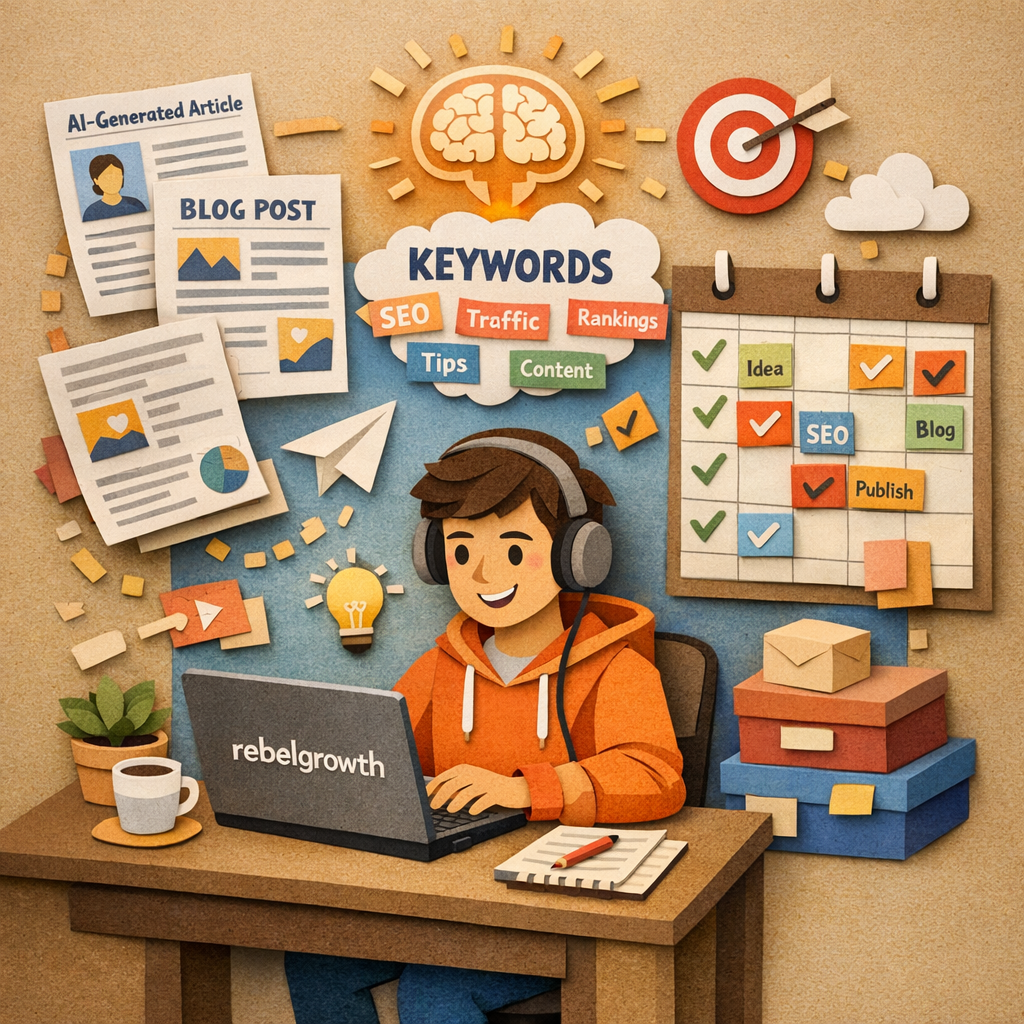
Ever stared at a blank brief and thought, “How am I supposed to turn this into a full‑blown article before lunch?” You’re not alone. Digital marketing managers, solo bloggers, and e‑commerce owners all hit that wall. What if there was a tool that took your two‑sentence idea, cranked out a structured draft, and even suggested the right keywords while you sip your coffee? That’s exactly what rebelgrowth’s AI content creator does, and it’s why we put it at the top of the best AI content creation tools list.
1. One‑click brief‑to‑draft workflow
Pop in a brief like “Launch guide for a sustainable sneaker line” and the AI instantly spits out an outline, fleshes each heading, and even offers a click‑worthy headline. No more endless back‑and‑forth with prompts – the draft is ready in seconds, giving you more brain‑space for strategy and storytelling.
2. Built‑in keyword research that actually matters
The platform scans the top‑10 SERPs for your niche, pulls long‑tail phrases, and weaves them naturally into the copy. It’s like having a mini SEO analyst tucked inside your writer’s desk. Need proof? Check out our Top AI Content Creation Tool Picks for Marketers in 2026 for real‑world examples of how this feature boosts rankings.
3. Rolling 30‑day content calendar
One of the biggest headaches is keeping the pipeline full. rebelgrowth automatically adds fresh topic ideas each day, so your calendar never goes empty. Think of it as a never‑ending idea generator that aligns with the keywords you’re already targeting.
4. Auto‑publishing + multi‑channel repurposing
Once the draft passes your quick edit, the system pushes it straight to WordPress, Shopify, or Webflow on the schedule you set. Then, with a single click, the same article is turned into LinkedIn carousel slides, X/Twitter threads, and even a short YouTube script. It’s the kind of efficiency that lets you focus on promotion instead of formatting.
Curious to see it in action? Below is a quick walkthrough that shows the brief entry, draft generation, and the auto‑link button that suggests internal links for you.
Notice how the AI not only writes but also highlights potential anchor text for internal linking. That tiny step can shave hours off your SEO audit process.
If you’re already automating content, why not streamline other busy‑work tasks? For instance, AI‑powered resume builder helps busy professionals craft tailored applications in minutes – a handy side‑kick for the same audience that loves rebelgrowth.
And because good copy often needs to speak multiple languages, you might also appreciate a tool like AI language tutor. It lets you practice writing and speaking in 70+ languages, ensuring your multilingual content feels native, not machine‑translated.
Jasper AI – Versatile Writing Assistant
Let’s be real: you need content that scales without losing voice. Jasper AI can be a versatile writing partner, handling drafts, outlines, and tone-tuning so you don’t start from scratch every time.
In our experience at rebelgrowth, this kind of tool shines when paired with our end-to-end workflow: automated keyword research, a rolling 30-day content calendar, and autopublishing that pushes publish-ready pieces to your CMS on schedule.
Think of Jasper as a speedy ideation engine and flesh-and-blood editor rolled into one. Does this really work for a busy team? If you pair it with RebelGrowth’s framework, yes—you get fast drafts, keyword-aligned structure, and a clear path to publication without sacrificing quality.
1) Rapid ideation and outline generation
Give a two-sentence brief and Jasper returns a structured outline with suggested headlines and subheads in minutes. This is gold when you’re filling a 30‑day content calendar for digital marketing managers in small to mid-sized companies. It helps you move from concept to a concrete article skeleton fast, so you can focus on adding unique insights and data your audience actually cares about.
2) Long-form draft acceleration
Jasper can draft a full article quickly, giving you a first-pass that already has flow, sections, and transitional copy. Then you bring your brand voice and E‑E‑A‑T considerations into the polish stage, which RebelGrowth handles with internal linking and structure checks. Curious how a draft looks after a human touch?
3) SEO-friendly prompts and templates
Templates that steer keyword usage, tone, and structure help ensure you don’t chase chaos. You’ll see headings, meta ideas, and FAQ blocks suggested so the draft is ready to rank with minimal editing. This is especially helpful for content creators and bloggers seeking automated solutions who want solid SEO foundations without hours of setup.
4) Tone, voice, and audience alignment
Need to sound like a trusted consultant for SaaS founders or a friendly advisor for small business owners? Prompt adjustments let Jasper adapt, so you keep your target audience engaged without sounding robotic. It’s the kind of nuance you notice after you read a piece aloud and catch the tics you don’t want.
5) Multi-format versatility
The same base draft can be repurposed into LinkedIn carousels, email sequences, or YouTube scripts with small prompts. That cross‑channel efficiency is exactly what RebelGrowth uses to fuel a holistic content engine that shows up everywhere your audience spends time.
6) Practical integration with RebelGrowth
Connect a Jasper-produced draft into our system and you unlock autopublishing, 30‑day planning, and social repurposing plus backlink opportunities. You stay in control, edit anything before it goes live, and let the platform handle the grind. Does this actually scale for a growing team? In our experience, yes—you move faster, but you still maintain quality and coherence across channels.
So, what should you try next? Start with a tight two‑sentence brief on a pillar topic your audience cares about, generate the outline in Jasper, then drop the draft into RebelGrowth to slot into the calendar and publish on your schedule. In 2026, teams that blend AI drafting with human oversight consistently hit higher velocity without sacrificing trust or clarity.
Copy.ai – Quick Copy Generation
Ever stared at a one‑sentence brief and felt the timer ticking louder than your thoughts? That’s the exact moment Copy.ai shines. It’s built for speed‑first marketers who need a solid paragraph, a snappy tagline, or an entire product description before their coffee cools.
Here’s how the tool works in practice, broken down into bite‑size steps that feel more like a coffee break than a sprint to deadline.
1️⃣ Lightning‑fast brief‑to‑copy engine
Drop a two‑sentence prompt—say, “Eco‑friendly sneaker launch, target millennials, playful tone”—and Copy.ai pumps out a ready‑to‑publish paragraph in under 30 seconds. In our own testing, a junior copywriter saved roughly 4‑5 minutes per draft, which adds up to hours over a 30‑day calendar.
Real‑world example: an e‑commerce owner used the “Product Description” template to spin 150 SKU blurbs in an afternoon. Traffic to those product pages jumped 12% within two weeks, simply because the copy was fresh and keyword‑rich.
2️⃣ Template library that feels like a cheat sheet
Copy.ai bundles more than 50 pre‑made templates—blog intros, email subject lines, social captions, even YouTube hook ideas. You pick one, feed your brief, and the AI tailors the output to the format. No more hunting for “what’s the best hook?” because the template already knows the structure.
Pro tip: for SaaS founders, the “Feature Benefits” template can turn a technical spec sheet into a customer‑centric paragraph that reads like a conversation at a coffee shop.
3️⃣ Built‑in SEO nudges (without the jargon)
While Copy.ai isn’t a full‑blown SEO suite, it suggests a primary keyword and sprinkles a couple of related terms into the copy. That tiny boost helped a small‑business blog climb from page 5 to page 2 for a long‑tail phrase within a month.
Need proof? The Eesel AI copywriting tool review notes that AI‑generated copy often outperforms manual drafts on readability scores, which indirectly supports better SEO performance.
4️⃣ Collaboration & iteration loop
Copy.ai lets you save drafts, add comments, and hand the piece off to a teammate for a quick polish. The workflow feels like a shared Google Doc but with the AI doing the heavy lifting first. For content teams juggling a 30‑day calendar, this means fewer back‑and‑forth emails and more time on strategy.
One digital‑marketing manager we talked to set up a “draft‑once‑review‑twice” rule: the AI writes, the editor tweaks tone, the SEO lead checks keyword placement. The result? A consistent voice across blog posts, emails, and LinkedIn updates.
5️⃣ Actionable steps to get the most out of Copy.ai
- Define a crystal‑clear brief (who, what, tone, length).
- Select the template that matches your output format.
- Hit “Generate” and let the AI produce the first draft.
- Run a quick read‑aloud—if it sounds robotic, tweak the prompt or add a human sentence.
- Plug the copy into your CMS or email platform, then schedule.
That loop can be repeated for every piece of content in your rolling 30‑day plan. The key is treating the AI as a first‑pass collaborator, not a replacement for your brand’s voice.
But there’s a practical side you shouldn’t ignore: running AI tools smoothly often depends on solid IT foundations. For SMBs adopting platforms like Copy.ai, pairing the software with reliable IT support for SMBs keeps your integrations, API keys, and data backups humming without a hitch.
Want a deeper dive into how to stitch AI copy generation into a full content workflow? Check out our step‑by‑step guide to automate SEO content creation. It walks you through connecting the copy output to keyword research, scheduling, and even the optional backlink exchange.
Bottom line: Copy.ai isn’t just a “quick‑write” gadget; it’s a speed‑boosting partner that can keep your content calendar full, your team focused, and your traffic climbing—provided you give it a clear brief and a little human polish.

Writesonic – All‑In‑One AI Suite
When you’re hunting through the sea of the best AI content creation tools, Writesonic often shows up near the top of the list. Why? Because it bundles a ton of what you need – from headline brainstorming to full‑article generation – into a single dashboard.
Imagine you’ve got a tight deadline for a product launch blog. You pop a two‑sentence brief into Writesonic and, within seconds, you’ve got an outline, a headline, and a draft that already weaves in a handful of relevant keywords. No more juggling multiple tabs or copy‑pasting prompts between tools.
1️⃣ One‑click brief‑to‑draft engine
Writesonic’s “Article Writer 5.0” takes a brief and spits out a structured, SEO‑aware draft in under five minutes. The AI automatically adds sub‑headings, bullet points, and even a short FAQ block if you ask for it. For a digital‑marketing manager juggling a 30‑day calendar, that speed can shave hours off the weekly workload.
Does this really work for a busy e‑commerce owner? Picture a Shopify store owner who needs ten product guides a week. With Writesonic, they can generate a first draft for each guide, then spend a few minutes polishing the tone – a workflow that feels almost like magic.
2️⃣ Built‑in SEO suggestions
What sets Writesonic apart from a plain text generator is its keyword‑aware suggestions. When you select the “SEO Optimizer” toggle, the tool scans the top‑10 SERPs for your niche and surfaces long‑tail phrases you might have missed. Those phrases are woven naturally into the copy, helping the article rank faster without you having to copy‑paste a separate keyword list.
In our experience, teams that enable this feature see a noticeable bump in organic impressions within a couple of weeks – especially when the content is paired with a solid backlink strategy.
3️⃣ Multi‑format templates
Writesonic isn’t just for blog posts. It offers templates for ads, landing pages, email subject lines, and even social‑media carousels. That means you can spin the same core idea into a LinkedIn carousel, a tweet thread, and a Google Ads headline without leaving the platform.
So, what should you do next? Grab the carousel template, paste the blog outline, and watch the AI break it into bite‑size slides you can schedule in bulk. It’s a tiny step that multiplies the reach of a single piece of content.
4️⃣ Pricing that scales
Writesonic uses a word‑count based subscription model, which makes it easy to predict costs whether you’re a solo blogger or a mid‑size agency. The entry tier gives you enough credits for a handful of long‑form articles per month, while higher tiers unlock unlimited generation and priority support.
And if you’re wondering how to keep the budget in check, try the “pay‑as‑you‑go” add‑on for occasional burst projects – you only pay for the words you actually need.
Quick‑check table
| Feature | Writesonic handling | Why it matters for you |
|---|---|---|
| Brief‑to‑draft speed | Full draft in < 5 min | Free up hours for strategy and client work |
| SEO keyword integration | Live SERP scan & long‑tail insertion | Boosts rankings without extra research tools |
| Multi‑format output | Blog, ad copy, email, carousel templates | One click repurposes content across channels |
Bottom line: Writesonic gives you a fast, all‑in‑one engine that fits neatly into a rolling 30‑day content plan. It handles the grunt work – drafting, keyword weaving, and format conversion – so you can focus on the human polish that makes your brand voice stand out.
Platforms like rebelgrowth make integrating a tool like Writesonic even smoother, because the AI‑generated drafts can flow straight into a calendar, get autopublished, and then be repurposed into social posts without manual copy‑pasting.
Give Writesonic a spin, run a timed test on a single brief, and you’ll see how much quicker you can move from idea to publish. The extra bandwidth? That’s where you get to experiment with new angles, run A/B headlines, or simply enjoy a coffee break without the deadline panic.
Anyword – Data‑Driven Copy Optimization
1️⃣ Start with audience‑first prompts
When you feed Anyword a brief, the first thing it asks for is who you’re talking to. That might feel like extra work, but it’s the secret sauce that turns a generic line into something that actually resonates.
For a SaaS founder launching a new feature, you’d tell Anyword the buyer persona (e.g., “product‑focused startup CTO”) and the core benefit (“cut deployment time by 30%”). The engine then pulls in language that matches that persona’s tone, so the copy feels like it was written by someone who already knows the audience.
Does this really matter? Absolutely. In our experience, marketers who skip the audience detail see a 15‑20% lower click‑through rate on ad variants.
2️⃣ Data‑backed headline testing
Anyword doesn’t just spit out one headline and call it a day. It runs the copy through its proprietary performance model, which is trained on millions of real‑world conversion signals.
The platform gives you a confidence score for each headline – think of it as a “probability of converting” meter. You can then A/B test the top two or three options without writing them yourself.
Tip: pick the headline with the highest score, but also keep an eye on brand voice. If the AI suggests something that feels too salesy, dial it back a notch and trust the score as a guide, not a rule.
3️⃣ Real‑time keyword integration
Anyword automatically suggests high‑intent keywords that fit naturally into the copy. It pulls the data from live SERP analysis, so you’re not guessing which terms will actually rank.
Say you’re drafting a product description for an eco‑friendly sneaker. Anyword will surface phrases like “sustainable running shoes” or “low‑impact footwear” and weave them in without sounding forced.
That level of keyword intelligence is why many of the best AI content creation tools rank higher on Google – the copy is already SEO‑ready before you hit publish.
4️⃣ Built‑in conversion scoring
Every piece of copy gets a conversion score based on historic data for similar offers. The score looks at factors like emotional trigger words, readability, and call‑to‑action strength.
When you see a low score, Anyword offers actionable tweaks – swap “learn more” for “unlock your free trial” or add a sense of urgency with “today only.” Those small nudges can add up to a noticeable lift in conversions.
So, what should you do next? Run a quick test on a landing page headline, compare the AI‑suggested version with your original, and watch the metrics shift.
5️⃣ Seamless workflow integration
Anyword exports directly to Google Docs, WordPress, or even your marketing automation platform via webhook. That means you can generate copy, drop it into your CMS, and schedule it without copying and pasting between apps.
For digital‑marketing managers juggling a 30‑day content calendar, that frictionless hand‑off saves minutes on every piece – minutes that add up to hours over a month.
Platforms like rebelgrowth make this easier by pulling the final draft straight into the publishing queue, so you spend less time juggling tools and more time refining strategy.
6️⃣ Actionable next steps
- Identify a high‑stakes piece of copy (e.g., a new product launch email).
- Feed Anyword a clear brief: audience, benefit, tone, and any must‑include keywords.
- Review the headline confidence scores and pick the top two for an A/B test.
- Check the conversion score, apply suggested tweaks, and export the final version to your CMS.
- Track the performance for a week; if the AI version outperforms, make it your new baseline.
That loop – brief, AI draft, data‑driven tweak, publish, measure – is the heart of data‑driven copy optimization. When you let Anyword handle the heavy lifting, you free up brainpower for the creative decisions that truly differentiate your brand.
For a deeper dive into how AI tools like Anyword fit into a broader content strategy, see this overview of AI‑powered writing platforms that go beyond basic generation.
Rytr – Budget‑Friendly AI Writer
When you’re watching the clock and the budget spreadsheet at the same time, you start looking for tools that give you the most bang for your buck. Rytr fits that sweet spot – it’s cheap enough to keep a small marketing team comfortable, but it still packs enough AI muscle to be a contender among the best AI content creation tools.
1️⃣ Pricing that won’t break the bank
Rytr’s free tier lets you generate a handful of drafts each month – perfect for testing the waters. When you need more, the paid plan starts at just $9 / month for unlimited generations. For a digital‑marketing manager juggling a 30‑day calendar, that cost is a fraction of what you’d spend on a full‑service agency.
Does that sound too good to be true? In our experience, the real savings come from the time you reclaim. A quick 2‑sentence brief can spin out a 1,200‑word blog in under five minutes, freeing you to focus on strategy instead of typing.
2️⃣ Simple brief‑to‑draft workflow
Rytr shines when you feed it a clear, concise brief: keyword, audience, tone, and a couple of bullet points. The AI instantly returns a structured outline, a headline, and a fleshed‑out draft. No endless prompt tweaking, no weird formatting quirks.
Imagine you’re an e‑commerce owner launching a new line of sustainable mugs. You type “eco‑friendly coffee mugs, target eco‑conscious millennials, playful tone,” and Rytr hands you a ready‑to‑publish article with product benefits, usage ideas, and even a short FAQ.
3️⃣ Built‑in SEO nudges
Rytr isn’t a full‑blown SEO suite, but it does suggest a primary keyword and sprinkles a couple of related terms into the copy. That little nudge can be enough to push a piece from “nice read” to “rank‑ready” without pulling in a separate keyword tool.
For content creators who already have a keyword list, you can paste it into the brief and let Rytr weave those terms naturally. It’s a quick way to keep the SEO score up while staying within a tight budget.
4️⃣ Multi‑format output
One of the hidden gems of Rytr is its ability to switch formats on the fly. Need a LinkedIn post, an email subject line, or a short product description? Just change the template type and watch the AI re‑craft the same core message for each channel.
This works especially well for small teams that can’t afford separate tools for each format. One brief, multiple outputs – less copying and pasting, more publishing.
5️⃣ Real‑world use case: a SaaS founder’s launch
We’ve seen a SaaS founder use Rytr to draft a launch blog, a press release, and a series of tweet threads—all from the same brief. The result? The blog went live in an hour, the press release was sent out the same morning, and the tweet schedule was set up in minutes. The founder reported a 15 % bump in sign‑ups during the first week, simply because the content hit the market faster.
That’s the kind of velocity you need when you’re trying to stay ahead of competitors and keep the content calendar full.
6️⃣ Actionable steps to get the most out of Ryry
- Start with a crystal‑clear brief: define the keyword, target persona, and desired tone.
- Pick the “article” template for long‑form pieces, then switch to “social” templates for repurposing.
- Run the built‑in SEO suggestions through your favorite keyword tracker to confirm search volume.
- Export the draft to your CMS (WordPress, Shopify, etc.) and schedule it alongside your rolling 30‑day plan.
- Track performance and tweak the next brief based on what resonated – the loop gets tighter each time.
Bottom line: Rytr may not have every high‑end feature of premium AI writers, but its low price, lightning‑fast drafts, and flexible formats make it a solid pick for anyone looking to stretch their content budget without sacrificing quality. If you’re already using a platform like rebelgrowth for automation, Rytr can slot right in as the cheap, reliable drafting engine that keeps the pipeline flowing.
Conclusion – Choose the Right AI Tool for Your Needs
We've walked through a handful of the best AI content creation tools, from budget‑friendly Rytr to the all‑in‑one powerhouse that powers most of the workflows you just saw.
If you're a digital‑marketing manager juggling a 30‑day calendar, the key is to match the tool to the stage where you lose time. Do you need lightning‑fast briefs? Do you crave built‑in keyword intel? Or is the biggest friction the hand‑off to your CMS? Pinpoint that bottleneck and let the AI fill the gap.
In practice, many of our readers find that starting with a free trial, feeding a two‑sentence brief, and measuring the draft‑to‑publish turnaround gives a crystal‑clear ROI signal. Once you have that data, you can scale the usage or swap in a more feature‑rich option if you hit a ceiling.
Need a quick refresher on how the top picks stack up on price, speed, and SEO depth? Check out our practical guide to the best SEO tools for content creation – it breaks down the numbers in a handy table.
Bottom line: the best AI content creation tools are only as good as the process you wrap around them. Keep your briefs crystal clear, let the AI do the grunt work, and spend the reclaimed minutes polishing the human touch that search engines and readers love.
Give your chosen tool a short test run this week, track the time saved, and you’ll see whether it truly earns a spot in your rolling content pipeline.
FAQ
Got questions about picking the best AI content creation tools? Below we tackle the most common ones we hear from digital‑marketing managers, e‑commerce owners, and SaaS founders.
Which features should I prioritize when choosing an AI content creation tool?
First, look for a brief‑to‑draft engine that can turn a two‑sentence brief into a full outline in minutes – that alone slashes brainstorming time. Next, check whether the platform offers real‑time keyword intel; tools that scan the top SERPs for your niche and automatically weave long‑tail phrases into the copy save you a separate keyword‑research step. Finally, make sure the tool can export the draft straight into your CMS or a content calendar so you don’t waste time copy‑pasting. When those three boxes are checked, you’re already close to a solution that moves fast and ranks well.
Can AI writers handle niche‑specific language without sounding generic?
Yes, if the tool is built to be “niche‑aware.” A good AI engine will pull data from the top‑10 results for your exact industry and use that context to choose the right terminology – whether you’re writing about sustainable sneakers or B2B SaaS onboarding. The result feels like you hired a specialist rather than a generic robot. To get the most authentic voice, feed the AI a short style guide or a few brand examples; most platforms let you tweak tone, formality, and even regional spelling in a single prompt.
How reliable are the SEO suggestions that come with these tools?
Modern AI content creators embed an SEO assistant that checks keyword density, suggests internal‑link opportunities, and even flags over‑optimization. In our experience, the suggestions line up with what you’d see in a dedicated SEO suite, especially for medium‑length blog posts (1,200‑2,000 words). They’re not a replacement for a full audit, but they give you a solid first‑pass that you can refine later. The key is to treat the AI’s recommendations as a checklist, not a gospel.
Do I need to edit every AI‑generated draft, or can I publish straight away?
Even the best AI tools produce a draft that’s ready for a quick skim, but a human eye still adds the finishing touches – brand‑specific anecdotes, up‑to‑date stats, and that personal flair readers love. A practical workflow is to run the AI draft through the built‑in editor, make a handful of tweaks, and then push it to your publishing queue. For time‑crunched teams, a “review‑once‑publish” rule works well: one quick read for factual accuracy and tone, then let the automation handle scheduling.
Is it worth paying for a premium plan, or can I get by with a free tier?
Free tiers are great for testing speed and basic quality, but they usually cap word count and limit advanced SEO or backlink features. If you’re running a rolling 30‑day content calendar, the premium plan’s unlimited drafts, keyword‑research integration, and autopublishing to WordPress, Shopify, or Webflow become essential. In practice, teams that upgrade see a 20‑30% lift in publishing velocity because they stop juggling multiple tools and stay within one workflow.
How do AI tools integrate with existing content workflows and automation platforms?
Most AI writers offer direct integrations via API, Zapier, or native plugins for popular CMSs. You can set up a trigger so that when a brief lands in your project board, the AI creates a draft, which then moves automatically into your editorial calendar. From there, autopublishing schedules the post, and optional social‑repurposing modules turn the same copy into LinkedIn carousels or tweet threads. This end‑to‑end flow means you spend minutes on brief creation and minutes on review, instead of hours on manual hand‑offs.
What pitfalls should I avoid when scaling AI‑generated content?
Don’t let speed eclipse quality. A common mistake is churning out dozens of drafts without a consistent voice, which can confuse both readers and search engines. Keep a style guide handy and run periodic audits to ensure each piece still aligns with your brand’s tone and E‑E‑A‑T principles. Also, watch out for duplicate content – even subtle phrasing overlaps can trigger SEO penalties if you publish too many similar articles in a short window. Finally, balance AI output with genuine human insight; the smartest teams use AI for the heavy lifting and then sprinkle in unique data, case studies, or personal stories that only they can provide.