Everyone knows choosing the right keyword research tool can make or break your SEO strategy.
Here’s the catch.
Long Tail Pro shut down in 2024. Ahrefs didn’t. If you came for “long tail pro vs ahrefs,” you still want a definitive answer in 2025. This guide gives you the quick verdict, the context, and the exact workflows to replace what you lost.
Some tools were built for link intelligence.
Some specialized in long‑tail keyword mining.
Some turned into all‑in‑one SEO suites with serious data.
Some felt friendly for beginners and solo operators.
Some got cheaper entry tiers.
Let’s dive right in.
Introduction
Keyword research drives every strategy worth scaling. Historically, Long Tail Pro and Ahrefs sat on different ends of the spectrum. Long Tail Pro focused on long‑tail idea generation with a single difficulty score to speed decisions. Ahrefs began as a backlink explorer and grew into a broad, data‑rich SEO and marketing platform with a vast index and precise metrics.
The landscape changed. Long Tail Pro went offline in June 2024 and it has not returned. That flips the comparison. The real question in 2025 is how to replace Long Tail Pro’s workflow and whether Ahrefs is the most efficient way to do it for your stack, budget, and team. Ahrefs also lowered the barrier to entry with a Starter plan at $29 per month that gives access to core tools like Site Explorer, Keywords Explorer, Site Audit, and Rank Tracker. If cost was your reason to avoid Ahrefs in the past, that reason is weaker now.
Quick answer for busy SEOs: if you need an active platform with serious data, Ahrefs is the move. If you loved LTP’s long‑tail routine, you can rebuild it inside Ahrefs with word‑count and KD filters, Traffic Potential, Clicks, and instant clustering. This guide shows you how, with updated pricing, real alternatives, and step‑by‑step processes. For historical context, we still outline LTP’s workflow so previous users can map old habits to new tools.
Overview of Long Tail Pro
Status in 2025: Long Tail Pro is discontinued. The site and app went dark in mid‑2024 and they remain offline. If you still see active pricing tables or affiliate pages for LTP, they are archival or out of date.
- Long‑Tail Keyword Suggestions: Bulk generation from seed keywords with simple filtering by volume, CPC, and modifiers. This was the core draw for niche publishers and affiliate sites.
- Keyword Competitiveness (KC): Proprietary 0–100 score derived from the current SERP. Many users framed decisions around thresholds like KC under 30 for fast wins.
- Rank Tracker: Daily position updates for tracked keywords across locations and devices.
- SERP Analysis: A quick table with page and domain level metrics to eyeball difficulty and spot weak results.
- Custom Filters & Tags: Lightweight project management for filtering ideas and grouping terms.
Pros
- Laser focus on long‑tail ideation for niche sites.
- Beginner‑friendly and fast to learn.
- KC turned difficulty into a simple, socializable number for teams and clients.
Cons
- No native backlink index, which forced a second tool for link research and outreach planning.
- Limited technical auditing depth compared to modern suites.
- Fewer integrations and report outputs.
- Deal breaker: the product is no longer available in 2025.
Overview of Ahrefs
Ahrefs is a broad SEO and marketing platform. It pairs a large, continuously updated link and keyword index with tools that reduce guesswork. In practice, that means fewer blind spots when you evaluate markets, prioritize content, and measure impact. You also get practical metrics like Clicks and Traffic Potential that help you avoid zero‑click dead ends and size topics beyond a single keyword.
- Site Explorer: Deep domain, URL, and subfolder analysis for organic traffic, paid traffic, links, and AI visibility. Useful for competitor deconstruction, content gap analysis, and campaign opportunity sizing.
- Keywords Explorer: Access to a very large keyword index with filters for word count, KD, clicks per search, Traffic Potential, and SERP previews. Includes instant clustering by Parent Topic to map clusters in seconds.
- Content Explorer: A content search engine that surfaces high‑performing pages by links, social signals, and traffic.
- Rank Tracker: Daily tracking by device and location, with tags and segments for client‑ready grouping.
- Site Audit: Technical checks with issue grouping, crawl budgets, and a simple health score for quick reporting.
- Web Analytics: Privacy‑friendly traffic analytics that cover essentials and integrate with your workspace.
Pros
- Active crawler and large live index for backlinks and keywords, which improves change detection and trend analysis.
- Modern keyword research stack with Clicks and Traffic Potential, which makes topic selection less brittle than raw volume plus difficulty.
- Instant clustering speeds up topical mapping and brief creation.
- Looker Studio connectors for Site Explorer, Site Audit, and Rank Tracker, which reduce reporting friction.
- Starter plan at $29 for hands‑on access without committing to agency‑level spend.
Cons
- There is a learning curve if you try to use everything at once.
- Credit limits on lower tiers mean you should plan heavy research sessions and exports.
- No traditional free trial for paid plans, although Ahrefs Webmaster Tools is robust for verified sites.
Detailed Feature Comparison
This is the practical, up‑to‑date comparison of long tail pro vs ahrefs for 2025. The point is not nostalgia. The point is to ship a faster workflow with fewer blind spots.
1. Keyword Research Capabilities
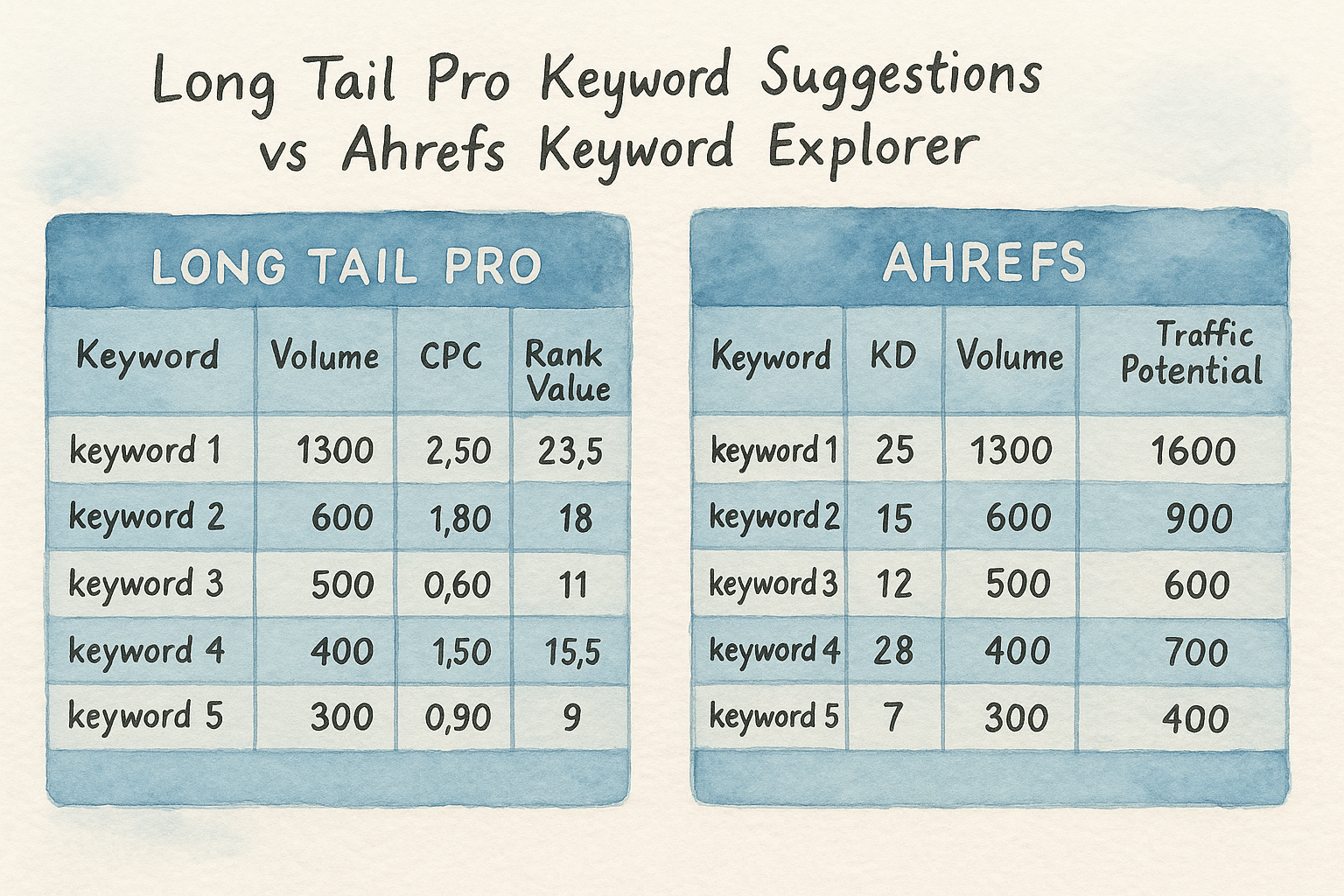
Long Tail Pro: The KC‑first routine was fast. Enter seeds, pull a list, sort by KC, and publish. If your business model depended on speed over depth, this worked well. The downside was binary thinking. KC could tempt you to ship shallow content into messy SERPs because the number looked easy. The exact KC number is gone with LTP, and copying it 1:1 is a trap. It is better to reproduce the spirit of KC with better inputs.
Ahrefs: Use Keywords Explorer with a long‑tail lens. Set a minimum word count to screen out head terms. Cap Keyword Difficulty to match your authority and link plan. Sort by Traffic Potential to find topics that can anchor clusters, not just single posts. Add a Clicks filter to avoid zero‑click results. Save filters by market so you can repeat the workflow consistently. Then use instant clustering by Parent Topic to turn your export into a draft site map with clusters, supporting pages, and internal link paths.
Bottom line for pros: KC was speed. Ahrefs gives you speed plus context. If volume is flat but Clicks and Traffic Potential are strong, you still have a play. If KD looks low but SERP intent is wrong, you know to pivot before you waste sprints.
2. Competition & SERP Analysis
Long Tail Pro: The SERP table was handy. You could eyeball page and domain strength and make quick yes or no calls. For deep analysis, you hit the wall and needed another tool.
Ahrefs: The difference is depth and speed. Open SERP overview to see intent patterns, feature crowding, and traffic estimates for top pages. Jump to backlink profiles, new vs lost links, and anchor text breakdowns. Slice by path or subdomain to see where competitors actually win. This is not just whether you can rank. It is how you will win that ranking and hold it.
3. Backlink Analysis
Long Tail Pro: No native link index. Outreach and link gap work always lived elsewhere.
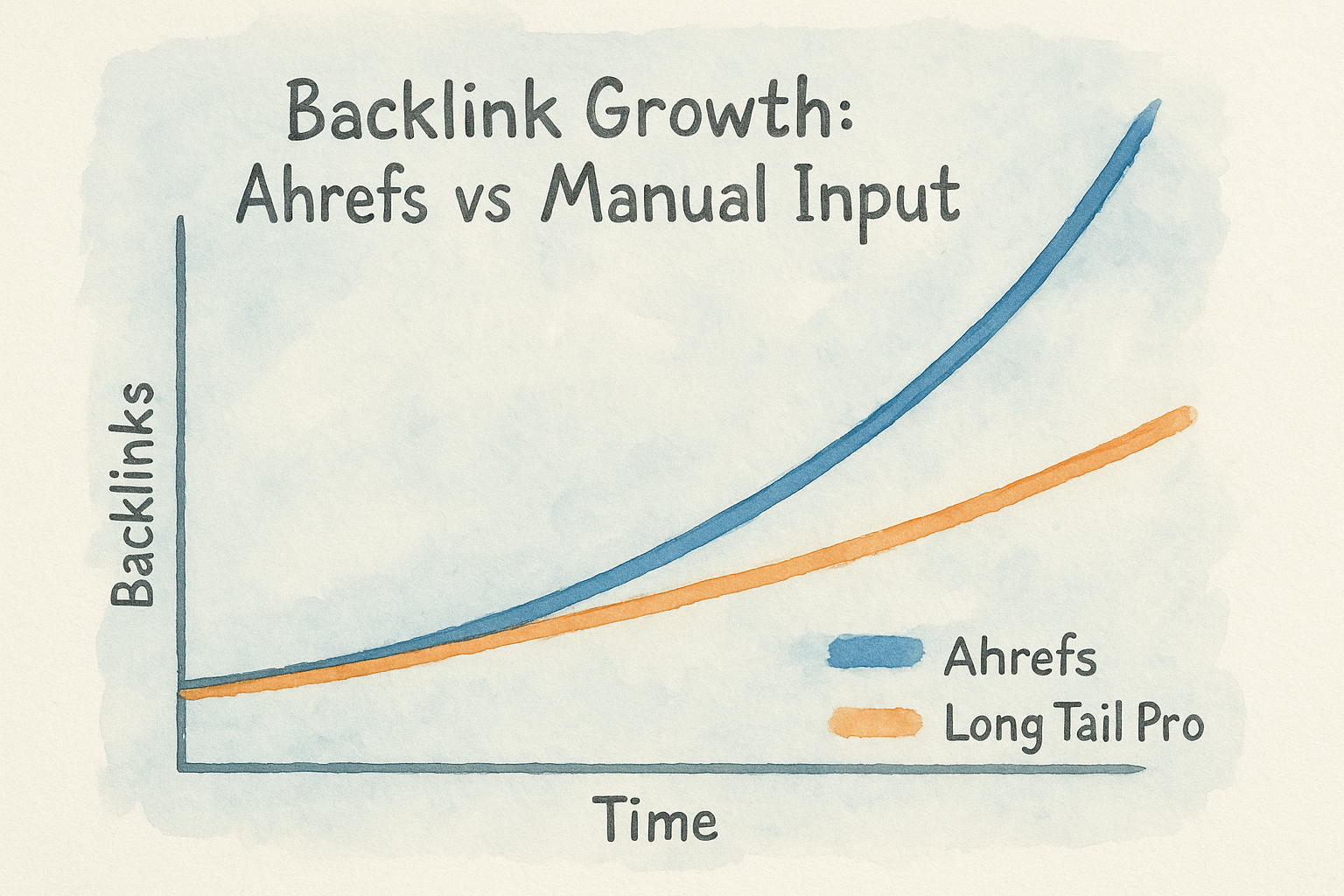
Ahrefs: Link intelligence is still the center of gravity. You can analyze referring domains, isolate bad patterns, monitor link velocity, and reverse engineer competitor campaigns. The scale matters because it reduces false negatives and lets you trust deltas. When you pitch a content update or a cluster sprint, these reports justify it with real change over time.
4. User Interface & Ease of Use
Long Tail Pro: Friendly and focused. It made keyword discovery feel simple and fast.
Ahrefs: Clean and fast once you know what you are doing. If you try to learn every tool in one day, you will get lost. Start with Keywords Explorer, Site Explorer, and Rank Tracker. Add Site Audit and Content Explorer after a week. Pin the filters you use most.
5. Reporting & Integrations
Long Tail Pro: CSV export and basic rank reporting. Good enough for solo operators. Not enough for agency clients who expect live dashboards.
Ahrefs: Use Looker Studio connectors for Site Explorer, Site Audit, and Rank Tracker to build client‑ready views without manual screenshots. Add Web Analytics if you want simple, privacy‑friendly traffic dashboards under the same roof. If you are running an SEO program for stakeholders who chase numbers, this is how you keep the conversation on outcomes instead of links for their own sake.
6. Feature Comparison Table
| Aspect | Ahrefs (2025) | Long Tail Pro (legacy) |
|---|---|---|
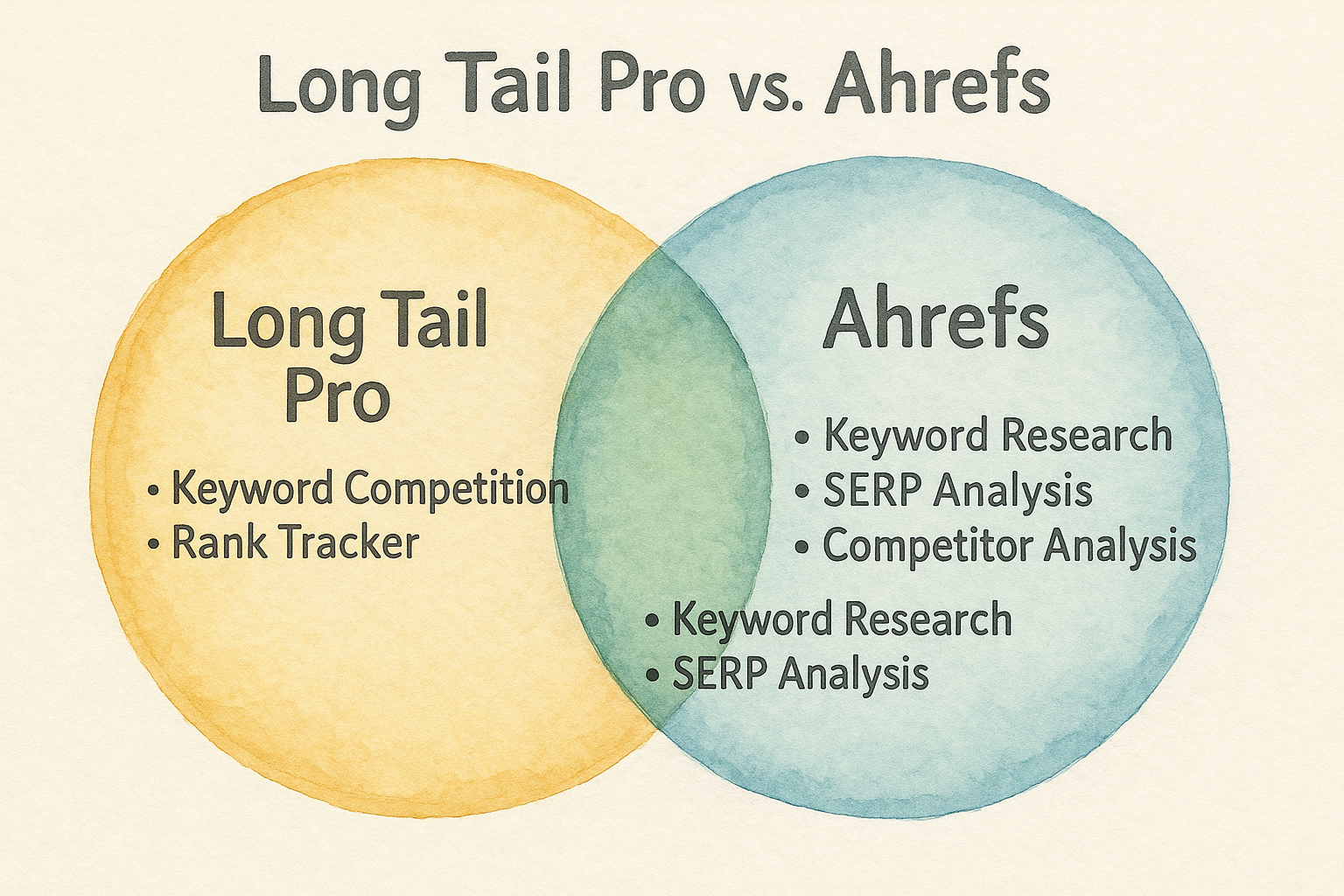
| Keyword database | Very large, updated frequently. Filters for KD, Clicks, Traffic Potential, word count. Instant clustering by Parent Topic. | Seed to long‑tail suggestions with basic filters. |
| Backlink index | Large live index with historical views and velocity. | No native index. |
| Rank tracking | Daily tracking by device and location with tags. | Daily basics. |
| Site audit | Technical checks with prioritization and issue grouping. | Basic checks only. |
| Reporting | Looker Studio connectors, exports, dashboards. | CSV and simple reports. |
| Pricing entry | $29 Starter plan for core tools. | Discontinued. Historic entry tier around $37 is no longer available. |
| Availability | Active and evolving. | Discontinued in 2024. |
7. Embedded Video Review: Long Tail Pro vs KeywordTool.io
This historical review is still useful if you are learning long‑tail workflows for the first time. The tool is gone. The logic behind it is not. Watch with a critical eye, then map the process to Ahrefs filters, Clicks, Traffic Potential, and clustering.
Pricing and Plans
Budget, limits, and team workflow should decide your plan. Prices move, but the structure in 2025 looks like this.
Long Tail Pro Pricing
- Discontinued: Long Tail Pro ceased operations in 2024. There is no current pricing or plan to buy. If you see “Starter $37” or similar, that is historical. Treat any sign‑up page as outdated.
- Migration note: Former LTP users typically move to Ahrefs Starter, KWFinder, or a mix of Ahrefs plus free tools for seed expansion. You will miss the KC number for a week. You will not miss the lack of data once you adopt Clicks and Traffic Potential.
If your budget is tight, combine Google tools and Ahrefs Webmaster Tools to start. Upgrade the moment you hit export or rank tracking limits. Do not starve your program of data to save a few dollars if the site has revenue potential.
Ahrefs Pricing
- Starter: $29 per month. Access to Site Explorer, Keywords Explorer, Site Audit, and Rank Tracker with credit limits that suit small projects or initial testing.
- Lite: $129 per month. More history, more projects, more tracked keywords. Good for freelancers and small businesses with a steady publishing cadence.
- Standard: $249 per month. The common choice for independent consultants and small teams that need headroom for research and client reporting.
- Advanced: $449 per month. Larger projects, deeper history, and features that make reporting and analysis easier across many sites.
- Enterprise: $1,499 per month on annual commitment. Custom limits, API access, and enterprise controls.
Ahrefs does not offer a traditional free trial for paid plans. If you need to evaluate, use Ahrefs Webmaster Tools for verified sites and test real workflows before you commit.
Use Cases and Ideal User Profiles
Best for Beginners and Small Businesses
If your previous routine was “find KC under 30 and publish,” replicate the intent with better guardrails. In Ahrefs, set a word count minimum of 4, a KD ceiling that matches your authority, and sort by Traffic Potential. Add a Clicks filter to avoid queries that look good but deliver nothing. Validate intent by opening the SERP for your top picks. Then group by Parent Topic and plan an initial cluster with 1 hub and 3–6 spokes. This is a simple, repeatable playbook that produces the same kind of wins you got from LTP, but with fewer duds.
On a lean budget, start with Starter. If you outgrow credits in your first month, you are actually doing the right work. Upgrade instead of cutting corners. The cost of under‑researching a market is higher than the difference between plans.
Best for Agencies and SEO Pros
Ahrefs scales when you care about repeatable decisions across multiple properties. Site Explorer gives you the top pages, link patterns, and subfolder analysis that matter for growth. Rank Tracker turns the plan into measurable outcomes with tags and country splits clients understand. Looker Studio connectors keep reporting out of spreadsheets and into living dashboards. Site Audit enforces technical hygiene so you do not ship content into a broken template. For teams that value speed to insight more than novelty, this is where you win hours back every week.
Edge Cases worth calling out
- Editorial SEO without link building: Lean on Clicks and Traffic Potential. Favor informational topics with stable intent. Push out clusters that build topical authority. You can win without aggressive link budgets if you are disciplined with pruning and internal links.
- Programmatic SEO: Use Keywords Explorer to define guardrails for modifiers and thresholds. Build programmatic templates that match SERP intent. Monitor bloat with Site Audit so you do not drown in thin pages.
- Local SEO: Use Site Explorer to find high‑traffic subfolders and citation sources. Pair this with GBP monitoring and a lean content plan. Do not chase head terms. Own specific neighborhood or service phrases with clean landing pages and internal links from relevant posts.
Step-by-Step Guide: Getting Started
This section is tactical. It replaces the old LTP routine with modern steps inside Ahrefs. Follow it line by line and you will ship a viable content sprint inside a week.
Signing Up
Long Tail Pro: New sign‑ups are not possible. If you have old CSVs, keep them for historical notes, but do not treat the metrics as fresh.
Ahrefs: Create an account. If you want to test without spend, use Ahrefs Webmaster Tools for a verified site. If you are ready to run a campaign, pick Starter and get real access to Site Explorer, Keywords Explorer, Site Audit, and Rank Tracker.
First Keyword Project
Rebuild LTP’s flow inside Ahrefs:
- Open Keywords Explorer and enter 3 to 5 seed topics that match your product and your customers’ language. Add 10 to 20 modifiers if your market has clear purchase signals, like “best”, “vs”, “pricing”, “template”, “for [audience]”.
- Apply filters: set word count to 4+, KD to a ceiling that matches your authority and link plan, and turn on Clicks to remove zero‑click traps. Choose country and device as needed.
- Sort by Traffic Potential. This surfaces topics that can yield more than a single keyword. You are planning clusters, not single posts.
- Open the SERP view for your top candidates. Check intent, feature crowding, and competitor types. If the page types do not match your plan, pivot the angle now. Do not write against the wrong intent.
- Export the list and use instant clustering by Parent Topic. You now have a one‑sprint content map with a hub and supporting pages.
Quality gate: remove anything with mismatched intent, thin SERPs that are dominated by marketplaces when you plan editorial, or queries with no Clicks. Keep a stretch list for terms that become viable after you earn links to the hub.
Taking Action
Create and interlink: Write the hub first. Ship the first 3 to 6 spokes within two weeks. Use descriptive internal anchors from spokes to the hub and between spokes when relevant. Add a short comparison table where it clarifies choices. Keep paragraphs short. Insert screenshots or charts only when they add signal. Include a simple CTA at the end of each page that points to the next action users should take.
Promote with intent: Use Site Explorer to find link magnets and similar pages that already earn links. Pitch your hub where it adds value and where you can offer a credible swap or update. Do not shotgun emails. Quality beats volume in 2025 more than it ever did.
Track and report: Add the primary and supporting terms to Rank Tracker. Group by cluster. Build a Looker Studio dashboard that pulls Site Explorer and Rank Tracker so stakeholders see movement without asking for screenshots. If you need simple traffic analytics, enable Web Analytics and keep everyone in one platform.
Maintain: Run Site Audit weekly during rollout. Fix indexation and duplication. When the cluster stabilizes, refresh content every quarter with new subtopics, FAQs from People Also Ask, and internal links from newer posts. Prune underperformers that pulled impressions without clicks over two quarters.
Case Studies and Examples
Success with Long Tail Pro
Before the shutdown, niche publishers used LTP to publish at speed. The playbook looked like this: pull long‑tails, pick easy KC, publish at volume, and ride the curve. The hits paid for the misses. That mindset still works, but you need better screens when the landscape is full of mixed intents and AI summaries. Recreate the speed with Ahrefs filters. Use Clicks to avoid zero‑click terms. Use Traffic Potential so the hub you write today can absorb more related searches without new pages. When you pair this with clean internal linking, you get the same momentum with higher signal and less wasted content.
Success with Ahrefs
An ecommerce team hit a plateau on their category pages. They used Site Explorer to profile top competitors by subfolder and found that most traffic came from a handful of hub pages, not product listings. They rebuilt their own hubs with clearer intent matching, better structure, and comparison blocks that made the choice obvious. In parallel, they launched two cluster sprints built from Keywords Explorer: one informational cluster and one commercial research cluster. Rank Tracker showed early movement in 30 days. Outreach to pages that already earned links produced a steady trickle of new referring domains without mass emails. Revenue lifted because visitors landed on pages designed to convert, not because the blog got longer.
Which Tool Should You Choose?
There is no more apples to apples here. Long Tail Pro is gone. The decision is whether Ahrefs alone covers your needs or if you want to pair it with a simpler keyword tool for team adoption. Use this quick framework.
- Need focused long‑tail research on a budget: Start with Ahrefs Starter and the workflow in this guide. Add a lightweight tool only if your team refuses to touch Ahrefs or you need training wheels for a junior hire.
- Need comprehensive backlinks, audits, and reporting: Pick Ahrefs. You are paying for index scale, fresh data, and fewer blind spots. That is what drives better decisions across campaigns.
- Still unsure: Use Ahrefs Webmaster Tools for a week on a verified site. Run a small sprint with the free stack. If it feels constrained, Starter will pay for itself quickly. If not, you just validated that your site needs more product work before a bigger SEO investment.
FAQs: Long Tail Pro vs Ahrefs in 2025
Is Long Tail Pro still available? No. The product shut down in 2024 and there is no current way to buy or sign up. Plan your migration.
What happened to Long Tail Pro? The site and app went offline and never returned. Some users reported issues in early 2024. There was no successful relaunch.
Can Ahrefs replace LTP’s KC‑based workflow? Yes. Use word‑count and KD filters to simulate “easy” thresholds. Add Clicks and Traffic Potential so you pick topics that produce real sessions, not just rankings. Use instant clustering to map supporting pages.
Does Ahrefs have a free trial? Not a traditional free trial of paid plans. Use Ahrefs Webmaster Tools on a verified site to get hands‑on access to Site Explorer, Site Audit, and Web Analytics. Upgrade when you need more depth and rank tracking.
How big is Ahrefs’ database? Large enough that historical comparisons and link velocity trends are useful. The scale is why you see changes sooner and miss fewer links when you reverse engineer competitors.
Is the $29 Starter plan enough? For a single site or a pilot project, yes. If you are running multiple clients or heavy research, you will likely need Lite or Standard. If you push lots of dashboards and reporting, Advanced plus connectors is the right call.
Does Ahrefs integrate with Looker Studio? Yes. Use the Site Explorer, Site Audit, and Rank Tracker connectors to build client‑ready dashboards and reduce manual reports.
What metrics matter most for long‑tail selection? Do not chase volume alone. Use KD for feasibility, Traffic Potential to size the topic beyond one keyword, and Clicks to remove zero‑click traps. Always validate intent in the SERP before you write.
Conclusion
The decision is simple now. Long Tail Pro served a generation of niche builders. It is gone. If you want current data, continuous crawling, and a serious keyword database, Ahrefs is the clear replacement. Use it with discipline. Filter for long‑tails, prioritize topics with Traffic Potential, and avoid zero‑click traps with Clicks. Execute in clusters, earn links to the right pages, and measure with Rank Tracker and simple dashboards.
If budget is tight, start with Ahrefs Webmaster Tools. The moment you feel constrained by exports or tracking, move to Starter. When your campaigns stack up and you need more headroom, move up a tier. There is no prize for overpaying too early. There is also no prize for starving your strategy of data. Run the workflow in this guide for a quarter. You will know exactly which plan you need.
Ready to replace the old workflow with something stronger? Take the Starter plan for a spin, rebuild your long‑tail process with modern filters, and ship your next quarter of content with intent‑aligned clusters. Your rankings and pipeline will feel the difference.
Last updated Nov. 06, 2025