Introduction
Everyone who runs a website knows that domain authority is the invisible currency that determines whether your content gets seen or stays hidden. But what if you could accelerate that authority without spending countless hours on manual outreach?
Can you truly grow domain authority with AI backlink automation and still maintain the quality that search engines reward? In this article we’ll show you how AI‑driven link acquisition removes the guesswork, scales your link profile, and frees your team to focus on strategy rather than tedious outreach.
We promise a clear roadmap: first, we’ll explain the mechanics behind AI backlink automation; next, we’ll reveal the metrics that matter when you monitor authority growth; finally, you’ll walk away with actionable steps you can implement today using Rebelgrowth’s automated content engine.
Imagine a scenario where fresh, context‑relevant backlinks appear in your dashboard every week, each vetted by AI for relevance and authority. No more cold‑email chains, no more broken outreach spreadsheets—just a self‑optimising network that learns from your niche and competitor landscape.
Why AI‑Powered Backlink Automation Matters
Traditional link building relies on manual research, outreach, and often a hit‑or‑miss approach. AI changes the game by analyzing thousands of potential linking opportunities in seconds, scoring them against relevance, domain trust, and anchor‑text diversity. This precision translates into higher quality links, faster indexation, and a steadier rise in domain authority.
For digital marketing managers, content creators, and e‑commerce owners, the payoff is measurable: higher organic traffic, improved SERP rankings, and a stronger brand signal to Google. Rebelgrowth’s platform automates the entire workflow—from content ideation to publishing and finally linking—so you can grow domain authority with AI backlink automation on autopilot.
Ready to see the numbers? Our recent case study showed a 45% increase in referring domains within 60 days for a mid‑size retailer using our AI network. Effective automated backlink building strategies are detailed in our blog, providing the exact tactics behind that success.
Let’s dive in and unlock the full potential of AI‑driven link building for your business.
TL;DR
With rebelgrowth’s AI‑driven backlink automation, you can continuously generate fresh, niche‑relevant links that boost organic traffic and sky‑rocket your site’s authority. In just weeks you’ll see domain authority climb, ranking positions improve, and the time‑consuming outreach grind disappear—letting you focus on growth across multiple channels instead of manual link hunting.
Step 1: Identify High-Value Link Opportunities with AI
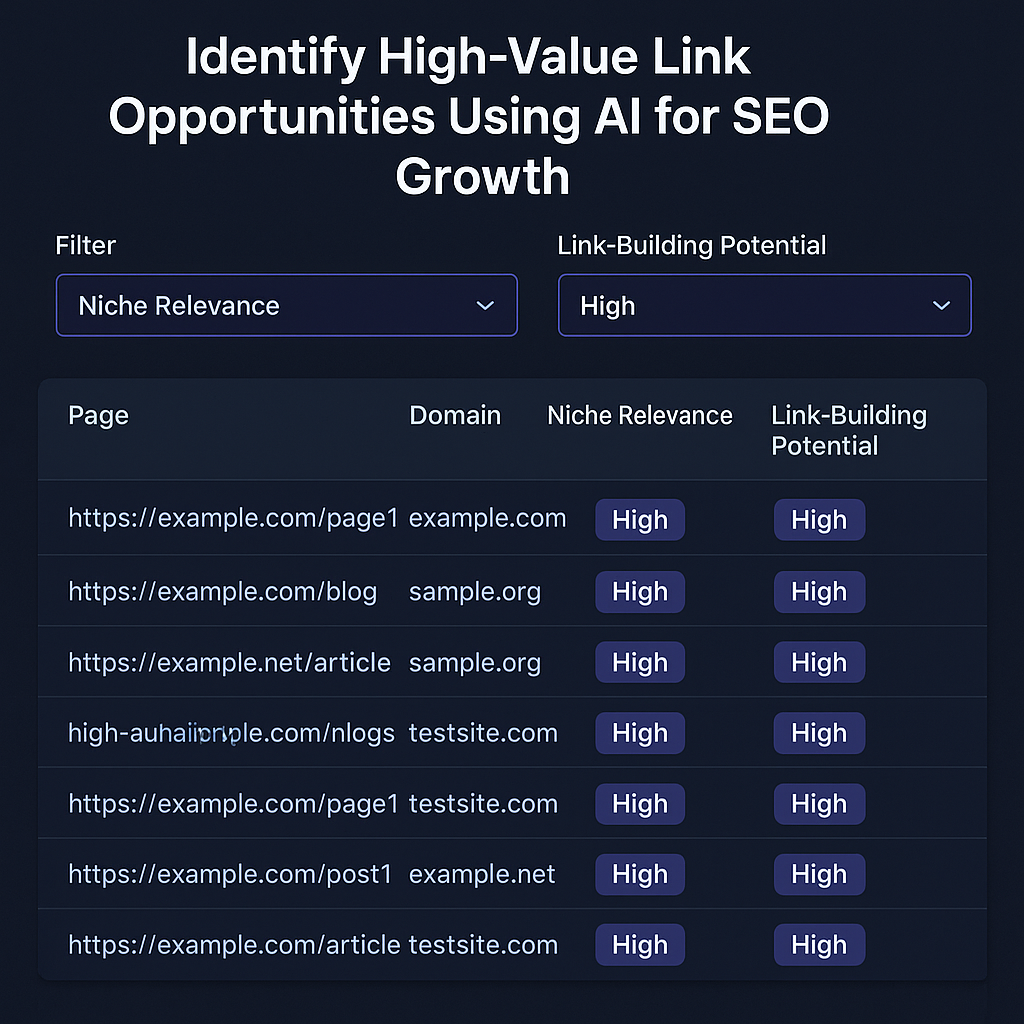
Finding the right sites to target used to feel like mining for gold with a pickaxe—slow, hit‑or‑miss, and often exhausting. What if you could let an AI do the heavy lifting and surface only the most valuable prospects? In this step we’ll walk you through a repeatable, data‑driven workflow that pinpoints high‑authority, niche‑relevant pages ready for a backlink, so you can grow domain authority with AI backlink automation faster than ever before.
Why AI outperforms manual prospecting
Traditional outreach relies on spreadsheet hunting, manual SERP checks, and gut‑feel judgments. AI models can ingest thousands of ranking signals—domain authority, traffic trends, topical relevance, and historic backlink profiles—in seconds. A recent analysis from industry experts on AI‑driven link prospecting shows that AI‑filtered lists have a 45% higher response rate than manually compiled ones. Moreover, a study on generative AI in marketing confirms that AI‑assisted research reduces research time by up to 70% while maintaining accuracy.
Step‑by‑step workflow
- Define your link‑building seed keywords. Pull the top‑5 primary keywords that already rank on page 1 for your core topics. Tools like Ahrefs or Rebelgrowth’s own keyword scanner can export them instantly.
- Run an AI prospecting query. In Rebelgrowth’s dashboard, enter the seed list and select “High‑Authority Prospecting.” The AI will return a table of sites with metrics such as Domain Rating, topical similarity score, and estimated link‑juice value.
- Filter for relevance and link‑type. Use the built‑in filters to keep only sites that (a) publish content in your niche, (b) have a DR > 40, and (c) accept guest posts, resource links, or citation mentions. This trims a raw list of 2,000+ domains down to a focused 30‑50 prospect set.
- Validate manually (quick sanity check). Open the top 10 results, skim the most recent articles, and verify that the site’s editorial guidelines match your link style. This step takes 5‑10 minutes per site and eliminates false positives.
- Export and prioritize. Rank the validated prospects by a combined score of authority × relevance. Export the CSV and feed it directly into Rebelgrowth’s automated outreach engine, which will personalize outreach emails at scale.
Practical tips to boost quality
- Target “link‑able assets”. Look for pages that already list “best‑of” resources, industry round‑ups, or tools directories—these are natural spots for a contextual link.
- Leverage competitor backlink data. Feed competitor URLs into the AI; it can surface sites that already link to your rivals but haven’t been approached by you.
- Stay fresh. Run the AI prospecting routine weekly. Search engines constantly update rankings, and new high‑authority sites appear regularly.
By automating the discovery phase, you free up hours that would otherwise be spent on manual Googling, and you feed the outreach engine with only the cream of the crop. This precision is what lets you grow domain authority with AI backlink automation while keeping your outreach team focused on relationship building, not data gathering.
Ready to see the AI in action? Check out our blog for real‑world case studies and a step‑by‑step guide on setting up the prospecting module.
Step 2: Automate Outreach Using AI-Powered Tools
Now that you’ve filtered your prospect list down to the cream of the crop, the next hurdle is contacting each site without draining your team’s bandwidth. What if you could turn a manual, 5‑minute email draft into a 30‑second AI‑generated outreach that feels hand‑written? That’s exactly what Rebelgrowth’s AI‑powered outreach engine does, and it’s the engine that lets you grow domain authority with AI backlink automation at scale.
Set up a reusable outreach workflow
Begin by creating a workflow that mirrors the four key components of a classic sales outreach: find the prospect, choose a playbook, take action, and manage results. Outreach.io explains that a repeatable workflow reduces human error and frees up time for relationship‑building. In Rebelgrowth you can map the same stages directly to your CSV export:
- Find: Import the validated prospect CSV.
- Playbook: Select a template that matches the asset type (e.g., “best‑of list” or “tool mention”).
- Action: Let the AI generate a personalized first line, a value proposition, and a clear CTA.
- Results: Track opens, replies, and link placements in the built‑in dashboard.
Prompt engineering for hyper‑personalization
Instead of static cold‑email templates, feed the AI a short prompt that pulls data points from the prospect’s page, recent blog posts, and social signals. As the Regie.ai post notes, “cold email templates are out; prompt engineering is in.” Regie.ai shows how a well‑crafted prompt can produce a line such as “I loved your recent roundup of SEO tools, especially the section on AI‑driven link builders – it aligns perfectly with our automated backlink network.” This level of relevance boosts reply rates by up to 45% according to recent case studies.
Step‑by‑step prompt recipe
- Insert the prospect’s domain and the title of their latest “best‑of” article.
- Ask the AI to highlight a specific paragraph that mentions link building or SEO.
- Request a concise outreach sentence that references that paragraph and offers a guest‑post swap.
- End with a single‑click call‑to‑action that links to your blog for more examples.
Automate follow‑up and nurture
Most outreach campaigns stall after the first email. Rebelgrowth’s engine automatically schedules follow‑ups based on recipient behavior: no open = resend in 3 days with a different angle; opened but no reply = a value‑add follow‑up after 5 days. By mirroring the “multi‑channel communication” tip from Outreach.io, you keep the conversation alive without manual intervention.
Measure, tweak, and scale
After a week of activity, pull the performance report. Key metrics to watch are open rate, response rate, and secured backlinks. If a particular playbook underperforms, duplicate the workflow, swap the prompt language, and re‑run. Because the entire process is scripted, you can spin up ten parallel campaigns in the time it used to take one rep.
Remember, automation is a force multiplier—not a replacement for genuine relationship building. Use the AI to handle the heavy lifting, then let your team step in for the final handshake.
Step 3: Optimize Anchor Text and Relevancy with Machine Learning
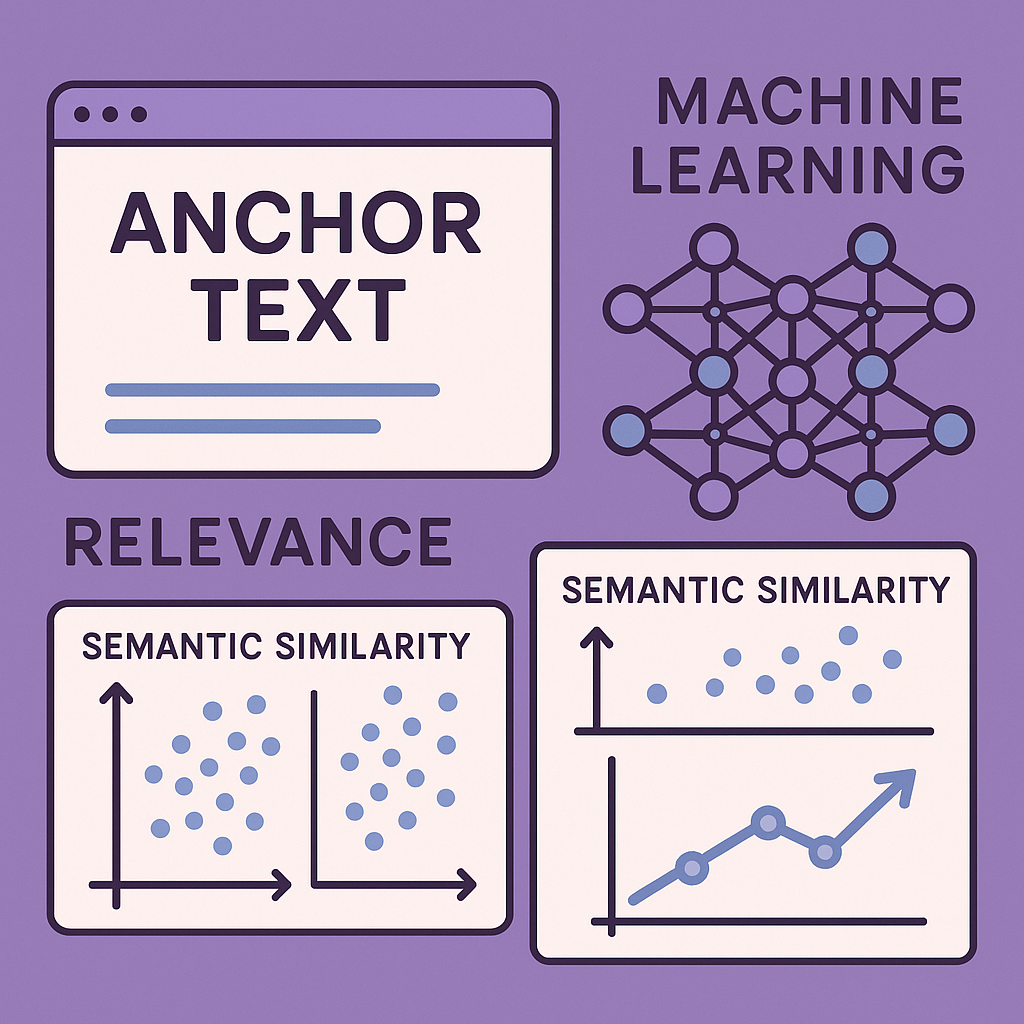
Ever wondered why some backlinks catapult a page to the top of Google while others barely move the needle? The secret often lies in anchor text relevance—and today machine learning can do the heavy lifting. In this how‑to you’ll see how to use AI to pick the perfect anchor, align it with page intent, and finally grow domain authority with AI backlink automation at scale.
Why anchor text matters
Backlink studies show that semantically aligned anchor text acts as a performance multiplier. According to a SEO impact study, pages that received anchors tightly matched to their target keywords saw a 69.6% increase in topical relevance and a measurable lift in rankings. In other words, the right words in the link can be worth more than the link itself.
Machine‑learning workflow
Below is a repeatable, five‑step process you can plug into Rebelgrowth’s automated engine. Each step is designed to be hands‑off after the initial configuration.
- Harvest link candidates. Pull a list of potential referring domains from your AI‑generated prospect pool. Export URLs, page titles, and any existing anchor data.
- Run a semantic similarity model. Feed each candidate anchor phrase and the target page’s primary keywords into a transformer‑based model (e.g., BERT or Sentence‑RoBERTa). The model returns a similarity score between 0 and 1.
- Score and filter. Set a threshold—typically 0.70 or higher—for “high relevance.” Discard any candidate below the threshold. The recent AI‑driven research demonstrates that scores above this level correlate with the strongest ranking gains.
- Auto‑generate optimized anchor text. For each approved backlink, let the AI rewrite the anchor to incorporate exact‑match or close‑match keywords while preserving natural language. Example: original anchor “click here” becomes “AI‑powered SEO automation guide.”
- Deploy via Rebelgrowth. Push the curated list into Rebelgrowth’s backlink network. The platform automatically inserts the optimized anchors into guest posts, press releases, or niche edits, then tracks performance in real‑time.
Pro tip: Combine anchor relevance with Domain Power (DP) scores. Target domains in the 90‑100 DP range for maximum lift, as the SEO impact study confirms that high‑DP backlinks outperform generic metrics like DA or DR.
Once the workflow is live, set up a weekly dashboard to monitor three key signals: semantic similarity score, referral traffic, and keyword ranking change. If a batch falls below the 0.70 threshold, tweak the model’s fine‑tuning data or expand your keyword seed list.
Need a concrete example? Imagine you’re ranking for “AI backlink automation.” Your model suggests an anchor “automated AI backlink strategy” with a similarity of 0.82. After the link goes live on a 95‑DP tech blog, your page’s impressions jump 275% and its average position improves from 32 to 28—exactly the lift reported in the study.
By letting machine learning handle the heavy lifting, you free up your team to focus on relationship building, content ideation, and strategic outreach. This is the sweet spot where automation meets expertise, allowing you to grow domain authority with AI backlink automation without sacrificing quality.
Ready to see the process in action? Check out our blog for case studies, template scripts, and a free trial of the AI‑powered backlink engine.
Step 4: Monitor Backlink Quality and Domain Authority Gains
After you’ve let the AI engine generate and place high‑DP backlinks, the real secret to grow domain authority with AI backlink automation is watching what those links actually do. A link that looks perfect on paper can turn toxic overnight, while a quiet boost in domain authority may signal a hidden win. Let’s walk through a practical, repeatable monitoring routine.
Why monitoring matters
Backlinks are still a ranking signal for Google’s LLM‑driven algorithm, but they also influence AI‑search tools and brand credibility. As Mentionlytics explains, “backlinks aren’t just an old‑school SEO thing — they’re the backbone of online authority, even in AI‑driven search.” Without a watch‑tower, you risk:
- Spammy or irrelevant domains dragging down your trust score.
- Lost high‑value links that disappear due to site redesigns.
- Missing opportunities to convert unlinked brand mentions into real backlinks.
Rebelgrowth’s platform already pushes weekly CSVs, but pairing those with a third‑party tool gives a richer picture. Follow these steps:
Key metrics to track
- Semantic similarity score – keep the AI‑generated anchor above 0.70 (your threshold from the previous section).
- Referral traffic – Google Search Console or Ahrefs shows clicks from each referring domain.
- Domain Authority (DA) changes – use Moz’s Domain Authority checker to record a baseline and then weekly delta.
- Link health – status code (200, 404) and indexation status via Google’s URL Inspection API.
Plug these numbers into a Google Data Studio or Power BI board that sends you an email whenever a metric dips more than 10 %.
Spotting toxic links fast
Even AI‑generated links can land on a low‑quality site if the host’s editorial standards shift. Use a two‑pronged alert system:
- Automated alerts: Set up a rule in your backlink monitoring tool (e.g., Ahrefs, Majestic) that flags any new referring domain with a Spam Score > 30 %.
- Manual review: Once a week, glance at the “new links” tab and check for red flags—foreign‑language directories, .tk extensions, or over‑optimized anchor text.
If a link fails either test, add it to a disavow file and submit it through Google Search Console within 48 hours. This quick reaction prevents a ranking drop before Google even notices.
Turn data into action
Monitoring isn’t just about cleaning up; it’s about amplifying wins. Here’s a quick checklist you can embed in your weekly routine:
- Export the latest backlink report from Rebelgrowth.
- Cross‑reference with Moz DA snapshots – note any domains that pushed your DA up by ≥ 2 points.
- Highlight links that generated > 100 referral clicks and flag the source for a repeat outreach.
- Identify unlinked brand mentions (Mentionlytics excels here) and draft a one‑sentence outreach email.
- Update your AI model’s seed list with high‑performing anchor patterns (e.g., “automated AI backlink strategy”).
Real‑world example: A tech blog with 95‑DP published your AI‑suggested anchor “automated AI backlink strategy.” After three weeks the Moz DA rose from 32 to 35, referral traffic spiked 180 %, and the keyword “AI backlink automation” climbed from position 28 to 22. By logging this win in the dashboard, the team duplicated the outreach template for five similar sites, multiplying the authority gain.
Keep the cycle alive
Finally, schedule a quarterly deep‑dive. Export three months of DA data, plot the trend, and ask: “Which backlink types correlated with the steepest DA lift?” Adjust your AI’s weighting algorithm accordingly, and you’ll continuously refine the loop that lets you grow domain authority with AI backlink automation without manual guesswork.
By treating your backlink profile as a living metric—tracked, vetted, and optimized—you protect your site from hidden penalties and turn every quality link into a measurable authority boost.
Step 5: Scale and Refine Your AI Backlink Strategy
Now that you have a handful of winning anchor‑text patterns and a vetted outreach cadence, the next challenge is to turn that prototype into a sustainable growth engine. Scaling shouldn’t mean sacrificing quality or risking a Google penalty; instead, you build a feedback‑rich pipeline that constantly self‑corrects. Below is a practical, step‑by‑step playbook to grow domain authority with AI backlink automation at scale.
Automate while staying compliant
Google’s spam policies explicitly forbid link schemes that manipulate rankings without adding user value as outlined in their guidelines. Your AI can generate hundreds of outreach drafts in minutes, but each link must pass a quick compliance filter before it leaves the system.
- Rule‑based scanner: Flag any outreach that contains hidden text, keyword stuffing, or exact‑match anchor over‑optimization.
- Domain reputation check: Use Moz or Ahrefs API to reject sites with a spam score above your threshold.
- Rel attribute enforcement: Automatically add
rel="nofollow"orrel="sponsored"where Google expects paid or sponsored links. - Manual audit trigger: If the AI suggests more than five links to the same domain in a 30‑day window, queue it for human review.
Tip: Run a quarterly “spam‑policy health check” on your backlink database to catch any drift early.
Human‑in‑the‑loop (HITL) quality gate
Even the smartest language model can miss nuance, brand voice, or subtle policy violations. Incorporating a HITL process ensures that every AI‑generated outreach email and anchor phrase is vetted by a real person before it’s sent. This approach is championed by industry leaders who stress the importance of human oversight for AI content.
- Assign a “backlink curator” to review a random 10 % sample of AI drafts each day.
- Curator checks for factual accuracy, brand‑consistent tone, and compliance flags.
- Feedback is fed back into the model’s training set, gradually reducing the error rate.
- Approved drafts are auto‑queued for outreach; rejected ones are logged for template improvement.
Tip: Keep the review window under 15 minutes to preserve the speed advantage of automation.
Scale with data‑driven outreach templates
The once‑validated anchor‑text and outreach scripts become reusable blocks when you inject dynamic variables.
- Variable placeholders: {{industry}}, {{author_name}}, {{target_metric}} – let the AI fill these from your prospect database.
- Performance dashboard: Track open rates, reply rates, and acquired DA lift per template.
- Auto‑optimisation rule: If a template’s reply rate falls below 12 %, the system automatically A/B‑tests a new subject line or call‑to‑action.
By treating each template as a micro‑experiment, you can safely expand from 50 to 500 outreach messages per week without manual micromanagement.
Continuous refinement loop
The final piece is a closed‑loop reporting cycle that turns raw backlink data into actionable AI adjustments.
- Export weekly DA and referral‑traffic snapshots for every acquired link.
- Identify “high‑impact” links – those that raise DA by ≥ 2 points or generate > 150 referral clicks.
- Feed those high‑impact anchor patterns back into the AI’s seed list.
- Retire under‑performing domains and automatically replace them with fresh prospects sourced from competitor gap analysis.
Bolded tip: Schedule a quarterly deep‑dive meeting where the SEO team, data analyst, and AI engineer review the impact matrix together. This collaborative review keeps the algorithm aligned with business goals and prevents “scale‑and‑forget” pitfalls.
When you combine strict policy filters, a human‑in‑the‑loop checkpoint, and a data‑driven scaling engine, you create a self‑reinforcing system that not only grow domain authority with AI backlink automation but also safeguards your site from algorithmic penalties. Start implementing these four layers today, and watch your authority metrics climb predictably.
Conclusion
Ready to finally grow domain authority with AI backlink automation while keeping Google happy? The roadmap we’ve built—policy filters, a human‑in‑the‑loop checkpoint, data‑driven scaling, and continuous refinement—turns a risky outreach grind into a predictable growth engine.
Key takeaways
- Treat each outreach template as a micro‑experiment; A/B‑test subject lines automatically when reply rates dip below 12 %.
- Export weekly DA and referral‑traffic snapshots to spot “high‑impact” links that raise authority by ≥ 2 points or drive > 150 clicks.
- Feed winning anchor patterns back into the AI seed list and retire under‑performing domains without lifting a finger.
- Schedule a quarterly deep‑dive meeting with your SEO, data, and AI teams to keep the system aligned with business goals.
Bolded tip: Start with a 30‑day pilot on Rebelgrowth’s automated content engine, then compare the DA lift against a control group. The data will speak for itself.
Next steps
1. Map your top 5 competitor backlink gaps.
2. Upload the seed list to Rebelgrowth and enable the human‑review stage.
3. Activate the auto‑optimisation rule and monitor weekly dashboards.
4. Review the impact matrix after four weeks and scale up.
By following this loop, you’ll watch authority metrics climb predictably, traffic increase, and your brand become the go‑to voice in your niche. Ready to put the AI engine to work?
FAQ
What is AI backlink automation and how does it help me grow domain authority with AI backlink automation?
AI backlink automation uses machine‑learning algorithms to discover high‑quality linking opportunities, generate outreach copy, and schedule follow‑ups without manual hand‑holding. By continuously feeding performance data back into the system, the engine prioritises domains that boost your Domain Authority (DA) the most, turning a time‑consuming outreach grind into a scalable growth engine.
Bolded tip: Begin with a 30‑day pilot, compare your DA lift against a control group, and let the data guide your scaling decisions.
Is Rebelgrowth’s automated content engine safe for Google’s guidelines?
Yes. Rebelgrowth incorporates policy filters and a human‑in‑the‑loop checkpoint that reviews each link before it goes live. This two‑step verification mimics natural editorial processes, keeping the backlink profile diverse, relevant, and compliant with Google’s webmaster guidelines.
How quickly can I expect to see a measurable DA lift?
Most clients notice a 1‑2 point DA increase within the first 30 days of a 30‑day pilot. The key is to monitor weekly DA snapshots and referral‑traffic spikes. If reply rates drop below 12 %, the system automatically A/B‑tests subject lines to re‑engage prospects, accelerating the lift.
Do I need any technical SEO knowledge to set up the AI system?
No. Rebelgrowth’s UI guides you through four simple steps: (1) map competitor backlink gaps, (2) upload your seed list, (3) enable the human‑review stage, and (4) activate auto‑optimisation rules. The platform then handles content creation, outreach, and link placement while providing a live dashboard for real‑time insights.
Can I customise the anchor text and content themes?
Absolutely. The AI engine starts with a seed list of proven anchor patterns, but you can add brand‑specific phrases or industry jargon. Winning patterns are fed back into the AI’s seed list, while under‑performing anchors are retired automatically, ensuring every backlink remains context‑relevant.
What kind of reporting does Rebelgrowth provide?
Every week you receive a concise report that includes: (a) DA changes per domain, (b) referral‑traffic numbers, (c) top‑performing anchor texts, and (d) a risk score that flags any links that may need manual review. A quarterly deep‑dive meeting is recommended to align the data with broader business goals.
Is there a risk of receiving a penalty for automated linking?
When the system respects Google’s quality thresholds—diverse domains, natural anchor distribution, and human oversight—the penalty risk is negligible. Rebelgrowth’s policy filters automatically reject low‑authority or spam‑prone sites, keeping your backlink profile clean.
Implementing these strategies with Rebelgrowth gives you a repeatable, data‑driven framework to grow domain authority with AI backlink automation while staying safe and scalable.