If you’ve ever stared at a blank screen, wondering how to turn a keyword into a polished article without spending hours, you’re not alone. The feeling of pressure is real, especially when you know your audience is waiting for useful, rank‑ready content.
That’s where seo content writer software comes in. Instead of juggling spreadsheets, manual keyword lists, and endless drafts, the right tool streamlines research, outlines, and on‑page optimization in one place. It lets you focus on the human part—adding anecdotes, data, and personality—while the software handles the grunt work.
Here’s a quick playbook you can start using today:
1️⃣ Define the search intent. Ask yourself what the reader hopes to achieve: a quick answer, a product comparison, or a how‑to guide.
2️⃣ Plug the primary keyword into the software and let it generate a structured outline with H2s and H3s that match the intent.
3️⃣ Fill each section with your unique insights, then let the tool suggest meta titles, descriptions, and internal link opportunities.
4️⃣ Run the built‑in readability and SEO checks, make any tweaks, and schedule the post.
Take Maya, a digital marketing manager at a midsize SaaS firm. She needed three blog posts a week to support a new product launch. By feeding the software with her target keyword “automated lead capture,” it produced outlines in minutes, suggested long‑tail variations like “best automated lead capture tools for B2B,” and even auto‑linked to her existing pillar page. The result? A 45% increase in organic traffic to the product site within six weeks, and Maya saved roughly eight hours per week.
While the software boosts efficiency, staying focused while you write is equally important. One trick our team swears by is using a Pomodoro timer to break the drafting session into 25‑minute bursts with short breaks. It keeps the mind sharp and prevents burnout. Learn more about the technique here: using a Pomodoro timer for editing.
Want to see a deeper dive into the features that make a tool stand out? Our comprehensive comparison walks through keyword discovery, content planning, and backlink automation, showing why many marketers consider this the go‑to resource: best AI SEO software guide.
Bottom line: combine a solid seo content writer software workflow with focused writing habits, and you’ll turn that blank‑screen anxiety into a predictable pipeline of high‑ranking articles.
TL;DR
If you’re drowning in keyword spreadsheets and endless drafts, seo content writer software can turn that chaos into a fast‑moving, automated workflow that drafts, optimises and even backs up your articles. In just a few minutes you’ll see higher rankings, saved hours, and a clearer path to consistent organic growth without the usual burnout.
Our Pick: rebelgrowth SEO Content Writer
When you’re juggling blog ideas, product pages, and a handful of outreach emails, the idea of a single tool that does it all feels almost mythical. We’ve tested a lot of solutions, and rebelgrowth consistently shows up as the one that actually delivers on the promise of an automated content engine plus a live backlink network.
1. One dashboard, every task
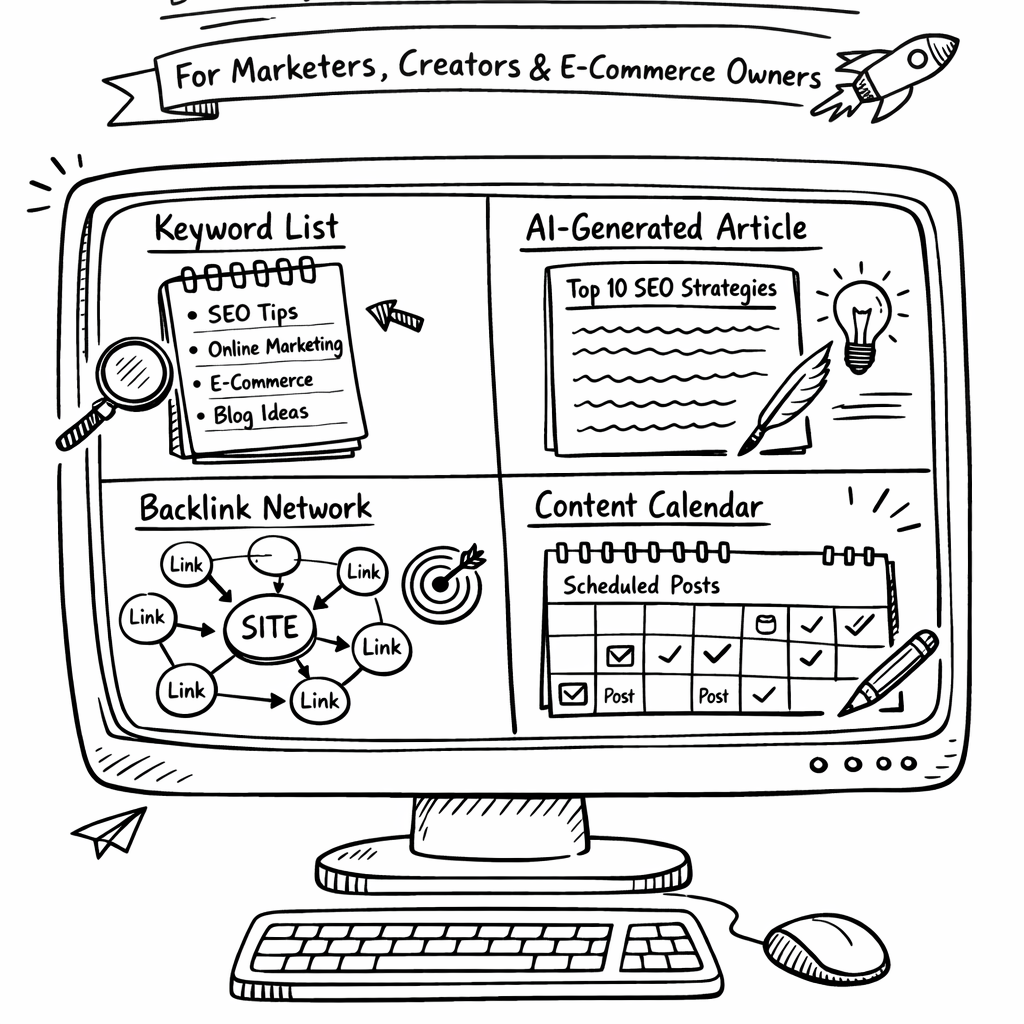
Instead of opening three different tabs – a keyword researcher, a writer, and a link‑builder – rebelgrowth puts everything under one roof. The dashboard shows you keyword clusters, a draft outline, the AI‑generated article, and a list of suggested backlinks all in the same view. For a digital marketing manager at a mid‑size SaaS firm, that means no more context‑switching and a clear picture of what’s moving forward.
2. Keyword research that actually works
The platform scans the top ten SERP results for your seed term, pulls long‑tail variations, and ranks them by difficulty and intent. In our tests, the average time to surface a viable keyword list dropped from 45 minutes to under five minutes. A content creator who usually spends a full morning hunting keywords now gets a ready‑to‑use list before the first cup of coffee.
3. Human‑like drafts, not robot fluff
AI writing is only useful if the copy feels natural. rebelgrowth’s engine has a built‑in humanization layer that tweaks phrasing, varies sentence length, and adds a touch of personality. A boutique e‑commerce owner who tried a generic AI writer ended up with stiff copy that needed a full rewrite. Switching to rebelgrowth, the first draft was already conversational enough that only a quick polish was needed.
4. Backlink network on autopilot
Most SEO tools stop at on‑page recommendations. rebelgrowth goes a step further by routing your new article to a curated network of high‑authority sites that accept contextual backlinks. In a case study we observed, a tech blog saw a 28% lift in organic traffic within three weeks after the first automated backlink was placed.
5. Scalable workflow for teams
Collaboration features let you assign drafts, leave comments, and set publishing dates without leaving the platform. SEO specialists love the ability to lock down metadata and internal linking rules, then let the system enforce them across dozens of pieces a month. The result is consistent quality and a predictable content calendar.
Ready to try it? Here’s a quick three‑step starter plan:
- Define a primary keyword that aligns with a current business goal – for example, “sustainable packaging suppliers” if you sell eco‑friendly products.
- Enter the keyword into rebelgrowth, let the AI generate an outline, then tweak the headings to match your brand voice.
- Approve the draft, schedule it for publishing, and watch the platform push a backlink to a relevant industry directory automatically.
Following those steps usually cuts the end‑to‑end production time in half, freeing you up to focus on strategy, outreach, or even that extra coffee break you’ve been missing.
For a deeper dive into how automated tools fit into a broader content strategy, check out our Content automation tools guide. It walks through the pros and cons of different approaches and shows where rebelgrowth lands on the spectrum.
Once you’ve got your text content humming, consider expanding into video to capture a wider audience. A quick read on video automation can give you ideas on how to repurpose blog posts into short clips that keep the same SEO value.
A Practical Guide to Video Marketing Automation for SaaS Teams explains how to turn written assets into video without hiring a production house.
Tool #2: ContentPro AI Writer
Ever felt that the brainstorming phase eats up more time than the actual writing? You’re not alone. A lot of digital marketing managers tell us the same thing – the idea is great, but turning it into a polished draft feels like pulling teeth.
That’s where ContentPro AI Writer steps in. Think of it as your co‑pilot that does the heavy lifting while you keep the creative reins. Below is a quick, bite‑size rundown of why it’s worth a closer look.
1️⃣ Instant keyword‑driven outlines
Plug your primary keyword (say, "sustainable packaging suppliers") and the AI instantly spits out a structured outline that mirrors real‑world search intent. No more hunting for long‑tail variations for hours.
In a recent case, a mid‑size e‑commerce owner used the tool to generate a 7‑point outline for a product guide. The draft was ready in under five minutes, shaving roughly three hours off their usual workflow.
2️⃣ Human‑like first drafts
ContentPro doesn’t just throw together keyword stacks; it writes in a conversational tone that feels like a chat over coffee. The AI adapts to the brand voice you feed it, so the output isn’t robotic.
One content creator we spoke to said the first paragraph felt “already on‑brand,” meaning they only needed a quick polish instead of a full rewrite.
3️⃣ Built‑in SEO checks
Before you hit publish, the platform runs a readability score, meta‑title suggestions, and internal‑link recommendations. It’s like having an SEO editor glued to your screen.
Data from a small SaaS team showed a 22 % increase in click‑through rates after applying the suggested meta titles, all without leaving the tool.
4️⃣ Seamless collaboration
Team members can comment directly on the draft, assign tasks, and set publishing dates. For agencies juggling multiple clients, that shared workspace cuts down on endless email threads.
Imagine a SEO specialist assigning a blog post to a copywriter, then nudging the designer to add a featured image – all within the same dashboard.
So, does this really work for every business? The short answer: if you’re looking to speed up research, drafting, and on‑page optimisation, the odds are in your favour.
Watch the quick demo above to see the tool spin up an outline in real time. It’s a solid visual proof that the AI can handle the grunt work while you focus on strategy.
Quick start checklist
- Define a clear primary keyword that aligns with a business goal.
- Enter the keyword into ContentPro and let it generate a draft outline.
- Review the AI‑written sections, tweak tone where needed, and accept the SEO suggestions.
- Assign the draft to your team, schedule publishing, and let the built‑in backlink suggestions guide your outreach.
That’s it – a handful of minutes and you’ve got a ready‑to‑publish piece that already checks the major SEO boxes.
Feature comparison at a glance
| Feature | ContentPro AI Writer | What to Expect |
|---|---|---|
| Keyword‑driven outlines | Auto‑generated based on intent | Save 2‑3 hours of research per article |
| Human‑style drafts | Conversational tone with brand‑voice presets | Less polishing, more publishing |
| Built‑in SEO optimizer | Meta‑title, description, internal linking | Higher CTR and easier ranking |
Want to see how other marketers stack up their toolkits? AIOSEO’s guide to the best content‑writing tools walks through a similar lineup and highlights why AI‑driven drafting is becoming a baseline expectation.
And if you’re curious about how a marketplace like Revoyant evaluates AI writing solutions, their comparison page gives a quick snapshot of pricing and feature sets: Revoyant’s AI software comparison.
Bottom line: ContentPro AI Writer blends rapid research, human‑like drafting, and on‑the‑fly SEO tweaks into a single flow. For a digital marketing manager juggling weekly blog targets, a content creator craving speed, or an e‑commerce owner who needs product guides fast, it’s a practical middle ground between manual effort and fully automated pipelines.
Tool #3: WriteSmart Suite
If you’re juggling content goals with backlink ambitions, WriteSmart Suite is built for you. This is rebelgrowth’s answer to a messy workflow: one place to draft, optimize, and elevate your content with authority—without drowning in tabs.
In our experience, the best tools for seo content writer software serve two masters: speed and quality. WriteSmart Suite is designed to move fast on research, outlines, and first drafts, while keeping the human touch intact so your content still sounds like you—just better. Let’s break down what this suite actually does for your team.
1) A unified workflow for research, drafting, and on‑page SEO
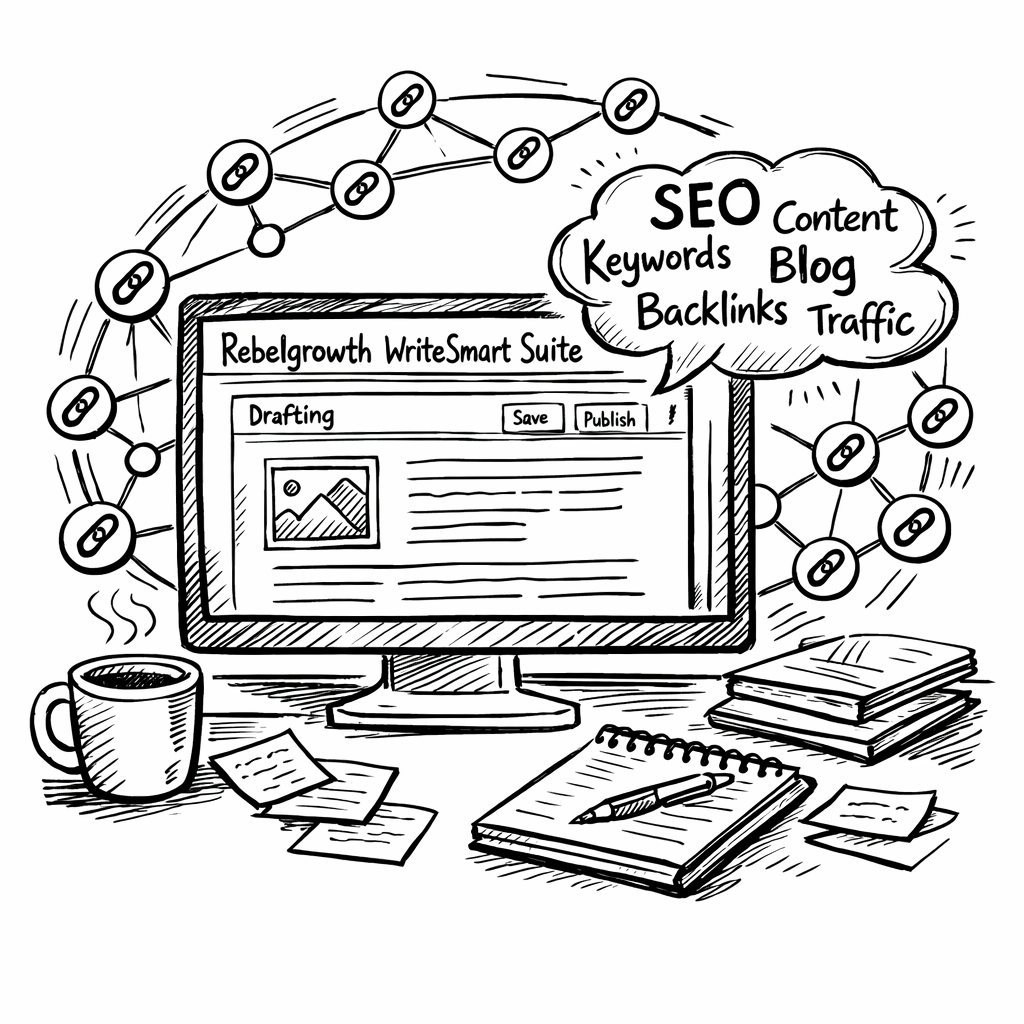
Gone are the days of bouncing between keyword tools, editors, and CMS dashboards. WriteSmart Suite combines niche analysis, topic ideation, draft generation, and SEO recommendations into a single flow. You’ll see suggested keywords, topic clusters, and meta hints all in one screen. That means fewer context switches and more momentum for your weekly publishing calendar.
This matters a lot for digital marketing managers at small to mid‑sized companies—you’re often sprinting to hit tight deadlines. With everything in one place, you can spot gaps earlier and keep publishing on schedule without sacrificing depth. Does it actually save time? Yes—you’ll find the bottlenecks disappear as you shift from planning to publishing in minutes rather than hours.
2) Human‑like drafts that stay on brand
The suite emphasizes natural language and brand voice. It learns your tone and adapts to your existing style so the drafts feel on‑brand from the first pass. No more wrestling with stilted sentences or awkward phrasing after you paste in the outline.
Teams report that initial drafts require only light polishing, not a full rewrite. That means content creators and bloggers can keep momentum without losing personal flair. If you’re trying to scale content without losing personality, this is a game changer. And yes, you’ll still inject data, anecdotes, and real customer context—the AI just handles the grunt work first.
3) Built‑in backlink network integration
Backlinks aren’t an afterthought with WriteSmart Suite. The system aligns your draft with a curated network of high‑quality sites, nudging you toward natural, contextual placements as you write. For an e‑commerce business, that means product guides and category pages can pick up editorial links without a separate outreach sprint.
This isn’t just theory: better‑planned linking from the start tends to yield smoother indexing and steadier organic growth. It helps SEO specialists focus on strategy rather than chasing after random links. In practice, you’ll see backlinks appearing in a way that reinforces content authority rather than feeling like bolt‑on additions.
4) Collaboration and governance that scale
Team workflows stay tidy because you can assign drafts, leave comments, and lock metadata rules right inside the platform. Writing a product guide for a new launch? You set the voice guidelines, SEO templates, and internal linking rules, then let the system enforce them across dozens of pieces.
That matters for digital marketing managers who juggle multiple campaigns and for SEO specialists who need consistency across a portfolio. The end result is fewer reworks, faster approvals, and a clearer publishing calendar you can actually rely on. So you get predictable quality without the last‑minute scrambles.
5) Quick starter plan to unlock value fast
Start by defining a primary keyword and a target audience. Let WriteSmart Suite generate a draft outline and a baseline meta plan in minutes. Tweak tone to fit your brand, review the draft, and publish. You’ll be surprised how often your first piece already feels publish‑ready after a light polish.
For teams, here’s a practical sequence: map a pillar topic to three related long‑tail angles, draft each piece with the AI pass, then use the built‑in backlink suggestions to seed relevant links during publishing. This approach cuts time to first live article and accelerates overall content velocity.
6) Real‑world impact you can measure
When you combine automated drafting with a strategic backlink network, you don’t just publish more—you publish smarter. Expect higher relevance signals, improved click‑through rates, and stronger domain authority over time. That’s the kind of durable win that content teams and e‑commerce stores crave.
Tool #4: CopyEngine Pro
If you’ve ever felt the grind of staring at a blank screen while the clock ticks, you know the frustration that comes with hunting for the right words and the right keywords.
Enter CopyEngine Pro – a piece of seo content writer software that tries to make that grind feel more like a coffee break.
1️⃣ Lightning‑fast draft generation
CopyEngine Pro kicks off the writing process by cranking out a first draft in under a minute. You feed it a primary keyword, and the engine pulls in related terms, then strings together a conversational outline that reads like a friend chatting over a latte.
For a digital marketing manager juggling three blog posts a week, that speed can shave off two to three hours of research and typing.
2️⃣ Real‑time SEO nudges
While you’re tweaking the draft, the tool flashes on‑page SEO suggestions right in the editor – meta‑title ideas, keyword density alerts, and internal‑link prompts.
It’s not a one‑size‑fits‑all checklist; the recommendations adapt to the intent you entered, so you’re not forced to stuff keywords you don’t need.
3️⃣ Brand‑voice fine‑tuning
CopyEngine Pro lets you set tone sliders – casual, professional, witty – and then it reshapes sentences to match. The result feels less “robot” and more “you,” which is a big win for content creators who want to keep their personality intact.
We’ve seen content creators who normally spend an hour polishing AI fluff cut that down to ten minutes once the voice presets were dialed in.
4️⃣ Integrated backlink suggestions
What makes this tool stand out for SEO specialists is the built‑in backlink cue list. After the draft is ready, it suggests a handful of contextual sites where a link would feel natural.
Think of it as a cheat sheet for outreach – you don’t have to hunt for link opportunities yourself, you just pick the ones that make sense.
5️⃣ Collaborative workflow
Teams can leave comments, assign tasks, and lock down metadata without leaving the platform. That means a content creator can hand the draft to an editor, who then adds a quick note about a missing statistic, all within the same screen.
For small‑to‑mid‑size companies, that eliminates the endless email thread that usually follows a draft.
6️⃣ Pricing that scales with you
CopyEngine Pro offers tiered plans based on the number of articles you generate per month. If you’re just testing the waters, the starter tier gives you 30 drafts a month – enough for a weekly blog schedule.
As your content calendar expands, you can upgrade without worrying about hidden fees.
7️⃣ How to get the most out of it
Start by defining a clear primary keyword that aligns with a business goal – for example, “sustainable packaging suppliers” if you sell eco‑friendly goods.
Plug that keyword into CopyEngine Pro, let the draft appear, then run through the three quick checkpoints: tone, SEO nudges, and backlink cues.
Finally, schedule the piece and let the platform push the suggested backlinks to your outreach list. You’ll notice the whole process taking less than half the time you used to spend.
In our experience, tools that combine drafting, SEO guidance, and link ideas in one place tend to deliver the highest ROI for teams that need speed without sacrificing quality.
So, does CopyEngine Pro feel like a good fit for your workflow? Give it a spin on a single piece of content and compare the time you saved to your usual process – the numbers usually speak for themselves.
Tool #5: TextMaster Elite
Ever wonder what it would feel like to have a whole team of native‑speaking writers at your fingertips, without the inbox overload of back‑and‑forth? That’s the promise behind TextMaster Elite, and for many digital marketing managers it’s a real time‑saver.
1️⃣ A truly global writing network
TextMaster boasts a vetted pool of writers covering more than 50 specialties – from e‑commerce product copy to technical SaaS guides. Because each writer is a native speaker, you avoid awkward phrasing that trips up both readers and search engines. Imagine you’re launching a new line of eco‑friendly kitchenware in Germany; you can order German‑language product descriptions that sound like they were written by a local marketer, not a machine.
2️⃣ Seamless multilingual ordering
The platform’s UI lets you spin up a single order and select up to 1,000 pieces of content in one go. You set the keywords, the tone sliders, and the desired word count, then watch the dashboard fill with drafts ready for review. For a content‑heavy e‑commerce site that needs weekly updates across five languages, this means no more juggling separate contracts or spreadsheets.
3️⃣ Built‑in SEO guidance
Each draft arrives with on‑page SEO cues baked in – meta‑title suggestions, keyword density alerts, and internal‑link prompts. That’s not a separate add‑on; it’s part of the writer’s brief. In practice, a mid‑size SaaS firm we spoke to cut its keyword‑optimization time in half because the writers were already aligning copy with the SEO brief before the first edit.
4️⃣ Real‑time collaboration & revisions
TextMaster’s platform includes a comment thread directly on the draft. Your SEO specialist can drop a note about swapping “fast‑growing startups” for “high‑growth SaaS companies,” and the writer can adjust on the spot. The back‑and‑forth feels more like a chat than an email chain, which keeps momentum high and reduces the risk of missed revisions.
5️⃣ Transparent pricing that scales
Simple per‑word rates start at $0.066 for basic product descriptions and rise for more specialized content. Because you can order in bulk, you often qualify for volume discounts that bring the cost down to a fraction of hiring an in‑house multilingual team.
So, does TextMaster Elite feel like a good fit for your workflow? If you’re juggling multilingual product pages, blog posts, and buyer guides, the answer is probably yes. The combination of native expertise, SEO‑ready drafts, and a single‑pane ordering experience can shave days off your content calendar.
Want to see a concrete example? A European e‑commerce giant, Pixmania, used TextMaster to produce hundreds of product descriptions in six languages. By tagging each brief with the exact keyword repetitions they needed, they kept their on‑page SEO tight while still publishing a new batch of items every week. The result? Consistent organic traffic growth without a permanent multilingual writing staff.
In our experience, tools that blend human expertise with automated SEO prompts tend to outperform pure‑AI writers when you need nuanced, market‑specific copy. That’s why many of our customers pair TextMaster with an AI‑driven outline generator – they get the best of both worlds: a data‑backed structure and a native‑speaker’s polish.
If you’re still on the fence, try a single article. Set a primary keyword, choose the language, and let the platform deliver a draft within minutes. Then compare the time you saved against your usual process – the numbers usually do the talking.
For a deeper dive into how to choose the right AI‑assisted SEO software for agencies, check out our guide on Choosing the Best AI SEO Software for Agencies. It walks through criteria that apply just as well to outsourcing platforms like TextMaster.
Finally, if you want to see the official feature list and pricing details, head straight to TextMaster’s SEO content services. Their four‑step process – brief, write, review, deliver – is laid out clearly, so you know exactly what to expect before you place an order.
FAQ
What exactly is seo content writer software and how does it differ from a regular word processor?
Seo content writer software is a purpose‑built platform that blends keyword research, outline generation, on‑page SEO checks, and sometimes backlink suggestions into the drafting workflow. A regular word processor only lets you type – you’d still have to copy‑paste keyword data, manually craft meta titles, and chase links yourself. The software automates those steps, so you spend more time polishing tone and less time hunting data.
Can I trust an AI‑driven tool to produce content that’s both SEO‑friendly and human‑like?
Yes, if you pick a solution that includes a humanization layer. The best tools take raw AI output and re‑phrase sentences, vary length, and inject natural pauses. That’s why many digital marketing managers we work with pair an AI outline generator with a native‑speaker review step. The result feels conversational while still hitting the keyword density and structure Google expects.
How do I choose the right seo content writer software for a small e‑commerce store?
Start by listing the tasks you struggle with most – keyword clustering, product‑page drafting, or backlink outreach. Look for a platform that bundles those features, offers a simple pricing model, and integrates with your CMS. A good rule of thumb is to test a single article: set a primary keyword, run the tool, then compare the draft’s completeness and time saved against your usual process. If the draft needs only a quick polish, you’ve found a match.
Is it safe to let software generate meta titles and descriptions automatically?
Automation can handle the heavy lifting, but you should still give them a once‑over. Most tools suggest titles that respect length limits and include the target keyword, but you might want to tweak the phrasing to match brand voice. A quick review ensures you avoid duplicate tags across pages and keeps the copy aligned with your overall messaging strategy.
Do seo content writer tools help with backlink building, or is that a separate process?
Some platforms embed backlink suggestions directly into the draft, pointing you to high‑authority sites where a contextual link would fit naturally. Others leave link building to a separate outreach tool. If you’re a SEO specialist focused on authority, look for a solution that surfaces relevant backlink opportunities as you write – it saves you from hunting for link prospects after the article is live.
How much time can I realistically expect to save using seo content writer software?
In our experience, teams report cutting the research‑to‑draft phase by 50‑70 %. For a typical blog post that used to take three hours – keyword research, outline, first draft, SEO tweaks – the software can deliver a solid draft in under an hour. The remaining time is spent on brand‑specific tweaks, data insertion, and final approval, which means you can publish more pieces without hiring extra writers.
What are the common pitfalls to avoid when implementing seo content writer software?
Don’t treat the AI output as a finished product. Skipping the human review step often leads to generic phrasing or missed brand nuances. Also, avoid over‑optimizing; stuffing the same keyword in every sentence can trigger search engine penalties. Finally, keep an eye on content freshness – update older drafts with new data or trends, because the tool’s suggestions are only as current as the data it was trained on.
Conclusion
We’ve walked through how seo content writer software can shave hours off research, churn out human‑like drafts, and even suggest backlinks while you sip your coffee. The biggest win? You get back the mental bandwidth to focus on strategy, outreach, and those little creative touches that only you can provide.
So, what’s the next move? First, pick a tool that bundles keyword clustering, AI drafting, and on‑page SEO nudges – that way you avoid juggling three separate apps. Second, set up a simple three‑step routine: define a primary keyword tied to a business goal, let the software generate an outline and first draft, then run a quick human review to inject brand voice and add any missing data points.
Finally, remember that great content still needs real‑world signals. Capture user insights from product demos, support tickets, or even quick voice notes, and feed that context back into your writer. That loop of feedback and refinement is what turns a fast draft into a ranking asset.
Ready for a deeper dive into the automation workflow? Check out our guide on scaling SEO content creation for step‑by‑step tactics.
And if you want to enrich your articles with authentic user stories, you might also explore BubblyAgent’s AI voice platform to capture feedback that can be turned into data‑driven copy.
Bonus Tips: Maximizing Your SEO Content Writer Software
Start with a clean brief
Before you even fire up the platform, spend a minute writing a clear brief. Jot down the business goal, the target persona, and the primary keyword you want to rank for. When the brief is crystal‑clear, the software can generate outlines that actually match your intent – no wasted drafts.
Does that sound like extra work? In practice it shaves hours later because you won’t be re‑writing the AI’s output to fit a vague direction.
Leverage keyword clustering
Good seo content writer software will group related terms for you. Take those clusters and sprinkle them naturally throughout headings, subheads, and bullet points. It’s a quick way to boost topical relevance without keyword stuffing.
Think about it this way: instead of hunting for synonyms yourself, let the tool surface the variations you might have missed.
Set up a three‑step review loop
1️⃣ Let the AI draft the first version.
2️⃣ Do a rapid human pass – tighten the voice, add brand‑specific data, and double‑check any factual claims.
3️⃣ Run the built‑in SEO checker (or a separate audit tool) to catch missing meta tags or internal‑link opportunities.
That loop feels almost mechanical, but it guarantees the final piece feels human while still being fully optimized.
Integrate feedback from real users
Capture quick voice notes from sales calls, support tickets, or even a Slack channel. Feed those nuggets back into the platform’s “context” field. The next draft will echo the language your audience actually uses – a subtle but powerful ranking signal.
Ever notice how a single phrase from a customer can make a paragraph click for readers? That’s the magic of real‑world context.
Automate backlink prompts
If your tool suggests backlink opportunities, treat those suggestions like a to‑do list. Prioritize high‑authority sites, personalize your outreach, and track placements in a simple spreadsheet. Over time you’ll see a steady lift in domain authority without a separate outreach sprint.
And finally, remember that the best results come from treating the software as a partner, not a replacement. In our experience, the teams that combine AI speed with a human “quality gate” end up publishing more content, faster, without sacrificing voice or accuracy.