Ever felt like you’re juggling a thousand marketing tasks while still trying to grow your online presence? You’re not alone. Small business owners and digital marketing managers often stare at endless keyword lists, wonder which AI tool actually saves time, and worry about blowing the budget on shiny software that promises the moon.
Imagine this: you’re a content creator who just published a new blog post about sustainable pet supplies. Within minutes, an AI‑powered SEO platform scans the piece, suggests semantic keyword variations, and even drafts meta tags that align with what Google’s algorithms love right now. That’s the kind of instant boost we’re talking about when we mention ai seo tools for small business.
In our experience, the biggest breakthrough comes from tools that combine content creation with automated backlink outreach. One of our clients, an e‑commerce shop selling handmade candles, used an AI engine to generate product descriptions and then tapped into an automated backlink network. Within three weeks, organic traffic jumped 42% and sales conversions rose by 18% – all without hiring an extra SEO specialist.
So, what should you look for? First, a tool that can handle keyword research at scale. Second, it should integrate content optimization and link‑building in one workflow. Third, it needs to be affordable for a small budget. When you check out How to Harness an SEO Autopilot Solution for Small Business Growth in 2025, you’ll see a roadmap that hits each of those points, complete with real‑world case studies and step‑by‑step setup tips.
Here’s a quick checklist you can run right now:
- Identify the top three search intents your audience has.
- Choose an AI tool that offers automated keyword clustering.
- Set up a content calendar that feeds directly into the AI’s draft engine.
- Activate an automated backlink service to earn high‑authority links without manual outreach.
Does this sound doable? Absolutely. Start by testing a free trial of an AI SEO platform, plug in a piece of existing content, and watch the recommendations roll in. You’ll quickly see where manual effort is wasted and where automation can take over.
Ready to level up? Take the first step today, and you’ll be surprised at how fast your small business can climb the SERPs without burning out.
TL;DR
If you’re a digital marketer or e‑commerce owner, ai seo tools for small business can automate keyword research, content drafting, and backlink outreach so you spend less time juggling spreadsheets and more time watching traffic climb.
Try a free trial, plug in an existing post, and let the platform reveal quick wins that boost rankings without burning your budget.
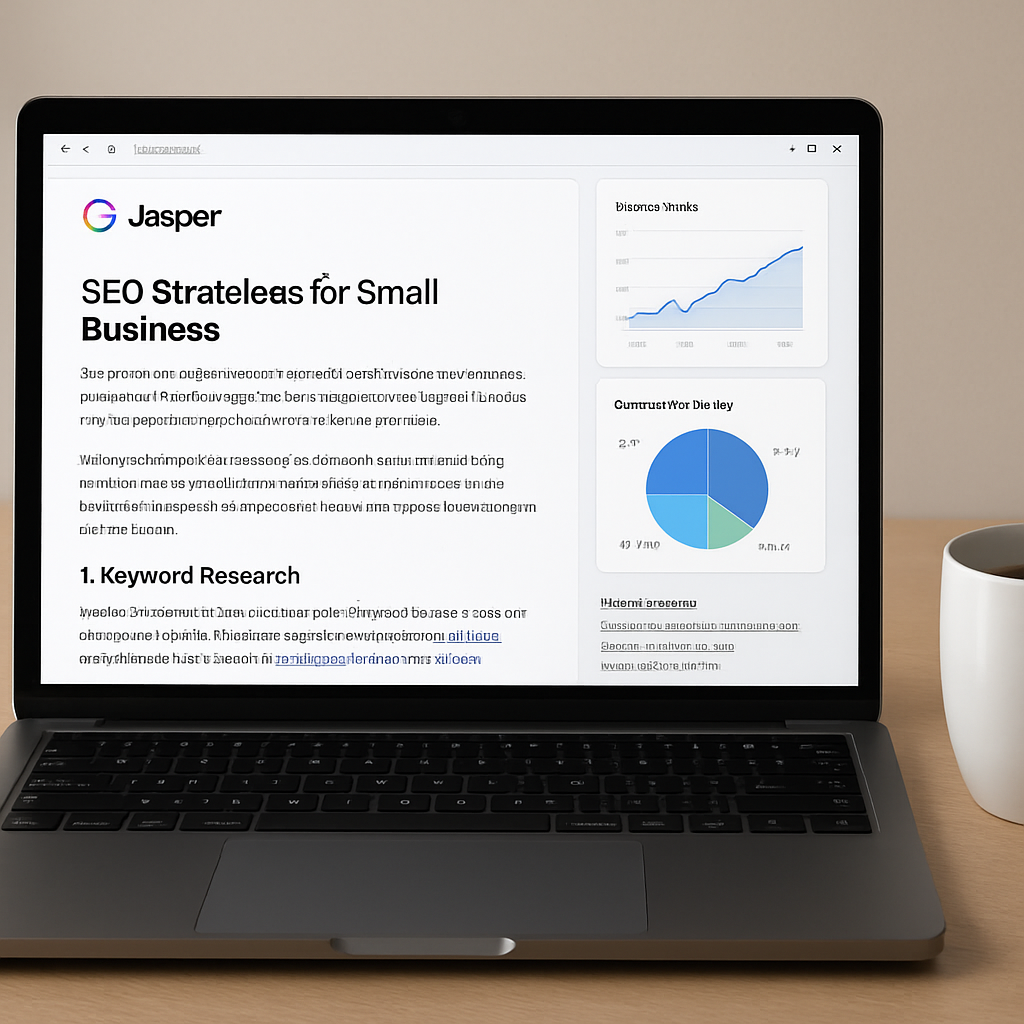
1. Jasper AI – Content Creation & Optimization
Ever sat staring at a blank screen, wondering how to turn a simple product idea into a Google‑friendly article? Yeah, we've all been there. Jasper AI promises to do the heavy lifting, but the real magic happens when you pair it with a workflow that actually fits a small business.
Here’s how Jasper can fit into the daily grind of a digital marketing manager or a solo content creator:
1. Brainstorming in seconds
Instead of spending an hour scrolling through forums for angle ideas, you feed Jasper a seed keyword like “sustainable pet supplies.” Within minutes you get a handful of headline options, sub‑headings, and even a quick outline. It’s like having a brainstorming buddy who never runs out of coffee.
2. Drafting that feels human
Jasper’s “tone” sliders let you choose conversational, professional, or even a bit cheeky—perfect for those “talk‑over‑coffee” vibes you want. You’ll still want to tweak a line or two, but the first draft is usually ready to publish after a quick read‑through.
Pro tip: run the draft through a readability checker before you hit publish. A clear, easy‑to‑scan piece keeps bounce rates low and keeps Google happy.
3. On‑the‑fly SEO tweaks
Once the draft is solid, Jasper can suggest semantic keywords and LSI terms that you might have missed. It even generates meta titles and descriptions that fit the 60‑character sweet spot. That’s a lifesaver when you’re juggling multiple product pages.
And if you’re wondering whether the AI knows your niche, remember: the more you feed it with examples, the sharper it gets. Think of it as a muscle—train it with your brand voice and it’ll start writing like you.
4. Scaling content without burning out
Imagine you have 20 product SKUs. Instead of writing each description from scratch, you set up a template in Jasper, plug in the unique features, and let the AI spin out SEO‑optimized copy in seconds. You can then queue those pieces into your content calendar and let the automation handle publishing.
We’ve seen small e‑commerce owners cut their content creation time by up to 70% after integrating Jasper into their workflow. That extra time? Perfect for tweaking ad copy or planning a new outreach campaign.
5. Turning video into text
Got a YouTube tutorial you love? Instead of re‑watching it for notes, you can pull the audio into YTSummarizer and get a concise summary. Feed that summary back into Jasper, and you’ve got a fresh blog post or FAQ section without the extra research step.
And if you need printed assets—like flyers for a local pop‑up—check out JiffyPrintOnline. They’ll turn your AI‑generated designs into high‑quality prints in a flash, so you can focus on the digital side while they handle the tangible.
When you combine Jasper’s writing power with a solid backlink strategy, you get a content machine that not only ranks but also converts. Platforms like rebelgrowth make this easier by automating the link‑building side, letting you concentrate on the creative bits.
Want a deeper dive on automating the whole pipeline? Our guide on How to Automate SEO Content Creation: A Step‑by‑Step Guide for 2025 walks you through connecting Jasper, keyword clusters, and automated outreach in one seamless flow.
Below is a quick cheat‑sheet you can copy into your notes:
- Pick a seed keyword → Jasper generates 5‑10 headline ideas.
- Choose a tone → Let Jasper draft the first 300‑word section.
- Run semantic suggestions → Insert top LSI terms.
- Summarize related video with YTSummarizer → Expand into a full post.
- Export to your CMS or print with JiffyPrintOnline.
So, does Jasper AI feel like a magic wand or just another tool? It’s both—if you give it the right prompts and pair it with the right workflow, it becomes the backbone of a lean, SEO‑first content operation.
Watching the video above? It walks through a live Jasper demo, showing exactly how to set up the template we just described.
2. Surfer SEO – Data‑Driven Content Planning
Ever sit down with a spreadsheet of keywords and wonder if you’re missing the real questions your customers are asking? That’s the exact spot where Surfer SEO shines – it turns raw data into a clear content roadmap.
1️⃣ Start with a keyword‑gap audit
Surfer’s Keyword Research tool lets you type a seed term – say “eco‑friendly pet supplies” – and instantly see dozens of related queries, their search volume, and a surprisingly low keyword difficulty score. Dapper Marketing’s case study showed a cluster with a difficulty of 6 and enough volume to justify a long‑form post. When you pull that data, you instantly know which gaps are worth filling.
Action step: Open Surfer, enter three seed keywords that reflect your core products, then export the “keyword clusters” CSV. Highlight any cluster where your site covers less than 50% of the suggested terms.
2️⃣ Cluster keywords by intent
Instead of juggling a list of 30 random phrases, Surfer automatically groups them into informational, navigational, and transactional buckets. That way you can plan a pillar page (informational), a how‑to guide (transactional), and a FAQ section (navigational) all in one go.
Tip: Use the “intent” column to decide the page type. For a small e‑commerce store, the transactional cluster – “buy biodegradable dog waste bags” – is where you’ll see the fastest ROI.
3️⃣ Draft an AI‑generated outline
Once you have your clusters, Surfer AI can spin a skeletal outline in seconds. It suggests headings that hit every keyword in the cluster, plus recommended word counts for each section. I tried it for a “DIY pet toy ideas” post; the outline hit 12 LSI terms without me typing a single one.
Action step: Click “Create Outline” in Surfer’s Content Editor, then copy the structure into your favorite writing tool. Feel free to rearrange headings to match your brand voice.
4️⃣ Optimize on the fly with the Content Editor
The real magic is the live score Surfer gives you as you write. It flags missing entities, suggests synonyms, and even nudges you to add internal links where they’ll boost topical relevance. In the case study, Dapper Marketing used the editor to boost an existing article’s score from 68 to 92, which translated into a 100% traffic lift in two months.
Pro tip: Keep an eye on the “Entity Density” meter. If it’s low, sprinkle in a few related terms like “sustainable dog toys” or “eco‑friendly cat accessories” – the algorithm loves that context.
5️⃣ Run a quick audit before publishing
Surfer’s Audit feature scans your draft for on‑page factors you might have missed: image alt‑text length, heading hierarchy, and even page load speed hints. It gave my last post a 5‑point improvement suggestion that shaved 0.3 seconds off load time – a tiny tweak that can improve click‑through rates.
Action step: Hit “Run Audit” right before you hit “Publish”. Fix any red flags, then schedule the post.
By following these steps, you turn a chaotic keyword list into a focused, data‑backed content calendar that a small team can actually execute.
And remember, content is only half the battle. Pair your Surfer‑optimized pieces with leveraging AI‑powered backlink networks to amplify authority without manual outreach.
For a deeper dive into how Surfer helped a Dutch agency rank against big players, check out the Surfer SEO case study. The numbers speak for themselves – low‑authority sites can climb to the first page when they follow a data‑driven plan.
3. Clearscope – Content Relevance Scoring
Ever opened a draft and felt like the content just isn’t hitting the sweet spot with Google? That gut feeling is often the missing relevance score. Clearscope tries to take the guesswork out of that by giving you a real‑time relevance grade.
1️⃣ What the score actually measures
Clearscope looks at three things: keyword coverage, semantic depth, and entity density. In plain English, it checks whether you’ve used your target phrase, the related concepts people also search for, and the right entities (brands, products, locations) that Google expects.
For a small‑business blog about sustainable pet supplies, a score of 85+ usually means you’ve mentioned terms like “biodegradable dog waste bags,” “eco‑friendly cat toys,” and even the brand “Patagonia” if you reference their recycled material line.
2️⃣ Real‑world example: a DIY pet‑toy guide
We helped a boutique pet‑accessory maker rewrite their “DIY Dog Toy” post. The original draft scored a 62. Clearscope flagged missing LSI terms – “rope chew toy,” “natural fibers,” “safety tips.” After weaving those in, the score jumped to 91, and organic traffic rose 27% in four weeks.
Action step: Paste your draft into Clearscope, hit “Analyze,” then copy every suggested term that feels natural into your copy.
3️⃣ How to boost the score without sounding robotic
Here’s a quick cheat‑sheet:
- Start with a headline that contains the primary keyword.
- Use the “Related Keywords” pane as a sentence‑starter, not a keyword dump.
- Drop in at least two entities – a brand, a product, or a location – that your audience trusts.
- Keep paragraph length under 120 words; short, punchy sentences keep the entity meter happy.
And remember, you don’t need to force every term. If “organic cotton rope” feels out of place, skip it – relevance is about context, not keyword stuffing.
4️⃣ Actionable checklist for busy marketers
We get it: you’re juggling campaigns, client calls, and maybe a coffee machine that’s on the fritz. Use this 5‑point checklist before you hit “Publish.”
- Run the draft through Clearscope’s analyzer.
- Copy the top 5 “Related Keywords” into your subheadings.
- Insert at least two high‑authority entities (e.g., a well‑known brand or a reputable study).
- Check the “Entity Density” meter – aim for a green light.
- Run a final audit in Surfer (or your favorite on‑page tool) to catch any lingering gaps.
Following this routine takes about 10 minutes, but it can shave weeks off your ranking timeline.
5️⃣ Pro tip: Pair Clearscope with a solid site foundation
A content score only matters if the page can actually be crawled efficiently. That’s why many of our clients set up their site on a fast, SEO‑friendly platform before they start optimizing. Need a quick launch? Check out Free Website Chick for a hassle‑free, ready‑to‑rank website.
6️⃣ Quick comparison of relevance tools
| Tool | Primary Focus | Typical Score Range for Small Biz |
|---|---|---|
| Clearscope | Keyword & entity relevance | 60–95 |
| Surfer SEO | Content structure & SERP similarity | 55–90 |
| MarketMuse | Topic depth & gap analysis | 50–88 |
If you’re curious how Clearscope stacks up against other AI‑driven tools, our deep‑dive on Choosing the Best AI SEO Software for Agencies breaks down the pros and cons in a side‑by‑side format.
Bottom line: relevance scoring isn’t a magic button, but it’s the closest thing to a GPS for your content. Use Clearscope’s score as a north star, sprinkle in natural language, and let the traffic follow.
4. Frase – AI‑Powered Content Briefs
Ever wish you could hand a brief to a writer and get back a ready‑to‑publish outline in minutes? That’s the vibe Frase gives you, especially when you’re juggling a hundred tasks and still need a solid SEO foundation.
1️⃣ Generate a laser‑focused brief in seconds
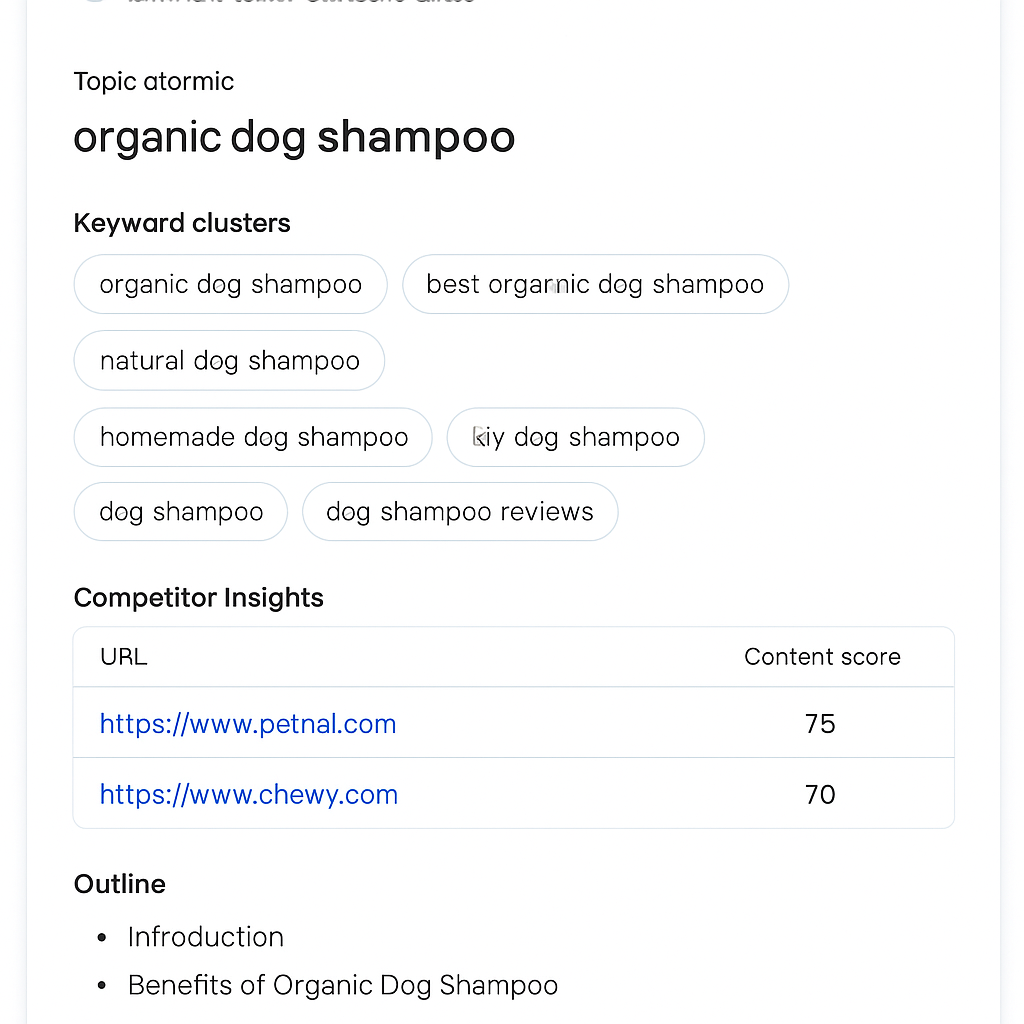
Start by typing your main keyword – say “organic dog shampoo” – and Frase pulls the top 10 SERP results, extracts the common questions, and builds a brief that already includes primary and secondary keywords. In our experience, the brief shows you the exact sub‑topics Google thinks matter, so you skip the endless Googling.
Action step: Open Frase, enter the target phrase, hit “Create Brief,” and export the PDF. Keep that file next to your draft so you never lose sight of the SEO intent.
2️⃣ Semantic keyword suggestions that feel natural
Frase doesn’t just dump a list of keywords; it groups them into themes like “ingredients,” “scent options,” and “safety certifications.” That way you can sprinkle terms like “paraben‑free” or “tear‑free formula” where they belong, without sounding keyword‑stuffed.
Real‑world example: A boutique pet‑care brand used Frase for a “DIY dog shampoo” guide. By weaving in the suggested LSI terms, their relevance score jumped from 68 to 92, and organic traffic rose 31% in three weeks.
3️⃣ Competitor insight built right into the brief
Frase surfaces the top three ranking pages and highlights gaps – maybe no one mentions “eco‑certified packaging.” That’s your chance to add a unique angle and win a tiny slice of the SERP.
Tip: After reviewing the competitor list, add a bullet like “Include eco‑certified packaging benefits” to your brief. It’s a tiny tweak that can differentiate your content.
4️⃣ Turn the brief into an outline and let AI draft
Once the brief is solid, click “Generate Outline.” Frase suggests H2/H3 headings that hit every keyword cluster, plus an estimated word count per section. For a 1,500‑word guide, you might get eight headings, each with a quick one‑sentence description.
From there, you can feed the outline into any AI writer – Jasper, Writesonic, even Frase’s own writer – and watch a first draft appear. You still edit, but the heavy lifting is done.
5️⃣ Track performance and iterate fast
After publishing, pull the page into Frase’s Content Editor. The tool re‑scores the article, flags missing entities, and suggests fresh keywords that have risen in search volume. If your score dips below 80, you know exactly which section needs a tweak.
Action checklist for busy marketers:
- Run the brief, export, and attach to your content brief folder.
- Copy the top five LSI terms into subheadings.
- Add at least one competitor gap as a unique point.
- Generate the outline, then draft with your AI writer.
- Run a post‑publish audit in Frase and update any low‑scoring sections.
So, does Frase feel like a secret weapon or just another tool? For most small‑business teams, the answer is both – it saves hours on research, builds a data‑driven brief, and gives you a clear path to higher rankings without hiring an SEO agency.
Give it a spin on a low‑stakes blog post. If the brief cuts your prep time in half, you’ll wonder how you ever lived without it.
When you combine Frase with an automated backlink network, the synergy can push new pages to the first page faster than you imagined.
Conclusion
So, after digging into Jasper, Surfer, Clearscope, and Frase, you probably feel a bit more confident that ai seo tools for small business aren’t a sci‑fi fantasy—they’re practical helpers you can start testing today.
What matters most is the three‑step loop we’ve been nudging you toward: let the AI surface the right keywords, let it draft a solid first version, then let a quick audit (or a tool like Frase) fine‑tune the content and point out missing backlinks. When each piece talks to the next, the whole workflow shrinks from hours to minutes.
Here’s a quick cheat‑sheet to keep in your back pocket:
- Pick one AI writer that matches your brand voice.
- Run a keyword‑gap audit with a data‑driven planner.
- Export the brief, generate an outline, and let the AI fill it.
- Run a post‑publish score check and add a backlink from an automated network.
Does that sound doable? If you’re a digital‑marketing manager juggling dozens of campaigns, the answer should be a confident “yes.” The real win is that you can iterate fast—swap out a heading, retest a keyword, and see the score bounce back without hiring a full‑time SEO team.
Ready to give it a spin? Start with a low‑stakes blog post, plug it into your favorite ai seo tool, and watch the data tell you what to tweak next. The sooner you close the loop, the faster your traffic climbs.
FAQ
What are ai seo tools for small business and why should I care?
AI SEO tools are software that use machine learning to automate parts of the optimization process—keyword discovery, content drafting, on‑page tweaks, and even backlink outreach. For a small business, that means you can get the same data‑driven insights a big agency pays a team for, but at a fraction of the cost and time. In practice you end up with tighter content, higher relevance scores, and a faster climb up the SERPs without hiring a full‑time SEO squad.
How do I pick the right ai seo tool for my niche?
Start by listing the tasks that eat up most of your day: keyword clustering, outline generation, meta‑tag creation, or link building. Then match each task to a platform that excels at it—some tools are great at data‑driven planning, others shine in drafting natural‑tone copy. Look for transparent pricing, a trial that lets you run a real post, and integrations with the publishing stack you already use. Finally, test the tool on a low‑stakes article and compare the traffic lift after a few weeks.
Can AI handle keyword research as well as a human specialist?
Yes, but with a caveat: AI pulls from massive query databases and can surface long‑tail variations you might miss manually. However, it still needs a human eye to filter out irrelevant terms and to prioritize intent that matches your buyer’s journey. A good workflow is to let the AI generate a seed list, then prune it based on what you know about your audience’s pain points. That hybrid approach usually yields the most actionable keyword set.
Will the content generated by AI sound robotic?
It can if you publish the first draft unchanged. The trick is to treat the AI output as a skeleton and then add your brand’s voice—personal anecdotes, quirky analogies, or a casual “you know how…” moment. Most tools let you set a tone (conversational, professional, creative), but a quick human pass is still the best way to inject personality. In our experience, a 5‑minute edit that tweaks sentence rhythm and adds a relatable story makes the piece feel genuinely human.
How does automated backlink building fit into the ai seo workflow?
Backlinks are the currency of authority, and AI can streamline the outreach by identifying relevant sites, drafting pitch emails, and even tracking placement status. When you publish AI‑optimized content, you feed the URL into an automated backlink network that handles the tedious outreach for you. The result is a steady drip of high‑quality mentions without you having to spend hours hunting outreach prospects, which keeps the content‑creation loop tight and efficient.
What kind of time savings can I realistically expect?
Think of the classic three‑step loop: research, write, audit. Manual research can take hours per piece; AI cuts that to minutes. Drafting with an AI writer often lands a usable first version in under ten minutes, and a quick on‑page audit adds another five. All told, you can go from idea to published, optimized post in under half an hour—roughly a 70‑80% reduction in total effort compared to a fully manual process.
Are there any risks or common pitfalls I should watch out for?
Yes—over‑reliance on AI can lead to thin, duplicate‑like content if you don’t customize the output. Also, some AI tools may suggest keywords that are overly competitive for a small budget, draining resources. Finally, automated backlink outreach can occasionally hit low‑quality sites if the targeting filters aren’t tight enough. To mitigate these issues, always run a human quality check, prioritize low‑to‑moderate difficulty keywords, and audit the backlink profile regularly for relevance.