It’s no secret that keeping up with SEO and content marketing feels like chasing a moving target. You’ve probably heard about automated content engines and backlink networks—they promise to flip the script on tedious, manual SEO work. But then comes the big question: What’s the real deal with automated content engine and backlink network pricing?
Think about it this way: you want a system that cranks out fresh, SEO-friendly articles and also builds a strong backlink profile without eating up all your time or budget. Sounds perfect, right? But the price tags can vary wildly, leaving you wondering what’s actually worth it and what’s just hype.
Here’s the thing—pricing isn’t just a number. It’s about what you get, how much control you have, and whether it fits your unique growth goals. Some platforms offer simple packages that cover only basic content generation. Others bundle in comprehensive backlink networking that builds domain authority through quality links. And then there’s the tech behind it all—AI-driven automation minimizes manual effort, but might come at a premium if you want tailored strategies.
So, how do you decide where to invest? It starts with clear expectations and understanding the nuances behind fees. Are you paying for volume or quality? Monthly subscriptions or pay-as-you-go? And crucially, how easy is it to track ROI?
If you’re curious about untangling this pricing puzzle, you’re in the right place. We’ll explore what typical pricing structures look like, what features to scrutinize, and how smart investment in automation can pay off. Plus, you’ll find practical tips to avoid common pitfalls and get more bang for your buck.
Ready to save time and grow your traffic without the headache? Let’s dive in and make sense of automated content engine and backlink network pricing together. And if you’re already leaning toward automation, our guide on how to automate SEO content creation for scalable organic growth might be just the thing to kickstart your journey.
TL;DR
Figuring out automated content engine and backlink network pricing can feel like decoding a secret language. It’s really about balancing what you want—quality links, smart content—with what you’re willing to pay.
Think of it as investing in a tool that works quietly behind the scenes, growing your traffic without your daily hassle. Choosing the right pricing model means knowing whether you value steady results or quick wins—and spotting hidden fees before they surprise you.
What is an Automated Content Engine and How Does Pricing Work?
Ever find yourself tangled in the never-ending cycle of thinking up fresh content ideas, writing articles, and hunting down quality backlinks? Yeah, me too. It feels like a full-time job that eats away at your time and energy. That’s where an automated content engine steps in — kind of like having a silent partner who quietly churns out SEO-optimized articles and helps build backlinks while you focus on other stuff.
So, what exactly is an automated content engine? At its core, it’s a software system that uses data about your industry, competitors, and keywords to automatically generate tailored content. But don’t imagine some generic robot spewing out fluff. These engines analyze what’s working in your niche and craft articles designed to attract organic traffic and build your site’s authority.
Think of it like a gardener who knows exactly when to plant, water, and prune to make your garden flourish. Meanwhile, the backlink network works alongside it — creating quality links by placing your content across credible sites, helping search engines notice and rank your pages higher.
But how does the pricing for all this magic actually work? This is where things can get a little tricky and sometimes frustrating.
Breaking Down the Costs: What Are You Really Paying For?
Usually, pricing models for automated content engines and backlink networks include a few core elements:
- Content Volume: Most providers charge based on how many articles you want generated monthly. More content equals higher cost.
- Quality Level: Not all content engines are made equal. Some offer basic drafts, others produce polished, ready-to-publish articles that need minimal tweaks.
- Backlink Quality: The network’s strength matters a lot. High-quality, relevant backlinks cost more because they have a bigger SEO impact.
- Customization and Strategy: Some packages include tailored keyword strategies, competitor analysis, or integration with your existing SEO tools — these add to the price.
Sounds simple, right? But watch out — many providers sneak in setup fees, minimum commitments, or charge extra for speedy delivery. It’s like booking a flight that looks cheap until you add luggage and seat selection.
What Does Pricing Look Like in Practice?
For smaller businesses dipping their toes in automation, packages might range from a few hundred to a couple thousand dollars per month. That usually covers a set number of content pieces and backlinks with standard quality.
On the flip side, larger enterprises or highly competitive niches often see pricing leaps. Why? Because they require deeper content research, more backlink diversity, and ongoing adjustments to keep pace with search engine algorithms.
Curious about real-world pricing examples? You can find useful breakdowns of automated content creation tactics and costs on sites like Leadpages’ blog about automated content creation. They give some eye-opening insights into what these tools actually deliver.
But here’s the kicker: cheaper isn’t always better. Low-cost engines might pump out generic articles that barely move your needle. And poor-quality backlinks can actually hurt your SEO rather than help. So, understanding what you’re getting—and what you’re not—is crucial.
How to Decide What Pricing Model Works for You?
Start by figuring out your priorities. Want fast volume or long-term authority? Are you hands-on or prefer a mostly self-running system? Knowing your comfort level guides which pricing plans to consider.
Also, be sure to ask your provider exactly how they source backlinks and how original their content really is. Transparent operations mean you won’t get blindsided by penalties down the line.
If you want to peek under the hood, digital marketing managers often rely on resources that explain the pros and cons of different content engines and their pricing. Tools like Engines365’s content engine overview provide a solid understanding of what to expect.
Remember, this isn’t just a transaction — it’s an ongoing relationship with your content and SEO strategy. Prices matter, but fit and trust matter more.
Okay, so what next? If you’re leaning towards trying an automated content engine, start small. Test a few articles. See how the backlinks impact your rankings. Then decide if scaling up makes sense given your budget.
And don’t forget: the best automated content engine doesn’t replace your voice—it amplifies it. That’s the sweet spot where pricing feels less like a cost and more like an investment.

Understanding Backlink Networks and Their Pricing Structures
Ever feel like backlink networks are some kind of secret society — shrouded in mystery, with pricing that seems all over the place? You’re not alone. Getting a grip on what backlink networks are and how their pricing works can feel like decoding a foreign language without a dictionary.
But here’s the thing about backlinks: they’re the digital version of word-of-mouth recommendations. The more trustworthy and relevant sites linking to yours, the more search engines nod approvingly. The challenge? Not all backlinks carry the same weight, and the price you pay can reflect that difference.
What Are Backlink Networks, Exactly?
In simple terms, backlink networks are organized groups of websites that sell links pointing to your site. It’s like tapping into a web of voices cheering your content on to search engines. Some networks own several sites; others partner with bloggers or niche publishers who agree to host your link.
Sounds straightforward, right? But it’s a bit of a jungle out there. Some networks prioritize quality—think sites with genuine traffic and relevant content—while others rely on volume without much focus on where links actually come from.
Pricing Structures: Why Do They Vary So Much?
One of the first headaches you might notice is how wildly backlink pricing can differ. Some networks charge $10 per link, others $100 or more. So, what’s behind this?
It mostly boils down to three factors:
- Domain quality: Links from established, authoritative sites cost more because they're harder to get and more valuable.
- Placement and context: Links embedded naturally within a blog post or article usually fetch a higher price than those in a sidebar or footer.
- Network transparency: If a network is upfront about where links come from and how content is created, you’re often paying a premium for trust and reduced risk of penalties.
Also, some backlink networks offer tiered pricing plans or bulk discounts, which can make things more affordable but tricky to compare apples to apples.
Here’s an insider tip: always ask your provider how they source backlinks. Are these guest posts written by real people? Or is it spun content stuffed with keywords? Being in the know helps you dodge penalties that can tank your rankings later.
Think of Pricing as More Than Just a Dollar Amount
It’s tempting to go for the cheapest deal and stack as many links as possible. But quantity without quality is like tossing business cards into a bonfire—wasteful and pointless.
Many marketing pros agree that paying a bit more to secure backlinks from relevant, reputable sites pays off long term. It’s less about buying links and more about investing in your site’s reputation.
Here’s a quick checklist to evaluate a backlink network’s pricing structure:
- Are prices reflective of site authority and traffic metrics?
- How is content created—automated or human-generated?
- Does the network provide transparency on link placement and site themes?
- Are there guarantees or protections against search engine penalties?
These questions might feel tedious, but trust me, they save weeks of headaches.
How Does This Tie Into Automated Content Engines?
You might be wondering—how does automated content engine and backlink network pricing connect? Well, they’re two sides of the same coin when it comes to scaling your SEO without burning out.
Automated content engines generate SEO-optimized articles at scale, while backlink networks place those articles (or at least links within them) on relevant sites. Pricing structures for both need to sync up to make sure your budget stretches while maintaining quality.
To really unpack how this works in action, check out this video walkthrough that dives deeper into backlink sourcing and pricing insight:
Still feeling a bit uncertain? That’s normal. This stuff takes a little time and testing to nail.
For a thorough look at backlink pricing norms and best practices, Moz’s guide on backlinks is a solid resource. It helps you separate hype from reality.
Also worth a peek: a detailed discussion on backlink value metrics and pricing that breaks down what affects a link's true worth in SEO terms.
Wrapping up, remember: backlink networks aren’t just vendors—they’re partners in your site’s growth. So treat their pricing not as a cost to slash but as an investment to manage wisely.
That means starting smart, asking tough questions, and keeping eyes open for genuine quality—not just cheap bulk links. If you do that, your automated content engine and backlink strategy will actually start working together beautifully.
Key Factors Affecting Automated Content Engine and Backlink Network Pricing
Pricing your automated content engine and backlink network can feel like navigating a maze blindfolded. You know there are costs involved, but what exactly drives the price? And why does it sometimes feel like you're paying way more than you should—or way less than you probably need to?
Let’s unpack the real factors behind those price tags. Understanding them can help you make smarter choices, stretch your budget without cutting corners, and avoid getting locked into a service that delivers little but drains a lot.
Content Quality and Complexity
First off, the quality and depth of the automated content directly affects pricing. Producing a 300-word blog post packed with basic info costs far less than a detailed, 1500-word article that’s SEO-optimized, niche-specific, and crafted for engagement. The more nuanced the topic and the higher the quality you want, the more effort (and tech) goes into creation.
Think about it like ordering a meal: a simple sandwich costs less than a gourmet, multi-course experience. Both fill you up, but the latter takes time, skill, and premium ingredients.
Backlink Source and Authority
Then there’s backlink quality—a huge price driver. Links from high-authority, relevant websites cost more because they carry more weight in search engines. Cheap backlinks might come from unrelated or low-authority sites, risking penalties or zero SEO impact. Reliable backlink networks price links based on site trustworthiness and relevance, not just volume.
This means the backlink network pricing fluctuates by the difficulty of acquiring those links. Some networks offer tiered pricing that matches link quality, so you can pick what fits your goals and wallet.
Scaling and Automation Complexity
Don’t overlook how automation tech itself influences pricing. A simple engine that churns out generic content probably runs cheaper than a sophisticated system analyzing your niche, competitors, and audience to target content and backlinks smarter.
More advanced automation incorporates AI, natural language processing, and SEO insights, pushing the cost up—but it also boosts your chances for real growth instead of just ticking boxes.
Frequency and Volume of Content and Links
How often and how much you automate matters. Want daily content plus dozens of backlinks per month? Expect to pay more. If your strategy is more conservative, the pricing adjusts accordingly.
But here’s a tip: more isn't always better. Focus on consistent, quality-driven volume over flood-the-web tactics, which usually waste budget and harm SEO.
Customization and Support
Automated solutions vary in how personalized they get. Some offer one-size-fits-all packages, while others tailor content themes, keyword targeting, or backlink sources to your specific business.
More customization can bump prices, but it usually delivers better results. Plus, dedicated support or consultation might be included or add to costs—but that investment often saves you time and headaches.
Market Competition and Industry Niche
Some niches are hotter and more competitive in SEO terms, meaning it takes more strategic content and backlinks to break through. This naturally drives prices up. A saturated market demands smarter automation and higher-quality backlink strategies.
Lower-competition fields might see cheaper automated services, but discounting quality means risking stagnation.
Transparency and Vendor Reputation
Lastly, pricing reflects vendor reliability and transparency. Deals that sound too good to be true often hide poor-quality links or spun content. Choosing a partner who clearly shows how pricing matches their deliverables saves money long-term.
So, how do you balance all this without losing your mind—or your budget? Look for platforms that let you adjust scale and quality, like Rebelgrowth, which integrates smart automation to match your exact SEO growth needs. You can also check out how to automate SEO content creation for scalable organic growth for real strategies focused on balancing cost and impact.
Ready for a quick comparison to keep these price drivers clear?
| Factor | Impact on Pricing | Notes |
|---|---|---|
| Content Quality and Complexity | High | Detailed, SEO-friendly content costs more than basic articles |
| Backlink Source and Authority | Very High | Links from reputable sites are pricier but more valuable |
| Automation Technology | Medium to High | Advanced AI and niche analysis increase costs but improve ROI |
| Content and Link Volume | Variable | Higher frequency/volume means higher prices, but focus on quality |
| Customization and Support | Medium | Tailored services and dedicated support often add to pricing |
| Market & Industry Niche | High | Competitive industries require more investment for results |
| Vendor Transparency and Reputation | Crucial | Lower prices may signal risky shortcuts; clarity equals trust |
Understanding these factors helps you cut through confusion and spot where your money really goes. Don’t just chase the cheapest option—think of this like planting a garden, not sowing weeds. The upfront care and cost make all the difference in what grows.
If you want to learn more about balancing pricing with smart strategy, give our pricing guide for SEO in 2025 a look. It breaks down costs clearly and helps you align budgets with realistic expectations.
Pricing your automated content engine and backlink network isn’t a one-size-fits-all situation. But with a solid grasp of these key factors, you can make choices that feel less like gambling and more like smart investing.
Cost Comparison of Popular Automated Content Engines and Backlink Networks
Let’s be honest: diving into automated content engines and backlink networks can feel like stepping into a jungle without a map. You hear prices tossed around, but what’s really fair? What gives you lasting value instead of a fleeting hit? That’s exactly why this cost comparison matters. It’s less about who’s cheapest and more about understanding where your money actually goes—and where it doesn’t.
Breaking Down the Market: Automated Content Engines
Think of automated content engines as your digital copywriters who never sleep. They crank out SEO-optimized articles, blog posts, and sometimes even product descriptions. Pricing here usually hinges on a few key things: word count, content quality, level of SEO optimization, and how niche-specific the writing needs to be.
On the low end, you might see plain-jane content engines offering bulk articles for just a few dollars each. But watch out—throwing down cash for the cheapest option often means you get robotic, keyword-stuffed text that neither humans nor search engines love.
Conversely, top-tier engines integrate advanced AI and niche analysis, pushing prices up but delivering content that sounds natural and is more likely to rank. This isn’t just fluff. Recent research on AI in marketing highlights how more sophisticated AI applications improve marketing outcomes, including content creation. The cost? Usually higher subscription fees or per-article rates that reflect this tech edge.
Backlink Networks: More Than Just Links
Now backlink networks... they’re the secret sauce for authority-building—but not all networks are created equal.
Lower-priced backlink services might offer lots of links from less reputable sources, which sounds good until you realize those can ding your site’s credibility. Higher-end options focus on quality over quantity, providing links from authoritative, niche-relevant domains. Pricing here varies wildly based on source authority and volume.
You’ve probably heard by now: links from highly trusted sites cost more, but they’re worth it. This is backed up by SEO pros everywhere who caution that buying cheap, spammy backlinks is a quick way to tank your rankings rather than boost them.
How Do Automated Engines and Backlink Networks Compare?
Here’s where it gets interesting. If you’re thinking these two are interchangeable buckets of cost, not so fast. Automated content engines focus on creating the magnet—high-quality content that attracts natural links. Backlink networks, meanwhile, are about seeding targeted links to jump-start your site’s authority. Both require investment, but they play different roles in your SEO strategy.
Looking at the pricing for popular tools and networks across the board, you’ll find these tendencies:
- Automated content engines charge more upfront per piece but reduce your manual labor drastically.
- Backlink networks usually bill per link, with premium link spots commanding hefty premiums.
- Combining the two strategically can maximize ROI, but the balance depends on your niche and goals.
Sounds like a lot to juggle? It is. But knowing this is half the battle.
Curious what this looks like side by side?
| Feature | Automated Content Engines | Backlink Networks |
|---|---|---|
| Pricing Model | Subscription or per-article rates | Pay per link; sometimes tiered packages |
| Typical Cost Range | $30 to $150+ per article depending on complexity | $20 to $500+ per link depending on authority |
| Quality Factor | Content quality and SEO integration vary by platform | Link source authority and niche relevance critical |
| Volume Discounts | Usually available for bulk content plans | Often offered for purchasing link bundles |
| Support & Customization | Higher tiers include tailored content strategies | Some services offer niche-specific link building |
One last thing. Regardless of price tags, transparency is your friend. If a network or engine can’t explain where your content or links come from, that’s a red flag. Good providers openly share their processes and sources because they know trust matters as much as cost.
This comparison isn’t exhaustive, but it highlights the practical aspects you want to weigh before committing dollars. After all, it’s your brand and reputation on the line—not just traffic numbers.
If this is starting to feel clearer, remember: weaving together automation and link building takes a bit of trial and error. But having a clear cost perspective means you’re already ahead.
So, what should you do next? Take a look at your own SEO goals, then match them against realistic pricing ranges like these. It’s not about finding the cheapest option—it’s about smart investment that fuels real growth. For deeper insight on AI’s impact in marketing, you might find value in exploring these recent studies on AI-driven marketing strategies.
And if you want more nuanced tips on pricing strategies tailored to your business, check out Rebelgrowth’s SEO pricing guide for 2025. It’s packed with realistic expectations and budget tips that can save you headaches—and cash.
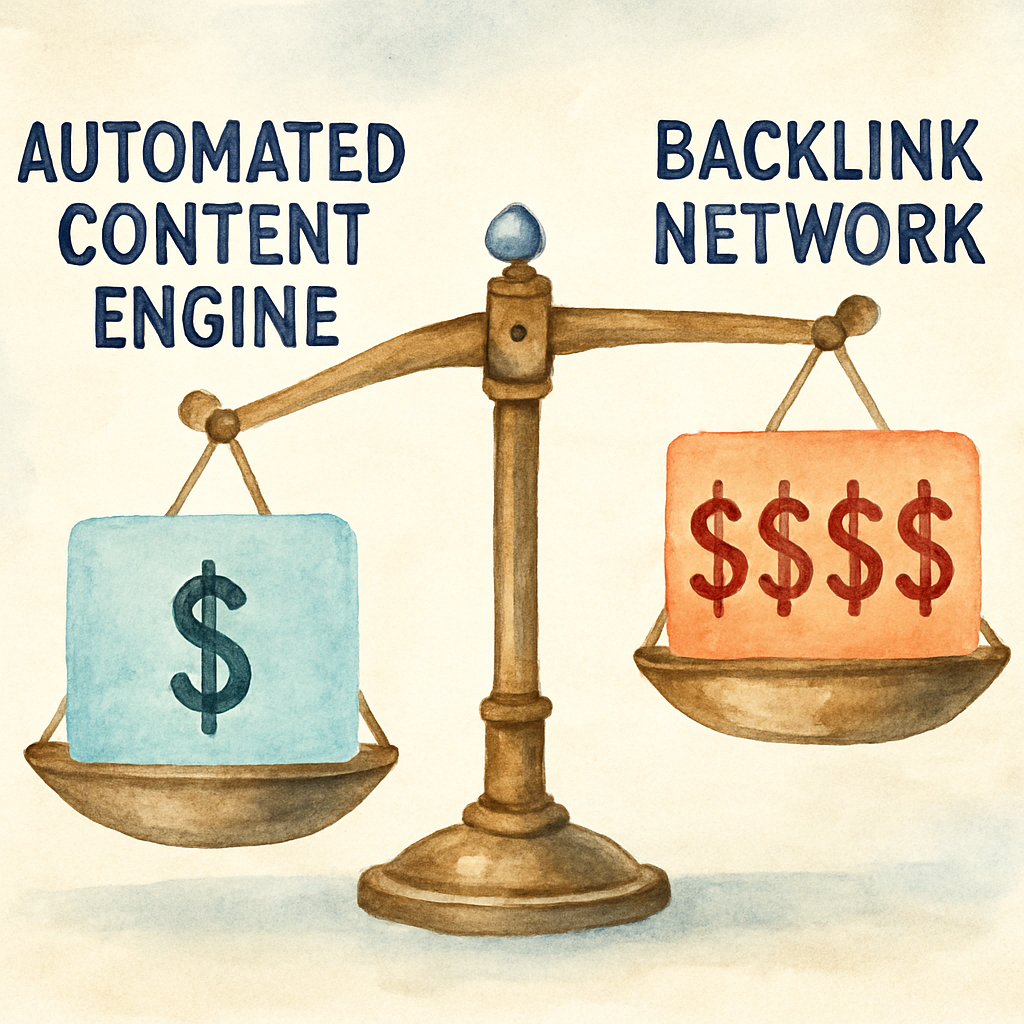
Tips to Optimize Your Budget When Choosing Automated Content Engines and Backlink Networks
Let’s be real for a second: working smart with your budget feels like threading a needle in a haystack sometimes. You want to get the most out of your spend on automated content engines and backlink networks—but how do you avoid throwing cash into the void?
Here’s the deal. It’s not just about picking the cheapest option. Low cost can be tempting, but it often hides pitfalls like poor-quality content or sketchy backlinks that might actually hurt your SEO in the long run.
Start Small, Test Fast
Picture this: you kick off with a modest budget slice devoted to one or two providers to see how they perform. This approach means you’re not betting the farm on anything unproven.
Why is this important? Because each automated content engine and backlink network comes with its own flavor of strengths and quirks. Running a small-scale pilot helps you figure out which efforts genuinely boost your authority and traffic.
For example, some services excel at niche-related backlinks that carry real clout, while others might churn out generic content that hardly moves the needle. Seeing these results early allows you to pivot before spending too much.
Prioritize Transparency and Quality
Ever get a vague pitch about “premium links” or “unique content” with zero proof? Yeah, that’s a red flag.
Always ask for details upfront. Where exactly does their content live? What kind of sites are linking back? Trustworthy networks are open about their process because they know showing their cards builds confidence.
It’s far better to spend a bit more and have clear insight into what you’re getting than to fall for an opaque deal that risks penalties from search engines.
Mix Automation with Human Oversight
Automated content engines can crank out articles at scale, which is amazing for saving time and money. But sometimes, this speed comes at the cost of nuance.
Adding a layer of human review or spot edits ensures that your content stays on brand and genuinely valuable to your audience. The same goes for backlinks—don’t just accept any link. Vet sites for relevance and authority.
This extra effort upfront might feel like extra spend but think about the savings you score by avoiding wasted content or low-value links.
Leverage Analytics to Guide Spend
Don’t just blindly go by initial quotes. Use your SEO data to see what’s working.
Are certain backlink sources driving traffic and rankings? Are your automated articles showing up in searches or getting read?
Numbers don’t lie. Spending more on tools or networks tied directly to your KPIs helps you optimize your budget smartly.
Negotiate Terms That Fit Your Needs
Listen, pricing models aren’t set in stone. Whether it’s per-article costs or monthly fees, you’ve got room to negotiate, especially if you’re committing to longer terms.
Ask for tailored packages or discounts based on your expected volume and goals. Sometimes, even slight tweaks can free up budget for more impactful efforts.
If a provider’s pricing feels off compared to the value you’re getting, say something. Better to have an honest conversation than swallow everything.
Tap Into Community Insights
Before you sign anything, check out what other marketers are saying about automated content engine and backlink network pricing and performance.
Discussion forums, LinkedIn groups, and industry resources often share real-world experiences and deal tips that can help you dodge mistakes.
For solid takes on budgeting and pricing strategies, the approach used in some academic research on digital advertising optimization might surprise you (check out this paper on automated bidding and budgeting optimization). It’s a different context, but the budgeting logic translates surprisingly well.
Don’t Forget the Long Game
Building strong SEO with automation and backlinks isn’t about quick wins. It takes patience, analysis, and fine-tuning.
If you’re tempted to cut corners purely on price, ask yourself if the savings today could mean a bigger cost tomorrow in lost rankings or brand trust.
Smart budgeting means thinking in months and quarters, not days. Marketers who adopt this mindset usually win over those chasing cheap, fast options.
For more tactical money-saving strategies tailored to marketing budgets, resources like Rebelgrowth’s SEO pricing guide offer practical advice you won’t want to miss.
So, what should you do next? Start mapping your priorities and set a clear budget that matches the quality and transparency you expect. Test providers, track results, and don’t hesitate to pull back on spend if you don’t see the promise turning into progress.
With a little patience and savvy, you can turn automated content engine and backlink network pricing from a stress point into an engine of growth.
Conclusion
We’ve walked through quite a bit about automated content engine and backlink network pricing. If you’re feeling a little overwhelmed by all the numbers and strategies swirling around, that’s totally normal. Pricing isn’t just a cold calculation—it’s about what fits your goals and your peace of mind.
Think about it this way: paying less upfront might feel great, but could that cheap option cost you more in the long run? Lost visibility, weaker authority, or scrambling to fix messy backlink profiles? Yeah, not fun.
Most of us want results without the hassle, and that's exactly where smart, automated solutions shine. They free you up from tedious manual work, letting you focus on what matters—growing your business and connecting with your audience.
So, what’s the takeaway? Start small, test the waters with providers that are transparent about what you’re paying for. Track the results honestly, and don’t be afraid to pivot when something isn’t delivering. It’s not about chasing the cheapest price tag, but investing where the returns actually matter.
At the end of the day, effective automated content engine and backlink network pricing is about balance—between budget and quality, speed and patience. Nail that mix, and you’re not just spending money; you’re building something that lasts.
Frequently Asked Questions (FAQ)
What exactly is automated content engine and backlink network pricing?
Good question. It boils down to how much you’ll pay for a system that automatically creates SEO-friendly content and builds backlinks for you. But it’s not just a flat fee—it often depends on factors like content volume, quality of backlinks, and the complexity of your niche.
Think of it like buying a tailored suit versus something off the rack. You want it to fit your goals and budget, not just be the cheapest option.
Why does pricing vary so much between providers?
Honestly, it’s because not all automated tools are created equal. Some focus on quantity, pumping out tons of low-value backlinks, while others prioritize quality, taking time to analyze and place links on reputable sites.
Remember when you tried bargain SEO services that promised the moon but left you with spammy links? Yeah, that’s why pricing can look all over the place. Higher prices often reflect better technology, smarter targeting, and safer strategies.
Can I start small and scale up later?
Absolutely. That’s the smartest way to test the waters. Start with a manageable volume of content and backlinks to see how your rankings respond. Keep an eye on metrics like traffic, keyword positions, and domain authority.
If things look good, you can ramp up. If not, tweak the approach or reconsider your provider. This way, you don’t blow your budget on unproven methods.
Do automated solutions really save time and improve SEO?
They sure can, but only if you pick the right system. The whole point is to get off the hamster wheel of manual content creation and link building.
Imagine freeing hours every week—no more chasing guest post approvals or writing dozens of articles yourself. Instead, you get consistent, optimized content and a steady flow of high-quality backlinks. That said, automation isn’t magic. You’ll still need to monitor results and adjust your strategy.
What should I watch out for when comparing prices?
Look beyond the sticker. Is customer support included? How transparent is the provider about backlink sources? Are there hidden fees for keyword research or content revisions?
And don’t overlook contract terms. Can you cancel anytime? Is there a trial period? Remember, a higher price might mean more peace of mind and fewer headaches down the road.
Are there risks with cheaper automated backlink services?
Yep. The old adage “you get what you pay for” tends to hold true here. Cheap backlinks often come from low-quality sites or networks that search engines frown upon.
You’ll risk penalties that tank your rankings or mysterious drops in traffic. So, if a price feels too good to be true, it probably is. Playing it safe with trusted providers will save you from a lot of stress.
How do I measure the return on investment (ROI) for these services?
Tracking the right metrics is key. Don’t just obsess over raw backlink counts or article numbers. Instead, focus on keyword ranking improvements, organic traffic growth, and leads or sales generated.
Try setting clear milestones and compare your investment against real business outcomes. This way, you’re not just paying for content or links—you’re investing in results that matter.
At the end of the day, automated content engine and backlink network pricing isn’t just about dollars and cents. It’s about finding a setup that makes your life easier and actually moves the needle for your site.